
Affiliate Disclosure
Some links on this page are affiliate links. As an Amazon Associate, we earn from qualifying purchases — at no extra cost to you. We do not buy, install, or physically handle the cameras we cover; our rankings come from aggregated owner reviews, ratings and expert consensus. Commissions never change our verdicts. How we rank · full disclosure.
Short version: brand choice matters far less than three decisions underneath it — whether recording requires a subscription, whether detection runs on the camera or in the cloud, and whether you can live inside one app. Ring, Arlo, Wyze and eufy all make cameras that take usable footage. Where they genuinely differ is in what they charge you after the sale, and how much freedom you keep.
How we work: we do not buy, install or physically handle any of these cameras, and we do not run brand-versus-brand bench comparisons. What we do is aggregate owner star ratings weighted by review volume, read the complaints that recur across thousands of buyers of each brand, and compare published specifications against what owners say those specifications actually deliver. The full method is on how we rank, and our funding is set out in the affiliate disclosure.
How This Site Approaches Brand Comparisons
The direct answer: we compare brands on the things that persist — subscription policy, storage model, detection quality and support longevity — rather than on the specification races that change with every product cycle.
Most brand comparisons you will read online are really model comparisons wearing a brand costume: two cameras, a spec table, a winner. That is not very useful, because the model you are actually shown will be superseded within eighteen months while the brand’s approach to your money will not. Ring’s subscription philosophy in 2026 is recognizably Ring’s philosophy from years ago. eufy’s commitment to local storage is a market position rather than a feature.
So the comparisons we publish are built around four questions, in this order. What does it cost after the sale? Where does the footage live, and who controls access to it? How good is the detection at telling a person from a shadow? And how likely is the app to still work in five years? Resolution, field of view and night vision matter, but they are commodity now — every serious brand delivers them adequately, and the differences are visible mainly at distance.
We also weight review volume heavily, and this is where brand comparisons get genuinely interesting. A brand-new flagship with a thin but strong-looking review base tells you much less than a three-year-old model with a deep, well-established one, even at a slightly lower average. The second camera has been through winters, firmware updates and app redesigns in the hands of ordinary owners. That is evidence. The first is a launch impression.
What to Look For When Comparing Security Camera Brands
Five things separate brands in ways you will still feel three years from now. Everything else is a spec race.
Subscription Cost Over the Life of the System
Work out the subscription cost per camera and per household before you compare sticker prices. A brand charging a modest monthly fee for a single camera and more for the household is quoting you a substantial sum across five years, and that number belongs in the comparison alongside the hardware. Some brands charge nothing at all because the footage never leaves your property.
App Ecosystem and Everyday Usability
The app ecosystem is what you actually touch, every day, for years. Judge it on how fast a live view loads, whether the event timeline is scrubbable, how many taps it takes to share a clip, and how many other devices — chimes, sensors, hubs, floodlights, smart displays — live inside the same app ecosystem. This is where the established brands earn their premium and where the value brands most often feel thin.
Build Quality and Weather Sealing
Build quality shows up in owner reviews after the first winter rather than on day one. The signals worth reading are hinge and mount rigidity, whether the battery door still seals after a dozen removals, and how many one-star reviews mention condensation inside the lens. Sealed, glued-shut housings generally age better outdoors than serviceable ones.
Warranty, Returns and Customer Support
Most camera brands offer a one-year hardware warranty as standard, with the larger ecosystems extending it while an active plan is running. What varies far more than the warranty length is customer support: whether a human answers, whether a dead camera is replaced or debugged for three weeks, and whether the brand still supports a model it stopped selling. Search owner reviews for the word "replacement" — how a brand behaves when something fails tells you more than the specification sheet.
Brand Reputation and Support Longevity
Brand reputation here means two specific things: the security and privacy record, and the likelihood the app still works in five years. Several major names in this category have had publicly reported incidents worth reading about before you commit a camera to an interior room. A brand with a long history of firmware updates for discontinued hardware is worth a genuine premium.
Ring vs Arlo vs Wyze vs Eufy: The Four Brands Compared
To make this concrete rather than abstract, here is how four representative products from the four most-compared brands actually sit against each other — real ratings, real review counts, no invented test results.
Ring is the default because it owns the doorbell. The Ring Battery Doorbell 2K holds a solid owner rating at a mid-range price, backed by a large evidence base by any standard. What owners consistently praise is the app, the setup experience and the breadth of things that plug into it. What they consistently complain about is that the video history they assumed they were buying requires a plan. Ring is the safe, polished, ecosystem-first choice, and it will keep charging you.
Arlo competes on intelligence rather than breadth. The Arlo Essential Battery 2K (3rd Gen) runs at a mid-range price with a solid rating across a still-modest review base so far, and the specification that matters is the person, package, vehicle and animal classification. Owners who moved to Arlo from cheaper cameras almost always cite the same reason: notifications that mean something. Arlo also gates its best features behind a plan, and its review bases on newer models are thinner than Ring’s.
Wyze is the value benchmark, and it earned that position honestly. The Wyze Cam v4 holds a strong owner rating at an entry-level price, with a 2.5K sensor, color night vision and local recording that needs no plan. That is the largest review base of these four, on the cheapest product, which is exactly the pattern our method rewards. The counterweight is corporate: Wyze has had publicly reported security incidents, and buyers who care about that should read the history before committing a camera to a bedroom.
eufy built its whole identity on not charging you monthly. The eufy SoloCam E42 4-camera solar kit at a premium price holds a solid rating across a still-growing review base, and it packages the eufy proposition neatly: 4K, solar power, local storage, no subscription. eufy has also faced its own scrutiny over how much data left devices versus what the marketing implied, which is worth knowing precisely because privacy is the brand’s core claim.
Subscription Policy Is the Real Brand Difference
If you take one thing from this hub, take this: the recurring fee is the largest financial difference between brands, and it is the one least visible at the point of purchase.
The pattern splits cleanly. Ring and Arlo are subscription-forward — the camera works without a plan, but saved video history and the better detection features generally do not, which for most owners means the plan is effectively mandatory. eufy and Reolink are subscription-optional in a meaningful sense, with local recording and on-device detection as the default. Wyze and TP-Link Tapo sit in between: local recording works with no plan, while some cloud conveniences stay paywalled.
The arithmetic is worth doing before choosing an ecosystem, not after. A household plan at a moderate monthly fee adds up to a substantial sum over five years, which exceeds the hardware cost of most four-camera setups. That does not make it a bad deal automatically — cloud storage genuinely protects footage when a camera is stolen, which local storage cannot — but it should be a decision. Our subscription-free rankings cover the no-fee route in full, and the buying guides hub goes through how each storage model works.
Ecosystem Lock-In: The Cost Nobody Quotes
Every camera you add to a brand makes leaving it more expensive. That is not a conspiracy, it is just how accessories, hubs and household plans work — but it does mean the second camera purchase is a bigger decision than the first.
The genuine benefits of staying inside one ecosystem are real: one app, one login, one plan covering everything, and accessories such as chimes, hubs and floodlights that actually cooperate. The most common regret in owner reviews of mixed setups is not technical failure, it is three camera apps on a phone and no single place to see what happened last night.
The cost is that switching later means replacing hardware, and that you are exposed to whatever the vendor decides about pricing, features and firmware. Features have moved behind paywalls across this industry more than once. The practical middle ground most experienced owners describe is one primary ecosystem for the everyday positions, plus permission to use an outsider for a specialist job — a cellular camera at an outbuilding, or an NVR system for permanent whole-property coverage where no app is in the loop at all.
What Barely Differs Between Brands Anymore
It is worth naming the things that used to separate brands and no longer do, because they still dominate the marketing.
Daytime image quality. Every mainstream brand delivers a clean, usable daylight picture at 1080p and up. Nobody is meaningfully losing here.
Two-way audio. Universal, and the quality differences are small and rarely mentioned in reviews.
Basic motion alerts. Every brand does this. The difference is in whether the alert is correct, which is a detection question, not a brand-badge question.
Weather sealing on outdoor models. IP65 and above is now table stakes across serious brands, and outdoor cameras failing to survive rain is no longer a common complaint outside the unbranded end of the market.
Where real differences remain: night performance at distance, detection accuracy, subscription policy, app quality and support longevity. Those are the axes worth comparing, and they are the axes our comparisons are built on.
Types of Camera Brands, and Where Google Nest and Blink Fit
It helps to sort the market into four types of brand rather than a dozen names. Ecosystem brands — Ring, Google Nest, Arlo — sell a platform and expect a recurring fee; you are buying convenience and accessory breadth. Value brands — Wyze, TP-Link Tapo, Blink — sell capable hardware cheaply and monetize lightly, so covering four positions costs what one ecosystem camera does. Local-storage brands — eufy, Reolink — sell the absence of a subscription as the product itself. And professional and prosumer brands sell wired PoE systems and NVRs to people who want the footage on their own property permanently.
Two names deserve calling out because buyers meet them constantly. Google Nest is the strongest option if your household already runs on Google — the cameras are excellent in low light, the app is clean, and Nest Aware bundles history across every camera at one household price rather than per device. The trade is a narrow hardware range and a subscription that is difficult to avoid. Blink, owned by Amazon alongside Ring, is the value entry point into that ecosystem: AA lithium cells that run for a year or more, a Sync Module for local clips, and image quality that is honestly a step behind. Neither belongs in the same comparison bracket as the other, which is the point of sorting by type first.
Installation and Migration Between Brands
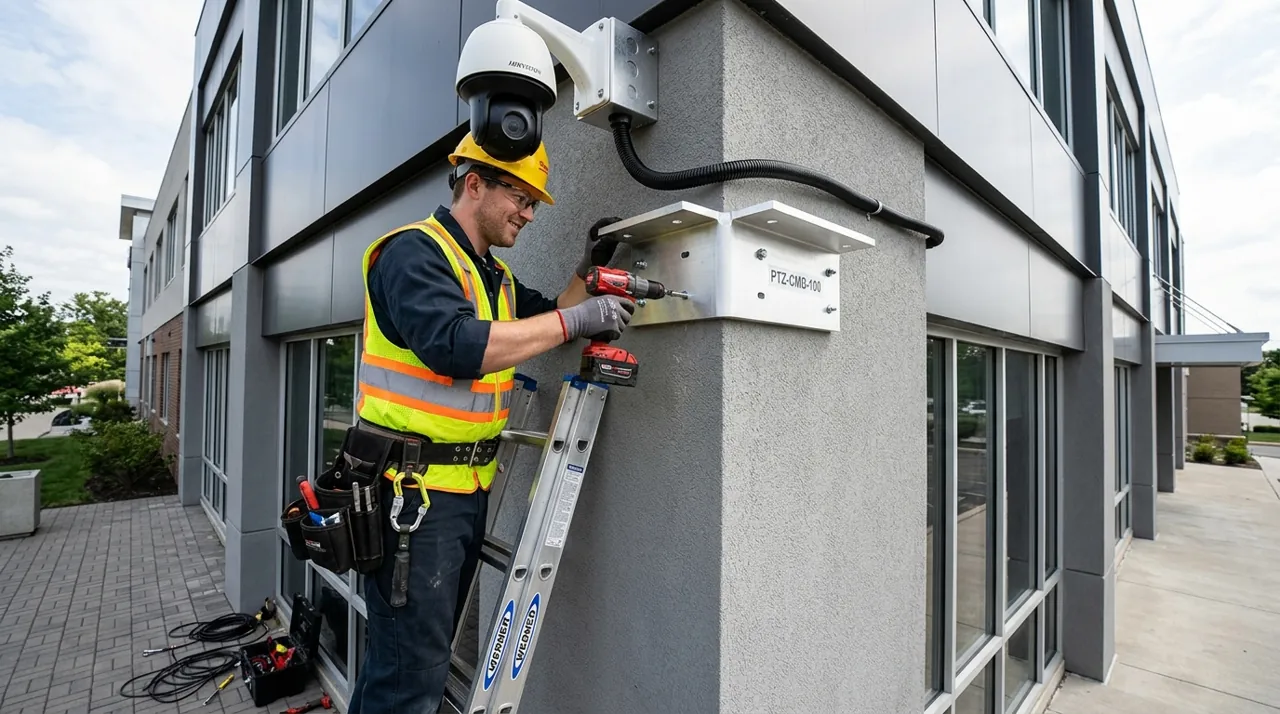
Installation differences between brands are smaller than most buyers expect, and the differences that exist are worth knowing before you commit. Battery cameras from every brand here mount with two screws and a magnetic or bracket base, and take under fifteen minutes. Wired and doorbell installation is where brands diverge: some include the chime kit and mounting wedges in the box, others sell them separately, and transformer requirements sit between 16V and 24V across the field.
Migration is the part nobody plans for. Cameras from one brand do not join another brand's hub, and a subscription does not transfer, so switching ecosystems means new hardware plus new mounting holes. If there is any chance you will change your mind, favor brands whose cameras record locally, since those keep working as standalone devices even after you stop paying anyone. This is the practical reason our buying guides hub treats storage model as a bigger decision than brand.
Which Brand Should You Choose? How to Choose in Three Questions
If you want the least friction and do not mind a monthly bill: Ring. The largest accessory ecosystem, the most polished setup, and a doorbell that most of the market is measured against. Start at the video doorbells hub.
If false alerts have already made you mute the app: Arlo. Better classification is the single most satisfying upgrade owners describe, and it is what you are paying for.
If the budget is the constraint: Wyze or TP-Link Tapo. Both carry enormous review bases at prices that let you cover four positions instead of one — the case is made in full in the budget cameras hub.
If the monthly fee is the dealbreaker: eufy, or a Reolink NVR system. Local storage, on-device detection, and nothing to cancel later.
If you own the property and want the permanent answer: skip the consumer brands entirely and read the premium cameras hub, which points at wired PoE systems that record locally and answer to nobody’s business model.
What This Hub Will Cover Next
Head-to-head comparisons are the natural next layer here — Ring against Arlo, Wyze against eufy, subscription-forward brands against local-storage ones — and we would rather publish them properly than quickly. Each one requires enough owner-review volume on both sides to say something defensible rather than something that reads well, which is the same standard every ranking on this site is held to.
Until those land, the most useful comparison work on the site is inside the category rankings, where brands are already being weighed against each other on identical criteria: the best outdoor security cameras and best indoor security cameras guides both put multiple brands on the same page under the same method. That is a brand comparison with the marketing stripped out, which is the only kind worth reading.
If you are still narrowing the field, the frequently asked questions below answer the ones readers send us most — which brand is best overall, which brands work with no plan, and whether the budget names hold up against the established ones. For the decisions that sit underneath brand choice, the storage-model buying guide in our buying guides hub is the better next read.