
Affiliate Disclosure: Some links on this page are affiliate links. As an Amazon Associate, we earn from qualifying purchases — at no extra cost to you. We do not buy, install, or physically handle the cameras we cover; our rankings come from aggregated owner reviews, ratings and expert consensus. Commissions never change our verdicts. We're reader-supported: commissions fund hosting, research and updates, so if a guide helped, buying through our links keeps it going. How we rank · full disclosure.
Short version: a GPS tracker is a legitimate tool for keeping tabs on your own vehicle, valuable equipment, a minor child, or a company fleet — and an illegal one for covertly tracking another adult without their consent. This hub covers the lawful use cases only. Three tracker types cover nearly every legitimate need: a cellular vehicle tracker for real-time location almost anywhere, an OBD-II plug-in for a vehicle with richer trip data, and a Bluetooth item tracker for a bag or set of keys with zero ongoing cost.
How we work: we do not buy, install or physically handle these devices. Every ranking here comes from aggregated owner reviews, star ratings weighted by review volume, and expert consensus. Method on how we rank; funding on our affiliate disclosure.
In Plain English
A GPS tracker is a small device that reports where something is. This page is about using one on things you have a right to track: your own car or equipment, a young child you are responsible for, an adult who has agreed to it, or a company vehicle.
Tracking another adult without their knowledge is a different matter. In most states it is a crime, even with exactly the same device.
There are three main kinds. A cellular tracker works like a tiny phone: it sends its location over a mobile network, so it usually needs a monthly data plan. An OBD-II tracker plugs into a car’s diagnostic port (a socket under the dashboard) and adds trip details. A Bluetooth tracker, like an AirTag, is more like a lost-property tag that nearby phones quietly report, so it has no monthly fee but isn’t built for following a moving car live. Before you buy anything, check the subscription cost. It is often more than the device itself.
Top 3 Recommended GPS Trackers

The LandAirSea 54 holds by far the deepest review base of any GPS tracker tracked on this site, backed by a solid owner rating, designed and built in the USA with a magnetic, IP67-rated waterproof housing. Hardware cost is genuinely low, though a subscription is required for the tracking service itself. Owners consistently value the battery life — LandAirSea quotes one to three weeks at standard update rates and up to six months in low-power mode — and the rugged build for vehicle or asset tracking. It suits tracking a vehicle or asset you own rather than a personal item.
Why You Should Get This
If you want the most review-validated vehicle or asset GPS tracker available, and don’t mind a subscription for the tracking service, this is the default.
Benefits
- Deepest review base of any GPS tracker tracked on this site.
- Magnetic, IP67 waterproof housing, designed and built in the USA.
- Up to six months per charge in low-power mode.
Pros and Cons
- Largest, most trustworthy review base.
- Rugged, weatherproof build.
- Low hardware cost.
- Subscription required for the tracking service.
- Recharging every one to three weeks at standard update rates.
- Lower star rating than the Bouncie in this comparison.
Features
- Magnetic, waterproof housing.
- Tracking in 155+ countries.
- Subscription-based tracking service.
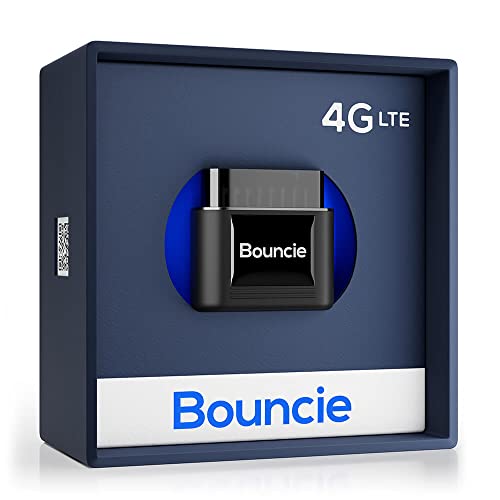
Bouncie holds the highest star rating of any GPS tracker tracked on this site, from a deep base of owner ratings, with real-time location tracking, route history and speed alerts. It plugs directly into a vehicle’s OBD-II port with no wiring required. Owners consistently value the richer real-time data over basic location-only trackers. A subscription is required for the tracking service — $9.99 a month per device with no contract, per Bouncie’s pricing page as of September 2026.
Why You Should Get This
If you want richer real-time vehicle data — route history and speed alerts, not just a location dot — this is the highest-rated way to get it.
Benefits
- Highest star rating of any GPS tracker tracked on this site.
- Real-time location, route history and speed alerts.
- No-wiring OBD-II plug-in install.
Pros and Cons
- Highest per-review rating in the category.
- Richer data than basic location trackers.
- Easy no-wiring installation.
- Subscription required for tracking service.
- Smaller review base than LandAirSea 54.
- OBD-II port placement can be visible in some vehicles.
Features
- Real-time location tracking.
- Route history and speed alerts.
- OBD-II plug-in, no wiring.

The Apple AirTag is the only item tracker in this comparison with no ongoing subscription cost at all, using Apple’s free Find My crowd-sourced network for basic location tracking. It holds a solid rating from a deep review base, with Precision Finding on compatible iPhones. Owners consistently note it suits belongings — keys, a bag, luggage — better than continuous vehicle tracking, since location updates depend on the crowd-sourced network rather than a dedicated cellular connection.
Why You Should Get This
If you want to track keys, a bag or luggage with zero ongoing subscription cost, this is the answer — it just isn’t built for continuous vehicle tracking.
Benefits
- No subscription or monthly fee at all.
- Uses Apple’s free crowd-sourced Find My network.
- Precision Finding on compatible iPhones.
Pros and Cons
- Genuinely zero ongoing cost.
- Strong network coverage via Find My.
- Compact, fits on a keychain.
- Not built for continuous real-time vehicle tracking.
- Requires an iPhone or iPad.
- Location updates depend on nearby Apple devices.
Features
- Free Find My network tracking.
- No subscription required.
- Precision Finding on iPhone.
Lawful Use Comes First
Before any product recommendation, read what is legal and what is stalking in full. It covers exactly which relationships and ownership situations make tracking legal, and which cross into anti-stalking territory. This applies regardless of which device you choose. The short version: ownership and legal responsibility are what make tracking lawful, not the technology itself. A GPS tracker on your own vehicle, a fleet vehicle your business owns, or a minor child you're legally responsible for is one situation. Placing the same device on someone else's property without their knowledge or consent is a completely different one, even if the hardware and setup process are identical.
Subscription-Based vs No-Monthly-Fee Trackers
Most dedicated GPS vehicle trackers require a data plan to transmit real-time location. The hardware itself is often cheap, but check the subscription requirement before buying. It's frequently the larger long-term cost. Bluetooth item trackers like Apple AirTag and Tile use a free crowd-sourced network instead, Apple's Find My or Tile's network, rather than cellular data. They carry no ongoing fee for basic functionality. They do have shorter range, though, and suit tracking a bag or a set of keys far better than a moving vehicle in real time.
Types of GPS Trackers: OBD-II, Bluetooth Item Tracker and More
Three main tracker types cover most lawful use cases on this hub. Picking the right one starts with matching the type to the job. A dedicated cellular GPS tracker, magnetic and self-powered or hardwired, reports real-time location almost anywhere there's cell coverage. That's the category best suited to a vehicle, a boat, or expensive equipment you want to locate at any moment. It's also why this type typically carries a subscription. An OBD-II plug-in tracker, like the Bouncie pick on this hub, connects directly to a vehicle's diagnostic port with no wiring. It adds richer data on top of location: route history, speed alerts and trip logs. A Bluetooth item tracker, like Apple AirTag or Tile, is built for a different job entirely. It's meant for a bag, a set of keys, or luggage. It relies on a free crowd-sourced network of nearby devices rather than cellular data. That means no subscription, but also no reliable real-time tracking through unpopulated areas.
GPS Trackers for Vehicles, Children, Fleets and Assets
Vehicle tracking is the most common lawful use. That's your own car, a teen driver's car you own, or a vehicle you've lent to someone else. A magnetic or OBD-II tracker with real-time updates and geofencing suits this best. It lets you set a boundary alert for a curfew or an approved driving radius. Tracking a minor child you're legally responsible for is a widely accepted use case too. It's generally covered by the same tracker types used for a vehicle, or a compact item tracker if the concern is a phone or backpack rather than a car. Fleet tracking is a business use case, and one of the clearest lawful applications of GPS tracking, provided the vehicles are company-owned and any required employee notification is handled. Asset tracking, for equipment, trailers or machinery that doesn't move under its own power, generally favors a long-battery-life magnetic tracker over a plug-in unit. There's no vehicle diagnostic port to connect to on a trailer or generator.
How to Choose: Real-Time Location, Geofencing and Battery Life
Start with what you're actually tracking, not the feature list. A vehicle you own needs real-time location and probably geofencing. That points toward a cellular tracker with a subscription. A bag, a set of keys or luggage needs presence-based tracking in populated areas instead. That points toward a free Bluetooth item tracker. A company fleet needs the richer trip and driver-behavior data an OBD-II tracker provides. Once you know the category, review depth and rating become the tiebreaker between similar products, the same way every other ranking on this hub works. Before any purchase, confirm the specific tracking situation is lawful under the legal rules for GPS trackers. The right product for an unlawful use case is still the wrong purchase.
Data and Privacy Considerations
Every tracker on this hub reports location data to an app or account. Cellular trackers report to the manufacturer's own servers. Bluetooth item trackers report through Apple's or Tile's crowd-sourced network. That means location history is stored somewhere outside the device itself, worth factoring into your decision even for a fully lawful use case. Check each manufacturer's privacy policy for how long location history is retained, who can access it, and whether it's shared with third parties. For a company fleet specifically, check whether your jurisdiction requires informing employees not just that tracking exists, but how the resulting data is actually used and stored.
How We Rank
Every product ranked on this hub is scored the same way the rest of the site is: aggregated owner star ratings weighted by review volume, recurring themes in negative reviews, and specification differences owners raise unprompted. We never buy, install or physically test these devices, and every star rating and review count comes from licensed Amazon data. Full method on how we rank. Explore the individual reviews and comparisons linked throughout this hub for the full detail behind each ranking, rather than relying on the star rating alone.
Going Deeper: How a GPS Tracker Actually Finds Its Position
GPS itself is a one-way system. Satellites are always sending out radio signals that carry their position, and a receiver works out how far away each satellite is using “distance = rate × time,” where the rate is the speed of light, according to GPS.gov. Once it knows its distance from at least three satellites, a receiver can calculate a three-dimensional position.
The constellation is built so that is almost always possible. The United States is committed to maintaining at least 24 operational GPS satellites 95 percent of the time, orbiting at about 20,200 km (12,550 miles) and circling the Earth twice a day in six equally spaced orbital planes. That arrangement lets users see at least four satellites from virtually any point on the planet (GPS.gov space segment).
Two practical points follow for anyone buying a tracker. The first is that the satellites only broadcast: a receiver learns where it is, but the signal does not tell anyone else. A tracker therefore needs a second, separate way to report its position, which is exactly why cellular units carry a data plan and Bluetooth item trackers rely on nearby phones to relay their location.
The second is that accuracy depends on the view of the sky. GPS.gov says GPS-enabled smartphones are typically accurate to within a 4.9 m (16 ft) radius under open sky, but that accuracy “worsens near buildings, bridges, and trees,” and signals reflected off buildings or walls — known as multipath — degrade it further (GPS.gov accuracy overview). The same tracker can look precise on an open road and vague in a dense downtown block, and that is a property of GPS, not a fault in the device.
Sources & References
- California Penal Code section 637.7 (electronic tracking devices) — California Legislative Information
- 18 U.S. Code section 2261A: Stalking — Cornell Law School Legal Information Institute
- Detect unwanted trackers — Apple
- AirTag — Apple
- Bouncie pricing — Bouncie
- LandAirSea 54 GPS tracker — LandAirSea
- Trilateration — GPS.gov (U.S. government)
- Space Segment — GPS.gov (U.S. government)
- GPS Accuracy — GPS.gov (U.S. government)