
Affiliate Disclosure: Some links on this page are affiliate links. As an Amazon Associate, we earn from qualifying purchases — at no extra cost to you. We do not buy, install, or physically handle the cameras we cover; our rankings come from aggregated owner reviews, ratings and expert consensus. Commissions never change our verdicts. We're reader-supported: commissions fund hosting, research and updates, so if a guide helped, buying through our links keeps it going. How we rank · full disclosure.
A note before anything else: we are publishing this comparison with an explicit caveat rather than skipping it, because pretending the two products have equally reliable review data would be dishonest. The Reolink 8CH system we can verify carries a strong average rating across a large, statistically meaningful sample. The Lorex system we can verify carries a middling average rating from just a handful of reviews — far too small a sample to draw a real conclusion from, in either direction. Do not read the star ratings below as directly comparable. One is backed by thousands of purchases; the other is not.
In Plain English
Reolink and Lorex both sell wired camera kits: several cameras, a recorder box and a hard drive, all connected by network cables that carry power and video to each camera. Both record around the clock at home, and neither charges a monthly fee.
On paper, the Lorex kit looks sharper. Its cameras film in 4K and can show color at night using a built-in light. The Reolink kit films in 5MP, which is less sharp, and shows black-and-white footage after dark. Reolink includes a bigger 2TB hard drive, though, and costs less.
The bigger issue is how much we can trust the owner ratings. Thousands of people have reviewed the Reolink kit. Only a handful have reviewed this Lorex kit. It’s like choosing a restaurant: one with thousands of reviews gives you a fair picture, while one with five reviews could be brilliant or awful, and you can’t tell yet.
That’s why this page calls Reolink the safer choice right now. It isn’t saying Lorex is worse, just that there isn’t enough evidence yet to know.
Top Picks: Reolink, Lorex and an Alternative

A thousands-of-reviews-strong track record backing the purchase, with a strong average rating — the largest review base of any complete NVR system tracked on this site, well ahead of Lorex’s much smaller sample. Four 5MP PoE cameras pair with an 8-channel NVR and 2TB HDD. No subscription at any point.
Why You Should Get This
If you want a complete system with genuine review-volume confidence behind it, this is the clear choice over Lorex on the evidence.
| Camera resolution | 4MP Super HD (2560x1440), 4 bullet cameras |
| NVR | 8-channel PoE NVR |
| Storage | 2TB HDD pre-installed, 24/7 recording |
| Connectivity | PoE, single cable per camera |
| Detection | Person and vehicle detection |
| Night vision | Infrared, up to 30m range |
Benefits
- Massive review base versus Lorex’s much smaller sample.
- 2TB HDD pre-installed, 24/7 recording.
- No subscription at any point.
Pros and Cons
- Far deeper, more trustworthy review base than Lorex.
- Lower price than the comparable Lorex kit.
- True 24/7 recording.
- 5MP rather than 4K.
- Real installation project running cable.
- Closed Reolink ecosystem.
Features
- Four 5MP PoE cameras.
- 8-channel NVR, 2TB HDD.
- No subscription.

A complete 4K 8-channel NVR system with four bullet cameras, at a premium system price — with the important caveat that this rating comes from a much smaller sample than Reolink’s flagship kit, so treat it as a provisional signal rather than a settled one. 4K resolution is sharper on paper than the comparable 5MP Reolink kit.
Why You Should Get This
If you specifically want Lorex hardware or its 4K resolution, this is the current lineup — with the honest caveat that its review base is far thinner than Reolink’s.
Benefits
- 4K resolution across four cameras.
- 8-channel NVR included.
- Sharper resolution on paper than the comparable Reolink kit.
Pros and Cons
- Higher stated resolution than the 5MP Reolink kit.
- Complete system with NVR included.
- Much smaller, less reliable review sample than Reolink.
- Lower star rating than Reolink’s flagship kit.
- Higher price than the comparable Reolink system.
Features
- Four 4K bullet cameras.
- 8-channel NVR.
- 1TB HDD included, expandable to 10TB.

A third prosumer PoE brand worth comparing if neither Reolink nor Lorex fits as a complete kit: a single 5MP turret camera at a strong owner rating and an entry-level price, for adding to an existing NVR or PoE switch rather than buying a complete system.
Why You Should Get This
If you already own an NVR and want a well-rated single camera rather than a full Reolink or Lorex kit, this is the alternative.
Benefits
- Sold as a single camera for an existing network.
- Turret housing suits discreet mounting.
- Solid rating from a third established brand.
Pros and Cons
- Flexible, adds to what you already own.
- Reasonable single-camera cost.
- Established prosumer brand.
- Needs a PoE switch, injector or NVR for power.
- Not a complete system like either kit above.
- Smaller review base than Reolink’s flagship kit.
Features
- 5MP resolution.
- Turret form factor.
- PoE powered.
Representative Products Compared
| Product | Best for | Buy |
|---|---|---|
| REOLINK 8CH 5MP PoE System (2TB HDD) | Reolink pick | Price |
| Lorex Connect V-Series 8Ch 4K NVR System (4 Bullet Cameras) | Lorex pick | Price |
Review-count gap: a large, well-established review base for Reolink vs a mere handful of ratings for Lorex. Treat the Lorex figure as directional at best, not a reliable signal.
What We Can Actually Compare: Price, Review Base and Verified Rating
Hardware category. Both are 4K/5MP-class multi-camera PoE NVR kits aimed at whole-property coverage, so they compete on paper for the same buyer.
Price. The Lorex system we verified runs somewhat higher than the comparable Reolink 8CH kit for a similar channel count, though exact configurations differ: both ship four bullet cameras, but Lorex lists a 1TB drive where the Reolink kit includes 2TB.
Review confidence. This is the entire point of this page. Reolink’s rating is backed by a sample size that makes it trustworthy. The Lorex rating, from only a handful of reviews, could easily shift meaningfully with the next handful of buyers — it simply hasn’t accumulated enough data to be meaningful yet.
Brand track record on this site. Reolink appears across multiple verified, well-reviewed products throughout our roundups. This is the only Lorex listing in our current verified product data, so we have no broader pattern to draw on for the brand as a whole.
Video Resolution (5MP vs 4K Bullet Cameras) and Night Vision
The Reolink 8CH kit runs four 5MP bullet cameras. That sits above standard 1080p, but short of true 4K. The Lorex system we verified is rated 4K across its four bullet cameras. That's a sharper number on paper, useful for zooming into a face or a plate after the fact. Night vision differs more than you might expect. The Reolink kit relies on infrared LEDs rated to about 100 feet, giving black-and-white footage after dark. Lorex lists color night vision for its V-Series cameras, with a built-in white security light and siren, falling back to infrared in complete darkness. If maximum zoomed-in detail is your priority, Lorex's 4K spec wins on paper. Weigh that against the review-confidence gap above before treating one spec-sheet number as decisive.
PoE Power, Ethernet Cabling and Installation
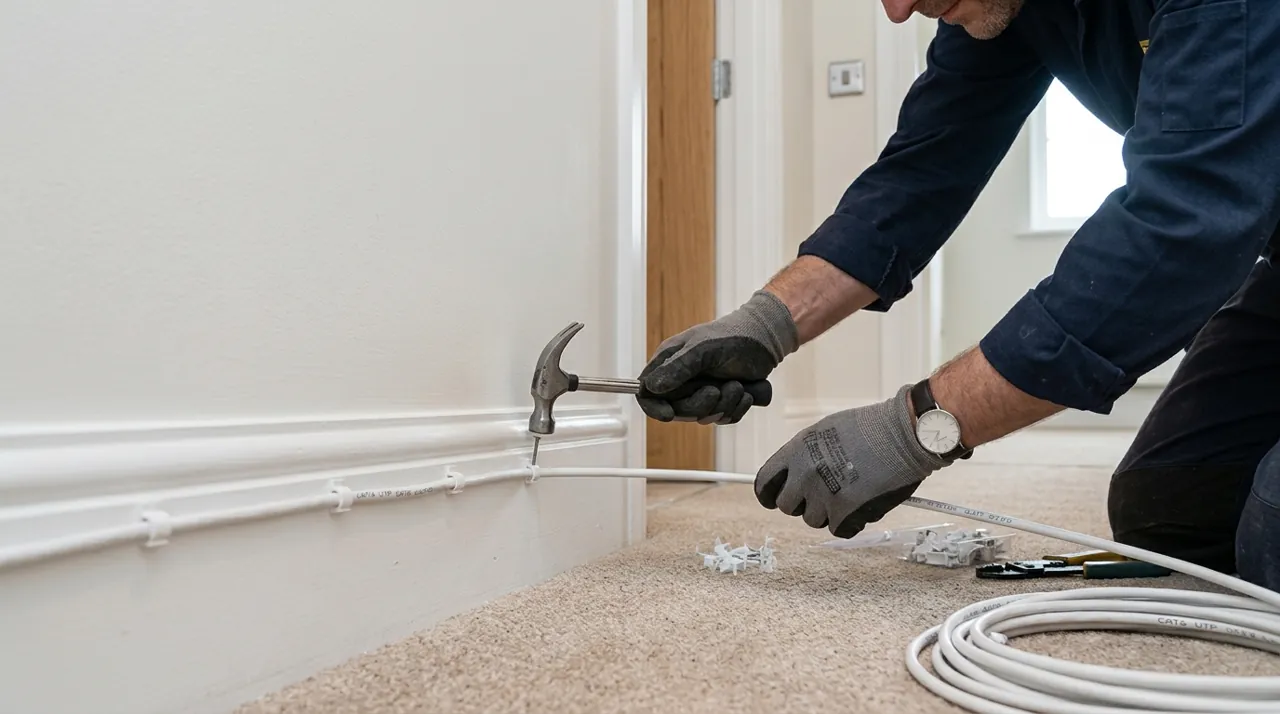
Both systems use Power over Ethernet. One cable run to each camera carries power and data together. No separate power brick or outlet is needed at the camera itself. That makes installation a real cabling project, not a stick-it-up-and-go setup. Expect to run cable through a wall, attic or conduit to each mounting point. Hire an installer if that's more than you want to take on yourself. Neither kit is meaningfully easier to install than the other — both share the same PoE NVR architecture. If a wired cabling project isn't for you, see our wireless battery camera roundup instead.
Storage: Local NVR, Hard Drive and Subscription
Here the two brands genuinely agree, and it's worth saying plainly. Most camera brands on this site can't claim this. Both kits record locally to an included hard drive inside the NVR. Both offer true 24/7 continuous recording. Neither requires a subscription to access your own footage. That's a real structural advantage over app-based battery cameras like Ring or Blink, where recorded clip history usually sits behind a monthly plan. The tradeoff: footage lives on a drive at your property, not in the cloud. A stolen NVR or a house fire can take the recordings with it unless you add off-site backup yourself.
App and Remote Viewing
Both brands offer a companion app for live viewing and remote playback once the NVR joins your home network. Both also offer desktop client software for reviewing longer footage on a bigger screen. Reolink's app is the more established of the two in owner feedback, with a longer update history behind it. We don't have enough verified Lorex owner commentary on app quality to compare confidently. That's consistent with the review-confidence gap running through this whole comparison. Check the current listing and recent app-store reviews for either brand before assuming the apps are equal.
Ecosystem, Channel Count and Expandability
Reolink's ecosystem is broader on this site specifically. It appears across multiple verified, well-reviewed products in our other roundups — single PoE cameras, solar-powered battery models, all manageable from one app. That gives a Reolink NVR kit a natural upgrade path. Add a single camera later, or mix in a solar unit at the back fence, without leaving the ecosystem. This is the only Lorex listing in our current verified product data. We can't speak to how well a Lorex NVR expands with additional Lorex cameras bought separately, or how consistent the wider Lorex lineup is.
Common Use Cases for a PoE Camera System
A PoE NVR kit like either of these suits a property that wants comprehensive, permanent coverage — a driveway, a backyard, a detached garage, a small business perimeter. It suits a buyer willing to do one real cabling install rather than manage battery recharges across several cameras. It's a poor fit for a renter who can't run cable through walls. It's also a poor fit for anyone wanting a single camera up in an afternoon; a battery or plug-in camera suits that case far better. Reolink's larger verified track record makes it the safer first-time PoE purchase. Lorex remains a valid choice if you've already decided on the brand for reasons outside this comparison's review data.
Price Tier and Value
The Lorex system we verified runs higher than the comparable Reolink 8CH kit for a similar channel count. Combined with its far thinner review base, that makes it a harder purchase to justify on value alone right now. Reolink's lower price, paired with a much larger and more trustworthy review sample, is the more defensible pick for most buyers on value grounds. Check the current listing for both — PoE system pricing shifts with bundle configuration (channel count, camera count, HDD size) more than most camera categories.
Winner by Use Case
You want the more statistically reliable choice: Reolink, without much ambiguity, given the review-volume gap.
You specifically want Lorex hardware for another reason: that’s a valid choice we’re not arguing against — just go in aware that the star rating alone shouldn’t be your deciding factor here.
You want the widest range of PoE options to compare: Reolink, covered in full at top-rated Reolink cameras.
Read More
See a ranked list of Reolink cameras and Reolink vs Amcrest for a more evenly-matched prosumer PoE comparison, and leading PoE security camera systems for the full category.
Going Deeper: Why a Handful of Reviews Can’t Settle Anything
This page keeps saying the two star ratings aren’t comparable. That isn’t caution for its own sake. It follows from basic statistics about how much an average can be trusted.
A star rating is a sample mean: the average score from the people who happened to leave a review. The NIST/SEMATECH e-Handbook of Statistical Methods explains how to put a range around a mean like that. The confidence limits are the sample mean plus or minus a t-distribution value multiplied by the sample standard deviation divided by the square root of the sample size. Two parts of that formula matter here. NIST notes that as the sample size increases, the interval gets narrower because of the square-root term. And the larger the standard deviation, meaning the more reviewers disagree with each other, the wider the interval.
Apply that to this matchup. With thousands of ratings behind the Reolink kit, the square root of the sample size is large, so the plausible range around its average is tight. With a handful behind the Lorex kit, the same term is tiny, and the t value used for small samples is larger too, which NIST builds in precisely because small samples are less reliable. The result is a range wide enough that the true owner consensus could sit well above or well below the number on the listing. The next few reviews could move it meaningfully in either direction.
That’s why the hardware comparison has to lean on specifications instead. There, the verifiable facts are clear. Lorex’s product page lists 4K bullet cameras on an 8-channel NVR, color night vision with IR in total darkness, a white security light and siren, person and vehicle detection, and a 1TB drive expandable to 10TB, with no monthly fees. Reolink’s RLK8-410B4 specifications list 5MP (2560 x 1920) bullet cameras with infrared to 100 feet, H.264/H.265 compression, a pre-installed 2TB drive expandable to 16TB with up to 8TB per drive, and an NVR supporting up to 12 IP cameras with a maximum of eight wired.
Specs you can check; a rating from a handful of buyers you can’t. Weigh them accordingly.
Verdict
On the data we can verify, Reolink is the more defensible recommendation, and the reason is straightforward statistics rather than any specific complaint about Lorex hardware: a large, well-established review base tells you something reliable; a mere handful of ratings does not. If Lorex is on your shortlist for other reasons, do your own research on a wider sample of that specific model before treating any single star rating as decisive.
Sources & References
- Reolink RLK8-410B4: 5MP 8-Channel PoE Security Camera System — Reolink
- Lorex Connect V Series 4K 8-Channel Wired NVR System — Lorex
- Lorex Connect V Series 4K 8-Channel Wired NVR System with V5 4K PoE Bullet Cameras — Lorex
- Confidence Limits for the Mean (NIST/SEMATECH e-Handbook of Statistical Methods) — National Institute of Standards and Technology