
Affiliate Disclosure: Some links on this page are affiliate links. As an Amazon Associate, we earn from qualifying purchases — at no extra cost to you. We do not buy, install, or physically handle the cameras we cover; our rankings come from aggregated owner reviews, ratings and expert consensus. Commissions never change our verdicts. We're reader-supported: commissions fund hosting, research and updates, so if a guide helped, buying through our links keeps it going. How we rank · full disclosure.
The short version: Wyze and Blink are the two most credible budget-tier brands on this site, and they’re closer in price than in specs. Wyze’s Cam v4 rates slightly higher and ships with a genuinely sharper 2.5K sensor and color night vision at an entry-level price. Blink’s Outdoor 4 counters with a quoted battery life of up to two years on two AA lithium cells — one of the longest claims in this category — and tighter Amazon ecosystem integration.
In Plain English
Wyze and Blink are two of the cheapest trustworthy camera brands. Both send alerts to your phone and both can save video without a monthly fee. The main difference is power.
Wyze’s camera plugs into the wall, like a lamp. Blink’s runs on two AA batteries, like a wall clock, for up to two years. So Wyze suits a spot near a socket, and Blink suits a shed, fence or garage far from power. Wyze gives a sharper picture and color at night; Blink switches to black and white. To save clips for free, Wyze uses a memory card inside the camera (microSD). Blink needs its Sync Module (a small plug-in hub) with a USB stick or memory card. If you already use Alexa, Blink fits in easily. Choose based on where the camera will go.
Top Picks: Wyze, Blink and an Alternative

The sharpest resolution and color night vision at this price tier, at an entry-level price and a solid owner rating. Local microSD recording works with no plan required at all. Rated for indoor or outdoor use, unusual at this price point.
Why You Should Get This
If sharper resolution and genuine no-subscription recording matter most, this is the pick.
Benefits
- Sharper 2.5K resolution than Blink’s 1080p.
- Genuine no-subscription local recording.
- Indoor/outdoor rated.
Pros and Cons
- Higher star rating than Blink.
- No subscription required for core recording.
- Built-in spotlight and siren.
- No fixed battery-life claim as strong as Blink’s two-year figure.
- Smaller ecosystem than Amazon.
- Cam Plus needed for smart detection.
Features
- 2.5K, color night vision.
- Local microSD recording.
- Indoor/outdoor rated.

The longest quoted battery life and Amazon ecosystem integration, with a solid owner rating. It runs on two AA lithium cells rated for up to two years. Weather-resistant, wire-free mounting works virtually anywhere.
Why You Should Get This
If the recharge chore is the deciding factor, this has the longest rated battery life of the two.
| Resolution | 1080p HD (1920x1080) |
| Field of view | 143° |
| Power | 2x AA lithium batteries, up to 2-year life |
| Night vision | Infrared |
| Audio | Two-way audio |
| Install | Wireless, wall-mount bracket |
Benefits
- Two-year rated battery life, longer than Wyze publishes.
- Amazon/Alexa ecosystem integration.
- Weather-resistant, wire-free mounting.
Pros and Cons
- Longest rated battery life of the two.
- Amazon ecosystem integration.
- Free local storage via Sync Module.
- Lower star rating than Wyze.
- 1080p rather than Wyze’s 2.5K.
- No color night vision.
Features
- Two-year rated battery life.
- 1080p HD video.
- Weather-resistant mounting.
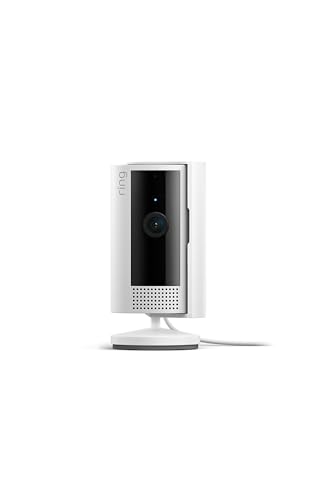
A third option worth comparing: the largest review base and fastest notifications tracked on this site, with one of the highest ratings we track, indoor-only rather than outdoor-rated like Wyze or Blink.
Why You Should Get This
If notification reliability and the deepest review base matter more than outdoor battery specs, this is the alternative.
Benefits
- Largest review base of any camera tracked here.
- Fastest, most reliable notification pipeline.
- Physical privacy cover.
Pros and Cons
- Massive, trustworthy review base.
- Widely regarded as the most polished app.
- Higher rating than either Wyze or Blink.
- Recorded clip history needs a Ring subscription.
- Indoor only, unlike Wyze or Blink.
- 1080p resolution.
Features
- 1080p HD, two-way talk.
- Physical privacy cover.
- Plug-in power.
Representative Products Compared
Where the Real Differences Are
Resolution. Wyze’s 2.5K sensor with color night vision is a genuine step up from Blink’s 1080p at a comparable price — this is Wyze’s clearest spec-sheet advantage.
Battery life. Blink’s quoted figure of up to two years (with default settings) is one of the longest in this category, well beyond typical rechargeable battery camera claims. Wyze doesn’t publish a comparably long figure for its equivalent models.
Subscription-free path. Both offer one, which is unusual at this tier. Wyze’s core microSD recording needs no plan at all. Blink’s local backup via a Sync Module 2 + USB drive (or Sync Module XR + microSD card) is also genuinely free, though it requires the extra hardware step.
Company track record. Wyze has a publicly documented, well-sourced history of security incidents, detailed with citations in the Wyze subscription math. We don’t have comparably detailed, verified reporting on Blink-specific incidents to make a fair side-by-side claim here, so we’re stating what we can document rather than implying a clean record for either brand.
Ecosystem. Blink, as an Amazon-owned brand, integrates more tightly with Alexa and other Ring/Amazon devices out of the box. Wyze is ecosystem-neutral, working reasonably with Alexa and Google Assistant without being built specifically for either.
Video Quality and Field of View
Wyze's 2.5K sensor beats Blink's 1080p on raw sharpness. That gap shows up most when zooming into a saved clip to check a face or a plate. Field of view goes the other way: Blink quotes a 143-degree diagonal view for the Outdoor 4 against Wyze’s 115.8 degrees diagonal, so Blink covers a wider area from one mount while Wyze resolves more detail within its narrower frame. Owner reviews on both cameras describe daytime footage as clear at typical porch and driveway distances, with the resolution difference mattering most once you zoom into a still frame.
Night Vision
This is one of Wyze's clearest advantages in this comparison. Wyze Cam v4 includes color night vision, given some ambient light. Blink Outdoor 4 uses standard infrared night vision only, producing the familiar black-and-white image once it's dark. For a driveway or porch with a streetlight nearby, Wyze's color image gives more usable detail. For a fully dark backyard with no ambient light at all, the practical gap narrows. Both cameras switch automatically between day and night modes based on the available light, with no manual setting required on either one.
Power and Battery
This is the core hardware split behind most of the other differences here. Blink Outdoor 4 runs on two AA lithium batteries, rated for up to two years. Wyze Cam v4 is primarily plug-in powered, so it needs a nearby outlet rather than a battery swap. Blink's battery power is the bigger draw for a spot far from any power source, like a shed, a fence line, or a detached garage. Wyze does sell battery-powered models elsewhere in its lineup, but the Cam v4 compared here specifically is not one of them, so factor that into the comparison if wire-free placement is the deciding factor rather than the resolution gap.
Connectivity, App and Ecosystem
Both connect over 2.4GHz WiFi, with Blink routing its camera through a required Sync Module. Blink lives inside its own app but is owned by Amazon, so it integrates tightly with Alexa and other Ring and Amazon smart-home devices. Wyze lives inside its own separate app and ecosystem of locks, sensors and plugs, working reasonably with Alexa and Google Assistant without being purpose-built for either. A household already deep in Alexa and Ring devices gets more day-to-day value from Blink; a household using Wyze's other devices gets more value staying inside that same app.
Storage and Subscription
Wyze records to a microSD card in the camera itself, with zero subscription required for core motion-triggered recording. Blink's free local path works differently: a Sync Module 2 plus a USB drive (or a Sync Module XR with a microSD card) stores clips locally, which needs the extra hardware step but still avoids a required monthly fee. Both offer an optional cloud plan for smarter detection and extended history on top of the free local option. Neither brand hides its core recording behind a required fee, which is a genuine break from Ring's structure and the main reason both Wyze and Blink sit firmly in this site's budget category rather than the ecosystem-first tier.
Wyze vs Blink Camera: Price and Who Should Buy Which
Wyze and Blink sit close together on price, with Wyze's entry cameras typically running slightly lower. Buy Wyze if sharper resolution and color night vision matter more than battery life, and you have an outlet nearby. Buy Blink if a wire-free position with a long battery life matters more, especially somewhere without easy power access, or if you're already deep in the Alexa and Amazon ecosystem. A privacy-sensitive indoor spot is worth weighing carefully either way — Wyze's documented security history is a real factor there. Covering several positions on a tight budget works fine with either brand, and some households mix the two: Blink at the shed or back fence where power isn't easy to reach, Wyze at the front door or porch where sharper video and an outlet are both available.
Winner by Use Case
Best resolution and color night vision for the price: Wyze.
Longest battery life: Blink, by a wide margin on quoted figures.
Already deep in the Amazon/Alexa ecosystem: Blink.
Wyze vs Blink vs Ring, if notification reliability and the deepest review base matter most: the Ring Indoor Cam, the third option listed above (indoor only, with a Ring subscription needed for clip history).
Privacy-sensitive placement (indoors, bedrooms): weigh Wyze’s documented incident history (see Wyze’s value guide) against your own risk tolerance before choosing either brand for a sensitive position.
Read More
See a ranked list of Wyze cameras and top-rated Blink cameras for full lineups, and budget security cameras ranked by owner reviews for how both compare against the wider low-cost field.
Going Deeper: Why a Battery Camera and a Plug-In Camera Record Differently
A battery camera can’t afford to watch all the time, so it waits for a trigger. Blink explains that its cameras use a passive infrared (PIR) sensor that detects heat energy from anything in view, with a special lens that exaggerates movement across the sensor. Blink cameras detect motion best from about 7 to 19 feet away and can respond to motion at 30 feet. PIR is most sensitive to motion moving across the field of view, and objects at the same apparent temperature as the background may not be detected when they move.
Once triggered, Blink records short bursts. Blink’s retrigger guide says the default is a five-second clip followed by a 30-second retrigger time, during which the camera doesn’t record motion events; the gap can be set from 10 to 60 seconds per camera. Those pauses are part of how two AA cells last as long as they do. The Outdoor 4 also relies on a hub: Blink’s Sync Module requirements list it as a device that must use a Sync Module, which relays commands and handles activity for up to ten Blink devices.
A plug-in camera has none of those constraints. Wyze’s Cam v4 specifications list wired USB power, microSD cards up to 256GB and “24/7 Local Recording” to the card, so a card-equipped Wyze can keep a continuous record rather than a series of clips. On the cloud side, Wyze’s service-plan page lists “no cooldown between events” as a Cam Plus feature, alongside 14-day cloud event history and person, vehicle, package and pet detection. For continuous coverage of a busy spot, card recording on a powered camera is the more complete record; for a spot with no outlet, Blink’s triggered clips are the trade-off for long battery life.
Verdict
Choose Wyze for sharper video and color night vision at the same price point. Choose Blink for the longest battery life and tighter Amazon ecosystem fit. If Wyze’s documented security history is a dealbreaker for an indoor placement, Blink or a local-storage brand like eufy are the more comfortable alternatives.
Sources & References
- Wyze Cam v4 — Wyze
- Blink Outdoor 4 Technical Specifications — Blink (Amazon)
- Blink Outdoor 4 camera FAQ — Blink (Amazon)
- Sync Module Requirements for Blink Devices — Blink (Amazon)
- Wyze Service Plans (Cam Plus) — Wyze
- Understanding motion detection — Blink
- How to adjust retrigger time — Blink