
Affiliate Disclosure: Some links on this page are affiliate links. As an Amazon Associate, we earn from qualifying purchases — at no extra cost to you. We do not buy, install, or physically handle the cameras we cover; our rankings come from aggregated owner reviews, ratings and expert consensus. Commissions never change our verdicts. We're reader-supported: commissions fund hosting, research and updates, so if a guide helped, buying through our links keeps it going. How we rank · full disclosure.
The short version: Arlo and Nest are both premium-positioned brands that don’t compete primarily on price, and each has a distinct technical strength. Arlo pushes harder on raw video quality — 2K and 4K HDR options with strong color night vision. Nest pushes harder on making its detection genuinely useful on the free tier, since it runs on-device rather than requiring a cloud subscription to work at all.

In Plain English
Arlo and Nest are both premium camera brands, but they are good at different things. Arlo puts its effort into the picture itself: sharp video, and footage that holds up when part of the scene is bright and part is dark. Its doorbell uses a square picture so you can see a visitor from head to toe, plus the parcel at their feet.
Nest puts its effort into the camera’s brain. The camera itself can tell whether a person, an animal or a car set it off, and it does that without a monthly fee. It’s like the difference between a very good pair of glasses and a friend who tells you what they saw. Arlo gives you the clearer view, while Nest tells you what happened even if you never pay for a plan.
Nest’s newer indoor camera also keeps up to six hours of short clips for free. With Arlo, saved clips and smart alerts come with its Arlo Secure plan. If your home already runs on Google Home, Nest fits in naturally. If you use Alexa, Arlo is the easier match.
Top Picks: Arlo, Nest and an Alternative

The sharpest mainstream video doorbell footage tracked on this site, with a solid owner rating, 2K head-to-toe video in a square 1:1 aspect ratio and HDR handling. Package, person, vehicle and animal detection require an Arlo Secure plan. It runs on a rechargeable battery that can trickle-charge from existing doorbell wiring, and a chime is included in this bundle.
Why You Should Get This
If reading detail at the door matters most, this delivers the sharpest footage of the comparison.
Benefits
- Sharpest mainstream video doorbell footage in this comparison.
- Chime included in the box.
- Square 1:1 aspect ratio shows the whole doorstep.
Pros and Cons
- Best detail-at-the-door of the brands compared here.
- HDR handles bright and dark areas well.
- Flexible battery or wired power.
- Full detection needs an Arlo Secure subscription.
- Lower star rating than the Nest Cam Indoor.
- No free event history included.
Features
- 2K head-to-toe video.
- HDR video handling.
- Chime included.
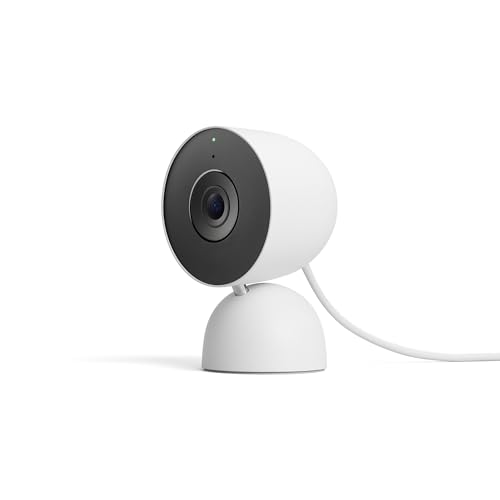
On-device person, animal and vehicle detection works with no plan required at all, at an entry-level price and a solid owner rating. Up to 6 hours of free event video previews (short clips of up to 10 seconds) is included by default — more generous than Arlo’s all-paid recording model. 2K HDR video with a 152-degree diagonal view handles bright windows and dark corners well. It runs on wired AC power.
Why You Should Get This
If free on-device detection and some included recorded history matter more than doorbell-specific framing, this is the pick.
| Resolution | Up to 1080p at 30fps |
| Field of view | 135° diagonal |
| Sensor | 2-megapixel color, HDR video |
| Zoom | 6x digital zoom |
| Power | AC wired |
| Connectivity | 2.4GHz and 5GHz WiFi |
| Storage | Up to 3 hours event history included |
Benefits
- On-device detection works with no subscription at all.
- Up to 6 hours of free event video previews by default.
- Higher star rating than the Arlo doorbell.
Pros and Cons
- Genuinely generous free tier.
- Strong Google Home integration.
- Wired power, no battery to manage.
- Indoor camera, not a doorbell.
- Full event history needs Google Home Premium.
- Needs an outlet at the mount point.
Features
- On-device detection.
- 6 hours of free event previews.
- 2K HDR video.

A third doorbell option worth comparing: the most-reviewed and highest-rated video doorbell tracked on this site. Its head-to-toe view shows the package on the mat. It runs on a removable rechargeable battery with no wiring required.
Why You Should Get This
If you want the most review-validated doorbell available rather than either premium brand here, this is the alternative.
Benefits
- Deepest review base of any video doorbell tracked on this site.
- Head-to-toe view shows the whole doorstep.
- No wiring required.
Pros and Cons
- Largest, most trustworthy review base of the three.
- Live view and two-way talk work with no plan.
- Lower price than the Arlo doorbell.
- Recorded clip history needs a Ring subscription.
- 1080p rather than Arlo’s 2K.
- No on-device free detection like Nest.
Features
- Head-to-toe 1:1 view.
- Removable battery or hardwiring.
- Two-way talk.
Representative Products Compared
| Product | Best for | Buy |
|---|---|---|
| Arlo Video Doorbell 2K + Chime | Arlo pick | Price |
| Google Nest Cam Indoor (Wired, 3rd Gen) | Nest pick | Price |
Where the Real Differences Are
Free-tier usefulness. Nest’s biggest structural advantage: person/animal/vehicle detection runs on the camera itself and works without paying anything, plus up to 6 hours of free event video previews on current wired models like the Nest Cam Indoor (3rd gen). Arlo’s free tier is comparatively bare — live view and basic alerts, with smart detection and recorded history behind Arlo Secure.
Video quality. Arlo’s HDR handling and color night vision on premium models are frequently cited as best-in-class in this comparison, a genuine edge over Nest’s competent-but-not-flagship video quality.
Ecosystem. Nest ties into Google Home tightly; Arlo is more ecosystem-neutral, listing Amazon Alexa, Google Assistant and IFTTT on its current spec sheets without being deeply tied to any one.
Review base and price. Nest’s flagship indoor camera rates higher in our data and sits at a lower price point than Arlo’s comparable premium options.
Arlo vs Nest: HDR Video Quality and Resolution
Arlo's doorbell and most of its camera range record at 2K-class resolution (the doorbell at 1944 x 1944), with 4K HDR reserved for its Ultra line. HDR processing is where the brand's engineering effort clearly shows. Footage holds detail in a backlit doorway or a half-shaded driveway that would blow out to white on a cheaper sensor. The current Nest Cam Indoor (wired, 3rd gen) records 2K HDR video, per Google, so on paper it's close to Arlo's 2K models and only Arlo's 4K Ultra line clearly out-resolves it. In owner reviews, Arlo's HDR handling and color night vision are consistently cited as the strongest video quality in this comparison. Nest's video is described as clear and reliable rather than exceptional. If raw resolution is the deciding factor, only Arlo's 4K Ultra line pulls clearly ahead.
Field of View and Framing
Arlo's Video Doorbell uses a square 1:1 aspect ratio. It's built specifically to frame a person head to toe on a doorstep, along with any package at their feet — a genuine advantage over a widescreen doorbell that crops a visitor at the waist. The Nest Cam Indoor is a general-purpose room camera with a 152-degree diagonal field of view, suited to a living room, hallway or entryway rather than a single narrow doorstep. These two products aren't solving the same framing problem. Pick Arlo's doorbell for the door itself, and weigh the Nest Cam Indoor against other indoor cameras for room coverage instead.
Color Night Vision
Arlo's color night vision on its premium models is widely regarded as among the strongest in the consumer camera category. It produces a genuine description rather than a grey silhouette after dark. Note that the Arlo Video Doorbell 2K itself uses infrared black-and-white night vision, per Arlo's spec sheet; color night vision belongs to Arlo's camera lines such as the Essential and Ultra. Nest's night vision is solid and reliable, and Google says the 3rd-gen Nest Cam Indoor stays in full color longer at dawn and dusk, but it isn't the specification the brand leads with. Its edge after dark comes from detection accuracy rather than image color or clarity. If distinguishing a face or clothing color at 2am matters most, Arlo has the stronger implementation. If the priority is simply knowing correctly that a person, not a cat, triggered the alert, Nest's on-device detection does that job just as well in the dark as in daylight.
Power, Battery and Wired Options
Both brands offer wired and battery models, so this comparison depends on which specific product you're weighing. Arlo's doorbell runs on its rechargeable battery and can trickle-charge from existing doorbell wiring, giving flexibility for renters without wiring. Nest Cam Indoor reviewed here is wired-only. That means no battery to manage, but also a fixed placement near an outlet. Where both brands sell battery versions of similar products — Nest's battery doorbell and outdoor cameras, Arlo's Essential range — owner reports on both cluster in the same rough range. Expect a few weeks to a few months, depending heavily on how much motion crosses the frame and the local climate.
Connectivity, Event History and Storage
Arlo connects over WiFi with no separate hub required for the models compared here. Recorded video lives in Arlo's cloud once you subscribe to Arlo Secure — without a plan, clips aren't saved to the cloud, though live view and motion alerts still work and compatible models can record locally through an optional Arlo SmartHub. Nest also connects directly over WiFi, and it stores at least some history for free: up to six hours of short event video previews by default on the Nest Cam Indoor (3rd gen), with no plan required to keep the on-device detection working. That's the structural difference worth understanding before price ever enters the conversation. Nest's baseline functionality survives without a subscription in a way Arlo's does not.
App, Google Home and Alexa Ecosystem
Arlo's app is rated highly for clip organization and live-view responsiveness. The brand is deliberately ecosystem-neutral, with Amazon Alexa, Google Assistant and IFTTT listed on its current spec sheets. Nest's app is tightly bound to Google Home. Casting to a Nest Hub or a TV with a voice command is smoother than Arlo's equivalent, but the experience narrows outside the Google ecosystem: Nest's Alexa skill covers live view on Echo Show-style displays and motion or person announcements, not the full feature set. If your household already runs on one platform or the other, that alone can decide it, independent of any camera specification.
Installation
Arlo's battery products mount with a bracket and a couple of screws with no wiring needed. The doorbell also supports running on existing doorbell wiring if you have it. Nest Cam Indoor (Wired) needs an available outlet within reach of the mounting point. Its wired doorbell needs existing doorbell wiring plus a compatible transformer, which can mean an electrician for some homes. Both brands also sell battery variants of most product types. Check the specific model's power requirement rather than assuming either brand is uniformly wired or uniformly wireless — the ranges mix both.
Arlo vs Nest Use Cases: Which Fits Your Situation
In an Arlo vs Nest camera decision, a front door where head-to-toe framing and the sharpest footage matter most: Arlo's Video Doorbell. A room, hallway or entryway where you want detection that works without paying anything, tightly integrated with Google Home: the Nest Cam Indoor. A household split across Alexa and Google devices: Arlo's ecosystem-neutral integrations are the safer bet. A household fully committed to Google Home, prioritizing alert accuracy over image quality: Nest. For a genuinely budget-conscious buyer who wants free smart detection with no plan at all, Nest's free tier does more real work than Arlo's equivalent. If you are weighing Arlo vs Nest vs Ring, the Ring Battery Doorbell listed above is the third option: it has the deepest review base of any video doorbell tracked on this site, though its recorded clip history needs a Ring subscription.
Price Tier
Nest generally sits at a lower price point for comparable single-camera hardware. Its free tier includes usable on-device detection that Arlo's free tier does not offer. Arlo's subscription and premium hardware both tend to run higher, particularly once Arlo Secure is added across multiple cameras. Check the current listing for both, since prices shift with promotions. The underlying structure is the consistent pattern across most of the year: Nest cheaper up front with more free functionality, Arlo pricier with stronger video quality.
Who Should Buy Which: Arlo vs Nest by Owner Reviews
Choose Arlo if the sharpest video quality and HDR handling matter most. Your household should not be locked into Google Home, and you should be comfortable paying a subscription for full detection and recorded history. Choose Nest if you want smart detection that works correctly before you've paid anything, some free event history included by default, and you're already inside — or happy to move into — the Google Home ecosystem. Both are premium-positioned brands rather than budget picks. The choice here is genuinely about which specific strength matters more to your household, not about which brand costs less overall.
Winner by Use Case
Best video quality for the price you’re willing to pay: Arlo.
Best free-tier functionality: Nest, by a clear margin.
Google Home household: Nest, for the tightest integration.
Ecosystem-neutral buyer who doesn’t want to commit to one smart-home platform: Arlo is the more flexible of the two.
Read More
See best Arlo cameras, is Arlo worth it, and Nest cost versus value for the full subscription breakdowns on each brand.
Going Deeper: Why Nest’s Detection Works Without a Plan
The biggest difference in this comparison isn’t the lens. It’s where the software that decides “that was a person” actually runs.
Google’s help page on how Nest cameras detect sound and motion explains that Nest cameras analyze video to identify people, animals and moving vehicles, and detect general motion by learning what the background looks like and watching for changes. For cameras set up in the Google Home app, including the Nest Cam Indoor (3rd gen), Google says the algorithms that do this are on the camera, and that unless specifically noted the camera doesn’t send that data to the cloud. Older models managed in the original Nest app, such as the Nest Cam IQ, worked differently: their video streamed to Nest’s servers, where the software identified activity.
That design choice is why the free tier is useful. If the camera does the recognition itself, Google doesn’t need to charge for server time to tell you a person is at the door. What a subscription adds is history and extra intelligence. Google’s video history help page lists up to six hours of event video previews, in clips of up to 10 seconds, for the Nest Cam Indoor (wired, 3rd gen) with no plan. Google Home Premium raises that to up to 30 days of event history on Standard or 60 days on Advanced, with up to 10 days of 24/7 recording on wired cameras.
Arlo draws the line in a different place. Its guide to using its cameras without a subscription says live view, motion alerts and two-way audio work for free. Cloud storage, person, vehicle, package and animal detection, and activity zones are listed as Arlo Secure features. So without a plan an Arlo camera still tells you something moved, but not what it was.
Neither approach is wrong. Arlo puts its money into hardware like the square, HDR-capable sensor in the doorbell, listed on its spec sheet at 1944 x 1944, and charges for the intelligence. Nest builds the intelligence into the camera and charges for the storage. Know which one you’d rather pay for, and the choice is easy.
Verdict
Choose Arlo if premium video quality is the deciding factor and you’re comfortable paying for it, subscription included. Choose Nest if you want smart detection that actually works before you’ve paid anything, and especially if you’re already in the Google Home ecosystem.
Sources & References
- Arlo Video Doorbell 2K (2nd Generation) Spec Sheet (AVD4001) — Arlo
- Arlo Ultra Wireless Security Camera 4K (3rd Gen) Spec Sheet (VMC5050) — Arlo
- Arlo Essential Security Camera (3rd Gen) Spec Sheet — Arlo
- Can You Use a Home Security Camera Without a Subscription? — Arlo
- Google launches its latest Nest Cams, a new Google Home speaker and more — Google
- Learn about event and 24/7 video history — Google Home and Nest Help
- Control Google Nest products with Amazon Alexa — Google Home and Nest Help
- Learn how Nest cameras detect sound and motion — Google Home and Nest Help