
Affiliate Disclosure: Some links on this page are affiliate links. As an Amazon Associate, we earn from qualifying purchases — at no extra cost to you. We do not buy, install, or physically handle the cameras we cover; our rankings come from aggregated owner reviews, ratings and expert consensus. Commissions never change our verdicts. We're reader-supported: commissions fund hosting, research and updates, so if a guide helped, buying through our links keeps it going. How we rank · full disclosure.
The short version: if you are buying into Reolink from scratch, buy the 8-channel 5MP PoE system with the 2TB drive at a mid-range system price. Four wired cameras, a recorder and around a week of continuous storage in one box is a different class of product from four battery cameras and an app, and it is the most thoroughly reviewed thing Reolink sells. If you already have a system and want to add the best single camera, the 12MP RLC-1224A, at a mid-range price, is the highest-rated camera on this page.
Reolink sits apart from the consumer smart-home brands, and this ranking of the best Reolink cameras reflects that. These are prosumer cameras for buyers who want a surveillance system rather than a smart-home gadget — local recording, no subscription, and a recorder that keeps running whether or not the internet does. The best PoE security camera systems roundup compares Reolink against the rest of that category; this page ranks Reolink against Reolink.
In Plain English
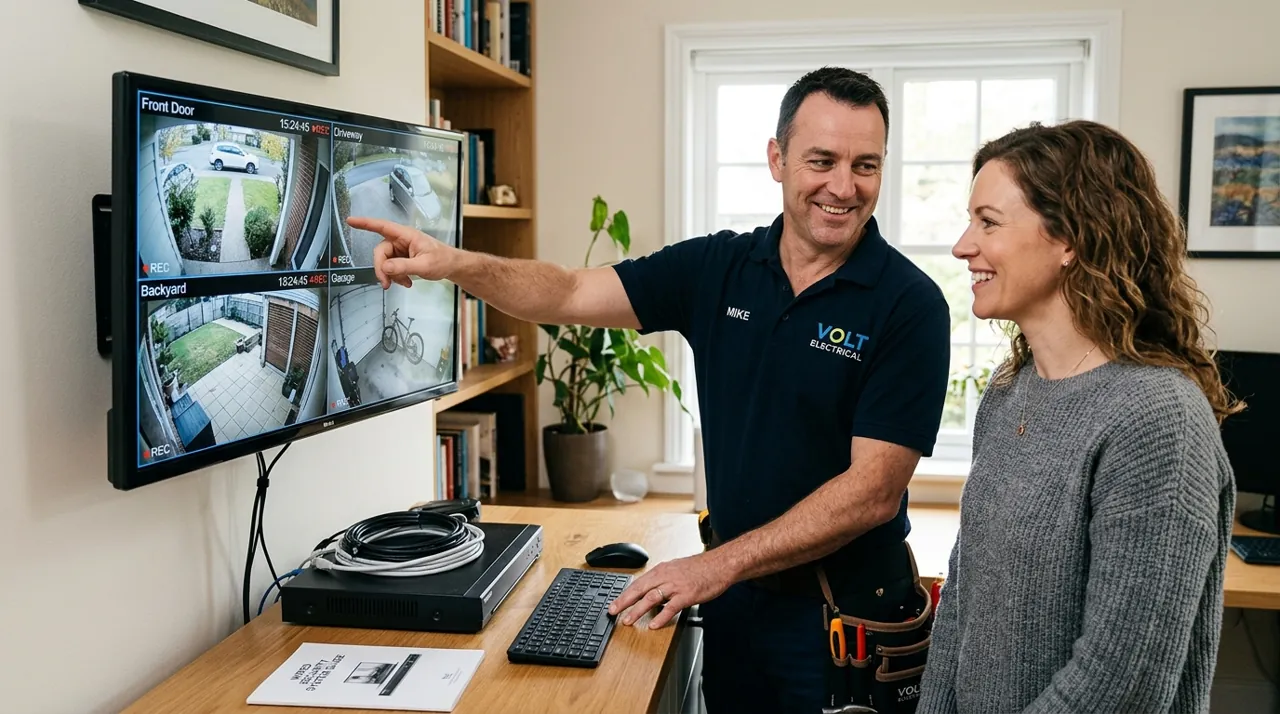
Most home cameras are gadgets: they wake up when something moves, send a short clip over the internet, and buzz your phone. Reolink sells something closer to what shops and offices use. Each camera connects to a recorder box with one network cable, and that single cable carries both power and video. This is called PoE, short for Power over Ethernet.
The recorder has a hard drive inside and records every camera all day and night. Think of it like a video diary rather than a pile of snapshots: if something happens at 3am, you jump to 3am and watch, instead of hoping the camera decided to save a clip.
Because everything is recorded at home, there’s no monthly fee, and the system keeps recording even if your internet goes down. The catch is the cable. Every camera needs a wire run back to the recorder, through walls or along the eaves, which is a weekend job or a job for an installer. Sharper cameras also fill the hard drive faster, so how much history you keep depends on resolution and drive size.
Top Rated Reolink Cameras at a Glance
What Reolink Is Actually Selling: A Real Surveillance System
Most camera brands sell you a smart-home accessory. Reolink sells you the thing businesses have used for twenty years, scaled down and priced for a house.
The difference is architectural. A consumer camera wakes when it detects motion, uploads a clip to a server and notifies your phone. A Reolink PoE system runs cable to each camera, powers it over that cable, and records everything continuously to a hard drive sitting in a cupboard in your house. Nothing depends on the internet. Nothing needs recharging. Nothing is deleted because a plan lapsed. When something happens at 3am, you do not scroll through event clips hoping the camera decided it counted — you scrub the timeline to 3am and watch.
What it costs you is installation. Every PoE camera needs a cable run back to the recorder, through walls, along eaves, into an attic. That is the barrier, and it is a real one. It is also the reason Reolink’s ratings hold up so well — the buyers who complete the install are the ones who wanted this kind of system, and the negative reviews are dominated by people who discovered midway through that they did not.
The Ranked Reolink Field: Star Rating, Consensus and Price

Best for a whole house that needs continuous recording rather than event clips.
- Four 5MP wired PoE cameras plus an 8-channel NVR.
- 2TB hard drive included for 24/7 recording.
- Single cable per camera carries both power and data.
- Person and vehicle detection with no subscription.
Why buy it: The most-reviewed Reolink product in this field and the clearest statement of what the brand does — a complete surveillance system with a recorder in a cupboard, not four gadgets depending on an app.

Best for the one angle where you need to read a face or a plate.
- 12MP resolution, the highest in this group.
- 700-lumen spotlight for color night vision.
- Human, vehicle and pet detection on device.
- microSD recording up to 512GB with no monthly fee.
Why buy it: The highest-rated Reolink camera here, and 12MP means you can crop hard into a frame and still have something a police report can use.
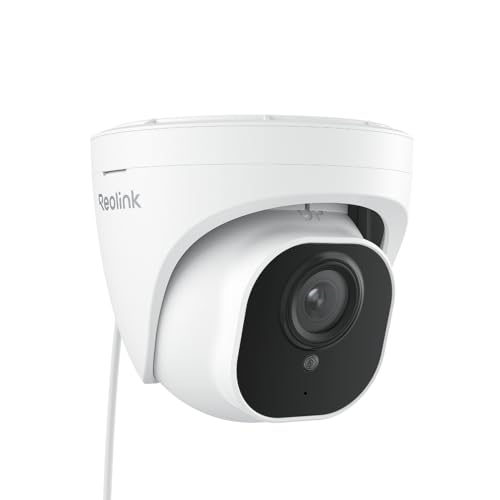
Best for adding 4K coverage to an existing PoE system one camera at a time.
- 4K resolution in an IP67 weatherproof metal housing.
- 100ft infrared night vision.
- Human, vehicle and animal smart detection.
- Timelapse and up to 512GB microSD recording.
Why buy it: 4K PoE for around a hundred dollars is the price point that makes building a wired system out camera by camera genuinely affordable.

Best for a driveway or yard where you need both the wide view and the close-up.
- Dual lenses with 6x hybrid zoom and auto-tracking.
- 4K video across 355-degree pan and 90-degree tilt.
- Color and infrared night vision.
- 24/7 recording with no subscription.
Why buy it: Two lenses working together means the wide view keeps the whole scene while the zoom lens follows the person across it — no other camera here covers both at once.

Best for a straightforward wired camera where reliability beats specifications.
- Power over Ethernet on a single cable run.
- Smart detection with no monthly fee.
- Local recording to the NVR or a microSD card.
- Weather-rated for permanent outdoor mounting.
Why buy it: The cheapest entry point to Reolink’s PoE ecosystem, and one of the better-evidenced cameras the brand sells.
Best Reolink PoE Camera Comparison: Reolink Cameras Side by Side
| Product | Best for | Buy |
|---|---|---|
| REOLINK 8CH 5MP PoE System with 2TB HDD | Best Overall | Price |
| REOLINK RLC-1224A 12MP PoE | Best Single Camera | Price |
| REOLINK RLC-820A 4K PoE Bullet | Best Value | Price |
| REOLINK TrackMix PoE Dual-Lens PTZ | Best for Tracking Movement | Price |
| REOLINK PoE Camera (RLC Series) | Best Proven Performer | Price |
How We Rank
We do not buy, install or physically handle Reolink cameras. There is no test house and we are not going to invent one. What we do instead is read the evidence that already exists at enormous scale: aggregated owner star ratings, weighted by review volume so that a 4.6 from 626 buyers does not automatically outrank a 4.4 from 2,800; the recurring themes in negative reviews, which are consistently more informative than the positive ones; the specification differences owners raise unprompted; and expert consensus across the category. A model with a thin review history can still place, but it has to earn it on specification and it gets flagged as unproven. Every star rating and review count on this page is pulled from licensed Amazon data rather than typed by us, and a product with no verified rating shows no stars at all. Full method on how we rank.
Every Reolink Camera Reviewed From Owner Reviews
1. REOLINK 8CH 5MP PoE System with 2TB HDD — Best Overall
The complete package and the most-reviewed Reolink product in this field. Four 5MP wired PoE cameras, an 8-channel network video recorder, a 2TB drive for continuous recording, and four free channels for expansion later.
What owners praise: the completeness. One purchase produces a working system with no further decisions about storage, hubs or plans. Continuous 24/7 recording is the feature owners rate above all others — the ability to scrub a timeline rather than hunt through event clips is described repeatedly as the reason they will never go back to a consumer brand. PoE wiring means each camera needs one cable and no outlet. And the four spare channels mean the system grows without being replaced.
What owners complain about: installation, overwhelmingly. Running four cable drops through a house is the project most negative reviews underestimated, and several describe hiring an installer after starting. The NVR interface is functional rather than modern, and owners coming from a polished phone app say so. 5MP is modest next to the 4K and 12MP cameras elsewhere in the range, which is the compromise for bundling four of them at this price. And the drive is a mechanical hard disk with a finite life under constant writing, so plan on replacing it eventually.
2. REOLINK RLC-1224A 12MP PoE — Best Single Camera
The highest-rated Reolink camera on this page, and the resolution leader at 12MP. An IP67 metal bullet housing, a 700-lumen spotlight for color night vision, on-device human, vehicle and pet detection, two-way talk and microSD recording up to 512GB.
What owners praise: the detail. 12MP carries about 37 percent more pixels than 4K, and the practical benefit is cropping — owners describe zooming into a recorded frame and still reading a face or a plate rather than a blur. The spotlight produces genuine color night footage rather than grey shapes. And detection accuracy is rated well above the bundled system cameras.
What owners complain about: storage consumption, which is the direct cost of the resolution — 12MP fills a drive substantially faster than 5MP and puts a heavier load on the recorder, which some owners only discover after their retention window shrinks. It is the least-reviewed camera here. And a bullet camera mounted in plain view is easier to reach and knock out of alignment than a dome, so mounting height matters.
3. REOLINK RLC-820A 4K PoE Bullet — Best Value
The workhorse: 4K in an IP67 weatherproof metal housing for around a hundred dollars, with 100ft infrared night vision, human, vehicle and animal smart detection, timelapse and up to 512GB of local microSD storage.
What owners praise: the price-to-resolution ratio, which is what makes building a system out one camera at a time realistic. 4K is enough for identification at driveway and garden distances. The 100ft infrared range covers a genuinely long approach. Smart detection filters out most of the noise that makes cheap cameras unusable. And with a solid review base behind it, it is a well-evidenced choice rather than a gamble.
What owners complain about: infrared night vision is monochrome, so night footage describes shapes rather than colors — the RLC-1224A’s spotlight is the fix if that matters. As a PoE camera it is useless without either an NVR or a PoE injector, which is a cost some buyers do not anticipate. Several reviews mention spider webs near the lens triggering infrared reflections and false motion. And the smart detection, while good, is a step behind the on-device intelligence of the premium consumer brands.
4. REOLINK TrackMix PoE Dual-Lens PTZ — Best for Tracking Movement
The most technically interesting camera in the range. Two lenses, 6x hybrid zoom, 4K video, 355-degree pan and 90-degree tilt, auto-tracking, color and infrared night vision, and 24/7 recording with no plan.
What owners praise: the dual-lens design solves the problem every other camera compromises on. A wide lens holds the whole scene while the telephoto lens zooms in and follows the subject, so you get context and detail in the same event rather than choosing one. Auto-tracking is rated as genuinely effective on driveways, which makes it the best Reolink camera for a driveway in this group. And 355 degrees of pan means one camera covers what would otherwise take three.
What owners complain about: a PTZ camera only sees where it is pointed, so an event behind it is missed entirely unless tracking catches the movement in time — the classic pan-tilt trade, and it is the most common complaint here. The motor is audible and, as a moving part, is the most likely thing on this page to fail eventually. Tracking sometimes locks onto a swaying branch and pans away from what mattered. And at a premium price it is priced above two fixed 4K cameras that between them would never miss anything.
5. REOLINK PoE Camera (RLC Series) — Best Proven Performer
The straightforward option and the cheapest entry into the PoE ecosystem at an entry-level price, with a strong rating across a solid review base. Power and data over one cable, smart detection with no fee, local recording to the NVR or a card, and a weather-rated housing for permanent mounting.
What owners praise: reliability at a price. This is the camera owners buy in threes to fill out a system, and the reviews reflect that — it goes up, it works, and it stops being thought about. Single-cable installation is the practical advantage over every WiFi camera at the same price, because there is no outlet to find and no signal to worry about. And the strong average rating across a substantial review base is a stronger reliability signal than any specification.
What owners complain about: it is the most basic camera on this page and the specifications say so — no spotlight, no zoom, no pan. It requires an NVR or a PoE injector like every camera in the line. And the Amazon listing detail for this configuration is thin enough that buyers should confirm the exact model variant and resolution before ordering, because Reolink’s RLC naming covers several similar cameras.
Buying Guide: Building a Reolink System
The direct answer: decide whether you are running cable before you compare a single camera. That one question determines whether Reolink is the right brand at all, and it matters more than resolution, detection or price.
PoE, WiFi or Battery
PoE is why Reolink exists. One Ethernet cable per camera carries power and video, so there is no outlet needed at the mount, no WiFi congestion, no recharging and no dropouts. It requires cable runs. Reolink’s WiFi and battery cameras exist for spots where cable genuinely cannot reach — a detached shed, a rental — but choosing them across the board means paying for a brand whose main advantage you are not using.
NVR or microSD
An NVR records every camera continuously to a shared hard drive and lets you scrub a timeline. A microSD card in each camera records locally and independently, which works but means checking cameras one at a time and living with much smaller retention. If you are running more than two cameras, the NVR is the right architecture, and buying it bundled as in the top pick is cheaper than assembling it later.
Resolution and Storage Math
Resolution and retention trade directly against each other. Reolink rates its 5MP cameras at about 48.5 hours of continuous recording per 128GB at the default bitrate, which works out to roughly a week of 24/7 footage from four 5MP cameras on a 2TB drive — and considerably less at 12MP. Motion-only recording or a lower bitrate stretches that. The sensible approach is mixed: put the highest-resolution camera on the angle where identification matters — the front door, the driveway gate — and use 4K or 5MP elsewhere. Buy the largest drive the recorder supports if continuous recording matters to you.
What Reolink Owner Reviews Actually Complain About
Four themes recur across the range.
Installation difficulty. The dominant complaint by a distance, and largely a scoping failure rather than a product failure — buyers underestimate what four cable runs through a finished house involves.
Software polish. The apps and the NVR interface are functional, dense and dated next to Nest or Ring. Owners who prioritize a pleasant phone experience notice immediately.
Storage filling faster than expected. Continuous recording at high resolution consumes drives quickly, and buyers who did not do the arithmetic find their retention window is days rather than weeks.
Notably absent: subscription complaints, which dominate every other brand page on this site. Reolink owners do not write about plans, because there is not one to write about.
Where Reolink Is Not the Right Answer
If you will not run cable, buy a wireless brand and be happier. Our eufy value guide covers the closest subscription-free wireless equivalent, and is Arlo worth it and the Nest worth-it verdict cover the two brands that lead on image quality and detection accuracy respectively.
If you want the wired approach but are not committed to this brand, the best security camera systems and the best PoE security camera systems compare the category as a whole. The brand comparisons hub lines the brands up directly, and premium cameras covers the top of the consumer market.
Going Deeper: H.265 and Why Codec Matters for Retention
Resolution gets the attention on a spec sheet, but the setting that most affects how many days of footage fit on a Reolink drive is the video codec: the method the camera uses to compress each second of video before it is written to storage.
Reolink’s own figures show the pressure that resolution puts on storage. The 5MP RLC-510A, which records in H.264, is rated at 48.5 hours per 128GB card. The 12MP RLC-1224A is rated at 36.4 hours on the same size card, and 145.6 hours on its maximum 512GB card. More pixels means more data per second, and without better compression, retention shrinks.
That is where H.265, also called HEVC, comes in. When the standard was agreed in January 2013, the International Telecommunication Union announced that HEVC would need only half the bit rate of its predecessor, H.264, and described it as designed for everything from mobile devices to Ultra-High Definition TV. The higher-resolution cameras on this page support it: Reolink lists H.265 and H.264 for the RLC-1224A, the RLC-820A and the TrackMix PoE.
Reolink’s encoding guide describes H.265 as offering significantly better compression than H.264, meaning higher quality at a lower bitrate or smaller files. It also offers H.265+, which analyzes the scene and cuts the bitrate during static or low-motion periods, and Reolink says that can reduce bitrate by about 50 to 60 percent compared with standard H.265. The same guide notes that only some PoE and DC-powered WiFi models support it, and that H.265+ on an NVR needs firmware v3.6.4 or later.
The trade-off is compatibility. Reolink cautions that H.264 is the most widely supported codec, so you should check that every device viewing the stream can decode H.265. Its playback requirements page lists Windows 8 or later, macOS Big Sur 11.0 or later, iOS 11.1 or later and Android 9.0 or later. On a modern setup, switching the high-resolution cameras to H.265 is the cheapest way to win back days of retention without buying a bigger drive.
The Verdict on the Best Reolink Cameras
Reolink is the brand for people who want a security system rather than security gadgets, and the 8-channel 5MP PoE bundle with the 2TB drive is the clearest expression of that. Four cameras, a recorder, continuous recording and around a week of 24/7 retention for a mid-range system price, with no monthly fee ever — against a subscription brand, that is roughly break-even inside two years and pure saving after. It is also the most-reviewed Reolink product here, which matters more than any specification.
If you are extending a system rather than starting one, the 12MP RLC-1224A is the highest-rated camera in the lineup and belongs on the angle where identification actually matters. The 4K RLC-820A, at a mid-range price, is the sensible filler for everywhere else, and the TrackMix earns its price only if you have a specific approach worth following with a zoom lens.
Be honest with yourself about the cable, though. Every complaint that matters on this page traces back to an installation that was harder than the buyer expected. Plan the routes before you order, budget a weekend or an installer, and you end up with a system that quietly records everything for years and never asks you for anything. Skip that planning and you end up with four excellent cameras in a box.
Pros and Cons: Best Overall, Best Value, Best PTZ
8CH 5MP PoE System (Best Overall): pros — complete kit with 2TB storage included, no subscription; cons — PoE cable installation is a real project.
REOLINK PoE Camera (Best Proven Performer): pros — lowest price point, local recording; cons — needs an existing NVR or switch.
TrackMix PoE (Best PTZ): pros — dual-lens zoom keeps detail at distance; cons — the most expensive single camera on this page.
How Reolink Compares to Ring, Wyze and Amcrest
Reolink's prosumer PoE catalog and complete kits set it apart from consumer smart-home brands like Ring and Wyze, which sell individual WiFi cameras rather than recorder-based systems. Amcrest is the closest comparable prosumer PoE brand — see Reolink vs Amcrest, or best Ring cameras and best Wyze cameras for the consumer-camera alternative.
Related Accessories

Best for local recording on a camera with a card slot.

Best for angling a camera precisely under an eave, soffit or shelf.

Best for a clean, weatherproof cable entry point on an outdoor mount.
Sources & References
- RLC-1224A 12MP UHD PoE Security Camera with Spotlight — Reolink
- RLC-820A 4K PoE Security Camera with Smart Detection — Reolink
- Reolink TrackMix PoE — Reolink
- RLC-510A 5MP PoE Camera Specifications — Reolink
- New video codec to ease pressure on global networks — International Telecommunication Union
- How to Set Up Reolink Encoding Format for Optimal Video Quality and Efficiency — Reolink Support
- What's the Requirement for My Device to Playback HEVC/H.265 Videos — Reolink Support