
Affiliate Disclosure: Some links on this page are affiliate links. As an Amazon Associate, we earn from qualifying purchases — at no extra cost to you. We do not buy, install, or physically handle the cameras we cover; our rankings come from aggregated owner reviews, ratings and expert consensus. Commissions never change our verdicts. We're reader-supported: commissions fund hosting, research and updates, so if a guide helped, buying through our links keeps it going. How we rank · full disclosure.
The short version: this comparison is worth reading precisely because Ring and SimpliSafe are not really the same category of product. Ring sells individual smart cameras and doorbells — you buy what you need, position by position. SimpliSafe sells a complete alarm system built around door and window sensors, motion detectors and a base station, with cameras as one component and professional monitoring as an option. If your goal is "see who’s at the door," Ring is the more direct answer. If your goal is "know if a door or window opens while I’m out, with someone able to call for help," SimpliSafe is architecturally closer to what you actually want.
In Plain English
Ring and SimpliSafe are often compared, but they do different jobs. Ring sells cameras and doorbells, one at a time, so you can see what is happening at a spot. SimpliSafe sells a full alarm kit: small sensors for doors and windows, a motion detector, a keypad and a base station (the hub that sounds the alarm).
Think of a camera as a window you can look through, and a door sensor as a bell tied to the door. The camera only helps if you look, and only sees what is in front of it. The sensor goes off the moment the door opens, wherever it is. Both brands offer professional monitoring (paid staff who watch for alarms and can call police or fire services for you). If you mostly want to see visitors and deliveries, start with a camera. If you want to know when a door or window opens while you are out, start with sensors. Many homes use both.
Top Picks: Ring, SimpliSafe and an Alternative
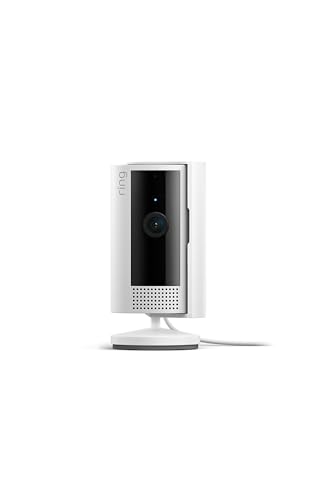
A single camera added to an existing smart-home setup, with one of the deepest, highest-rated review bases in the category. 1080p HD video with two-way talk and a physical privacy cover. Plug-in power means nothing to recharge.
Why You Should Get This
If you want one well-reviewed camera rather than a whole-home sensor system, this is the pick.
Benefits
- Largest review base of any indoor camera tracked here.
- Simple, single-device purchase.
- Physical privacy cover.
Pros and Cons
- Massive, trustworthy review base.
- Much lower price than a full system.
- Simple plug-in setup.
- Recorded clip history needs a Ring subscription.
- No door/window sensors or professional monitoring.
- One camera only, not whole-home coverage.
Features
- 1080p HD, two-way talk.
- Physical privacy cover.
- Plug-in power.

A complete door/window/motion sensor system with optional professional monitoring, backed by a deep base of owner ratings. It includes an 8-piece wireless sensor kit covering multiple entry points from one purchase, with no long-term contract required.
Why You Should Get This
If you want whole-home sensor coverage and the option of professional monitoring, this is the pick.
Benefits
- 8-piece kit covers multiple entry points from one purchase.
- Optional 24/7 professional monitoring, no contract required.
- Higher star rating than most whole-home systems.
Pros and Cons
- Whole-home coverage in one kit.
- No long-term contract required.
- Strong review base for a monitored system.
- Higher price than a single Ring camera.
- Professional monitoring carries a monthly fee if chosen.
- Not primarily a video camera product.
Features
- 8-piece wireless sensor kit.
- Optional 24/7 professional monitoring.
- No contract required.

A third option worth knowing about if you want the front door covered specifically: one of the most-reviewed video doorbells on Amazon, with one of the deepest, highest-rated review bases we track. Its head-to-toe view shows the package on the mat.
Why You Should Get This
If the front door specifically is your priority rather than whole-home sensors, this is the alternative worth comparing.
Benefits
- One of the deepest review bases of any video doorbell.
- Head-to-toe view shows the whole doorstep.
- No wiring required.
Pros and Cons
- Largest, most trustworthy review base of the three.
- Visual verification a sensor-only system lacks.
- No wiring required.
- Recorded clip history needs a Ring subscription.
- No door/window sensor coverage.
- One device only, not whole-home.
Features
- Head-to-toe 1:1 view.
- Removable battery or hardwiring.
- Two-way talk.
Representative Products Compared
| Product | Best for | Buy |
|---|---|---|
| Ring Indoor Cam | Ring pick (single device) | Price |
| SimpliSafe 8-Piece Wireless Home Security System | SimpliSafe pick (whole-home system) | Price |
Where the Real Differences Are
Product category. Ring is camera-first. SimpliSafe is sensor-first, with entry-point detection (doors, windows) that a camera alone cannot replicate — a camera sees an intruder after they’re already inside the frame; a door sensor alerts the moment the door opens.
Professional monitoring. SimpliSafe’s whole business model centers on optional 24/7 professional monitoring that can dispatch police or fire services. Ring offers 24/7 professional monitoring for Ring Alarm through its Ring Pro plan, but its alarm business is younger than SimpliSafe’s, which dates to 2006.
Installation. Both are largely DIY and wireless. SimpliSafe’s system involves placing more individual components (sensors on each door/window) versus Ring’s single-camera-per-position approach.
Ecosystem breadth. Ring has the larger current camera and doorbell lineup for buyers who specifically want video coverage across many positions. SimpliSafe’s camera lineup is comparatively thin.
Video Quality and Camera Coverage
Ring's whole product line is built around video — HD recording (1080p on the Indoor Cam, up to 4K on its newest Pro models), two-way talk, and an app designed for scrubbing through footage. SimpliSafe's SimpliCam exists as a secondary feature of an alarm-first system, and it isn't the part of SimpliSafe owners rate most highly. If your primary goal is visual verification — seeing who's at the door, checking the driveway, reviewing a delivery — Ring's dedicated cameras are the stronger match. If your goal is knowing whether a door or window has opened, video quality is beside the point.
Sensors and Entry-Point Detection
This is SimpliSafe's structural advantage and the one a camera-only setup cannot fully replicate. A door or window sensor triggers the instant the entry point opens, before an intruder is ever in frame. Ring's cameras rely on motion detection within the lens's field of view, which means the camera has to actually see movement to alert you — useful for a porch or driveway, less useful for the back window a camera doesn't happen to cover. SimpliSafe's 8-piece kit spreads sensors across multiple doors and windows from a single purchase, which is architecturally a different approach to coverage than adding cameras one position at a time.
Power and Installation
Both systems are designed for DIY self-installation with no technician visit required. Ring's cameras mount with two screws or a magnetic base and pair over WiFi in minutes, running on either plug-in power or a rechargeable battery depending on the model. SimpliSafe's kit involves more individual pieces — door and window sensors, a motion detector, a keypad and a base station — each mounting with adhesive or a simple screw, and the whole kit is typically running within an hour. Neither requires drilling into a wall stud for the base install.
Monitoring, Alerts and Emergency Dispatch
SimpliSafe's core business is built around optional 24/7 professional monitoring: if a sensor trips, the monitoring center can attempt verification and dispatch police, fire or medical services. Ring offers comparable 24/7 professional monitoring for Ring Alarm through its Ring Pro plan, though its alarm business has a shorter track record than SimpliSafe's, which was founded in 2006. Without a monitoring plan, both systems fall back to app notifications and a local siren rather than third-party dispatch, so the alert still reaches you — it just doesn't reach a monitoring center or first responders on its own.
App and Ecosystem
Ring's app is built for camera review first, with alarm functionality (Ring Alarm) available as a separate add-on system inside the same app ecosystem. SimpliSafe's app is built around the sensor system, arming and disarming, and the SimpliCam sits inside that same experience rather than being the app's main focus. Ring has the broader accessory ecosystem overall — doorbells, spotlights, floodlights, chimes — while SimpliSafe's ecosystem is narrower and more tightly focused on the alarm-and-sensor use case.
Ring vs SimpliSafe Cost and Who Should Buy Which
A single Ring camera costs meaningfully less upfront than SimpliSafe's multi-piece kit, which makes sense given they solve different problems — one camera versus whole-home sensor coverage. Choose Ring if you want visual coverage of one or two specific positions and are comfortable adding devices individually over time. Choose SimpliSafe if you want entry-point detection across multiple doors and windows from one purchase, with the option of professional monitoring and dispatch. Many households ultimately run both, using Ring for the positions they want to see and SimpliSafe for the entry points they want alarmed. A renter weighing both should also check lease terms before committing to either — both brands' mounts are largely reversible, but a monitored alarm plan is a recurring cost worth confirming makes sense for a property you may not stay in long-term.
Winner by Use Case
You want video coverage of specific positions (door, driveway, yard): Ring.
You want a whole-home alarm system with entry-point sensors and optional professional monitoring: SimpliSafe.
You rent and want no permanent installation: Ring’s battery cameras are generally easier to remove without a trace; some SimpliSafe sensors use adhesive mounts that are also renter-friendly.
You want both a camera AND entry-point sensors: many households genuinely run both systems together rather than choosing one — they solve different parts of the same problem.
Read More
See Ring cameras compared side by side for the full Ring lineup, Ring cost versus value for the subscription math, and security camera vs monitored alarm system for the broader decision this comparison sits inside.
Going Deeper: How Entry Sensors Differ From Camera Motion Detection
A door or window sensor is a simple, two-part device. SimpliSafe’s entry sensor guide describes a sensor and a magnet: when they are lined up within two inches of each other, the system knows the door or window is closed, and when they move more than two inches apart, it registers an opening. There is no picture to interpret, which is why an entry sensor reacts the instant a door moves, whether or not anyone is in view. The guide also covers adhesive mounting, which is part of why these kits install without tools.
Camera motion detection has more variables. Ring’s motion zones guide gives a standard maximum detection range of 30 feet (larger objects such as vehicles can still trigger alerts from farther away), says moving trees, sunlight, reflections or shadows can trigger unwanted alerts, and lets you draw up to three motion zones per device to focus on the areas that matter. That makes a camera excellent for seeing who is on the porch, but it can only report what passes through its field of view.
Sensors have their own weak point: people. A U.S. Department of Justice–funded guide, False Burglar Alarms (2nd edition, 2007), names user errors — wrong keypad codes, a door or window left open when the alarm is set, roaming pets — among the main causes of false alarms, and reports that between 94 and 98 percent of alarm calls are false. That is why monitored plans try to verify an alarm before dispatch; SimpliSafe’s plan page pairs 24/7 police, fire and medical dispatch with Active Guard outdoor protection on its upper tiers. Adding a camera to a sensor system gives a monitoring center, or you, something to look at when a sensor trips.
Verdict
Don’t treat this as a straight head-to-head — treat it as two different tools for two different jobs. Ring answers "who is at my door." SimpliSafe answers "is someone breaking in, and can help be dispatched." A lot of the strongest home setups on this site use elements of both rather than picking a side.
Sources & References
- What are the residential monitoring plan options? — SimpliSafe
- SimpliSafe press room — SimpliSafe
- Ring Pro plan — Ring
- Ring subscription plan changes in 2026 — Ring
- Indoor Cam (2nd Gen) tech specs — Ring
- Ring unveils first-ever 4K security cameras — Amazon
- Entry Sensor overview and installation guide — SimpliSafe
- Using Motion Zones for Cameras and Doorbells — Ring
- False Burglar Alarms, 2nd Edition (Problem-Oriented Guides for Police No. 5) — U.S. Department of Justice, COPS Office