
Affiliate Disclosure: Some links on this page are affiliate links. As an Amazon Associate, we earn from qualifying purchases — at no extra cost to you. We do not buy, install, or physically handle the cameras we cover; our rankings come from aggregated owner reviews, ratings and expert consensus. Commissions never change our verdicts. We're reader-supported: commissions fund hosting, research and updates, so if a guide helped, buying through our links keeps it going. How we rank · full disclosure.
Short version: outdoor security lighting means motion-activated lights with no camera and no recording — pure illumination and deterrence. Solar models install anywhere with a few hours of direct sun and no wiring; hardwired models connect to an existing outdoor fixture and never depend on sun exposure or battery charge. As a rough guide, doorways and entries do well with about 1,500-2,500 lumens, a general yard or typical driveway with about 2,000-4,000, and only a large driveway needs 7,500-9,000.
How we work: we do not buy, install or physically handle these lights. Every ranking here comes from aggregated owner reviews, star ratings weighted by review volume, and expert consensus. Method on how we rank; funding on our affiliate disclosure. Ready for models? Go to best motion sensor light for the full ranked field.
In Plain English
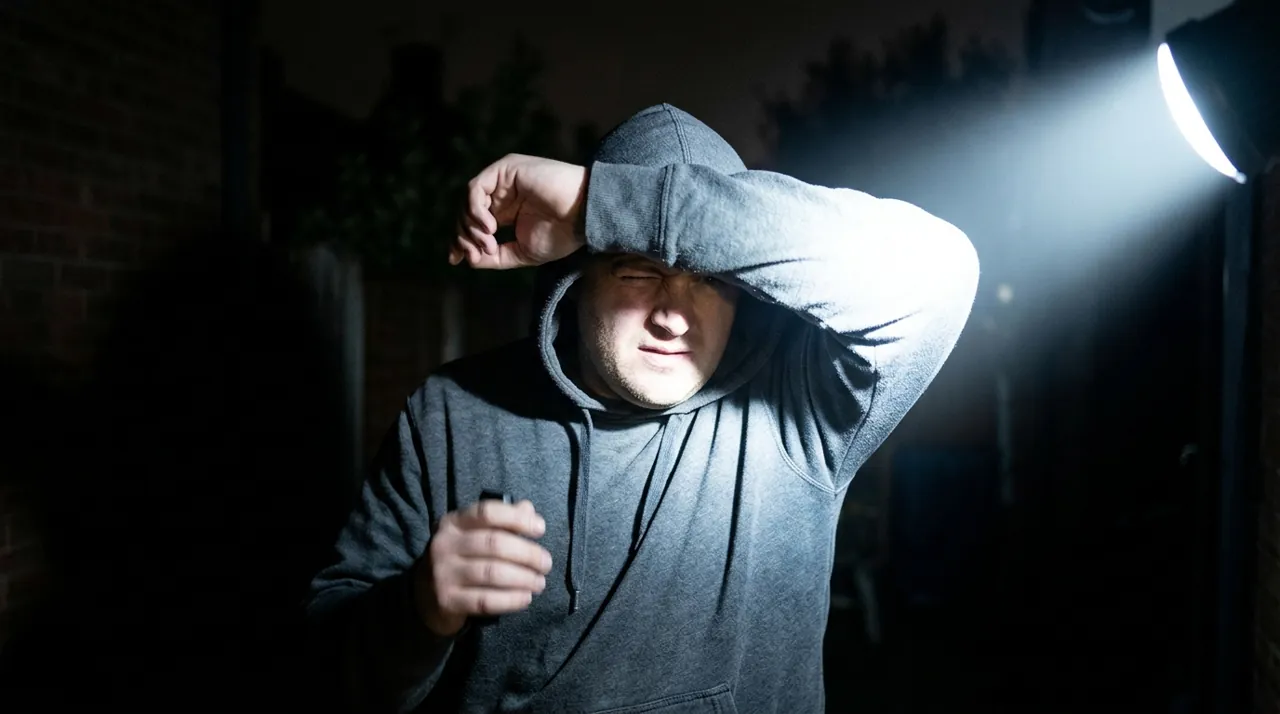
A security light is an outdoor light that switches on by itself when something moves nearby. It has no camera and records nothing. Its job is to take away the darkness a sneaky visitor is counting on, a bit like someone flicking on the hallway light when they hear a noise.
Why it matters: a light that snaps on suddenly tells anyone nearby that the house is paying attention, and it helps you and your neighbors see. You'll choose between solar (a small panel charges a battery by day) and hardwired (connected to your home's electricity). The one thing to decide first is where it's going. No wiring there? Go solar, as long as the spot gets a few hours of direct sun. Wiring already there? Hardwired is the more reliable choice.
Top 3 Recommended Security Lights

The LEPOWER Hardwired LED Security Light holds the highest star rating of any security light tracked on this site, from a deep base of owner ratings. It delivers 40W and 4,000 lumens through a hardwired connection with dual adjustable heads, so it never depends on sun exposure or battery charge. Owners consistently rate it as reliable, always-ready coverage for a driveway or side entrance. It is a lighting fixture only, with no camera or recording capability.
Why You Should Get This
If you want permanent, always-ready illumination with no sun or battery dependency, and the highest-rated security light tracked on this site, this is the default pick.
Benefits
- Highest star rating of any security light tracked on this site.
- Hardwired, never depends on sun or battery charge.
- Dual adjustable heads for flexible coverage.
Pros and Cons
- Massive review base backing the rating.
- Reliable year-round, no recharge needed.
- Low price for a hardwired fixture.
- Needs an existing wired fixture or electrician to install.
- No camera or recording, illumination only.
- 4,000 lumens is modest next to higher-output models.
Features
- 40W, 4,000 lumens.
- Hardwired connection.
- Adjustable dual heads.

The LUTEC 80W delivers 9,000 lumens through a hardwired 4-head design, more than double the output of the entry-level LEPOWER, for larger driveways or yards needing wider, brighter coverage. It holds a solid rating from a deep review base, with a fully adjustable motion sensor. Owners consistently cite the raw brightness as the reason they upgraded from a dimmer fixture. As with any hardwired light, it needs an existing outdoor fixture or an electrician to install.
Why You Should Get This
If one dimmer light isn’t covering a wide driveway or yard adequately, this is the high-output upgrade.
Benefits
- More than double the lumen output of the entry-level pick.
- 4-head design spreads light across a wider area.
- Adjustable motion sensor settings.
Pros and Cons
- Genuinely bright, covers large areas.
- Strong owner rating for a high-output fixture.
- 4-head design reduces harsh shadowing.
- Requires hardwiring, same install commitment as any hardwired light.
- Smaller review base than the entry-level LEPOWER.
- Can create glare if aimed carelessly toward a neighbor.
Features
- 80W, 9,000 lumens.
- Hardwired, 4-head design.
- Adjustable motion sensor.

Aootek’s solar motion lights hold one of the deepest review bases of any solar security light tracked on this site, backed by a solid owner rating, sold as a 6-pack for whole-property coverage with no wiring at all. Each light runs on solar power, suiting a shed, fence line or detached structure with no electrical access. Owners consistently value the multi-pack format for covering several positions from a single purchase. Performance depends on adequate daily sun exposure to the panel.
Why You Should Get This
If wiring isn’t an option and you want to light several positions around a property at once, this is the well-evidenced solar route.
Benefits
- No wiring required anywhere it’s mounted.
- Sold as a 6-pack, covers multiple positions in one purchase.
- One of the deepest review bases in solar lighting.
Pros and Cons
- Massive, well-established review base.
- Multi-pack value for whole-property coverage.
- Installs anywhere with sun exposure, no electrician.
- Performance depends on daily sun exposure.
- Lower lumen output than hardwired options.
- Battery-based, not continuous like a hardwired fixture.
Features
- 120 LED, solar powered.
- Motion sensor with 3 lighting modes.
- 6-pack for multi-position coverage.
Solar vs Hardwired: The Core Decision
Solar security lights need no wiring at all — mount, angle the panel toward the sun, done. They suit sheds, fence lines, detached structures and any position without existing electrical access, and the best-reviewed models in this category carry enormous review bases, reflecting how well-suited solar is to this specific use case. Hardwired lights connect to an existing outdoor junction box or fixture and never depend on sun exposure, battery charge or weather — the more reliable choice for a position you want lit every single night without exception, at the cost of needing existing wiring or an electrician.
Lumens and Coverage
How much light you need depends on the spot. The FTC explains that lumens measure brightness, so more lumens means a brighter light. These ranges are our rough guides, based on the output of the lights on this hub and owner reports, not a formal standard. For a doorway, back door or side gate, about 1,500-2,500 lumens is usually enough. For a general yard or a typical driveway, about 2,000-4,000 lumens. For a large or long driveway, higher-output hardwired lights of roughly 7,500-9,000 lumens suit the job, but they risk glare and light-spill complaints if aimed carelessly across a property line. Match brightness to the actual area covered rather than buying the highest lumen count available.
How Motion Sensors Actually Work
Most outdoor security lights with a motion sensor use a PIR (passive infrared) sensor, which detects the heat signature of a moving body crossing its field of view, rather than detecting motion the way a camera's video analysis does. That's why a PIR sensor can trigger on a pet or a car passing on the street, but generally ignores stationary heat sources like a parked vehicle's engine once it's cooled. Sensitivity, detection range and time-delay before the light switches off are usually all adjustable, letting an owner tune the fixture to their specific position — a busy street-facing light needs different settings than one covering an enclosed backyard. Getting these settings right is the difference between a light that reliably announces a real approach and one that triggers so often on false positives that a household starts ignoring it entirely.
Motion Sensor Placement and Aim
Height and angle matter as much as lumen output. Most manufacturers recommend roughly 8-10 feet of mounting height for a typical residential PIR sensor, balancing a wide, useful detection zone against the light being easy to reach and tamper with if mounted too low. Aiming the fixture downward toward the area actually needing coverage, rather than outward across a property line, is the single biggest factor in avoiding glare and light-spill complaints from neighbors. A light angled directly at a neighbor's window or a passing street, even unintentionally, is one of the more common sources of neighborhood disputes over security lighting — a five-minute adjustment after installation is worth the effort.
Does Motion Lighting Actually Deter Break-Ins?
A light that snaps on the instant someone approaches is one of the most consistently cited deterrents in home security research and owner reviews. It signals attention to anyone nearby and removes the cover of darkness an opportunistic intruder typically relies on. It isn't a guarantee against a genuinely determined intruder, the way a monitored alarm or a camera with active response might be, but as a low-cost, no-subscription first line of defense against the far more common opportunistic scenario, motion lighting consistently ranks as one of the better value additions to a property. Pairing a security light with a camera — either a dedicated floodlight camera or a separate camera covering the same area — adds an evidence trail on top of the deterrent effect a light alone provides.
Maintenance: Solar Panels vs Hardwired Bulbs
Solar security lights need periodic panel cleaning — dust, pollen and grime gradually reduce how much charge the panel collects each day, and a noticeably dimmer light or shorter runtime is often simply a dirty panel rather than a failing unit. Most solar lights use long-life LEDs that rarely need bulb replacement, so panel upkeep is the main ongoing maintenance task. Hardwired lights need no panel cleaning, but a traditional bulb-based fixture will eventually need a bulb replacement, while an LED hardwired light shares the same long-life advantage as solar models. Either format is meaningfully lower-maintenance than an old-style incandescent floodlight that needed frequent bulb changes.
Going Deeper: What the Research Says About Lighting and Crime
The best modern evidence on lighting and crime comes from a randomized experiment in New York City. Researchers Aaron Chalfin, Benjamin Hansen, Jason Lerner and Lucie Parker worked with the city to randomly assign temporary streetlights to public housing developments between March and August 2016, then compared crime with developments that didn't get the extra lights. Their NBER working paper found that communities assigned more lighting saw sizable reductions in crime, with nighttime outdoor index crimes falling by at least 36 percent even after accounting for crime shifting to nearby areas.
That study was about street lighting in dense public housing, not a motion light on a single house, so it shouldn't be stretched too far. But it shows the basic mechanism is real: changing how visible a place is at night changes behavior. The ASU Center for Problem-Oriented Policing's street lighting guide adds an important nuance. It says glare and high light levels that make it harder for people to see can increase fear, whereas uniform lighting that eliminates both glare and dark shadows can lead to increased feelings of security. Brighter is not automatically better, which is why this hub keeps steering you toward matched brightness and careful aim.
Timing is the other limit. The same center's burglary guide reports that around 60 percent of reported residential burglaries happen during the day, when homes are unoccupied, and notes that lighting has no impact on those daytime break-ins. At night, it observes, poor lighting on a non-secluded home makes a burglar less visible to anyone who might notice them.
The practical reading is that a security light is a good night-time layer, not a whole-day solution. It works best where it makes an approach visible to you, your neighbors or a camera. For daytime protection, locks, a real camera and the occupancy cues covered on our security deterrents hub do the heavy lifting.
More Security Lights Worth Knowing About

Best for a mid-output hardwired light between the entry-level and high-output picks.

Best for an alternative solar light with a very deep review base.

Best for angling a security light precisely under an eave or soffit.
How We Rank
Every product ranked on this hub is scored the same way the rest of the site is: aggregated owner star ratings weighted by review volume, recurring themes in negative reviews, and specification differences owners raise unprompted. We never buy, install or physically test these lights, and every star rating and review count comes from licensed Amazon data. Full method on how we rank.
Motion-Only vs Dusk-to-Dawn Modes
Most security lights ranked on this hub default to motion-only activation — the light stays off until the sensor detects movement, which conserves energy and keeps the sudden brightness change itself part of the deterrent effect. Some hardwired LED security light models also support a dusk-to-dawn mode, staying lit continuously from sunset to sunrise regardless of motion, which trades the deterrent surprise of a light snapping on for constant, predictable illumination across an entire area all night. A position where continuous visibility matters more than a startling motion trigger — a shared walkway or a well-used entrance — may suit dusk-to-dawn better, while a driveway or fence line generally benefits more from motion-only mode's element of surprise.
Looking for a Camera Instead of Just a Light?
This hub covers lighting fixtures only — no camera, no recording. If you want motion-activated light combined with video, see the floodlight cameras hub instead.
Sources & References
- Reducing Crime Through Environmental Design: Evidence from a Randomized Experiment of Street Lighting in New York City — National Bureau of Economic Research
- Improving Street Lighting to Reduce Crime in Residential Areas — ASU Center for Problem-Oriented Policing
- Burglary of Single-Family Houses (Problem-Specific Guide) — ASU Center for Problem-Oriented Policing
- PIR Motion Sensors FAQ 2025 — Panasonic Industry
- LED Basics — U.S. Department of Energy
- Protecting Night Skies at Home — National Park Service