
Affiliate Disclosure: Some links on this page are affiliate links. As an Amazon Associate, we earn from qualifying purchases — at no extra cost to you. We do not buy, install, or physically handle the cameras we cover; our rankings come from aggregated owner reviews, ratings and expert consensus. Commissions never change our verdicts. We're reader-supported: commissions fund hosting, research and updates, so if a guide helped, buying through our links keeps it going. How we rank · full disclosure.
The short version: Ring and Blink are both owned by Amazon, which makes this less a "which company" question and more a "which tier" question. Ring’s devices consistently rate higher (the Indoor Cam holds one of the deepest, highest-rated review bases we track) and its app is widely regarded as the fastest and most reliable for notifications in this entire category. Blink’s Outdoor 4 rates lower, across a deep review base, but undercuts Ring meaningfully on both hardware and subscription price, and quotes the longest battery life (2 years) of any camera covered on this site.
In Plain English
Ring and Blink are both owned by Amazon, and both make cameras and doorbells that alert your phone when something moves. The real question is which price level suits you.
Think of them as two models of car from the same maker. Ring is the better-finished model: owners say its app alerts them faster and more reliably, and it has more devices to add later. Blink is the budget model: cheaper to buy, cheaper each month, and its outdoor camera runs up to two years on AA batteries. The biggest difference is storage. Ring needs a paid plan (a monthly subscription) before it saves any video. Blink can save clips for free on a USB stick plugged into its Sync Module 2 (a small plug-in hub). Decide whether you want polish or the lowest ongoing cost.
Top Picks: Ring, Blink and an Alternative
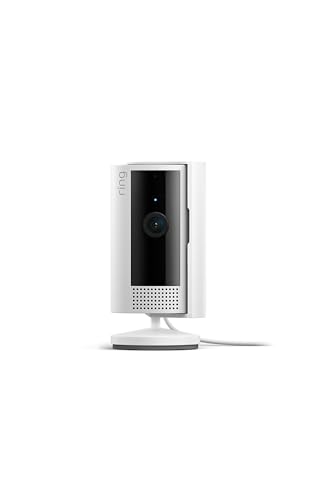
Ring’s clearest, most consistently reported advantage: one of the highest ratings and deepest review bases we track, and the fastest, most reliable notification pipeline of any camera app tracked on this site. 1080p HD video with two-way talk and a physical privacy cover. Plug-in power means nothing to recharge.
Why You Should Get This
If notification speed and app polish matter most, this is the most review-validated way to get it.
Benefits
- Fastest, most reliable notifications in this comparison.
- Massive, trustworthy review base.
- Physical privacy cover.
Pros and Cons
- Largest review base of any indoor camera tracked here.
- Widely regarded as the most polished app.
- Simple plug-in setup.
- Recorded clip history needs a Ring subscription.
- 1080p rather than 2K.
- No free local storage (Ring Edge needs a paid plan).
Features
- 1080p HD, two-way talk.
- Physical privacy cover.
- Plug-in power.

Blink generally undercuts Ring on hardware price and has a low-cost single-camera plan, with the longest quoted battery life (two years) of any camera on this site. It also supports genuinely free local backup via a Sync Module — no subscription required for that path, unlike any current Ring device.
Why You Should Get This
If price and a genuinely no-fee storage option matter more than best-in-class polish, this is the pick.
| Resolution | 1080p HD (1920x1080) |
| Field of view | 143° |
| Power | 2x AA lithium batteries, up to 2-year life |
| Night vision | Infrared |
| Audio | Two-way audio |
| Install | Wireless, wall-mount bracket |
Benefits
- Longest quoted battery life in this comparison.
- Genuinely free local storage via Sync Module.
- Cheaper subscription than Ring.
Pros and Cons
- Best value on hardware and subscription.
- Real no-subscription storage path.
- Amazon ecosystem integration.
- Lower star rating than Ring.
- App less polished than Ring’s.
- 1080p resolution.
Features
- Two-year rated battery life.
- Free local storage via Sync Module.
- 1080p HD video.

A third option worth knowing about if neither Amazon brand fits: 2.5K resolution with color night vision at an entry-level price, recording to a local microSD card with no subscription required at all. Rated for indoor or outdoor use, unusual at this price point.
Why You Should Get This
If you want sharper resolution than either Amazon brand with zero required subscription, this is the alternative worth comparing.
Benefits
- Sharper 2.5K resolution than either Ring or Blink here.
- Genuine no-subscription local recording.
- Indoor/outdoor rated.
Pros and Cons
- Best resolution-to-price ratio of the three.
- No subscription required for core recording.
- Built-in spotlight and siren.
- Smaller ecosystem than Ring or Amazon.
- MicroSD card sold separately.
- Cam Plus needed for smart detection.
Features
- 2.5K, color night vision.
- Local microSD recording.
- Indoor/outdoor rated.
Head-to-Head Comparison
Where the Real Differences Are: Rating, Resolution, Subscription and Battery Life
Notification speed and app polish. This is Ring’s clearest, most consistently reported advantage across owner reviews — alerts arrive faster and more reliably, and the app itself is described as more mature. Blink’s app is simpler and does the job, but it’s not competing on this dimension.
Ring vs Blink subscription cost. Blink’s Basic plan costs $3.99/month for one camera and its Plus plan $11.99/month for unlimited cameras at one address (US pricing since October 8, 2025, according to Blink). Ring’s equivalents are Ring Solo and Ring Multi, so compare current prices for your camera count; even small monthly differences compound over a few years.
Local storage. Blink supports genuinely free local storage via a Sync Module 2 and a USB drive — no subscription required for that path. Ring’s only local option, Ring Edge, works with a Ring Alarm Pro base station and a paid Ring Pro plan, so there is no free path to recorded history on Ring.
Battery life. Blink Outdoor 4 quotes up to 2 years on default settings from two AA lithium batteries, the longest claim in this category. Ring’s battery devices vary and are generally reported as needing more frequent recharging in busy locations.
Resolution and video quality. Both are 1080p on their comparable outdoor models — neither brand has a meaningful edge here.
App Reliability and Notifications in Everyday Use
Ring's app reputation for speed isn't just marketing — it's one of the most consistently repeated points across independent owner reviews for this brand specifically. Alerts tend to arrive within a second or two of motion, and live view connects quickly when you tap in. Blink's app is functional and covers the same core actions, but owners more often describe a short delay before an alert lands, and live view can take a moment longer to connect. Ring cameras need no separate hub, while Blink’s free local-storage path depends on a Sync Module 2 with a USB drive plugged in.
Who Should Look Elsewhere: Local Storage and the Sync Module
If you refuse to pay any subscription at all and want full recorded history for free, neither Ring nor Blink is the ideal starting point. Blink's Sync Module gets closer, but Ring has no free path whatsoever. A buyer in that position is better served by a brand offering genuinely free local recording as standard, like Reolink's PoE systems or select Wyze cameras with a microSD slot.
Night Vision
Night vision differs by model rather than by brand. Ring lists Color Night Vision on the Ring Indoor Cam (2nd Gen) compared here, while Blink Outdoor 4 uses standard night vision; Blink’s Mini 2 adds a built-in spotlight for night view in color. If richer color night vision outdoors matters to you more than price or notification speed, see the Ring-versus-Arlo breakdown for a brand that does offer it on select models.
Installation
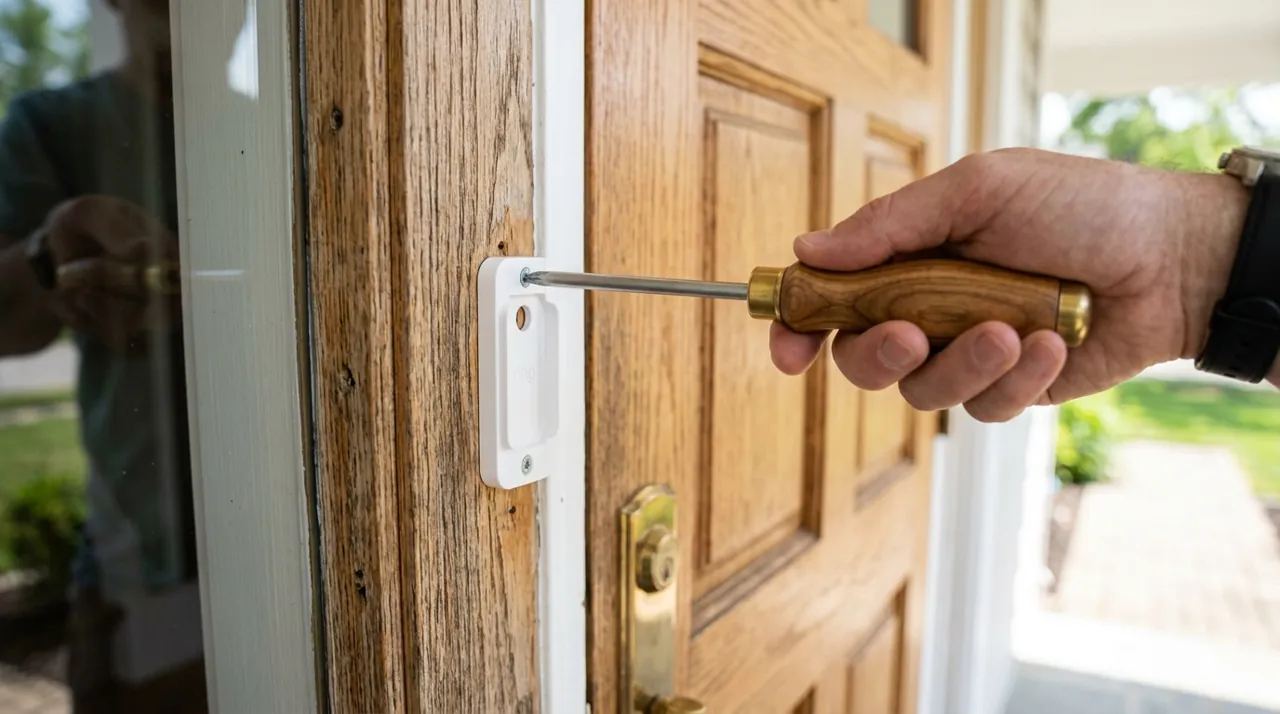
Both brands are built around wire-free, self-install hardware: mount the bracket, insert the battery, pair with the app. Neither requires an electrician or a professional installer for the standard setup. Ring's outdoor cameras and doorbells and Blink Outdoor 4 install in essentially the same way — a same-afternoon job for most doors and eaves.
Ecosystem, Alexa and Accessories
Ring has the broader current device lineup: doorbells, floodlights, indoor and outdoor cameras, and standalone alarm hardware, all in one app. Blink's catalogue is smaller — indoor, outdoor and doorbell cameras — but stays within the same Amazon-owned family and works with Alexa the same way Ring does. If you're planning to expand into several devices over time, Ring's wider current catalogue gives you more to add without leaving the ecosystem.
Common Use Cases
Ring suits a buyer who wants the most polished day-to-day experience and is willing to pay more for it, across a whole-property, multi-camera setup. Blink suits a genuinely budget-conscious buyer, a rental property, or anyone who wants a real no-subscription storage path via the Sync Module. Both suit a renter or homeowner who wants no wiring project for the standard battery models.
Price and Value
Blink generally undercuts Ring on hardware price across comparable device pairs, and its $3.99/month single-camera Basic plan is a low entry point; for multi-camera plans, compare current pricing because the gap is narrower. Ring's higher price buys a more polished app and a larger, higher-rated review base. Neither is the cheapest option in this whole category overall — Wyze and eufy typically undercut both — but between these two Amazon-owned brands specifically, Blink is consistently the value pick.
Blink vs Ring Pros and Cons: Who Should Buy Which
Choose Ring if the smoothest day-to-day experience is worth paying more for, on both hardware and subscription, and you want the largest, most consistently praised app in this category, plus the broadest current device lineup. Choose Blink if price and a genuinely no-fee storage option matter more than best-in-class polish, and a lower star rating is an acceptable tradeoff for paying less throughout.
Winner by Use Case
Best notifications and overall polish: Ring. This is the least disputed point in owner reviews across both brands.
Best value / lowest total cost: Blink, mainly on hardware price, its low single-camera plan and its free local-storage option.
Best for avoiding a subscription entirely: Blink, via its free local-storage backup option — Ring has no equivalent.
Best for longest battery life: Blink, with its 2-year quoted figure.
Best for a large, mature ecosystem: Ring, with a broader current device lineup and deeper accessory support.
Read the Full Reviews
See our individual reviews for Ring Indoor Cam and Blink Outdoor 4, or the full brand lineups at Ring’s camera lineup and best Blink cameras.
Going Deeper: How the Two Subscription Models Are Built
Both brands split their plans by camera count, but they draw the lines differently. Blink’s plan-change notice says its U.S. prices rose on October 8, 2025, the first increase since 2021: the Basic plan to $3.99 a month or $39.99 a year, and the Plus plan to $11.99 a month or $119.99 a year. Plus covers unlimited eligible devices and adds an extended warranty and 10 percent off Blink devices on Amazon, while even Basic includes features such as Blink Moments, which combines motion events into a single clip. New customers still get a 30-day no-cost trial.
Ring’s structure is similar in shape. Ring’s subscription guide describes Ring Solo for a single device and Ring Multi for every Ring device at one location, with recorded videos kept for up to 180 days. Without a plan, Ring says you can only watch live and respond to real-time alerts. Ring’s plan-management page adds that subscriptions auto-renew until cancelled and that when a plan ends you lose access to all of your recorded videos, so it pays to download anything important before cancelling.
The structural difference is Blink’s escape hatch. Blink’s storage options page lists cloud storage of up to 60 days with a plan, or local storage with no subscription at all: clips saved to a USB drive on a Sync Module 2, or to a microSD card on a Sync Module XR. Ring’s only local route, Ring Edge, needs a Ring Alarm Pro base station and a paid plan. Over several years, that choice between renting storage and owning it separates the two tiers more than any single hardware spec does.
Verdict
Choose Ring if the smoothest day-to-day experience is worth paying more for, on both hardware and subscription. Choose Blink if price and a genuinely no-fee storage option matter more than best-in-class polish. Because both are Amazon-owned, you’re not choosing between two philosophies of camera design — you’re choosing a price tier within the same company’s portfolio.
Sources & References
- Blink subscription plan changes starting October 8, 2025 — Blink
- Blink Outdoor 4 technical specifications — Blink
- Local storage with Sync Module 2 — Blink
- Blink Mini 2 FAQ — Blink
- Indoor Cam (2nd Gen) tech specs — Ring
- Ring Pro plan — Ring
- Understanding Ring Protect subscriptions — Ring
- Subscribe to and manage a Ring plan — Ring
- Blink storage options — Blink