
Affiliate Disclosure: Some links on this page are affiliate links. As an Amazon Associate, we earn from qualifying purchases — at no extra cost to you. We do not buy, install, or physically handle the cameras we cover; our rankings come from aggregated owner reviews, ratings and expert consensus. Commissions never change our verdicts. We're reader-supported: commissions fund hosting, research and updates, so if a guide helped, buying through our links keeps it going. How we rank · full disclosure.
Short version: a smart lock replaces or retrofits your deadbolt with keypad, fingerprint or app-based entry, removing the need for a physical key while adding remote access, guest codes and activity logs. Most buyers should start with a keypad-equipped deadbolt from an established brand — it is the most universally reliable entry method, and nearly every well-reviewed lock includes one as a fallback even when fingerprint or app entry is the headline feature.
How we work: we do not buy, install or physically handle these locks. Every ranking here comes from aggregated owner reviews, star ratings weighted by review volume, and expert consensus. Method on how we rank; funding on our affiliate disclosure. Ready for models? Go to best smart lock for the full ranked field.
In Plain English
A smart lock is a deadbolt you can open with a code, a fingerprint or your phone instead of (or as well as) a key. Most are made to fit the hole your current deadbolt already uses, so fitting one is like changing a light fixture rather than rebuilding the door.
Why it matters: no more lost keys, and you can give a code to a guest or cleaner and delete it later. Connected models also let you lock up from anywhere and see who came in. The one thing to do first is pick how you want to get in. A keypad is the most dependable option, so choose a lock that has one even if you mainly plan to use a fingerprint or app.
What Are Smart Locks for a Door?
A smart lock is a deadbolt or door handle that adds an electronic entry method — a keypad code, a fingerprint, an app, or some combination — on top of, or instead of, a traditional key. Nearly every one of the smart locks for home use sold in the US is a retrofit design, built to fit the exact same backset and door-thickness range as the deadbolt already on your door, so installing one is a same-afternoon hardware swap rather than a carpentry project. The electronics add convenience — no key to lose, codes you can hand out and revoke without a locksmith, and on connected models, remote access and an activity log — while the certified deadbolt hardware underneath still does the actual work of resisting forced entry.
Top 3 Recommended Smart Locks
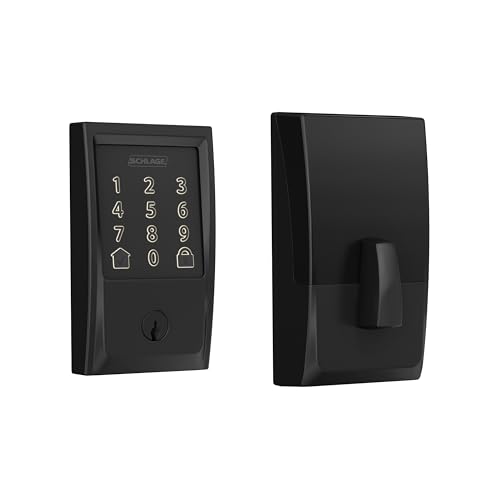
The Schlage Encode carries the deepest review base of any smart lock tracked on this site, backed by one of the highest ratings we track. Built-in WiFi means remote lock/unlock and activity monitoring with no separate bridge accessory required, unlike many Bluetooth-only rivals. It supports keypad entry with up to 100 codes plus auto-lock and auto-unlock. Owners consistently rate the built-in WiFi as the reason they chose it over cheaper Bluetooth-only alternatives.
Why You Should Get This
If you want built-in WiFi with no extra hub purchase, backed by the deepest review base in the category, this is the default starting point.
Benefits
- Built-in WiFi, no separate bridge required.
- Deepest review base of any smart lock tracked on this site.
- Auto-lock and auto-unlock included.
Pros and Cons
- No bridge accessory needed for remote access.
- Up to 100 keypad codes.
- Largest, most trustworthy review base.
- Higher price than budget keypad-only deadbolts.
- WiFi connection draws more battery than Bluetooth-only locks.
- No fingerprint entry option.
Features
- Built-in WiFi.
- Keypad entry, up to 100 codes.
- Auto-lock and auto-unlock.

The TEEHO TE001 holds the highest star rating of any lock tracked on this hub, from a genuinely simple keypad deadbolt (TEEHO lists no ANSI/BHMA grade) with no app, WiFi or subscription involved. A backlit keypad makes night entry easier without a phone. A deep base of verified owner ratings backs a rating well above several smart-home-connected competitors. It is the pick for buyers who want reliable keyless entry without any of the connectivity complexity.
Why You Should Get This
If a code at the door is all you actually want, with no app to configure and no WiFi to troubleshoot, this is the highest-rated way to get it.
Benefits
- Highest star rating of any lock tracked on this hub.
- No app, WiFi or subscription required at all.
- Backlit keypad for reliable night entry.
Pros and Cons
- Simplest, most reliable entry method in this comparison.
- Fraction of the price of WiFi-connected locks.
- No connectivity to troubleshoot.
- No remote access or activity log.
- No fingerprint or app entry option.
- Codes must be set at the lock itself, not remotely.
Features
- Keypad deadbolt, up to 20 user codes.
- Backlit keypad.
- No app or subscription required.

The ULTRALOQ Bolt SE adds Matter over Thread compatibility to WiFi and app remote access, making it the pick for buyers already running a broader Matter-based smart-home setup. It includes keypad entry and holds a deep base of verified owner ratings at a solid rating. Owners consistently value the wider ecosystem compatibility over single-app-only competitors. It sits mid-price between the simplest keypad deadbolts and premium WiFi-native locks.
Why You Should Get This
If your smart home already runs on Matter or Thread and you want a lock that plugs into that same ecosystem, this is the natural fit.
Benefits
- Matter over Thread compatibility for broader smart-home integration.
- App remote access included.
- Strong review base for a newer connectivity standard.
Pros and Cons
- Matter/Thread support future-proofs the ecosystem choice.
- App remote access.
- Solid mid-tier pricing.
- Smaller review base than Schlage Encode.
- No fingerprint entry.
- Matter/Thread setup adds complexity for non-technical buyers.
Features
- Matter over Thread compatibility.
- App remote access.
- Keypad entry.
Types of Smart Locks: Deadbolt, Lever, Retrofit and Beyond
Most of what's sold for a home front door is a smart deadbolt — a retrofit replacement for the deadbolt above your existing handle, leaving the handle itself alone. A smart lever lock replaces the entire handle-and-latch assembly instead, more common on interior doors, offices or entries that specifically require a lever rather than a round knob for accessibility. Within deadbolts, the entry method varies: a keypad deadbolt uses a numeric code as its primary method, a fingerprint deadbolt adds a biometric sensor (almost always alongside a keypad backup), and a fully app-only or "smart-home-native" lock leans on a phone or ecosystem app as the primary control, with a key or code as fallback. Nearly every model in every category is a retrofit design built for a standard existing deadbolt hole, which is the detail that determines whether installation is a simple swap or a bigger project.
Keypad, Fingerprint or App: Choosing an Entry Method
A keypad is the most universally reliable method — no phone, no biometric sensor, just a code, and it’s the fallback built into almost every lock on this hub regardless of its headline feature. Fingerprint adds genuine convenience for the primary household but is worth pairing with a keypad backup, since sensors can misread wet, dirty or injured fingers. App-only control (via Bluetooth or WiFi) is the most convenient for remote access and guest codes but should not be your only entry method — a dead phone battery locks you out entirely without a physical backup.
WiFi vs Bluetooth vs Z-Wave/Matter
Built-in WiFi gives you remote lock/unlock and status checks from anywhere with no extra hardware, at the cost of higher battery draw than Bluetooth-only models. Bluetooth-only locks work reliably at the door and often cost less, but need a separate bridge accessory for remote access. Z-Wave and Matter locks integrate into a broader smart-home hub (SmartThings, Home Assistant, Apple Home) rather than connecting directly to your phone, which suits buyers already running one of those ecosystems.
How to Choose the Right Smart Lock
Start with entry method, since it drives everything else: if you mainly want to stop losing keys and don't care about remote access, a simple keypad-only deadbolt like the TEEHO TE001 covers that at the lowest price and complexity on this hub. If you want to check or control the door remotely, prioritize built-in WiFi (no bridge accessory needed) or confirm a bridge is included with a Bluetooth or Z-Wave model. If you're already running a Matter-based smart home, or Apple Home, Google Home or Alexa specifically, check ecosystem compatibility before price, since a lock that doesn't talk to your existing setup loses much of its connected value regardless of its rating. Finally, measure your door's backset and thickness against the specific listing before ordering — a mismatch is the single most common return reason across this category.
Installation Basics
Because nearly every smart lock on this hub is a retrofit design, installation follows the same general pattern: remove the existing deadbolt, confirm your door's backset (commonly 2-3/8" or 2-3/4") and thickness match the new lock's listed range, then mount the new hardware with a Phillips screwdriver — most owners finish in under an hour. Connected models add a pairing step (joining WiFi, Bluetooth or a smart-home hub) after the physical mount is done. Reviewers who run into trouble across this hub almost always point to a door that wasn't square, a deadbolt hole cut slightly off-standard, or an existing deadbolt that wasn't seated properly — not the new lock's own hardware. See the full how to install a smart lock guide for the complete step-by-step walkthrough.
Security Considerations
A reputable smart lock from an established brand encrypts its wireless communication and adds real protections a traditional deadbolt doesn't have, like a temporary lockout after several failed keypad attempts. That said, the electronics are only half the picture — a smart lock's physical build quality, and specifically its ANSI security grade, still determines how well it resists prying, drilling or forced entry, the same way it always has on a purely mechanical deadbolt. Buying from a known brand with a track record of firmware updates, checking for ANSI Grade 1 or Grade 2 certification, and treating a shared keypad code with the same care as a house key (not sharing it too widely, rotating it after a contractor or tenant moves on) do more for real-world security than any single connectivity feature.
Who Each Type Suits
A no-frills keypad-only deadbolt suits a first smart lock purchase, a second door, or a budget-conscious rental where WiFi and an app add cost without adding value. A WiFi-connected deadbolt suits a household that wants remote access, activity notifications and guest codes without needing a separate hub. A fingerprint deadbolt suits anyone who wants to unlock with a touch rather than remembering a code, provided a keypad or key backup is available for when a finger won't scan. A Matter or Z-Wave lock suits a household already invested in a broader smart-home ecosystem that wants the lock to show up as just another connected device rather than a standalone app. Landlords and short-term-rental operators generally want remote code scheduling above everything else — see best smart lock for Airbnb for picks built around that specific use case.
What Consumer Reports says: Consumer Reports' door lock buying guide separates smart locks into full replacements and retrofit models that swap only the interior half and keep your existing keys. It also tests locks against kick-in, drilling and picking attacks, and notes that a reinforced strike plate with 3-inch screws makes a real difference to how well a door resists force.
Going Deeper: What a Smart Lock's Security Actually Rests On
A smart lock has two kinds of security, and it helps to judge them separately. The first is physical: how well the bolt and its housing resist being forced. That's what the ANSI/BHMA grades measure. The Builders Hardware Manufacturers Association describes grades 1, 2 and 3, with grade 1 the highest, as progressive levels of performance benchmarks defined in each standard. Those standards include cycle, operational, strength, security and finish tests, and products are tested by independent laboratories. A manufacturer doesn't have to be a BHMA member to certify its products.
Residential locks can also carry a three-letter rating. Schlage explains that BHMA grades hardware A, B or C in three categories, security, durability and finish, where C is good, B is better and A is best, so AAA is the top result in all three. Security testing covers things like sledgehammer attacks and attempts to pull the lock from the door. A connected lock's app features have no bearing on either rating, which is why this hub keeps telling you to check the grade separately from the star rating.
The second kind of security is digital: who can reach the lock through your network or account. Here the Federal Trade Commission's guidance on connected devices is a solid checklist. It calls your router the key to privacy for connected devices and recommends changing its default admin username and password and turning on wireless encryption. For the lock itself, it recommends changing default credentials, not reusing passwords, turning on two-factor authentication if offered, using features like a passcode lockout, and keeping firmware updated.
Put together, a secure setup has a strong graded bolt, a door and frame that can hold it, and good account habits. A keypad-only lock skips the network layer entirely, which is part of its appeal. A connected lock adds convenience that's worth having, as long as you treat its app login with the same care as the key it replaces.
More Smart Locks Worth Knowing About

Best for a second-door lock with simple touchpad entry to match a smart front door.


How We Rank
Every product ranked on this hub is scored the same way the rest of the site is: aggregated owner star ratings weighted by review volume, recurring themes in negative reviews, and specification differences owners raise unprompted. We never buy, install or physically test these locks, and every star rating and review count comes from licensed Amazon data. Full method on how we rank.
More Options

Best for a premium touchscreen deadbolt with broad smart-home module compatibility.

Best for a household already running Google Home wanting tight native integration.
Best for a matching keypad-only deadbolt for a second door at low cost.
Looking for a Video Doorbell Instead?
A smart lock controls who gets through the door; a video doorbell shows you who’s there before they knock. The two pair well together but are different products — see the video doorbells hub if you’re after a camera rather than a lock.
Sources & References
- How to Choose the Best Door Lock for Your Home — Consumer Reports
- Product grade levels — Builders Hardware Manufacturers Association (BHMA)
- Understanding BHMA security grades — Schlage
- Securing Your Internet-Connected Devices at Home — Federal Trade Commission
- Matter: the foundation for connected things — Connectivity Standards Alliance
- Thread and IPv6 — Google Home Developers
- A Tale of Two Errors: Measuring Biometric Algorithms — National Institute of Standards and Technology