
Affiliate Disclosure: Some links on this page are affiliate links. As an Amazon Associate, we earn from qualifying purchases — at no extra cost to you. We do not buy, install, or physically handle the cameras we cover; our rankings come from aggregated owner reviews, ratings and expert consensus. Commissions never change our verdicts. We're reader-supported: commissions fund hosting, research and updates, so if a guide helped, buying through our links keeps it going. How we rank · full disclosure.
The short version: Ring and Nest both rate strongly, with Ring holding a modest edge, and the honest deciding factor for most buyers is which smart-home ecosystem they already run rather than a clear quality gap. Nest’s specific technical edge is on-device AI detection that works on its free tier; Ring requires a paid plan for any recorded history or smart detection at all.

In Plain English
Ring and Nest both make indoor cameras that plug into the wall and let you watch a room from your phone. Both are well rated. The biggest difference is which smart-home system they belong to.
It is a bit like choosing a phone: most people stick with the system they already use. Ring works best with Alexa (Amazon’s voice assistant). Nest works best with Google Home. Nest also does more for free. Its camera works out what it saw — a person, an animal or a vehicle — right inside the device (on-device detection), and keeps a few hours of recent clips without a plan. Ring shows you live video and alerts for free, but saves nothing until you pay for a plan (a monthly subscription). Nest’s picture also copes better with a bright window. Check which assistant is already in your home first.
Top Picks: Ring, Nest and an Alternative
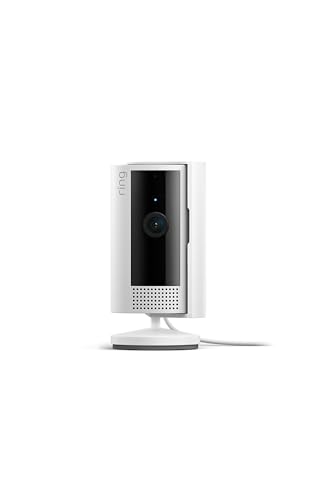
Alexa households and the largest review base in this category, backed by one of the highest ratings we track. 1080p HD video with two-way talk and a physical privacy cover. Plug-in power means nothing to recharge.
Why You Should Get This
If you run Alexa devices and want the most review-validated indoor camera, this is the pick.
Benefits
- Largest review base of any indoor camera tracked here.
- Fastest, most reliable notification pipeline.
- Physical privacy cover.
Pros and Cons
- Massive, trustworthy review base.
- Lower price than the Nest Cam.
- Widely regarded as the most polished app.
- Recorded clip history needs a Ring subscription.
- 1080p rather than Nest’s 2K HDR sensor.
- No on-device free detection like Nest.
Features
- 1080p HD, two-way talk.
- Physical privacy cover.
- Plug-in power.
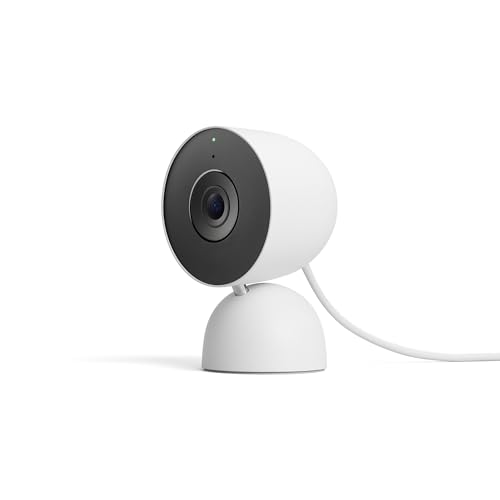
On-device AI detection that works even without a subscription, at an entry-level price and a solid owner rating. Up to 6 hours of free event video previews are included, and 2K HDR video handles bright windows and dark corners well.
Why You Should Get This
If you run Google Home and want free on-device detection with some included history, this is the pick.
| Resolution | Up to 1080p at 30fps |
| Field of view | 135° diagonal |
| Sensor | 2-megapixel color, HDR video |
| Zoom | 6x digital zoom |
| Power | AC wired |
| Connectivity | 2.4GHz and 5GHz WiFi |
| Storage | Up to 3 hours event history included |
Benefits
- On-device detection works with no subscription at all.
- Up to 6 hours of free event video previews.
- Strong Google Home integration.
Pros and Cons
- Genuinely generous free tier versus Ring.
- HDR video quality.
- Wired power, no battery to manage.
- Higher price than Ring Indoor Cam.
- Longer history needs Google Home Premium (formerly Nest Aware).
- Smaller review base than Ring.
Features
- On-device detection.
- Up to 6 hours free event previews.
- 2K HDR video.

A third indoor option worth comparing: 2.5K resolution with color night vision at an entry-level price, recording to a local microSD card with no subscription required at all.
Why You Should Get This
If you want a middle ground on price and no-subscription recording between Ring and Nest, this is the alternative.
Benefits
- Sharper than Ring, cheaper than Nest.
- Genuine no-subscription local recording.
- Indoor/outdoor rated.
Pros and Cons
- Best resolution-to-price ratio of the three.
- No subscription required for core recording.
- Built-in spotlight and siren.
- Smaller ecosystem than Ring or Google Home.
- MicroSD card sold separately.
- Cam Plus needed for smart detection.
Features
- 2.5K, color night vision.
- Local microSD recording.
- Indoor/outdoor rated.
Representative Products Compared
| Product | Best for | Buy |
|---|---|---|
| Ring Indoor Cam | Ring pick | Price |
| Google Nest Cam Indoor (Wired, 3rd Gen) | Nest pick | Price |
Where the Real Differences Are
Free-tier capability. This is Nest’s clearest structural advantage: on-device person, animal and vehicle detection works without paying anything, plus up to 6 hours of free event video previews on the 3rd-gen model. Ring’s free tier gives live view and motion alerts only — no recorded clips, no smart detection.
Ecosystem integration. Ring is built for Alexa; Nest is built for Google Home. Cross-ecosystem support is limited, and the deepest integration (routines, displays, voice control nuance) stays within each brand’s own platform.
Review base size. Ring’s review counts are dramatically larger across nearly every device — tens of thousands versus roughly a thousand for comparable Nest products in our verified data — which affects how much statistical confidence to place in each rating.
Notification reliability. Ring is more consistently praised for fast, reliable alerts across a larger sample of reviews; Nest’s smaller review base makes broad claims about its notification consistency less statistically certain, though what reviews exist are generally positive.
Video Quality and Field of View
Ring Indoor Cam records at 1080p with a wide-angle lens (115° horizontal) that comfortably covers a single room from a shelf or wall mount. Nest Cam Indoor (Wired, 3rd Gen) steps up to 2K (2560 x 1440) HDR video with a 152° diagonal view, which handles a bright window and a dark corner in the same frame far better than a standard sensor — a genuine advantage in rooms with strong daylight contrast. Google’s 152° diagonal figure is on the wide side for an indoor camera; check the current listing for the exact degree spec if a single camera needs to cover an oddly-shaped room.
Night Vision
Nest Cam Indoor switches to infrared night vision in low light (two 850 nm IR LEDs, rated to about 15 ft), producing the familiar black-and-white image once ambient light drops below a threshold. Ring lists Color Night Vision for the Ring Indoor Cam (2nd Gen), which adds some color in dim rooms. For most indoor rooms, where some ambient light (a hallway light, a streetlamp through a window) is usually present, the difference between the two night-vision implementations matters less day-to-day than the daytime HDR gap described above.
Power and Installation
Both cameras are plug-in powered rather than battery, which means no recharging schedule but does mean a nearby outlet and a visible cable are part of the deal. Setup on either is a same-day job: mount or stand the camera, connect to WiFi through the app, and confirm the live feed. Neither requires drilling for the base install, though a wall or ceiling mount is available for a more permanent position. Nest Cam Indoor (Wired) is explicitly wired-only in this comparison — there's no battery variant of this specific 3rd-gen model — while Ring's indoor line stays plug-in across the range too.
Connectivity, App and Ecosystem
Ring connects over WiFi and lives inside the Ring app, which also houses every other Ring doorbell, spotlight and alarm sensor a household owns — genuinely useful once you're a few devices deep. Nest Cam connects the same way but sits inside the Google Home app, alongside Nest thermostats, other Nest cameras and any Google Home speakers or displays already in the house. Neither app is objectively better in isolation; the decision comes down to which ecosystem the rest of your smart home already runs on, which is the same conclusion the rest of this comparison keeps landing on.
Ring vs Nest Subscription Cost: Storage and Plans
Ring's free tier gives live view and motion alerts with no recorded history at all — a Ring Protect plan is required to see anything that happened after the fact. Nest's free tier is more generous on paper: on-device detection plus up to 6 hours of event video previews at no cost on the 3rd-gen Nest Cam Indoor. Extending that history, or unlocking familiar-face recognition, requires a Google Home Premium subscription (formerly Nest Aware). Neither brand's paid tier is dramatically cheaper than the other for a single camera; the real cost difference shows up once a household adds several cameras, since both offer a whole-home plan that covers every device on the account rather than charging per camera.
Who Should Buy Which, and What It Costs Over Time
Buy Ring Indoor Cam if you already run Alexa devices, want the largest available accessory range to expand into later, and are comfortable paying for a plan the moment you want recorded clips. Buy Nest Cam Indoor if you're a Google Home household, want free on-device detection without committing to a subscription on day one, or specifically need HDR video for a room with a bright window. Over a few years, the household-wide plan structure on both brands means the real cost gap is less about the camera's sticker price and more about which ecosystem you're already paying into, or about to start paying into, for other devices. A household that already owns a Nest thermostat or a Google smart display will get more day-to-day value from Nest Cam simply because it lives in the same app; the same logic applies in reverse for a home full of Echo speakers and Ring doorbells.
Winner by Use Case
Alexa household: Ring, for the tightest integration.
Google Home household: Nest, for the same reason in the other direction.
Want smart detection without paying: Nest, by a clear structural margin — its free tier includes AI detection Ring does not offer at any price without a plan.
Want the largest, most statistically reliable review base: Ring.
Read More
See leading Ring cameras and Nest pricing and value for the subscription math, and best smart home security cameras for how each fits into a broader Alexa/Google Home/HomeKit decision.
Going Deeper: What “On-Device” Detection Means
Cameras decide what counts as a person in one of two places: in the cloud, after uploading video, or on a chip inside the camera. Google’s technical specifications list on-device machine learning and secure boot for the Nest Cam Indoor (wired, 3rd gen), and resolutions up to 2K (2560 x 1440) across its range. Doing the recognition inside the camera is what lets Google offer smart alerts without the cloud processing that a subscription would normally pay for.
The free allowance comes from the same design. Google’s event-history page says newer models, including the 3rd-gen Nest Cam Indoor, get up to 6 hours of event video previews, older models up to 3 hours of event history, and that live video is available at any time without a plan. It also notes that all Nest cameras detect sound and motion events. A paid plan extends history and adds features; Google’s plan comparison lists familiar face detection on both Nest Aware and Google Home Premium, and storage options that reach 60 days of event history with 10 days of 24/7 recording.
Ring keeps those features on the plan side. Ring’s subscription guide says that without a plan you can only view live video and respond to real-time alerts, while a plan keeps recorded video for up to 180 days and adds its smart features. There is a network angle too: Google’s specifications recommend at least 2 Mbps of upload speed per camera, so a household adding several cameras from either brand should check its internet upload speed as well as its plan. On-device processing reduces how much a camera depends on the cloud to understand a scene, but viewing and storing clips remotely still uses your connection.
Verdict
Let your existing smart-home ecosystem decide first — that integration matters more day-to-day than the small rating gap between these two flagship cameras. If you have no existing ecosystem and want smart detection without paying anything, Nest’s free tier is the more generous starting point.
Sources & References
- Google launches its latest Nest Cams, a new Google Home speaker and more — Google
- Learn about event and 24/7 video history — Google Nest Help
- Learn about Nest Aware and Google Home Premium — Google Nest Help
- Technical specs for Google Nest cameras and doorbells — Google Nest Help
- Indoor Cam (2nd Gen) tech specs — Ring
- Ring Protect subscription plans — Ring
- Understanding Ring Protect subscriptions — Ring