
Affiliate Disclosure: Some links on this page are affiliate links. As an Amazon Associate, we earn from qualifying purchases — at no extra cost to you. We do not buy, install, or physically handle the cameras we cover; our rankings come from aggregated owner reviews, ratings and expert consensus. Commissions never change our verdicts. We're reader-supported: commissions fund hosting, research and updates, so if a guide helped, buying through our links keeps it going. How we rank · full disclosure.
Short version: of all security deterrents, a real camera is usually the better buy if budget allows, warning signs don’t require actual dog ownership in most places, and a motion-activated light is one of the better-evidenced low-cost deterrents available.
A security deterrent works on perception, not detection. A warning sign or a realistic dummy camera changes what a passerby believes about a property's risk, without actually recording, alerting or physically stopping anything. That's a genuinely useful, low-cost layer for the opportunistic scanning behavior behind most residential incidents, but it's a different tool than a real camera or lock, and it's worth being clear-eyed about where the line sits. This guide covers how to choose a convincing dummy camera, how to place a warning sign for maximum effect, and when a deterrent alone stops being enough.
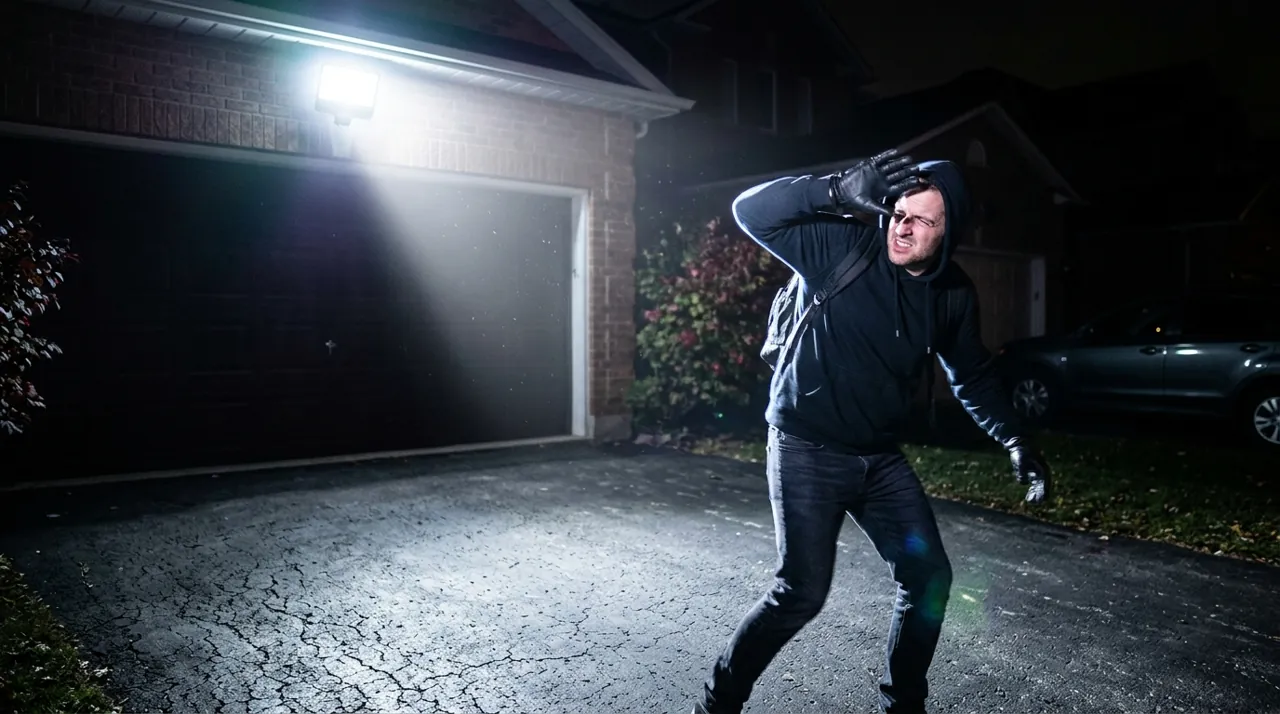
How a Security Deterrent Works Against Opportunistic Theft
Much opportunistic intrusion and theft is driven by a quick, low-effort risk assessment; burglars surveyed by UNC Charlotte cited signs of security such as alarm signs, dogs and outdoor cameras among the factors they weigh. Someone scanning a property for an easy target looks for visible signs of attention, like a camera, a light, or a warning sign, and moves on if the perceived risk outweighs the perceived reward. A deterrent doesn't need to be a genuine security device to change that calculation. It needs to look and read like one at a normal glance. That's the entire mechanism behind a dummy camera or a sign, and it's also the entire limitation: neither one does anything once someone decides the risk is acceptable.
Choosing a Realistic Dummy Camera
Housing shape matters more than any other single factor. A dome or bullet housing that closely resembles a genuine security camera reads convincingly at the distance most passersby actually view it from, which is rarely up close. A flashing or slow-pulsing red LED adds a strong visual cue that something is active, since it mimics the power or recording indicator many real cameras display. Weatherproof construction matters too if the unit will sit outdoors year-round, both for appearance (a faded, cracked housing looks obviously fake) and for basic longevity.
Choosing and Placing a Warning Sign
A sign works best positioned where an approaching person will actually see it before reaching the door or a vulnerable entry point, such as a front gate, a fence line, or beside a driveway. One or two signs at the most visible approach angles do the job; scattering signs everywhere adds clutter without adding meaningful deterrent value. Choose wording and design that reads clearly from a normal walking or driving distance rather than a sign designed to be read only up close.
Real Cameras vs Dummy Cameras: When to Combine Both
The strongest, most defensible setup pairs a real device at the position that matters most with a lower-cost deterrent covering a secondary angle. A genuine camera at the front door, paired with a dummy unit watching a side gate, extends visible coverage across a property without the cost of two real cameras. The same logic applies to lighting: a real motion-activated light at the main approach, with a warning sign covering a less critical angle, stretches a modest budget across more of a property's visible perimeter.
When a Fake Camera Alone Is Not Enough
A deterrent provides no evidence if something does happen, and it does nothing against a determined intruder who isn't deterred by appearances in the first place. If you need proof after an incident, whether for an insurance claim, a police report, or your own peace of mind, that requires an actual recording device, not a dummy one. High-value entry points, like a front door or a garage, are usually worth the modest extra cost of a real camera or lock rather than a deterrent alone, reserving dummy units and signs for secondary positions where the cost-benefit tips the other way.
Maintenance and Upkeep
A battery-powered dummy camera's LED will eventually dim or stop as the battery drains, at which point the unit loses much of its deterrent value along with its realism. Check and replace the battery on a regular schedule rather than waiting for it to fail. Signs fade and weather over time too; a sun-bleached, peeling sign reads as neglected rather than as an active warning, so replacing an aged sign is a cheap way to keep the deterrent effect intact.
Being Honest About What a Deterrent Cannot Do
It's worth stating plainly: none of the products on this hub detect motion, record footage, send an alert, or provide any evidence after the fact. Every benefit they offer depends entirely on someone else believing, at a glance, that they're looking at an active security device. That belief is genuinely useful against opportunistic, low-effort scanning, which burglar research such as the UNC Charlotte offender survey identifies as a large share of residential burglaries. It provides nothing at all against someone who inspects closely, who has already decided to target a specific property regardless of visible risk, or who simply doesn't care. Buyers who understand that distinction get the most realistic value from a deterrent, because they're using it for the job it's actually suited to rather than expecting it to behave like a real camera or lock.
Budgeting Across a Whole Property
A useful way to think about a deterrent budget is coverage per dollar rather than device count. A single realistic dummy camera and a well-placed sign, positioned at the two or three approach angles a passerby actually sees, typically costs less than one entry-level real camera. That leaves room in a tighter budget to put the genuine device where it matters most, usually the primary entry door, while still extending a visible security presence around the rest of the property. Buyers upgrading from deterrents to real devices over time often keep the original signs and dummy units in place at secondary positions rather than removing them, since there's no real downside to running both alongside each other once a real camera covers the priority angle. Treat the deterrent budget as the starting layer of a security plan that grows over time, not a permanent substitute for it.
Common Questions
For product picks, see a ranked list of fake security cameras or best beware of dog sign. For real camera alternatives, see the owner-ranked budget security camera roundup.
Sources & References
- Through the Eyes of a Burglar: Study Provides Insights on Habits and Motivations — University of North Carolina at Charlotte
- Reducing Crime Through Environmental Design: Evidence from a Randomized Experiment of Street Lighting in New York City — National Bureau of Economic Research
- Burglary of Single-Family Houses (Problem-Specific Guide) — ASU Center for Problem-Oriented Policing
- Practice Profile: Closed Circuit Television (CCTV) Surveillance — National Institute of Justice, CrimeSolutions