
Affiliate Disclosure: Some links on this page are affiliate links. As an Amazon Associate, we earn from qualifying purchases — at no extra cost to you. We do not buy, install, or physically handle the cameras we cover; our rankings come from aggregated owner reviews, ratings and expert consensus. Commissions never change our verdicts. We're reader-supported: commissions fund hosting, research and updates, so if a guide helped, buying through our links keeps it going. How we rank · full disclosure.
Short version: all three beware of dog signs here share the same top-tier rating. The Anley sign has the deepest review base at the lowest price. The Multiwins 2-pack adds reflective visibility for low light. The SmartSign comes from a brand specializing specifically in outdoor signage.
In Plain English
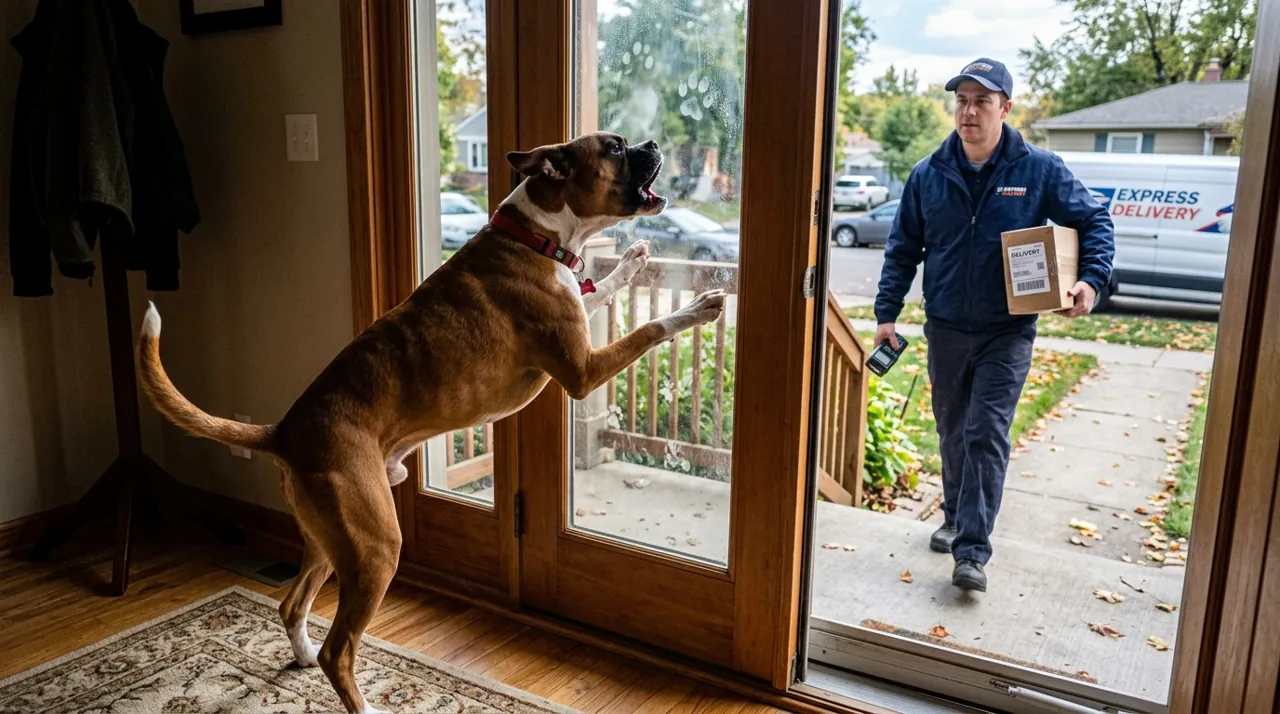
A beware-of-dog sign is a cheap warning you hang on a gate or fence. It works on doubt. Someone thinking about walking in can't tell from the street whether there is a real dog behind it, and most people would rather not find out. It's the same idea as a closed door: it doesn't have to be locked to make people stop and knock.
Why it matters: it's one of the lowest-cost ways to add a layer of caution to a property. Material matters for how long it lasts. Aluminum resists rust better than tin, and reflective printing (a coating that bounces light back) makes the sign readable in headlights at night. The one thing to do: mount it where people see it first, at the front gate or any spot where they'd step onto your property.
Does a Beware of Dog Sign Work as a Deterrent?
A beware of dog sign is one of the lowest-cost security deterrents available, and its deterrent value comes from simple risk calculation on the part of anyone considering approaching a property uninvited. Even a would-be intruder who suspects the sign might be more bluff than warning generally has no reliable way to confirm that from the street, and many would rather not test it. Research backs the real-dog part of that logic: the ASU Center for Problem-Oriented Policing's burglary guide notes that most burglars avoid houses with dogs, and burglars surveyed by UNC Charlotte listed dogs among the signs of security they weigh. There is little direct research on signs alone, so treat a sign as a cheap supporting cue rather than a proven deterrent in its own right. This is the same underlying psychology behind fake security camera decoys and alarm-monitoring yard signs — the deterrent works by introducing uncertainty and perceived risk, not by requiring the threat behind it to be verified. A beware of dog sign works best as one layer in a broader approach, paired with visible lighting, an actual camera, or a real dog, rather than treated as a complete security solution on its own.
Material: Weatherproof Aluminum vs Tin, Rust and Reflective Coating
Aluminum is the more common, genuinely weatherproof material among well-reviewed outdoor warning signs, and for good reason — it resists rust and holds its printed color better than tin under sustained sun and rain exposure over multiple seasons. Tin signs can still perform reasonably well outdoors, particularly with a protective coating, but tend to show fading or minor surface rust sooner in a harsh climate than a comparable aluminum sign. Reflective printing, seen on the Multiwins pick in this roundup, adds a genuinely different capability rather than just a material choice — it catches headlights or a flashlight beam at night, extending the sign's visibility well beyond what plain daytime printing offers on either aluminum or tin.
Top Rated Picks at a Glance
The Ranked Field: Star Rating, Consensus and Price
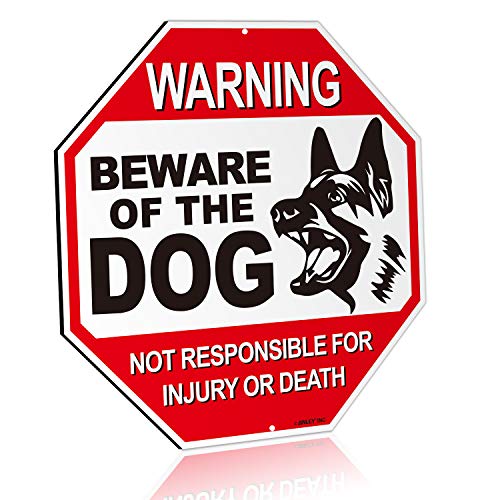
Best for the deepest-reviewed warning sign at an exceptionally low price.
- Rust-free aluminum construction.
- Weatherproof, fade-resistant print.
- Easy to mount on a fence or gate.
- Over 2,500 verified owner ratings.
Why buy it: The deepest review base of any warning sign we track, at a price low enough to place at every entry point on a property.

Best for visibility in low light thanks to reflective printing.
- Reflective tin sign material.
- Large 13x9.9 inch size.
- Two signs in one purchase.
- Nearly 1,500 verified owner ratings.
Why buy it: Reflective printing that stands out in headlights or a flashlight beam, at the same top-tier rating as the category leader.

Best for a signage-specialist brand with a long track record.
- Aluminum construction.
- Standard 7x10 inch sizing.
- From an established signage manufacturer.
- Nearly 700 verified owner ratings.
Why buy it: From SmartSign, a brand specializing specifically in outdoor signage, for buyers who weight manufacturer track record.
Comparison Table
| Product | Best for | Buy |
|---|---|---|
| Anley Beware of The Dog Aluminum Warning Sign | Best Overall | Price |
| Multiwins 2 Pack Beware of Dog Signs | Best Reflective | Price |
| SmartSign Beware of Dog Sign | Best Established Brand | Price |
Placement: Where and How to Mount a Warning Sign
Placement determines most of a sign's practical deterrent value, more than the specific material or brand. The front gate, a side fence gate, and any point where a visitor or intruder would first encounter the property boundary are the standard mounting locations, since visibility from the approach — not from inside the yard — is what actually creates the deterrent effect. A sign mounted low on a fence, tucked behind foliage, or only visible once someone has already stepped onto the property provides little practical value, regardless of how well-reviewed the sign itself is. Most signs in this category mount with basic screws, zip ties through pre-drilled holes, or adhesive, so check the specific product's mounting hardware and whether it's included before ordering, particularly for a metal or vinyl fence where screw-mounting isn't straightforward.
Sizing and Visibility From the Street
Sign size affects legibility from a realistic viewing distance more than most buyers initially consider. A small sign mounted at eye level on a close gate reads fine, but the same size mounted on a taller fence set back from the sidewalk can become difficult to read from the street, undermining the deterrent value entirely. The signs ranked on this page range from 7x10 inches (SmartSign) to 12x12 inches (Anley), with the Multiwins at 13x9.9 inches, and larger, higher-contrast lettering paired with a reflective or brightly colored background reads more reliably at distance and in low light than a smaller sign with fine print, even when both technically say the same thing.
Do I Need a Real Dog for the Sign to Be Effective?
No — a beware of dog sign is a legitimate deterrent on its own merits, independent of whether a dog is actually present, and many buyers purchase one specifically as a standalone low-cost deterrent rather than as a companion to an actual pet. That said, combining a genuine dog with a sign, where applicable, adds a real audible and visible layer beyond the sign's psychological effect alone. For households without a dog, pairing the sign with other visible deterrents — a security camera, motion-sensor lighting, or a driveway alarm — builds a more complete deterrent picture than relying on any single low-cost item alone.
Pairing a Warning Sign With Other Deterrents
A beware of dog sign is most effective as one layer in a broader deterrent setup rather than a standalone solution, and it's also one of the cheapest layers to add. Motion-sensor lighting near the same entry point adds a second, active deterrent that works specifically at night, when a static sign is harder to read and a would-be intruder is more likely to attempt entry unseen. A visible security camera, even a basic one, adds the layer a sign fundamentally can't — an actual record of who approached, which matters both as a deterrent and as evidence after the fact. Households already running a driveway alarm or a security camera system can add a warning sign at minimal cost as a first line of psychological deterrence before someone even reaches the more active layers of the setup. None of these layers substitutes for the others; each addresses a different part of the deterrent picture.
How We Rank
We do not buy or physically install these products. Every star rating and review count comes from licensed Amazon data. Full method on how we rank.
What to Check Before Buying
Confirm the material and finish match your climate — aluminum for a harsher, wetter or coastal climate, tin acceptable in a milder one. Check the exact dimensions against your mounting spot and its viewing distance from the street, since a sign that reads clearly up close can become illegible from a car passing at normal speed if it's undersized for the location. Look at what's included for mounting hardware, since screws, zip-tie holes and adhesive backing aren't universal across every listing. Finally, weigh review depth alongside star rating the same way you would for any product in this category — a sign with a few dozen reviews and a perfect score is a thinner evidence base than one with thousands of reviews at a marginally lower score.
Going Deeper: How Reflective Printing Works at Night
The Multiwins pick on this page uses reflective printing, and that works differently from ordinary paint. Normal surfaces scatter light in all directions, so only a sliver of a car's headlight beam ever bounces back toward the driver. Reflective sign material is designed to do the opposite. The Federal Highway Administration describes retroreflection as a property of the sheeting material that redirects incident light back toward the source. When headlights hit a retroreflective sign, the light returns toward the car, which is why road signs seem to glow at night even though they have no power.
Highway sign sheeting achieves this with microprisms, small angled reflectors molded into the surface. A home warning sign is not held to highway specifications, but the principle is the same: the brighter return is strongest when the light source is roughly in line with the viewer. That is why a reflective sign pops in a car's headlights and looks more modest when a flashlight hits it from an angle.
Reflectivity doesn't last forever. FHWA's work on minimum retroreflectivity drew on measurements from more than 20,000 in-service signs, used to guide sign maintenance. For a homeowner, that means a reflective sign is brightest when new and gradually dims with sun and weather exposure. A fading reflective finish is normal wear, and replacing a cheap sign every few years is part of the cost of keeping it effective.
How much does it matter? For a gate that is lit by a porch light or a motion light, plain printing is fine, because there is light to read by. Reflective printing earns its place where a sign faces a dark driveway or road, and the only light that will ever hit it comes from headlights. If that describes your entrance, the reflective option is worth the small extra cost. If not, pick on material and size first.
The Verdict
The Anley sign is the right default for most buyers given its exceptional review depth and low price. Choose the Multiwins if reflective low-light visibility matters, and the SmartSign if brand track record in signage specifically is your priority.
Sources & References
- Through the Eyes of a Burglar: Study Provides Insights on Habits and Motivations — University of North Carolina at Charlotte
- Burglary of Single-Family Houses (Problem-Specific Guide) — ASU Center for Problem-Oriented Policing
- Spotlight on: Dog Bite Liability — Insurance Information Institute
- Updated Minimum Retroreflectivity Levels for Traffic Signs, Chapter 1 — Federal Highway Administration