
Affiliate Disclosure: Some links on this page are affiliate links. As an Amazon Associate, we earn from qualifying purchases — at no extra cost to you. We do not buy, install, or physically handle the cameras we cover; our rankings come from aggregated owner reviews, ratings and expert consensus. Commissions never change our verdicts. We're reader-supported: commissions fund hosting, research and updates, so if a guide helped, buying through our links keeps it going. How we rank · full disclosure.
The short answer: Nest is worth it for the cameras and doorbells themselves if you are already inside Google’s ecosystem, and it is the only major cloud brand whose cameras remain genuinely useful without paying anything. The free few hours of event history plus person, animal and vehicle detection is a real product, not a demo. Nest is not worth it if you need long recording history, because the tier that provides it is one of the pricier recurring fees in the mainstream category.
That inverts the usual review-site framing. With most subscription cameras the question is whether the monthly fee is justified. With Nest the more useful question is whether you ever need to start paying at all — and for a large share of households, the answer is no. If the subscription is what you are weighing, see is Nest Aware worth it.

In Plain English
Google Nest cameras are made by Google and live inside the Google Home app. Their big selling point is what you get for free.
Most cloud cameras (cameras that save your video on the company’s computers over the internet) are a bit like a gym membership: stop paying and you are locked out of the good stuff. A Nest camera without a plan still works. It can tell a person from an animal or a car, and it keeps the last few hours of clips.
The limit is time. After about three hours, older clips disappear. If a parcel goes missing at 9am, you need to check before lunch. If you want to look back days or weeks, you need a paid plan. Plans cover every Nest device in your home, not one camera each.
The one thing to decide first: do you need to look back more than a few hours? If not, a Nest camera can do the job for free. If you do, compare the plan cost against cameras that save video at home instead.
The Free Tier: Three Hours, And Why That Matters
Current Nest cameras include a short rolling window of free event history: 3 hours of event recordings on the Nest Doorbell (battery), or 6 hours of 10-second event previews on the newer Nest Cam Indoor (wired, 3rd gen). Older events fall off the end. On top of that, and this is the part rivals cannot match, the smart detection runs on the device itself: the camera decides locally whether it is looking at a person, an animal or a vehicle, and it does that whether or not you have a plan.
Compare that with the competition. A subscription-free Ring keeps no video history at all and no person detection, which is the origin of the most common one-star review in the whole category. A subscription-free Nest keeps a short window of clips and still filters the alerts intelligently. That is a different class of free tier.
The limitation is exactly what the number says. Three hours means you must respond the same morning. A parcel taken at 9am is unrecoverable by lunch. If you travel, or you want a record you can hand to anyone, three hours is not enough and you are buying a plan. But for the household that wants a live view, a smart alert and the ability to check what just happened, the free tier does the job indefinitely.
Nest Aware Cost 2026: The Current Pricing, Tier By Tier
Nest Aware was renamed Google Home Premium on October 1, 2025. There are two paid tiers, and the one you need is decided by how much history you want rather than by how many cameras you own.
| Tier | Relative Cost | What it covers |
|---|---|---|
| Free (no plan) | No cost | 3 hours event history (6 hours of short previews on the newest Nest Cam Indoor), person/animal/vehicle detection, live view, two-way talk |
| Google Home Premium Standard (formerly Nest Aware) | $10/month or $100/year (US) | 30 days of event video history, familiar faces — every Nest device at one address |
| Google Home Premium Advanced (formerly Nest Aware Plus) | $20/month or $200/year (US) | 60 days of event history, plus 10 days of 24/7 continuous recording on wired cameras and Gemini AI event descriptions |
Annual billing is cheaper at every tier and is how most owners pay. Treat these figures as the floor of a five-year estimate rather than a fixed input — cloud camera fees across the category have moved upward more often than down, and Google has restructured this line-up before.
The structural point worth noticing: both paid tiers are priced per home, not per camera, so if you intend to own three or more Nest devices the per-camera cost falls sharply. The expensive jump is the one to continuous recording, which doubles the fee.
Tip Three free hours means you have to respond the same morning. If you travel or want a record you can hand to anyone, plan on a plan.
Five-Year Total Cost, Written Out
Take a two-device household: the indoor camera and the battery doorbell together represent a modest hardware outlay.
Staying free. Five-year cost: just the hardware, nothing more. You get smart alerts and a short free history window the whole time. Nothing else in the mainstream cloud category offers this.
Google Home Premium Standard. At $100 a year, that is $500 in fees over five years at today’s US price, on top of the hardware. In exchange you get a long history and familiar-face recognition on both devices.
Google Home Premium Advanced. At $200 a year this is $1,000 in fees alone over five years, and the continuous recording only applies to the wired camera anyway, because a battery doorbell cannot record continuously at all.
Now the local-storage comparison. A two-camera Eufy or Reolink setup costs more up front — commonly a fair bit more per device than the Nest indoor camera — and then costs nothing. Over five years the local route beats paid Nest Aware comfortably and loses to free-tier Nest. That is the honest shape of the decision, and it is why we send subscription-averse readers to best security cameras without subscription rather than talking them into a plan.

The Nest Devices Worth Buying
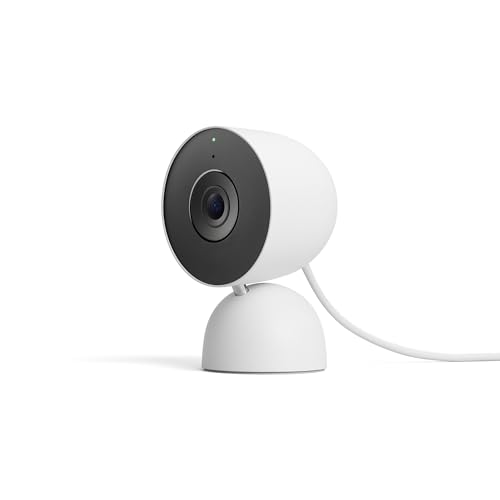
The cheapest way into the Nest ecosystem, and the device that shows off the free tier best, with one of the strongest owner ratings in the lineup. On-device person, animal and vehicle detection works with no plan required, and up to 6 hours of free 10-second event video previews are included by default — more than most competitors give away. HDR video handles bright windows and dark corners better than budget sensors. It runs on wired AC power, so nothing needs recharging.
Why You Should Get This
If you want to try the Nest ecosystem with the least commitment, this is the cheapest, most review-validated entry point.
| Resolution | Up to 1080p at 30fps |
| Field of view | 135° diagonal |
| Sensor | 2-megapixel color, HDR video |
| Zoom | 6x digital zoom |
| Power | AC wired |
| Connectivity | 2.4GHz and 5GHz WiFi |
| Storage | Up to 3 hours event history included |
Benefits
- On-device detection works with no subscription at all.
- Up to 6 hours of free event video previews.
- HDR video quality.
Pros and Cons
- Some free recorded history included, unlike most rivals.
- Strong Google Home integration.
- Wired power, no battery to manage.
- Full event recordings and longer history need Google Home Premium.
- Needs an outlet at the mount point.
- Indoor use only.
Features
- On-device person/animal/vehicle detection.
- 6 hours free event video previews.
- 2K HDR video, night vision.

Strong smart detection at a premium price, with battery life the most common complaint in owner reviews, and a still-solid owner rating. Its 3:4 tall aspect ratio fits a face and a parcel in the same frame. Person, package, animal and vehicle alerts work with no plan; familiar-face alerts need Google Home Premium. It runs wired or on the internal battery, whichever your door supports.
Why You Should Get This
If you want Nest’s on-device familiar-face and package detection at the front door, this is the doorbell built around that.
Benefits
- Tall aspect ratio shows the whole doorstep, not just a face.
- On-device familiar-face and package alerts.
- Works wired or on battery.
Pros and Cons
- Smart detection doesn’t depend entirely on the cloud.
- Flexible wired or battery power.
- Deep review base behind the rating.
- Battery life is the most common complaint in owner reviews.
- Premium price versus Ring or Blink doorbells.
- Full history needs Nest Aware.
Features
- 3:4 tall aspect ratio.
- Free package and person alerts.
- Wired or battery power.
The Google Nest Cam Indoor (Wired, 3rd Gen) is the strongest-rated device on this page and the best demonstration of what Nest is actually selling: one of the highest owner ratings here, across a modest but solid review base, at an entry-level price. It is mains-powered, so there is no recharging, and the on-device detection means it filters alerts sensibly on day one with no plan. The recurring complaint in negative reviews is the wired-only design limiting placement, and a minority reporting app-side setup friction when migrating older accounts. The review base is modest rather than enormous, so read the score as encouraging rather than settled.
The Nest Doorbell (Battery) is the more divided product: a still-solid rating across a deep review base, at a premium price for a battery doorbell. Its 3:4 tall frame is genuinely well suited to a doorstep, fitting a visitor’s face and a parcel on the ground in one shot, and the free package, person, animal and vehicle alerts are among the best free detection in the category (familiar-face alerts need a paid plan). Negative reviews cluster on two things: battery life falling well short of the quoted figure in busy locations, and buyers who expected a premium price to include long history and found it does not. Owners who hardwire it, which this doorbell supports, report much of the frustration disappearing.
Consensus Score █████████░ 9.0 — Nest Cam Indoor (Wired, 3rd Gen), from a solid, well-rated base of owner ratings.
Privacy, Data And What You Are Actually Agreeing To
Cloud cameras concentrate footage of your home on somebody else’s servers, and the past few years have given buyers good reason to take that seriously. The Federal Trade Commission’s 2023 settlement with Ring — over employees and contractors accessing customer video and over inadequate security controls — is the reference point every camera buyer should know, and it applies to the category as a whole rather than to one brand. It is the clearest evidence available that cloud access is a real risk surface and not a hypothetical one.
Nest has not been the subject of an equivalent action. Google publishes a commitment that camera footage is not used for advertising personalisation, supports two-factor authentication, and the on-device detection model means a meaningful share of the analysis never leaves the camera at all. That is a better-than-average posture in this category. It is not the same as the footage never leaving your house.
The practical takeaway is not brand loyalty but placement discipline:
- Keep indoor cameras out of bedrooms and bathrooms.
- Point outdoor cameras at your own property rather than a neighbour’s windows.
- Check your state’s audio-recording consent law before enabling two-way talk recording.
- Use a unique password with two-factor authentication on the account.
If none of that satisfies you, local storage is the answer rather than a different cloud vendor.
What Consumer Reports says: In its guide to Nest and Ring doorbell alternatives, Consumer Reports notes privacy concerns with both brands because they upload footage to Google’s and Amazon’s servers. It suggests several alternatives, some of which keep footage on a local microSD card or built-in memory instead. That lines up with the local-storage route described above.
How We Reached This Verdict
We do not buy, install or physically handle Nest cameras. There is no rig behind this page and we will not imply one. This verdict is assembled from aggregated owner star ratings weighted by review volume, the recurring themes inside negative reviews, published Nest Aware pricing, and expert consensus across the category. Where the review base is thin — as it is on the newest indoor camera — we say so instead of treating a small sample as proof. Full method on how we rank.
Nest Is Worth It If
- You already run Google Home. Nest devices appear on Google smart displays and respond to voice control without configuration. In a Google household this is the path of least resistance.
- You want smart detection without paying anything. On-device person, animal and vehicle recognition on the free tier is the single best reason to choose Nest over Ring, and it does not expire.
- You want a doorbell that frames a doorstep properly. The 3:4 tall aspect ratio fits a face and a parcel at once, which a standard widescreen camera cannot.
- You are covering three or more positions and will pay. Both Google Home Premium tiers cover every Nest device at one address, so per-device economics improve fast.
- Video processing quality matters to you. HDR handling and night vision on Nest cameras rate consistently well in owner reviews, particularly in high-contrast doorway light.
Nest Is Not Worth It If
- You want zero ongoing fee and more than a few hours of history. There is no microSD fallback on mainstream Nest cameras. A few free hours or a subscription — there is no middle option.
- You need long continuous recording. Continuous capture is locked to the most expensive tier and to wired cameras only. Over five years that is one of the priciest routes in this comparison. Go to premium cameras or a wired system instead.
- You want the widest hardware range. The Nest line-up is deliberately small. Ring and Eufy both offer far more device types, mounts and accessories — see brand comparisons.
- You object to cloud storage on principle. Nest is a cloud-first design. Local-storage brands exist precisely for this objection.
- Hardware price is the binding constraint. The battery doorbell is priced well above comparable Ring and Blink models — budget cameras covers the low end honestly.
Going Deeper: What Google’s Privacy Commitments Cover, and Where Your Account Fits In
Google’s promises for Nest are written down, which makes them worth reading closely. According to Google’s Nest security and privacy commitments, video footage, audio recordings and home sensor readings are kept separate from advertising and are not used for ad personalisation. When a camera is on and sending video to Google, the device shows a clear visual indicator, such as a green light. And Google commits to automatic critical security updates for Nest devices for at least five years from the date it starts selling them. That last point has a practical edge: a model bought late in its sales life has fewer guaranteed years of updates left than one bought at launch.
What those commitments cannot cover is the most common way camera accounts are actually broken into. The FTC’s complaint against Ring explains “credential stuffing”: attackers find usernames and passwords leaked from other websites and try them on camera accounts, and if you reused the same combination, they get in. The same complaint notes media reports in December 2018 and April 2019 of credential stuffing attacks that included devices made by Nest. No company-side policy stops someone logging in with your real password.
A second sign-in step does. The FTC complaint describes multi-factor authentication as requiring at least two different forms of proof, such as a password plus a code texted to your phone, so that a compromised password on its own is not enough. CISA puts it the same way: even if an attacker compromises one factor, like your password, they cannot meet the second requirement. Google’s commitments page lists 2-step verification as the account tool for exactly this. Turning it on, with a password you use nowhere else, closes the gap that the privacy policy leaves open.
The Verdict
Nest is the one mainstream cloud brand you can buy with no intention of ever subscribing and still end up with a camera that does something useful. A few hours of free history plus free smart detection is a genuine differentiator, and the wired indoor camera, with one of the strongest ratings in the lineup, is the cheapest sensible way to test whether that is enough for your household.
Where Nest stops being good value is at the top of the plan ladder. If you need ten days of continuous footage you are looking at one of the most expensive five-year bills in this comparison, for a capability that a one-off wired system delivers permanently. Buy Nest for the free tier and the Google integration. Do not buy Nest to solve a long-recording problem.
Next steps: if the recurring fee is your objection rather than the brand, best security cameras without subscription is the direct comparison you want. To weigh Nest against the market leader on the same terms, read is Ring worth it. For the front door specifically, best video doorbell cameras ranks the field, and how to install a security camera covers the mounting and signal decisions that decide whether any of the footage is worth keeping.
Sources & References
- Best Google Nest and Ring Video Doorbell Alternatives — Consumer Reports
- Learn what you get with a Google Home Premium subscription — Google Home and Nest Help
- Introducing the new Google Home Premium subscription — Google
- Learn about Nest Aware & Google Home Premium — Google Home and Nest Help
- Technical specs for Google Nest cameras and doorbells — Google Home and Nest Help
- Google Nest Security & Privacy Commitments — Google Safety Center
- FTC Says Ring Employees Illegally Surveilled Customers, Failed to Stop Hackers from Taking Control of Users' Cameras — Federal Trade Commission
- Complaint: FTC v. Ring LLC — Federal Trade Commission
- More than a Password (Multifactor Authentication) — Cybersecurity and Infrastructure Security Agency (CISA)