
Affiliate Disclosure: Some links on this page are affiliate links. As an Amazon Associate, we earn from qualifying purchases — at no extra cost to you. We do not buy, install, or physically handle the cameras we cover; our rankings come from aggregated owner reviews, ratings and expert consensus. Commissions never change our verdicts. We're reader-supported: commissions fund hosting, research and updates, so if a guide helped, buying through our links keeps it going. How we rank · full disclosure.
The direct answer: Nest Aware (renamed Google Home Premium on October 1, 2025) is worth it if you specifically want extended or continuous recorded history — for smart detection alone, you likely don’t need it at all, since Nest’s person, animal and vehicle detection already works on the free tier. This is a genuinely different structure from Ring, which requires a paid plan just to save any recorded video, and from Arlo, which keeps footage without a plan only if you add local-storage hardware, and Blink, whose Sync Module 2 can store clips on a USB drive (check Blink’s current plan terms for what works without a subscription).
In Plain English
Nest Aware is Google’s monthly plan for its Nest cameras and doorbells. Since October 2025 it has been called Google Home Premium. It does not make your camera smarter. It mostly changes how long your videos are kept.
For free, a Nest camera still tells you whether it saw a person, an animal or a car. It also keeps a few hours of recent clips. After that, older clips drop off, like a whiteboard that wipes itself clean every few hours.
Paying makes the memory longer. The cheaper plan keeps 30 days of clips. The dearer plan keeps 60 days, and it can also record all day and night (called 24/7 or continuous recording) on cameras that are plugged into power. One plan covers every Nest device at your address.
So the question to ask yourself is simple: how often do you need to look back further than a few hours? If rarely, the free version is probably enough. If you often need to check yesterday’s footage, a plan is worth it.
The Nest Devices This Decision Applies To
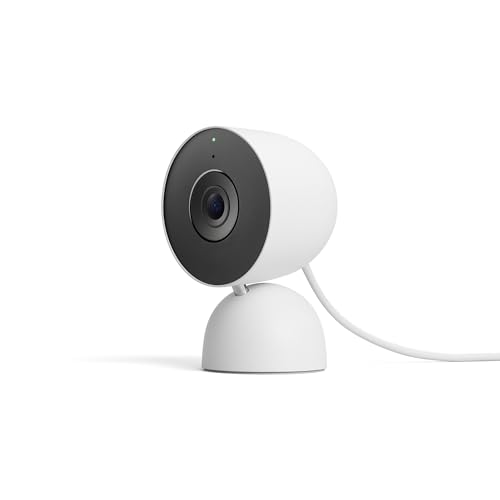
On-device person, animal and vehicle detection works with no plan required at all, and up to 6 hours of free 10-second event video previews are included by default, at an entry-level price and a solid owner rating. HDR video handles bright windows and dark corners better than budget sensors. Wired power means nothing to recharge. Owners consistently cite it as the cheapest, most generous way to try Nest before deciding whether Nest Aware is worth adding.
Why You Should Get This
If you want to see exactly how much Nest gives away free before paying for Nest Aware, this is the camera to start with.
| Resolution | Up to 1080p at 30fps |
| Field of view | 135° diagonal |
| Sensor | 2-megapixel color, HDR video |
| Zoom | 6x digital zoom |
| Power | AC wired |
| Connectivity | 2.4GHz and 5GHz WiFi |
| Storage | Up to 3 hours event history included |
Benefits
- On-device detection works with no subscription at all.
- Up to 6 hours of free event video previews.
- HDR video quality.
Pros and Cons
- Genuinely generous free tier versus Ring, Arlo or Blink.
- Strong Google Home integration.
- Wired power, no battery to manage.
- Full event recordings and longer history need Google Home Premium.
- Needs an outlet at the mount point.
- Indoor use only.
Features
- On-device person/animal/vehicle detection.
- 6 hours free event video previews.
- 2K HDR video, night vision.

Person, package, animal and vehicle alerts work at the front door with no subscription (familiar-face alerts need Google Home Premium), at a premium price and a solid owner rating. A 3:4 tall aspect ratio fits a face and a parcel in the same frame. It runs wired or on the internal battery. Owners consistently note battery life as the most common complaint, independent of the Nest Aware decision.
Why You Should Get This
If you want to see how much of Nest’s doorbell detection works free before deciding whether Nest Aware is worth it for your front door specifically.
Benefits
- Free person, package, animal and vehicle alerts.
- Tall aspect ratio shows the whole doorstep.
- Works wired or on battery.
Pros and Cons
- Smart detection doesn’t depend entirely on the cloud.
- Flexible wired or battery power.
- Deep review base behind the rating.
- Battery life is the most common complaint in owner reviews.
- Full history needs Nest Aware.
- Premium price versus Ring or Blink doorbells.
Features
- 3:4 tall aspect ratio.
- Free package and person alerts.
- Wired or battery power.
What You Get Free, No Subscription Required
Google Nest's smart detection — distinguishing a person from an animal or vehicle — works without paying anything. You also get a short free event history: 3 hours of event recordings on the Nest Doorbell (battery), or 6 hours of 10-second event previews on the newer Nest Cam Indoor (wired, 3rd gen). For buyers whose main interest is a smart notification rather than a long recorded history, this free tier may genuinely be enough. That is the reason Nest Aware is a meaningfully different pitch from Ring or Arlo plans. Ring withholds recorded clips entirely until you pay, and Arlo keeps footage without a plan only if you add a SmartHub for local storage.
Nest Aware Plans, Compared Properly
Nest Aware (Standard): extends stored event history to 30 days; since October 1, 2025 it is sold as Google Home Premium Standard, at $10/month or $100/year in the US. Adds richer activity zones and familiar-face recognition on supported devices, beyond what the free tier provides.
Nest Aware Plus (Advanced): extends event history further, to roughly 60 days, and adds continuous 24/7 recording capability with about 10 days of continuous history — a meaningfully different feature than event-triggered clips alone, available on wired Nest cameras and doorbells only. It is now sold as Google Home Premium Advanced, at $20/month or $200/year in the US, and also adds Gemini features such as AI event descriptions.
Both tiers bill per household rather than per camera, which is the detail that changes the arithmetic for a multi-camera home. A family running a Nest Cam Indoor, a Nest Doorbell and an outdoor camera pays one subscription that covers all three, where a per-camera model like Ring's entry-level plan would multiply the fee by device count. The prices above are Google's US list prices as of September 2026; they have shifted with plan restructuring over time, so check the live figure before budgeting and treat any number quoted here as a floor rather than a fixed input.
Standard or Plus: Which One Do You Actually Need
Most households can answer this with one question: do you ever go back and watch footage from more than a day or two ago? If rarely, Standard's roughly 30-day window is already more than you'll use. Plus's continuous recording would sit mostly unused. If yes — a delivery dispute, a pattern of visits worth reviewing, a shared driveway camera neighbors reference — the longer history in Plus earns its keep.
Continuous 24/7 recording covers one gap Standard cannot: footage from a period when nothing triggered a motion event. That happens more than buyers expect. A car that drives past slowly without stopping, a person standing just outside a detection zone, or a blind spot near the frame edge can all mean an event-triggered clip simply doesn't exist. Continuous recording captures the full timeline regardless of what the AI flagged, at the cost of the higher tier's price and, on some setups, faster storage turnover.
Cost Over Five Years: Nest Aware vs No Subscription at All
Run the honest comparison before subscribing. A Nest Aware Standard plan across five years adds up to a moderate recurring total on top of hardware. Plus runs higher again. Against that: the free tier costs nothing and already includes person detection plus a short recorded window, which covers many single-camera households' actual use case without ever touching the subscription page. If the five-year fee is the objection rather than the feature, a no-subscription brand like eufy is the more complete answer — see is eufy worth it for that side of the comparison, including its own five-year cost breakdown against the subscription brands.
What Consumer Reports says: In its camera buying guide, Consumer Reports notes that cloud subscriptions across brands run from about $1 to $30 a month, and that local storage avoids those fees. Its doorbell alternatives article also observes that Nest and Ring doorbells upload footage to Google’s and Amazon’s servers, which is why it points privacy-minded buyers toward other options.
What Owner Reviews Say About Nest's Free Tier and Nest Aware
The recurring theme in Nest owner reviews is relief that the free tier does more than competitors' do. That is usually paired with mild frustration when a buyer only discovers the roughly 3-hour history window after wanting to check something from the previous evening. Person detection is consistently rated among the best in the category and works on the free tier; familiar face recognition, also well rated, needs a paid plan. The most common complaint tied specifically to Nest Aware is billing confusion after Google folded it into the broader Google Home Premium subscription structure. Some long-time subscribers found that less transparent than the standalone Nest Aware plan it replaced. Complaints about the hardware itself — battery life on the Nest Doorbell, the need for an outlet near the Nest Cam Indoor — are unrelated to the subscription decision and apply regardless of which tier, if any, you choose.
Installation, Setup and How to Cancel Nest Aware
Nest Aware is added through the Google Home app after a camera or doorbell is already paired to your account. There is no separate hardware step, and camera installation itself never has to be redone. A short trial period is typically available at signup — the ideal window to test whether continuous recording or the longer history window actually changes your day-to-day use before committing. To manage a Nest Aware subscription, including cancelling, use the same subscription settings; cancelling is self-serve and takes effect at the end of the current billing period, with no retention call or downgrade friction reported in owner reviews. That is a meaningfully lower-friction cancellation experience than some competing brands offer.
Worth It If
- You want recorded history beyond roughly 3 hours. The free tier’s window is short; if you routinely want to look back further than that, a paid tier is the only way.
- You want continuous 24/7 recording, not just event clips. Only the Advanced tier offers this, and it’s a genuine step up from motion-triggered recording alone.
- You’re already invested in the Google Home ecosystem and want the deepest feature set across multiple Nest devices at one address.
- You run more than one Nest camera. Per-household billing means the second and third device add zero incremental subscription cost.
Not Worth It If
- Person, animal and vehicle alerts are your main interest. Those already work free — you’re not unlocking better detection by subscribing, mainly storage duration plus extras like familiar faces.
- You rarely need to look back more than a few hours. The free tier likely covers your actual use case already.
- You want zero subscription, ever. A local-storage brand like eufy is the more complete answer — see is eufy worth it.
- You are budgeting a single camera at one door. The free tier's roughly 3-hour window plus reliable on-device detection is often enough for a single, low-traffic entry point.
Going Deeper: Why 24/7 Recording Is a Different Job From Event Clips
From a data point of view, an event-recording camera is idle most of the day. According to Google’s Nest help pages, newer Nest cameras and doorbells, such as the Nest Cam (wired), Nest Cam (battery) and Nest Doorbell (battery), only stream video when you are watching the live feed or when the camera records a detected event. Continuous recording flips that. The camera sends video to Google’s servers every minute of every day, whether anything happens or not, so there is a complete timeline to scroll back through.
Google publishes what that costs in data, and the gap is large. For the Nest Cam (battery) and Nest Cam (wired), Google lists roughly 10 GB of data a month at the High quality setting with event-based recording, against about 200 GB a month with 24/7 recording. At the Max setting it is about 75 GB versus 300 GB. The same page gives the camera’s upload rate at High quality as 700 Kbps, rising to 2,000 Kbps during recorded events. A continuously recording camera takes a steady slice of your home internet’s upload capacity all the time, rather than in short bursts.
That is also why continuous history sits on the Advanced tier and is limited to wired cameras. A battery camera saves power precisely by staying quiet until there is an event to send; streaming nonstop would remove the quiet time the battery depends on. A wired camera has no such limit, so it can keep a full timeline. It also explains the gap that continuous recording fills: a clip only exists if the camera decided something happened, while a 24/7 timeline exists regardless.
Before choosing Advanced, check two things on your own internet plan: your upload speed, and whether the plan has a monthly data allowance. Each camera recording around the clock adds a constant load, and the figures above show how quickly that adds up across two or three cameras.
Tip Before choosing Advanced, check your internet plan's upload speed and any monthly data allowance. Each camera recording around the clock adds a constant load.
Verdict
Nest’s free tier is more generous than any subscription-model competitor’s, which makes Nest Aware a genuine optional upgrade rather than a functional requirement the way Ring Protect effectively is. Subscribe specifically for extended or continuous history, not for detection quality, and start with the free trial before committing to either tier. See is Nest worth it for the broader brand comparison, or best cameras without a subscription if you want to avoid any recurring fee entirely.
Sources & References
- Home Security Camera Buying Guide — Consumer Reports
- Best Google Nest and Ring Video Doorbell Alternatives — Consumer Reports
- Learn what you get with a Google Home Premium subscription — Google Home and Nest Help
- Learn about Nest Aware & Google Home Premium — Google Home and Nest Help
- Introducing the new Google Home Premium subscription — Google
- Technical specs for Google Nest cameras and doorbells — Google Home and Nest Help
- Understanding Ring Protect subscriptions — Ring
- Learn about internet bandwidth & speed requirements for Nest cameras — Google Home and Nest Help