
Affiliate Disclosure: Some links on this page are affiliate links. As an Amazon Associate, we earn from qualifying purchases — at no extra cost to you. We do not buy, install, or physically handle the cameras we cover; our rankings come from aggregated owner reviews, ratings and expert consensus. Commissions never change our verdicts. We're reader-supported: commissions fund hosting, research and updates, so if a guide helped, buying through our links keeps it going. How we rank · full disclosure.

Ring Battery Doorbell (2K)
Ring’s current battery doorbell with a head-to-toe 2K vertical frame, 6x digital zoom and no wiring required — the doorbell most first-time Ring buyers land on.
Check Price →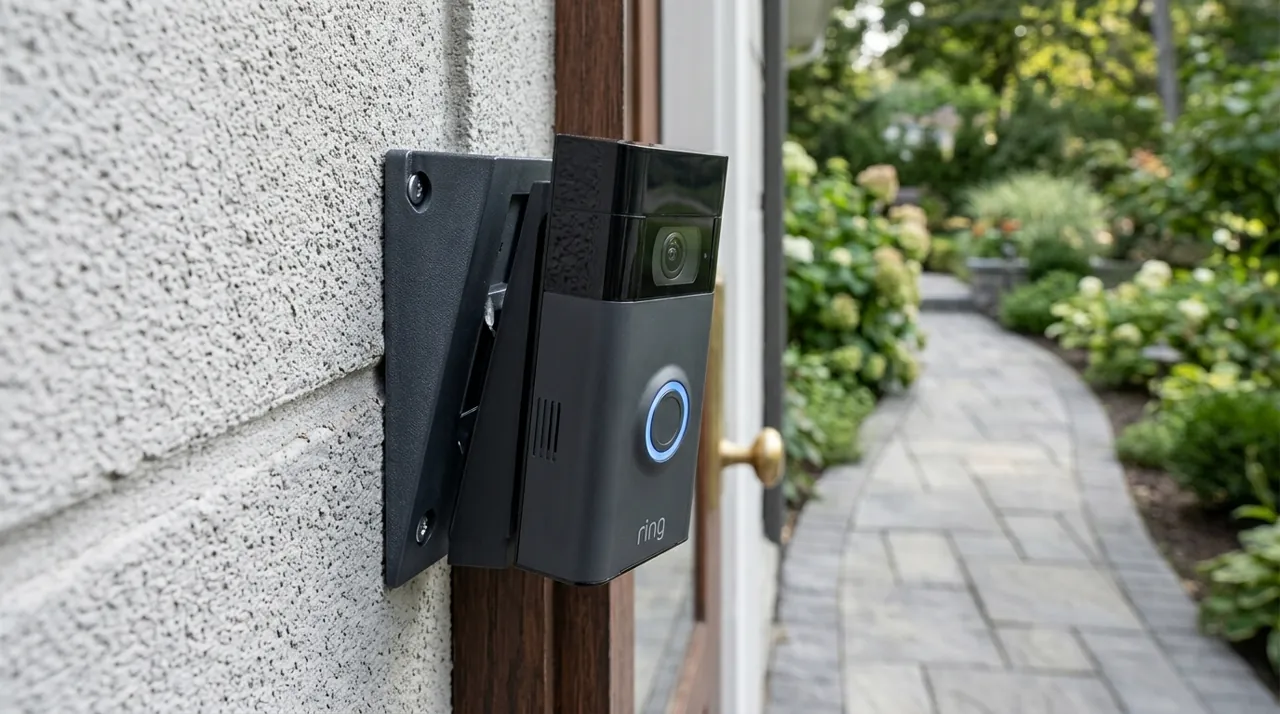
In Plain English
The Ring Battery Doorbell is a camera doorbell that runs on a built-in rechargeable battery, so you can fit it without any wiring. Its main selling point is a tall, square picture that shows a visitor from head to toe, including a parcel on the mat.
When the battery runs low, you release the whole doorbell from its bracket and charge it with a USB-C cable. If your home has doorbell wires, you can connect it to them instead so it stays charged.
It connects to your WiFi only on the 2.4GHz band (one of the two radio lanes most home routers offer). That lane reaches farther through walls but is slower and more crowded. Think of it like a country road next to a motorway: the road goes further, the motorway is faster.
The one thing to know before buying: live video is free, but saving recordings needs a Ring Protect plan. And turn on two-factor sign-in for your Ring account, since this device watches your front door every day.
Full Manufacturer Specifications: 2K Resolution, IP55 Rating and Battery Life
Sourced from Ring’s official product page for the Battery Video Doorbell 2K (ring.com/products/battery-doorbell).
| Resolution | Ring Retinal 2K, 1920x1920 pixels, with 6x enhanced digital zoom |
| Field of view | 173° diagonal (140° horizontal and vertical) — head-to-toe framing |
| Power source | Built-in rechargeable lithium-ion battery, charges via USB-C |
| Connectivity | Single-band 2.4GHz WiFi, Wi-Fi 4 |
| Night vision | Infrared with enhanced low-light performance, illumination up to 6m |
| Motion detection | Motion detection with customizable motion zones |
| Weather rating | IP55, rated -20°C to 50°C operating range |
| Two-way audio | Yes, two-way talk |
| Dimensions | 5.36cm x 14.68cm x 3.58cm |
| Storage / subscription | Live view free; recorded video history (up to 180 days) requires a Ring Protect plan |
Summary
The Ring Battery Doorbell 2K (2nd Gen), Ring’s current Battery Video Doorbell, is one of the newest battery doorbells in Ring’s lineup and the model most first-time buyers land on, backed by one of the deepest, highest-rated review bases we track. Its defining feature is the 2K head-to-toe vertical frame, purpose-built to capture both a visitor’s face and a package on the ground in one shot — a genuine improvement over older, wider-but-shorter doorbell frames.
What Owners Praise
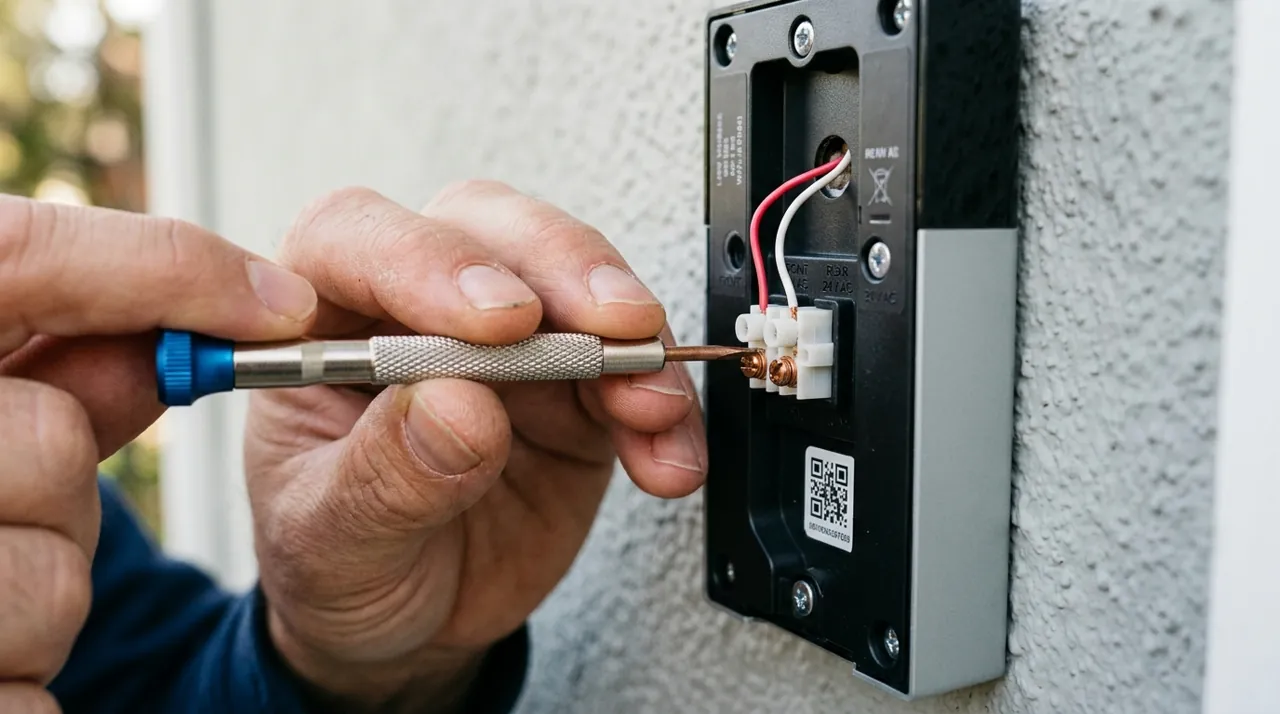
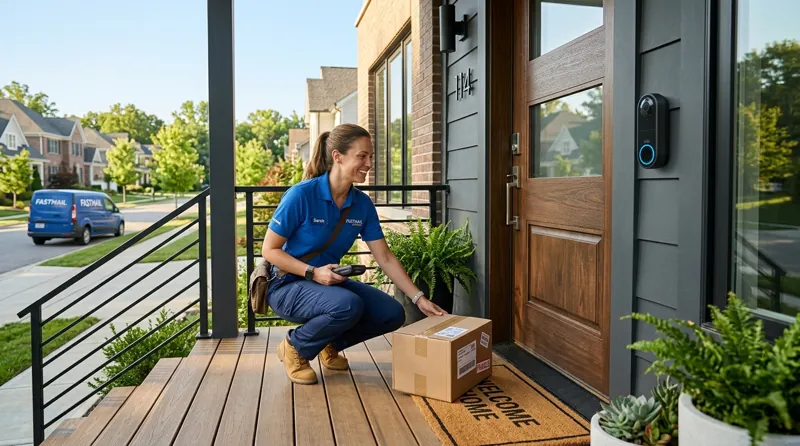
The head-to-toe framing is the most frequently cited positive — owners specifically note being able to see a delivered package without cropping or tilting the view. Install is reported as straightforward: a bracket, a few screws and an app pairing, with no wiring needed. The IP55 rating and stated -20°C to 50°C operating range are also mentioned favorably by owners in colder climates who report the doorbell continuing to function through winter.
What Owners Complain About
This is the lowest-rated device in Ring’s current outdoor/doorbell lineup, and the recurring complaints track closely with the rest of the brand: battery life shorter than quoted in busy, high-traffic locations; occasional notification delay; and buyers surprised that useful features (recorded history, person detection) sit behind a subscription. Some owners also note the single-band 2.4GHz-only WiFi can be finicky to pair on routers that don’t clearly separate 2.4GHz and 5GHz networks.
Who It’s For
First-time doorbell buyers with no existing wiring who want the newest hardware in Ring’s battery lineup and are comfortable with the subscription model. The head-to-toe frame makes it a particularly strong fit for households that get frequent deliveries.
Who Should Skip It
Buyers who want a doorbell with zero recurring fee should look at our best video doorbell without subscription roundup instead, and anyone who wants the absolute highest-rated Ring hardware should compare it against the rest of the Ring lineup, where several devices score higher.
Pros and Cons
Pros: genuinely useful head-to-toe 2K frame, no wiring required, easy install, wide temperature rating for cold climates.
Cons: lowest-rated current Ring device in this comparison, battery life varies with traffic volume, subscription required for recorded history, single-band WiFi only.
Night Vision Performance
This model switches to infrared night vision after dark, with Ring quoting illumination up to 6m, and reviewers describe the alert light and visible glow at the door as a mild deterrent in its own right, separate from the video itself.
Ring Battery Doorbell Design and Build
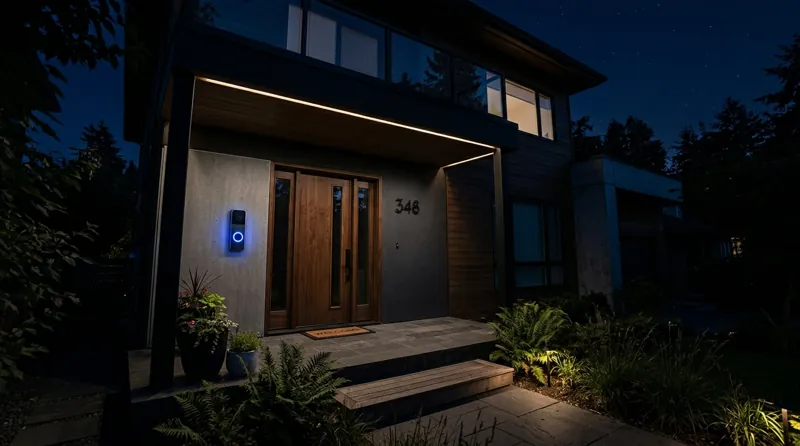
The Ring Battery Doorbell keeps the brand's familiar shape — a tall, narrow faceplate over a physical press button, offered in a small set of finish colors rather than a single glossy option. Owners describe the housing as solidly built for a plastic-bodied device in this price tier, with a snug fit against the included mounting bracket that doesn't rattle in wind the way some cheaper doorbells reportedly do. The battery is built in rather than a swappable pack: an easy-release mechanism lets the whole doorbell come off its mounting plate for charging over a standard USB-C cable, which Ring does not include in the box.
Ring Battery Doorbell Installation
Because it runs on battery power by default, most owners report installing this doorbell themselves in well under thirty minutes with the included mounting plate, screws and a screwdriver — no electrician and no existing wiring required. Ring lists the wedge kit as sold separately, which matters for doors where the doorbell would otherwise point down a hallway rather than out at the porch, and reviewers who mounted next to brick or stucco note the included anchors handle those surfaces without extra hardware. For households with existing low-voltage doorbell wiring, the same unit can be wired in to trickle-charge continuously instead of being removed for manual charging — see the wiring FAQ below for how that changes the maintenance routine. Anyone installing their first video doorbell should also confirm their WiFi signal reaches the mounting spot before finalizing placement, since a weak signal at the door is a more common cause of dropped alerts than the hardware itself.
Ring App, Motion Alerts and Chime Options
The Ring app handles live view, motion and ring alerts, and — with a Ring Protect subscription — recorded event history and richer motion zones. Owners consistently describe the app itself as mature and reasonably polished compared to some newer doorbell brands, a reasonable expectation given how long Ring has iterated on it. Push notifications arrive quickly in most reports, though, as with any WiFi doorbell, a weak signal at the mounting position is the most commonly cited cause of delayed or missed alerts rather than an app fault. Because the doorbell itself has no built-in audible chime, households that want to actually hear a ring from another room — not just see a phone notification — typically add an indoor chime accessory; see best doorbell chimes for compatible options.
WiFi, Privacy and Security Considerations
As a WiFi-connected camera pointed at a public-facing entry, the Ring Battery Doorbell raises the same general privacy questions as any video doorbell — what it can see, who else can see the footage, and how it's protected against unauthorized access. Ring supports two-factor authentication on the account, which security-conscious owners are advised to enable given how much a compromised doorbell account could expose. Motion zones let a household narrow detection away from a neighbor's yard or a public sidewalk, which matters both for reducing false alerts and for staying within the more considerate end of what's reasonable to record on a shared street. For the legal side of what a doorbell camera can and can't record, see home camera legality in the US.
Going Deeper: Why This Doorbell Uses Only 2.4GHz WiFi
Ring’s specifications list this doorbell’s connectivity as single-band 2.4GHz WiFi, Wi-Fi 4, and both parts of that phrase help explain owner reports. Wi-Fi 4 is the Wi-Fi Alliance’s name for the older 802.11n standard: when the Wi-Fi Alliance introduced generational names in October 2018, it defined Wi-Fi 4 as devices supporting 802.11n, Wi-Fi 5 as 802.11ac and Wi-Fi 6 as 802.11ax.
The 2.4GHz band suits a doorbell for a physical reason. Intel’s comparison of WiFi bands says “2.4 GHz has the longest range and wall-penetration capability of the available bands.” A doorbell usually sits on the far side of an exterior wall from the router, often near the edge of coverage, so reach matters more than raw speed.
The costs are speed and crowding. Intel notes that 2.4GHz devices are typically limited to three 20 MHz channels, that the band is busy because most legacy devices still use it, and that it tops out around 100 Mbps compared with up to 1 Gbps on 5GHz. For a doorbell sending a single video stream, that speed ceiling is rarely the problem; a weak or congested signal at the door is the more common cause of the delayed alerts owners describe, as the installation section above notes.
The pairing trouble some owners report fits the same picture. A 2.4GHz-only device has to connect on that band specifically, and the review above notes it can be finicky on routers that don’t clearly separate their 2.4GHz and 5GHz networks. Checking how your router presents its bands, and confirming signal strength at the mounting spot before you drill, are the practical first steps.
Verdict
The Ring Battery Doorbell is a solid, if not standout, entry point into Ring’s doorbell lineup — the head-to-toe frame is a genuine practical upgrade, but it’s outscored by Ring’s own wired floodlight and indoor cameras. It’s the right doorbell if wireless installation and delivery-package framing matter most to you; see best video doorbell cameras for how it stacks up against the wider field.
Accessories for This Camera

Best for an audible indoor chime for eufy doorbell households.

Best for angling this camera precisely under an eave, soffit or shelf.
Alternative Video Doorbells to Consider
- Arlo Video Doorbell 2K + Chime review
- Tapo D210 Video Doorbell review
- Best Video Doorbell Cameras — the full ranked field
Sources & References
- Battery Video Doorbell 2K (2nd Gen) — Ring
- Comparing Ring Plans — Ring
- Explore Ring plans — Ring
- Using IP Cameras Safely — Federal Trade Commission
- Wi-Fi Alliance Introduces Wi-Fi 6 — Wi-Fi Alliance
- 2.4 GHz vs. 5 GHz vs. 6 GHz: What’s the Difference? — Intel