
Affiliate Disclosure: Some links on this page are affiliate links. As an Amazon Associate, we earn from qualifying purchases — at no extra cost to you. We do not buy, install, or physically handle the cameras we cover; our rankings come from aggregated owner reviews, ratings and expert consensus. Commissions never change our verdicts. We're reader-supported: commissions fund hosting, research and updates, so if a guide helped, buying through our links keeps it going. How we rank · full disclosure.
Short version: the security lighting FAQs below come down to a few rules: mount lights 8-10 feet up, angled across your own property rather than toward a neighbor’s, match brightness to the spot (roughly 1,500-2,500 lumens for a doorway, 2,000-4,000 for a yard or typical driveway), and expect a solar light’s battery to lose capacity gradually over a few years of daily charging.
A security light does one job well: it changes a dark approach into a lit one the moment something moves. Getting real value from that simple mechanism comes down to a handful of practical decisions covered on the main hub page, plus the details this guide focuses on: exactly how bright is enough, where to mount for the best coverage without upsetting a neighbor, how motion sensitivity actually works, and what solar and hardwired lights each need to keep performing well over time. None of these decisions require expert knowledge, but getting them right the first time saves a return trip up the ladder later.
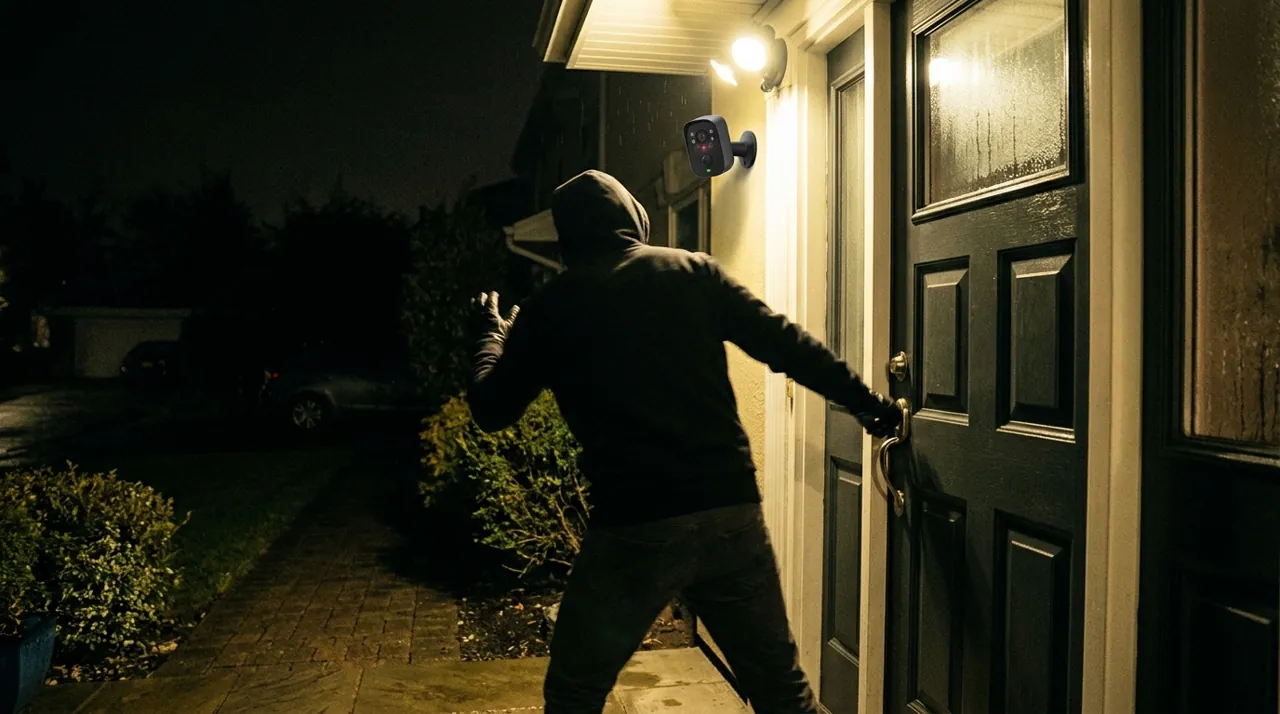
Solar vs Hardwired: Choosing the Right Type for Each Spot
Solar lights install anywhere with a few hours of daily direct sun and no existing wiring, which makes them the natural choice for a shed, a fence line, or a detached structure with no electrical access. Hardwired lights connect to an existing outdoor junction box or fixture and never depend on sun exposure or battery charge, which makes them the more dependable choice for a position you want reliably lit every night regardless of weather. Many properties end up using both: hardwired at the main entrance where reliability matters most, solar at secondary positions where running new wiring isn't practical.
Lumens and Coverage: How Bright Is Actually Enough
How much light is enough depends on the spot. The FTC explains that lumens measure brightness, and these ranges are our rough guides from the lights on this site and owner reports, not a formal standard. Roughly 1,500-2,500 lumens suits a doorway, back entrance or side gate, and roughly 2,000-4,000 suits a general yard or typical driveway, with 7,500-9,000 reserved for a large or long driveway. Pushing well beyond what the spot needs starts producing diminishing returns: glare that can actually wash out detail in the area you're trying to see, plus a meaningfully higher chance of spilling unwanted light onto a neighbor's property. Match the lumen output to the specific area being covered rather than defaulting to the brightest model available, since more isn't automatically better past a certain point.
Security Light Placement and Mounting Height
8-10 feet up is the general sweet spot, angled slightly down and outward across the area you actually want covered. That height balances effective motion detection range against making the fixture meaningfully harder to reach and tamper with than a light mounted at eye level. Angle the fixture across your own property rather than straight out toward a street or a neighbor's yard, which both improves the light's usefulness and avoids the most common source of neighbor complaints in this category.
Avoiding Neighbor Disputes and Light Spill
Most light-spill complaints trace back to aiming rather than raw brightness; the National Park Service's home lighting guidance boils it down to lighting only where needed (shielded and aimed down), only when needed (motion sensors or timers) and at the minimum brightness needed. A bright light aimed carefully down and across your own property causes fewer problems than a dim light pointed carelessly toward a shared boundary or a neighbor's window. If a specific complaint does come up, re-aiming the fixture is usually a five-minute fix, and it's worth doing proactively before installing rather than waiting for a neighbor to raise it.
Motion Sensitivity and Reducing False Triggers
Most motion sensor lights let you adjust sensitivity and detection range through a dial or a companion app, and tuning this after initial installation meaningfully reduces nuisance triggers from street traffic, passing pedestrians, or small animals moving through the yard. Start with a moderate sensitivity setting and adjust down if the light triggers more often than feels useful, rather than leaving it on a factory default that may not suit your specific location. A pet-immunity setting, where available, specifically filters out small animals without reducing sensitivity to a person.
Battery Life and Maintenance for Solar Lights
A solar light's rechargeable battery gradually loses capacity with daily charge cycles and seasonal heat and cold, like any rechargeable battery, and runtimes typically shorten noticeably after a couple of years of use. Wiping dust and debris off the solar panel periodically meaningfully improves charging efficiency, since even a light layer of grime measurably reduces how much sun reaches the cells. Check whether the specific model has a user-replaceable battery or requires replacing the whole unit once the battery ages out, since this varies by product.
Pairing With a Camera or a Deterrent
A security light provides illumination and deterrence, not recording. Pairing it with a camera, see the floodlight cameras hub for a combined unit, or the outdoor cameras hub for a separate camera, adds visual evidence to the deterrent effect. A warning sign or dummy camera, covered on the Security Deterrents FAQs, is another low-cost layer that pairs well with a bright, well-aimed light. Building coverage in layers, light first, then a camera, then a deterrent sign, is a reasonable way to spread the cost of a complete setup over time rather than buying everything at once.
Weatherproofing and Cold-Climate Performance
Look for an IP65 rating or higher on any light mounted outdoors year-round: IP65 means dust-tight and protected against low-pressure water jets from any direction, genuine resistance to rain and general weather exposure rather than just splash resistance. Heavy, prolonged snow cover on a solar panel reduces charging until it's cleared, and cold temperatures around freezing can temporarily shorten a rechargeable battery's runtime on any solar light, not just this category specifically. A hardwired light sidesteps both issues entirely, which is worth weighing for a genuinely harsh climate where a solar light's performance could meaningfully dip during the exact season you want reliable coverage most.
Dusk-to-Dawn and Timer Modes
A dusk-to-dawn light stays on continuously from sunset to sunrise based on an ambient light sensor, rather than switching on only when triggered by motion. Some fixtures combine both approaches, staying dim overnight and brightening sharply on motion, which balances constant low-level visibility with the alert value of a sudden bright trigger. A timer mode, where available, offers similar constant-illumination coverage without needing a light sensor, useful for a walkway or entrance you want lit on a predictable schedule rather than purely on movement.
Common Questions
For product picks, see motion sensor lights ranked by owner reviews, solar security lights worth considering or leading security lights. For the solar-vs-hardwired decision in full, see the security lighting buying guide.
Sources & References
- Positioning Doorbells and Security Cameras — Ring
- Protecting Night Skies at Home — National Park Service
- Improving Street Lighting to Reduce Crime in Residential Areas — ASU Center for Problem-Oriented Policing
- Introduction to Security Cameras' Weatherproof IP Rating — Reolink
- Ring Devices and Extreme Temperatures — Ring
- Lumens and the Lighting Facts Label — Federal Trade Commission