
Affiliate Disclosure: Some links on this page are affiliate links. As an Amazon Associate, we earn from qualifying purchases — at no extra cost to you. We do not buy, install, or physically handle the cameras we cover; our rankings come from aggregated owner reviews, ratings and expert consensus. Commissions never change our verdicts. We're reader-supported: commissions fund hosting, research and updates, so if a guide helped, buying through our links keeps it going. How we rank · full disclosure.

REOLINK RLK8-410B4 8-Channel 5MP NVR System, 4 Cameras
A 4-camera PoE NVR kit with substantial expansion headroom, no subscription required.
Check Price →
In Plain English
The RLK8-410B4 is a complete wired security kit: four outdoor cameras, a recorder box (an NVR, or network video recorder) and a 2TB hard drive. Each camera plugs into the recorder with one network cable that carries both power and video, called PoE (Power over Ethernet).
Think of the recorder as a car park with eight spaces. The kit fills four, so you can add four more cameras later without buying a new car park.
Everything records at home, onto the hard drive, so there is no monthly fee. You can still watch on your phone through Reolink’s app.
Why it matters: it is a proven, well-reviewed way to cover a typical house, such as the front door, back door, driveway and one more angle, with room to grow.
The one thing to plan: the cable runs. Most owners spend a weekend routing cable through an attic or crawlspace, so map out where each camera will go before the box arrives.
Full Specifications
| Cameras included | 4, 5MP resolution |
| NVR channels | 8 (4 spare for expansion) |
| Power | PoE |
| Storage | 2TB HDD included, expandable (Reolink lists up to 16TB) |
| Night vision | Infrared, up to 100ft (30m) |
| Weatherproofing | IP67, aluminum camera housing |
| Smart detection | Person, vehicle and animal |
| Subscription | None required, records locally |
| Status | Listed as discontinued on Reolink’s product page; availability depends on remaining retail stock |
Summary
The distinction that matters up front: this REOLINK RLK8-410B4 kit and the near-identical RLK8-410B6 are the two camera-count variants of the same 5MP RLK8-410 family — both 5MP, both on the same 8-channel NVR, same no-subscription local recording. The B4 ships four cameras and leaves four spare channels; the B6 ships six and leaves two spare. Start with the B4 when you want to cover a standard perimeter now and grow into a shed or side gate later; choose the B6 when you already know a house needs six angles from the outset. Neither is the 4K option — that is the RLK8-800D4. The REOLINK RLK8-410B4 holds a solid rating across a deep base of verified owner ratings, recording locally with no subscription. For a household weighing a wired PoE system against a battery or plug-in WiFi setup, this kit represents the more traditional, hard-wired end of the home security camera market — a genuine installation project up front in exchange for reliable local recording, no recurring fee, and meaningful room to grow the system over time.
What owners praise
The expansion headroom — four spare channels beyond the included cameras — is repeatedly cited as valuable for buyers who expect to add coverage over time without replacing the NVR. No-subscription local recording remains a consistent category strength.
What owners complain about
As with any PoE system, the installation is a genuine project requiring cable runs to each camera position — the main tradeoff reviewers note against the reliability and no-fee benefits.
Design and Build Quality
The four included cameras use a bullet-style housing rated for outdoor exterior mounting, per the manufacturer's specification. Reolink specifies an aluminum metal housing with IP67 weatherproofing. Owners consistently describe the housings as feeling solidly built rather than lightweight. The NVR unit itself is a compact desktop box. It's designed to sit near a router or network switch rather than being wall-mounted. Cable connections at both the camera and NVR ends use weatherproof PoE connectors. Reviewers specifically call this out as reassuring for an outdoor-rated system that will sit through multiple seasons of weather exposure without a service visit.
Key Features
Beyond the core 4-camera, 8-channel configuration, the system's headline feature is the four spare NVR channels. That gives genuine room to add more cameras later without replacing the recording hub. Each camera records at 5MP resolution, which sits above standard 1080p but below the 4K/8MP tier Reolink offers on its higher-end kits like the RLK8-800D4. Local recording with no mandatory subscription is consistent across Reolink's NVR lineup. The system supports motion-triggered recording (the default), scheduled recording and 24/7 continuous recording, per Reolink's spec page, along with person, vehicle and animal detection. That lets owners balance storage consumption against how much footage history they want retained on the included hard drive.
Performance From Owner Reviews
Aggregated owner ratings for the RLK8-410B4 describe dependable day-to-day performance across the core functions — steady recording, functional motion detection, and a live-view app experience that reviewers generally call responsive rather than laggy. Night vision performance is a recurring point of praise, with owners noting usable detail at typical residential distances after dark. Where reviews trend more mixed is around initial network configuration for less tech-comfortable buyers, a pattern common to PoE NVR systems generally rather than specific to this kit — most owners who push through the initial setup describe the ongoing experience afterward as low-maintenance.
Setup and Installation Experience
Because this is a PoE system, installation is a more involved project than a plug-in WiFi camera: each of the four cameras needs an Ethernet cable run back to the NVR, which typically means routing cable through an attic, crawlspace or along exterior trim depending on the home's layout. Most owners describe a realistic weekend timeframe for a first-time PoE installation, including mounting the cameras, running cable, and completing the NVR's initial network setup. The box includes the core cabling and mounting hardware needed for a typical 4-camera layout, though longer cable runs than what's included are a common and inexpensive add-on purchase for larger properties.
Who It's For
Buyers starting with 4 camera positions who want significant room to expand without a new NVR purchase later are the clearest fit for this kit. It particularly suits a household covering a typical residential perimeter — front door, back door, driveway and one additional angle — with the option to add coverage for a shed, side gate or detached garage down the line using the same recording hub. Anyone who values local, subscription-free recording over cloud convenience, and who is comfortable with a genuine PoE cable-running project rather than a plug-in WiFi setup, is squarely the target buyer here.
Who Should Skip It
If you want to start with 6 cameras instead of 4, see REOLINK RLK8-410B6 review. Buyers who specifically want 4K resolution rather than 5MP should look at the RLK8-800D4 instead, and anyone unwilling to run Ethernet cable to each camera position is better served by a battery or plug-in WiFi camera system rather than any PoE NVR kit, this one included.
App and Remote Access
The Reolink app handles both local viewing over the home network and remote access from outside it, syncing to whichever channels are active on the NVR. Owners generally describe the app as functional for checking live feeds and pulling up recorded clips, with push notifications for motion events available without a mandatory subscription — a meaningful point of differentiation from cloud-camera brands that gate notification history or extended clip storage behind a monthly fee. Multiple household members can install the app and log in to the same NVR — Reolink lists support for 20 user accounts (one admin plus 19 users).
Expansion and Storage Planning
The four spare NVR channels are this kit's standout practical feature: a household that starts with four camera positions can add up to four more later using the same NVR, rather than needing an entirely new recording hub when coverage needs grow. That expansion headroom does mean storage planning deserves some thought up front — more active cameras recording continuously will fill the included hard drive's retention window faster, and owners planning to eventually use all eight channels commonly plan for a larger drive from the outset rather than upgrading twice.
Pros and Cons
Pros: substantial expansion headroom, no subscription, solid review base, complete kit in one purchase.
Cons: PoE installation is a real project, 5MP rather than 4K resolution.
Going Deeper: What 5MP Means, and How This Kit Records and Survives Weather
Reolink’s spec sheet lists the kit’s cameras at a default resolution of 2560 × 1920 (5.0 megapixels) at 25 frames per second, through a fixed 4.0mm lens with an 80° horizontal field of view, recording in H.264 or H.265. That is about 4.9 million pixels a frame, more than twice 1080p’s 2.1 million and a little over half of 4K’s 8.3 million, which is exactly the middle ground this review describes: clearly sharper than mainstream 1080p, but short of what you need to read a plate at distance.
Encoding decides how long the 2TB drive lasts. The International Telecommunication Union said H.265 would need only half the bit rate of H.264 for comparable video, so running the cameras in H.265 is the cheapest way to stretch retention before upgrading the drive. Reolink lists the NVR’s storage capacity at up to 16TB.
The IP67 rating on the housings has a specific meaning. As Reolink’s guide to IP ratings explains, the first digit covers dust and the second covers water: a 6 means completely dustproof, and a 7 means the housing can endure temporary immersion in water up to 1 metre for 30 minutes. That is more than rain demands, which is why owners describe the cameras going through seasons without a service visit. Night vision comes from 18 infrared LEDs per camera, which Reolink rates to 30 metres (100 ft).
Power and cabling follow standard PoE rules. Reolink says its PoE cameras, apart from a few listed models, need an IEEE 802.3af-compliant, 48V active PoE source, which the NVR provides over the same cable that carries video. Its cable FAQ gives a maximum run of 100m (328 ft) on Cat 5e or better and notes that standard NVR kits include an 18m (59 ft) cable per camera, so longer runs mean buying extra cable up front.
Verdict
A well-evidenced NVR kit for buyers wanting room to grow. See best security camera systems for how it compares against the field.
Accessories for This Camera


Best for extending 24/7 recording history beyond the included drive.
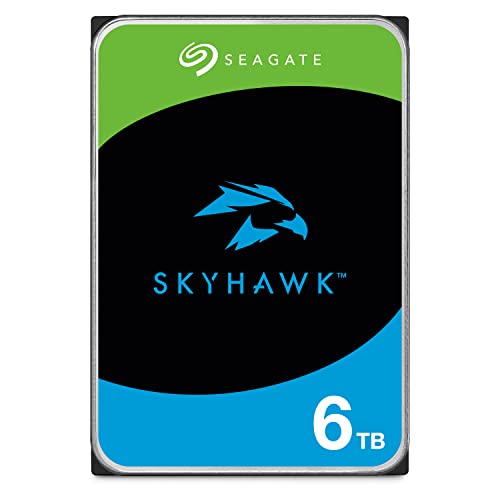
Best for maximum retention on a larger camera count or 4K system.
Alternatives to Consider
- Reolink RLK8-800D4 review
- Best Security Camera Systems — the full ranked field
Sources & References
- Reolink RLK8-410B4 Smart PoE NVR System with 4 Cameras — Reolink
- How to Power on Reolink PoE Cameras — Reolink
- Reolink Ethernet Cable FAQ — Reolink
- SkyHawk Surveillance Hard Drive — Seagate
- New video coding standard HEVC (H.265) approved — International Telecommunication Union
- Introduction to Security Camera Weatherproof IP Ratings — Reolink Support