
Affiliate Disclosure: Some links on this page are affiliate links. As an Amazon Associate, we earn from qualifying purchases — at no extra cost to you. We do not buy, install, or physically handle the cameras we cover; our rankings come from aggregated owner reviews, ratings and expert consensus. Commissions never change our verdicts. We're reader-supported: commissions fund hosting, research and updates, so if a guide helped, buying through our links keeps it going. How we rank · full disclosure.

REOLINK RLK8-410B6 8-Channel 5MP PoE System, 6 Cameras
A complete 6-camera PoE system with 2 channels of expansion headroom, no subscription required.
Check Price →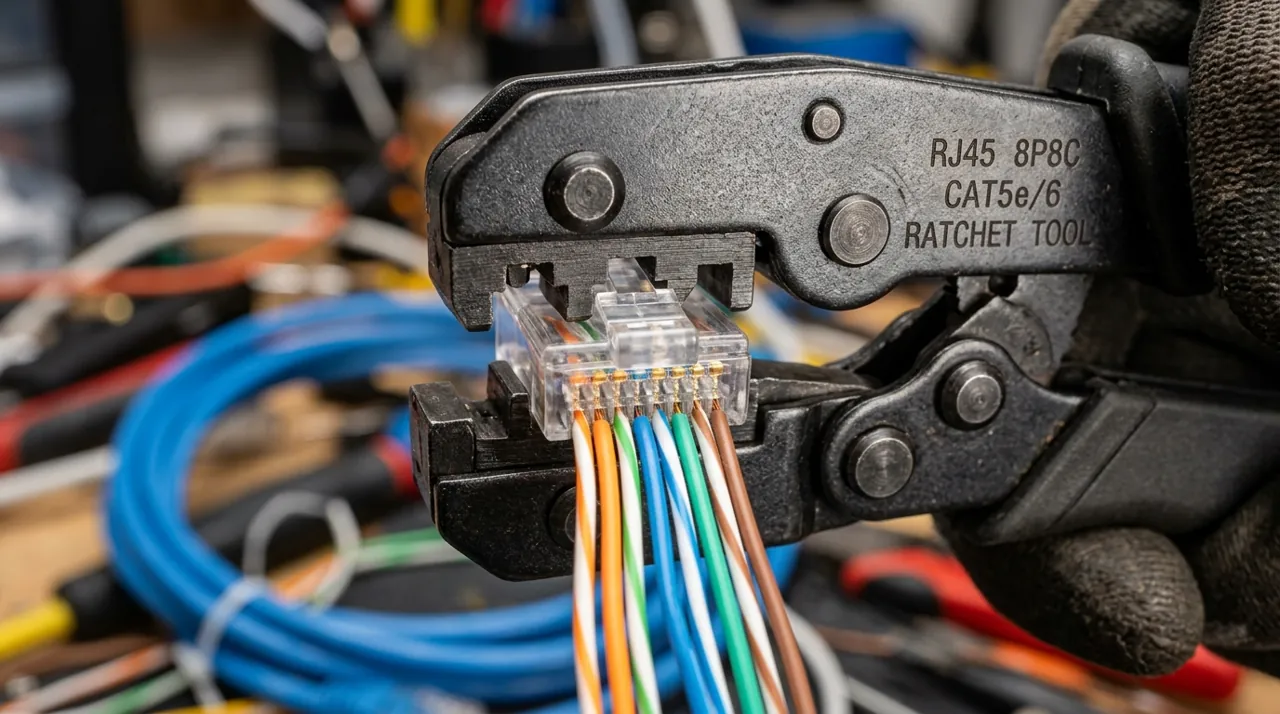
In Plain English
The REOLINK RLK8-410B6 is a complete wired camera kit: six outdoor cameras plus a recorder box that stores everything on a hard drive inside your home. Each camera connects by one Ethernet cable that carries both power and video.
Because the footage lives on your own drive, there is no monthly fee to record or play it back. The recorder has eight camera slots, so you can add two more cameras later without buying a new box.
Think of the hard drive as a notebook that never runs out of pages because it quietly rubs out the oldest ones. With six cameras writing to it nonstop, it holds about five days before it starts writing over the oldest video.
The one thing to plan: running six cables is a real job, often a full weekend. Measure the route from each camera to the recorder before you start, because PoE cable runs top out around 100 meters.
Full Specifications
| Cameras included | 6, 5MP resolution |
| NVR channels | 8 (2 spare for expansion) |
| Power | PoE |
| Subscription | None required, records locally |
Summary
The distinction that matters up front: this B6 kit and the near-identical RLK8-410B4 are the two camera-count variants of the same 5MP RLK8-410 family — both 5MP, both on the same 8-channel NVR, same no-subscription local recording. The B6 ships six cameras and leaves two spare channels; the B4 ships four and leaves four spare. Pick the B6 when you already know a house needs six angles from day one; pick the B4 when you want to start smaller and grow. Neither is the 4K choice — that is the RLK8-800D4. The REOLINK RLK8-410B6 holds a strong rating across a genuinely strong review base for a full 8-channel NVR kit, recording locally with no subscription required.
What owners praise
Comprehensive coverage from a single purchase is the most repeated theme, along with the expansion headroom that lets buyers add two more cameras later without a new NVR. No-subscription local recording continues to be one of Reolink’s most consistently praised category-wide features.
What owners complain about
Installation is a genuine project — running PoE cable to six positions is more involved than a wireless kit, and some reviewers note this as the main tradeoff for the comprehensive coverage and no-subscription model. A handful of reviewers also mention that six cameras generate a lot of footage, so drive space fills up faster than it does on a smaller two- or four-camera kit.
Design and Build Quality
The RLK8-410B6 pairs an 8-channel NVR box with six bullet-style cameras built for outdoor mounting. Reolink's camera housings use a weatherproof metal-and-plastic shell, a design shared across most of the brand's PoE line. Owners describe the housings as solid rather than flimsy. Each camera ships with a mounting bracket that lets you angle it up or down once it's screwed to a wall or eave. The NVR itself is a compact desktop box meant to sit indoors near a router or patch panel. A waterproof cover on each camera's network connector seals the Ethernet connection against rain once it's wired in.
Camera Coverage and Night Vision
Each of the six 5MP cameras records in color by day. It switches to infrared night vision after dark. That's standard across Reolink's PoE range. The system includes motion detection with adjustable sensitivity zones. You can mask out a street or a neighbor's yard. That cuts down on irrelevant alerts. Smart detection tells people and vehicles apart from general motion. Owners specifically call this out, since it cuts notification fatigue compared to older motion-only systems. Audio is one-way: Reolink's spec sheet for this kit family lists a built-in microphone for audio recording but no speaker, so don't expect two-way talk.
PoE Cable Installation
Every camera connects to the NVR over a single Ethernet cable. That cable carries both power and video. That's what "PoE," Power over Ethernet, means in practice. There's no separate power adapter at each camera, just one cable run per position. PoE cable runs typically max out around 100 meters under the Ethernet standard. That covers most home layouts, but measure first before you assume reach across a larger property. Running six cables is a bigger job than a wireless kit. Fishing cable through walls, along eaves, or underground in conduit takes real time. It's the single most common reason reviewers describe the install as a weekend project rather than an afternoon one. Once the cables are run, the NVR auto-detects each camera. Setup in the app then walks through naming each position and setting a recording schedule.
App, Remote Viewing and Notifications
The Reolink app handles live viewing across all six channels at once. It also plays back footage stored on the NVR's hard drive. Owners generally describe the app as stable. Its multi-camera grid view is useful for a quick check of the whole property from one screen. Push notifications fire on motion. Where smart detection is turned on, they fire specifically on a detected person or vehicle. Remote access over the internet works without any subscription. Owners note that viewing high-resolution footage remotely still depends on home upload speed, the same as any NVR-based system.
NVR Storage, Recording and No Subscription
Recordings save directly to a hard drive inside the NVR, not to the cloud. That's why no monthly fee applies to basic recording and playback. Reolink's spec sheet for the RLK8-410 family lists a pre-installed 2TB drive; confirm the size on the current listing for your bundle. At the default bitrate that is roughly five days of continuous recording across six cameras, so budget for a larger drive swap later if you want a longer recording history across six channels. Both continuous and motion-triggered recording are supported. Owners commonly switch to motion-triggered recording to stretch available storage further across a busy multi-camera system.
Performance and Reliability From Owner Reviews
Across the aggregated owner reviews, daytime footage at 5MP is described as sharp. Owners say it's clear enough to identify faces and license plates at typical driveway distances. Night-time footage holds up well for the resolution tier too. Motion detection accuracy is a consistent strength owners point to. That's especially true once sensitivity and detection zones are tuned in during the first week of use. The NVR itself is reported as stable over long uptime periods. Firmware updates arrive periodically to add features, not just patch bugs. The most common reliability complaint isn't the hardware itself. It's a loose or weathered Ethernet connection at a camera after a season of outdoor exposure. That's usually fixed by reseating or resealing the cable gland, not by replacing the unit.
Who It’s For
Buyers who want comprehensive 6-camera coverage with room to grow, and are comfortable with a PoE installation project. It particularly suits a larger property — a house with a long driveway, a detached garage, or several entry points — where a two- or four-camera kit would leave real gaps in coverage. Anyone already comfortable running Ethernet cable, or willing to hire an installer for a day, gets the most value from the six-camera layout and the no-subscription recording model.
Who Should Skip It
If 4K resolution per camera matters more than camera count, see REOLINK RLK8-800D4 review. Renters or anyone unable to run cable to six outdoor positions should also look at a wireless battery or solar kit instead, since PoE cabling generally isn't practical without committing to the property long-term.
Pros and Cons
Pros: six cameras with expansion headroom, no subscription, strong owner rating, complete kit in one purchase.
Cons: PoE installation is a real project, 5MP rather than 4K resolution.
Going Deeper: How NVR Storage Adds Up, and How to Stretch It
The five-day figure in this review isn’t a fault; it’s arithmetic. An NVR recording continuously writes every camera’s stream to disk at all times, so retention is roughly the drive’s capacity divided by the combined data rate of all the cameras. Six 5MP streams add up quickly, which is why the same size of drive that Reolink estimates at about eight days across the four 4K cameras of the RLK8-800D4 gives roughly five days here.
Compression changes that data rate. The Fraunhofer Heinrich Hertz Institute says in its HEVC overview that the H.265/HEVC standard “achieves about 50% bit-rate reduction at the same subjective video quality” compared with H.264. Where your recorder lets you choose the codec, H.265 roughly halves the storage each hour of footage consumes; where it lets you lower bitrate or frame rate on less important channels, retention stretches further.
Recording mode matters as much. The review notes the system supports both continuous and motion-triggered recording, and that many owners switch to motion-triggered recording to stretch storage. A side-yard camera that sees a few events a day uses a fraction of the disk space of one recording nonstop, freeing capacity for the channels where an unbroken timeline matters most.
When the drive itself needs upgrading, choose one designed for constant recording. Seagate describes its SkyHawk drives as built for systems that work 24/7, rated for workloads up to 180TB per year, with ImagePerfect firmware to reduce frame loss and rotational vibration sensors for multi-drive systems. Before buying, confirm the maximum drive size your NVR supports in Reolink’s specifications for your model.
Verdict
A well-evidenced, comprehensive PoE system for buyers wanting extensive coverage with no subscription. See best PoE security camera systems for how it compares against the field.
Accessories for This Camera


Best for extending 24/7 recording history beyond the included drive.
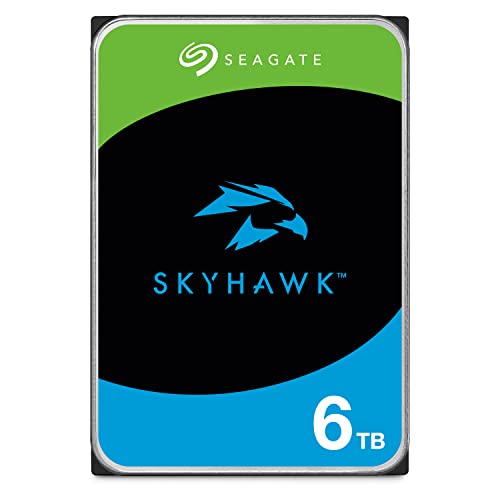
Best for maximum retention on a larger camera count or 4K system.
Alternatives to Consider
- Best PoE Security Camera Systems — the full ranked field
Sources & References
- RLK8-410B4 Smart PoE NVR System (RLK8-410 family spec sheet) — Reolink
- RLK8-800D4 4K PoE Security Camera System — Reolink
- What Is Power over Ethernet (PoE)? — Cisco
- H.265 / HEVC — Fraunhofer Heinrich Hertz Institute
- SkyHawk Video Hard Drives — Seagate