
Affiliate Disclosure: Some links on this page are affiliate links. As an Amazon Associate, we earn from qualifying purchases — at no extra cost to you. We do not buy, install, or physically handle the cameras we cover; our rankings come from aggregated owner reviews, ratings and expert consensus. Commissions never change our verdicts. We're reader-supported: commissions fund hosting, research and updates, so if a guide helped, buying through our links keeps it going. How we rank · full disclosure.
Short version: yes, for most households an indoor camera is a reasonable thing to own, but it is a decision about privacy as much as security. Put cameras where people enter, not where they undress or sleep, keep audio off unless everyone agrees, tell anyone who lives in or visits the home, and lock the camera down like the internet device it is. A camera that watches the hall while you are out is a good trade. A camera that watches the living room while you are home is usually not.
Where this comes from: we do not buy, install or physically test cameras. The privacy and security guidance below rests on the Federal Trade Commission, the Reporters Committee for Freedom of the Press, the U.S. Code and manufacturer support pages. This is general information, not legal advice. Method on how we rank.
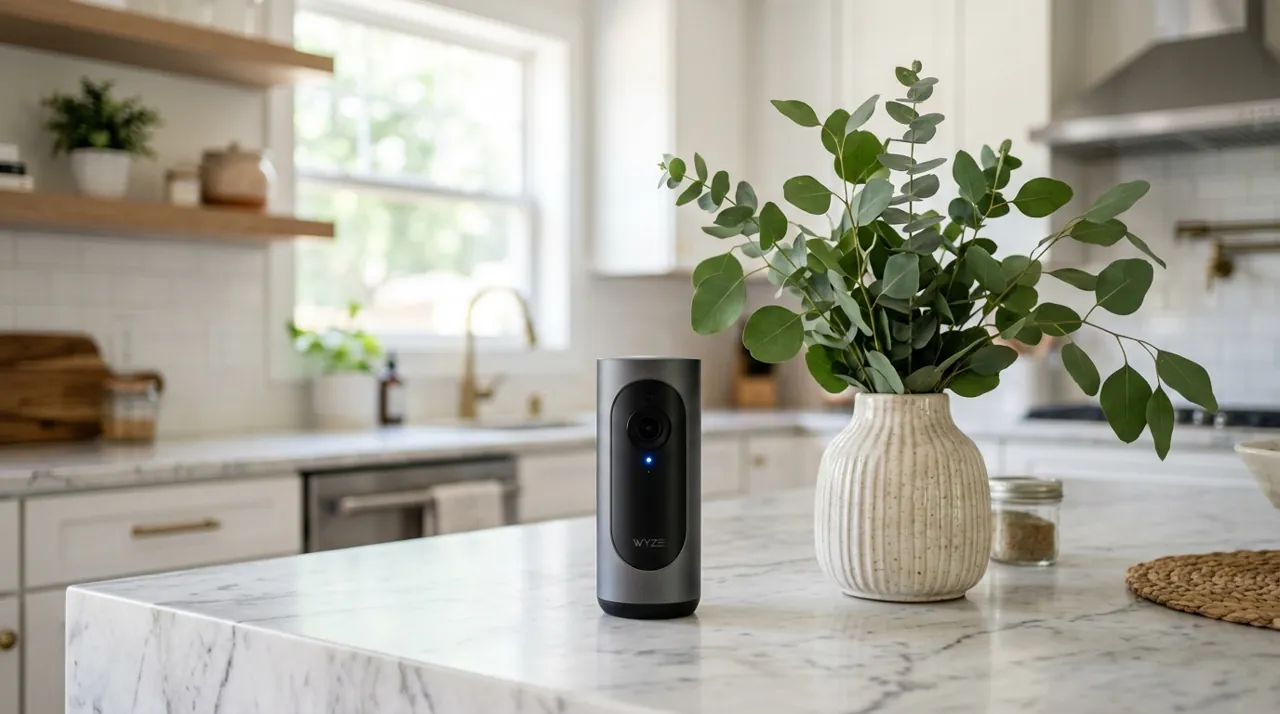
In Plain English
An indoor camera sees inside your home, so it can also see you. That is the whole tension. It can tell you a child got home safely, that a pet is fine or that a stranger walked in. It can also record a family argument, a morning in pajamas or a guest who did not know it was there.
The law is not complicated on the basics. It is your home, so you can generally record video there. The restrictions cover places where people expect real privacy, such as bathrooms, and they are stricter for sound than for pictures. Different states draw the lines in different places.
So the practical approach is to think like a considerate host. Put the camera where it protects the door rather than where it watches people live. Tell anyone who might be recorded. Turn off the microphone unless you need it. Turn the camera off, or cover it, when you are home. And lock down the account so nobody else can watch through it.
When an Indoor Camera Makes Sense
Indoor cameras earn their place in a few specific situations. You want to check on a pet or a child at home after school. You are away and want to see whether anyone entered. An older relative lives with you or alone nearby, and you want to know the day started normally. Or you want a second angle on an entry that an outdoor camera does not cover.
They are a worse fit if the main concern is deterring a burglar before they get in. By the time someone is inside, the camera is recording an event rather than preventing it. An outdoor camera or video doorbell does more for deterrence, and our best indoor security cameras roundup is for the cases where an indoor unit really is the right tool.
Room-by-Room Advice
Entry hall or foyer. The best single position for most homes. It sees everyone who comes in and out and avoids the private rooms.
Living room or main open area. Reasonable if you are away, but consider whether you want it recording when you are home. Ring recommends mounting indoor cameras in a room corner facing inward and away from windows, which also gives the widest view of the room.
Kitchen. Common for pets and for watching a back door. Keep it away from where guests would change or from a shared household space if you have housemates.
Stairs and hallways. A hallway or landing that everything passes through sees more of what matters than several cameras in separate rooms.
Children’s rooms and nurseries. Legal for parents in your own home, and many families use them. They are also the highest-consequence place for a security lapse, so give them your strongest password, two-factor authentication and up-to-date firmware. See using a security camera as a baby monitor.
Bedrooms. Avoid your own bedroom, and never place a camera in a bedroom used by a guest, a housemate or a family member who has not agreed.
Bathrooms and changing areas. No camera, ever. This is the clearest line, in practice and in law.
The Privacy Rules in Plain Terms
Video. The Reporters Committee for Freedom of the Press explains in its recording guide that hidden camera laws address only the recording of video images, though some also cover audio. Where they do not cover audio, the audio portion of a recording is subject to the state’s recording law, and if your camera does not record audio, wiretap laws will generally not apply. That is why turning the microphone off simplifies the legal picture for an indoor camera.
Audio. Federal law sets a minimum of consent from at least one party before recording conversations. The Reporters Committee lists about 11 states that require everyone’s consent, including California, Florida, Illinois, Maryland, Massachusetts, Pennsylvania and Washington, with a few more that have partial rules. A camera that records a conversation between two visitors when you are not part of it is where the risk sits. If you are unsure, disable audio.
Places with a reasonable expectation of privacy. The federal video voyeurism statute, 18 U.S.C. 1801, makes it a crime to intentionally capture images of a person’s private areas without consent where they have a reasonable expectation of privacy, punishable by a fine, up to one year in prison, or both. It applies only in the special maritime and territorial jurisdiction of the United States, so it is not the everyday rule for a home, but it shows how the law thinks about the question, and states have their own, broader laws.
Who lives there. A camera in your own home is one thing. A camera in a shared house, a room you rent out or a nanny’s work area is another, and the safe course is agreement in advance, not a hidden device. Our privacy and hacking hub covers this ground in more depth.
The Real Risk: Who Else Can Watch
An indoor camera is only private if nobody else can log in. The FTC’s guide to securing home security cameras gives a clear checklist.
Pick a camera with security built in, including encryption of your account information, livestreams and stored video. Secure your Wi-Fi with a strong router password, firewall and encryption, and consider isolating cameras on a separate network. Keep everything updated, both the camera firmware and the viewing app, and sign up for automatic updates if the manufacturer offers them. Use a strong, unique password that you have not used elsewhere and change any default credentials. Check that the login page shows https, so the connection is encrypted. Manage remote viewing carefully, and look for cameras that let you disable it. Control sharing, choosing cameras that let you limit who can watch and when.
Turn on two-factor authentication if the service offers it. See our answers on whether security cameras can be hacked and how to tell if yours has been.
Privacy Controls to Look For
Features that make an indoor camera easier to live with are worth paying for. A physical shutter or lens cover gives certainty that nothing is recording. Scheduling or geofencing turns the camera off when phones are home. Privacy zones, which Ring describes as blocking areas you do not want in the picture, let you exclude part of a room. A visible status light shows when the camera is active, which is fair to visitors. A local-storage option keeps footage off the cloud, at the cost of losing it if the camera is stolen. Check how each one works on the specific model before buying.
Telling Guests, Housemates and Workers
The kind thing to do, and usually the safest, is to say so. A short sentence covers most cases: there is a camera in the hall that records while nobody is home. Housemates and long-term guests should know where each camera is and whether it records sound. Nannies, cleaners and tradespeople should be told before their first visit, and a camera should not be hidden in a space they use for changing or breaks. A visible camera also does more for deterrence than a hidden one. If a short-term guest is staying in a room or a rental, check the platform and local rules rather than assuming a camera is fine.
How We Rank
When this site ranks cameras, it uses aggregated owner star ratings weighted by review volume, recurring themes in negative reviews, and specification differences owners raise unprompted. We do not buy or physically test cameras. Full method on how we rank.
Going Deeper: Why Audio Is Riskier Than Video
People are often surprised that the law treats a microphone more seriously than a lens. The reason is history. American recording law grew out of wiretapping statutes, which were written to protect conversations. The Reporters Committee notes that federal law establishes the minimum consent requirements across the country: consent of at least one party before recording in-person, telephone or electronic conversations. States can be stricter, and about 11 require every party to consent. Those rules are about hearing and capturing speech.
Hidden camera and video voyeurism laws address a different harm: watching or recording people in places where they expect privacy. The Reporters Committee explains that these laws address only the recording of video images, though some also cover audio. That is why the same camera can raise two separate questions. Where is it pointed, and is it listening?
For a homeowner, the practical consequence is a simple rule of thumb. If the camera has no microphone, or the microphone is off, the wiretap side of the analysis usually falls away, and you are left with the question of where the lens points. If audio is on, you need to think about whose conversations it might capture when you are not in the room: a babysitter on the phone, two guests talking, a tradesperson on a call. A camera that records those conversations without anyone knowing is where trouble starts, especially in an all-party consent state.
The federal video voyeurism statute shows the other half of the picture. It defines a reasonable expectation of privacy around whether a person could reasonably disrobe without concern about being photographed, and whether a private area would be visible to the public. It is limited to federal jurisdiction, but it captures the instinct behind most state laws, which is why bathrooms and changing areas are the fixed point in every version of this question. Where a state law is stricter than the federal one, the stricter rule applies to you, so read your own state’s rules or ask a local attorney if you have a specific situation, such as a rental or a household worker.
The Bottom Line
An indoor camera is a sensible tool if you use it narrowly. Cover the door and the hall. Keep it out of bathrooms, changing areas and other people’s bedrooms. Turn audio off unless you have a reason and everyone knows. Tell the people who live in or visit the home. Then spend ten minutes on the FTC’s security checklist, because a private camera is only private if it is locked down.
Sources & References
- How To Secure Your Home Security Cameras — Federal Trade Commission
- Introduction to the Reporter's Recording Guide — Reporters Committee for Freedom of the Press
- 18 U.S. Code 1801 - Video voyeurism — Legal Information Institute, Cornell Law School
- Positioning Doorbells and Security Cameras — Ring
- Motion Detection for Ring Devices — Ring