
Affiliate Disclosure: Some links on this page are affiliate links. As an Amazon Associate, we earn from qualifying purchases — at no extra cost to you. We do not buy, install, or physically handle the cameras we cover; our rankings come from aggregated owner reviews, ratings and expert consensus. Commissions never change our verdicts. We're reader-supported: commissions fund hosting, research and updates, so if a guide helped, buying through our links keeps it going. How we rank · full disclosure.
Short version: a Ring camera showing offline is almost always one of five things. Weak WiFi signal at that mounting position. A dead or critically low battery. A router that restarted or changed settings. A transformer issue on a hardwired doorbell. Or a temporary Ring app glitch that doesn't reflect the camera's real status. Work through them in that order.

In Plain English
When the Ring app says a camera is “offline,” the camera has stopped checking in with Ring over the internet. While it’s offline, it can’t send alerts, show live video or save clips.
Think of it like a phone call that keeps dropping. The phone usually isn’t broken. More often you’re standing somewhere with poor reception, the battery is nearly flat, or the network had a hiccup. Ring cameras are the same.
The most common cause is a weak WiFi signal where the camera is mounted, often on an outside wall far from the router. Cold weather can also drain a battery camera faster. The one thing to check first: open the camera’s Device Health screen in the Ring app and look at the RSSI number (a measure of WiFi signal strength). Numbers closer to zero are better. If it’s weak, moving the router closer or adding a mesh node (an extra WiFi point) usually fixes it. If the signal looks fine, charge the battery and restart your router next.
Ring Devices This Guide Applies To

The most-reviewed video doorbell tracked on this site with one of the deepest, highest-rated review bases we track. Battery-powered doorbells are the most common source of offline reports, since a depleted battery drops the WiFi radio.
Why You Should Get This
If this doorbell is showing offline, check its battery level first — that’s the most common cause on battery Ring devices.
Benefits
- Deepest review base of any doorbell tracked on this site.
- Battery level directly affects WiFi stability.
- No wiring required.
Pros and Cons
- Largest, most trustworthy review base.
- Extensive community troubleshooting resources.
- Removable battery for a quick swap.
- Battery drain is the most common cause of offline reports.
- Recorded clip history needs a subscription.
- Lower resolution than Ring’s 4K Pro doorbells.
Features
- Head-to-toe 1:1 view.
- Removable battery or hardwiring.
- Two-way talk.

The highest-rated Ring device tracked on this site with one of the highest ratings and deepest review bases we track. Wired power removes battery-related offline reports entirely, leaving WiFi signal strength as the main variable.
Why You Should Get This
If this floodlight camera is showing offline, battery isn’t the cause — check WiFi signal strength at the mounting position instead.
| Resolution | 1080p HD |
| Field of view | 140° horizontal |
| Power | Hardwired, existing outdoor fixture |
| Night vision | Color night vision |
| Audio | Two-way talk |
| Siren | 105dB built-in siren |
| Lighting | Motion-activated LED floodlights |
| Smart home | Works with Alexa |
Benefits
- Highest-rated Ring device tracked on this site.
- Wired power rules out battery-related offline reports.
- Reliable wired connection.
Pros and Cons
- Massive, consistent review base.
- One less variable to troubleshoot than battery devices.
- Motion-activated floodlights double as a deterrent.
- Needs an existing wired fixture or electrician.
- Still needs a strong WiFi signal at the mount point.
- Recorded clip history needs a subscription.
Features
- Motion-activated LED floodlights.
- 105dB built-in siren.
- Two-way talk.
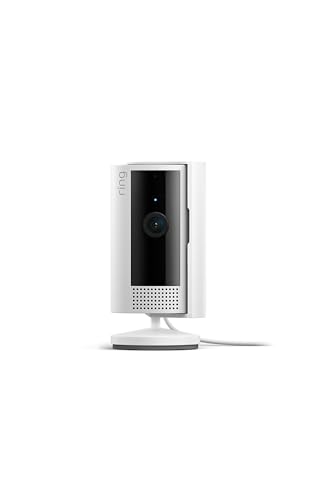
The most-reviewed inexpensive indoor camera tracked on this site with one of the deepest, highest-rated review bases in the category. Being closer to the router than most outdoor devices, it typically has fewer offline reports.
Why You Should Get This
If this indoor camera is showing offline, router restarts or password changes are the most likely cause, not signal strength.
Benefits
- Most-reviewed inexpensive camera in the category.
- Typically closer to the router, fewer signal issues.
- Physical privacy cover.
Pros and Cons
- Massive, trustworthy review base.
- Fewer offline reports than outdoor Ring devices.
- Simple plug-in power.
- Recorded clip history needs a subscription.
- 1080p rather than 2K.
- Router changes can still disconnect it.
Features
- 1080p HD, two-way talk.
- Physical privacy cover.
- Plug-in power.
Weak WiFi Signal at the Mounting Position
This is the single most common cause, and outdoor Ring cameras are particularly exposed to it since exterior walls, distance from the router, and weather can all degrade a signal that looked fine during initial setup. Check signal strength directly in the Ring app's device health section, rather than assuming from the camera's general area — Ring rates an RSSI of 0 to -60 as great, and -70 to -80 as poor, with possible delays and interruptions, while -80 or worse risks intermittent service or falling offline.
If it's marginal, there are three options in order of cost:
- Reposition your router closer to that side of the house.
- Add a mesh WiFi node.
- Switch that specific position to a wired Ring model, which removes WiFi range from the power equation, though it still needs WiFi for connectivity.

What "Offline" Actually Means in the Ring App
The Ring app's offline status reflects the last time your Ring camera checked in with Ring's servers, and it isn't always instant. A camera can drop its connection for thirty seconds during a router hiccup and the app can still show "offline" for several minutes afterward, because the status hasn't refreshed yet. Pull down to refresh the Ring app's device list, or fully close and reopen the app, before assuming the offline status is current.
Tip Pull down to refresh the Ring app's device list, or fully close and reopen the app, before assuming the offline status is current.
Low or Cold-Affected Battery
For battery Ring cameras, a run-down battery is a common and underappreciated cause, especially in cold weather: Ring notes battery life shortens around freezing and its devices are designed to stop charging below freezing, so a solar panel may not keep up until it warms. Charge the battery fully via USB and reinstall it — if the camera stays online reliably afterward, that confirms battery voltage was the issue, and more frequent charging, or a solar charging accessory, is the practical fix going forward.
Router Restarts and Network Changes
Internet providers periodically push firmware updates that briefly restart routers, and some Ring cameras don't reconnect automatically and cleanly after that kind of interruption. If your camera consistently goes offline around the same time each day (the classic pattern when a Ring camera keeps going offline at night), or shortly after an internet outage, check your router's own logs or restart schedule, if it has one.
Ring Chime Pro and Alarm Pro Connectivity
If your cameras connect through a Ring Chime Pro, which doubles as a WiFi extender for Ring doorbells and cameras, or through a Ring Alarm Pro base station, which has a built-in eero router and is designed to act as your main router, a connectivity problem with that device can show up as individual cameras going offline even though the cameras themselves are fine. Check the Chime Pro or base station's own status light and app entry first — if it has lost its connection, every camera relying on it can report offline at once, which can look like a camera-specific fault when it isn't one.
Hardwired Doorbell Transformer Issues
A hardwired Ring doorbell relies on your home's existing doorbell transformer for power, and older transformers are commonly undersized for the load a video doorbell draws. If a hardwired Ring doorbell goes offline specifically during high-usage moments, like a live view session or a recording, that points to insufficient transformer voltage rather than a WiFi problem. The Ring app's device health screen shows the doorbell's current voltage reading — check the current spec for your exact doorbell before assuming a transformer swap is needed.
Ring Server Status and Regional Outages
Occasionally the problem isn't local at all. Ring, like most cloud-camera brands, has had server-side outages that show cameras offline across many households simultaneously. If Ring's official status page (status.ring.com) lists an incident, or several unrelated Ring owners are reporting the same issue at the same time on community forums, that points to a server problem rather than your specific setup, and there's nothing to fix locally but wait it out.
False Offline Reports From the App
Occasionally the Ring app itself shows a camera as offline when it's actually fine — this is a known, if inconsistent, quirk covered in the FAQ above. Before assuming a real connectivity problem, check the camera's status on a second device or the ring.com web dashboard.
When to Contact Ring Support vs Troubleshoot It Yourself
Most offline reports resolve with the steps above: a signal check, a battery charge, or a router restart. It's worth contacting Ring support directly when a camera stays offline despite a strong signal, a full battery, and a confirmed-stable router, since that combination points toward a hardware fault rather than an environmental one. Ring support can also check server-side account and device logs that aren't visible from the app, which helps confirm whether the problem is truly on the camera's end. Have the device's serial number and a rough timeline of when the offline reports started ready before you call, since it speeds up the diagnosis considerably.
Reducing Future Offline Reports
A camera that goes offline once in a while, then reconnects on its own, usually isn't worth chasing further. A camera that goes offline repeatedly is telling you something about its position or power source. If signal strength keeps coming up marginal in the device health screen, a mesh WiFi node aimed at that side of the house fixes more chronic Ring offline reports than any other single change. Keeping firmware updates set to automatic, rather than manual, closes the gap where a known connectivity bug sits unpatched on an older firmware version. And for any position that's genuinely borderline on both power and signal, a wired Ring model removes one variable permanently rather than asking a battery to fight cold weather and a weak signal at the same time.
Accessories Worth Having on Hand

Best for repositioning a camera closer to the router to fix a weak signal.

Best for confirming alerts are working again after reconnecting a Ring device.

Best for local backup storage so an offline camera doesn’t lose recent footage.
Going Deeper: What the Numbers in Device Health Mean
RSSI is reported as a negative number, so -50 is a stronger signal than -75. Ring’s wifi recommendations break it into bands: 0 to -60 is great, -60 to -70 okay, -70 to -80 poor, and -80 or worse very poor, with intermittent service. The same page lists what drags the number down: brick, stucco or metal walls, big objects like fridges or ovens, electronics and mirrors, plus plain distance, since wifi signals get weaker the farther you are from the router. An outdoor camera on the far side of an exterior wall stacks several of those at once.
Signal strength isn’t the whole story. Cisco Meraki describes connection quality as signal-to-noise ratio (SNR): the difference between the received signal and the noise floor, which is background transmission from distant devices or interference on the same frequency. In Meraki’s example, a signal received at -75 dBm over a -90 dBm noise floor gives an SNR of 15 dB, below the 20 dB or more it recommends for data networks, and signals close to the noise floor can suffer data corruption and retransmissions. That’s why a camera can look borderline-acceptable on RSSI and still drop in a crowded neighborhood.
For hardwired doorbells, the voltage reading matters just as much. Ring says wired doorbells need 16 to 24 VAC (battery-powered doorbells, when hardwired, 8 to 24 VAC), and its own hardwired transformer supplies 16 VAC at 30 VA, according to Ring’s power troubleshooting page. It warns that incorrect power ratings can damage devices or stop the in-home chime from working properly, and that multiple hardwired doorbells on one transformer might need a higher VA rating. Compare your Device Health voltage with your exact model’s spec before buying a new transformer.
If Nothing Above Fixes It
If you've ruled out signal, battery, router and transformer causes and the camera is still reporting offline, a reset is the next step — see how to reset a Ring camera. And if the camera is online but not actually recording clips, that's a different problem covered in Ring camera not recording.
Sources & References
- Understanding wifi recommendations for Ring devices — Ring
- Ring devices and extreme temperatures — Ring
- Understanding Ring Protect subscriptions — Ring
- Ring Chime Pro (2nd Generation) Information — Ring
- Ring Alarm Pro FAQs — Ring
- Ring Status — Ring
- Battery Doorbell tech specs — Ring
- Signal-to-Noise Ratio (SNR) and Wireless Signal Strength — Cisco Meraki
- Troubleshooting power for hardwired doorbells — Ring