
Affiliate Disclosure: Some links on this page are affiliate links. As an Amazon Associate, we earn from qualifying purchases — at no extra cost to you. We do not buy, install, or physically handle the cameras we cover; our rankings come from aggregated owner reviews, ratings and expert consensus. Commissions never change our verdicts. We're reader-supported: commissions fund hosting, research and updates, so if a guide helped, buying through our links keeps it going. How we rank · full disclosure.
Short version: the Schlage Encode is the best smart deadbolt for most buyers — built-in WiFi, no separate bridge, and the deepest review base in the category. The Kwikset SmartCode 270 is the value pick at less than half the price. And the Yale Assure Lock 2 is worth considering specifically if you’re standardizing on the Yale/August ecosystem, accepting its lower rating.
Want fingerprint entry instead of a keypad? See best fingerprint lock.
In Plain English
A smart deadbolt is the thick bolt above your door handle, upgraded with a keypad and often Wi-Fi. The bolt itself is the same kind of sturdy metal a regular deadbolt uses. The electronics just add new ways to open it, like adding a remote to a garage door that still has a handle.
Why it matters: Wi-Fi models let you lock the door from anywhere, see who came and went, and give out codes that you can cancel later. Auto-lock can relock the door a few seconds after it closes. The one thing to check is the lock's security rating from BHMA (an independent standards group). It tells you how tough the bolt is, which no app feature can change.
Top Rated Picks at a Glance
The Ranked Field: Star Rating, Consensus and Price
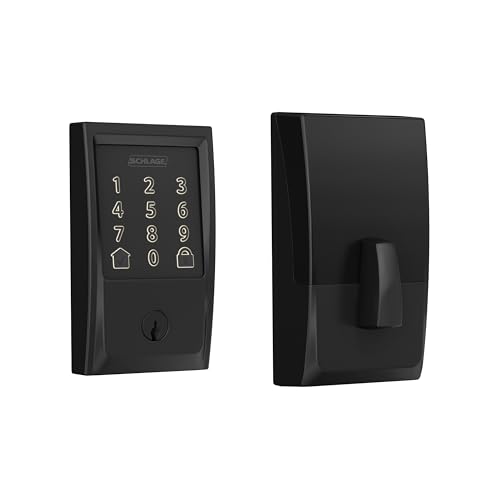
Best for built-in WiFi with no separate bridge, and the deepest review base of any smart deadbolt.
- Built-in WiFi, no separate bridge required.
- Keypad entry with up to 100 codes.
- Auto-lock with adjustable delay.
- Over 16,500 verified owner ratings.
Why buy it: The deepest review base of any smart deadbolt we track, with built-in WiFi that removes the extra-hub purchase most competitors still require.

Best for auto-lock and keypad convenience at a much lower price than the category leader, with no app or WiFi.
- Electronic touchscreen deadbolt.
- Auto-lock feature.
- Up to 50 user codes, no app or WiFi.
- Over 1,000 verified owner ratings.
Why buy it: A well-reviewed deadbolt from an established brand at less than half the price of the Schlage Encode, for buyers who want keypad convenience without app connectivity.

Best for buyers standardizing on the Yale/August smart-lock ecosystem.
- Fingerprint and keypad entry with built-in WiFi.
- Auto-lock with DoorSense.
- Works with the Yale Access app.
- Nearly 1,000 verified owner ratings.
Why buy it: The natural pick for anyone already invested in the Yale or August smart-lock ecosystem, though it carries the lowest rating of the three picks here.
Comparison Table
| Product | Best for | Buy |
|---|---|---|
| Schlage Encode Smart WiFi Deadbolt | Best Overall | Price |
| Kwikset SmartCode 270 Keyless Entry Deadbolt | Best Value | Price |
| Yale Assure Lock 2, Touch Keypad Deadbolt with Wi-Fi | Best for Yale/August Ecosystem | Price |
How We Rank
We do not buy or physically install these locks. Every star rating and review count comes from licensed Amazon data. Full method on how we rank.
How A Smart Deadbolt Works
A smart deadbolt replaces the traditional key cylinder with an electronic keypad, and often built-in WiFi for remote access. The bolt mechanism itself is the same ANSI-graded hardware a traditional deadbolt uses. The electronics sit on top, not instead of, that physical security layer. Understanding that distinction helps explain why price varies so widely across the category, from a basic keypad to a fully connected smart-home ecosystem hub.
Most smart deadbolts run on standard AA batteries, not a wired connection. WiFi models draw a bit more power than a plain keypad, but still last months per set on a well-reviewed lock. A low-battery warning through the app or keypad gives you time to swap batteries before a lockout. Every lock on this page also includes a physical backup method, whether that's a key cylinder or an external battery-jump contact, for the rare case the batteries die without warning.
What To Look For Before You Buy
Built-In WiFi and Connectivity
Built-in WiFi connects a smart deadbolt straight to your router. No separate hub or bridge is required. That's the single biggest differentiator on this page. The Schlage Encode and Yale Assure Lock 2 both include it. The Kwikset SmartCode 270 ships keypad-only, with no WiFi, Bluetooth or app connectivity at all.
Auto-Lock and Auto-Unlock
Auto-lock automatically re-locks the deadbolt a set number of seconds after the door closes. It's a consistently praised feature across owner reviews. It does depend on a door sensor detecting a fully closed door. A door that doesn't latch cleanly can stop auto-lock from engaging. That's a door-alignment issue, not a lock defect. Auto-unlock, which unlocks as your phone approaches, is less common: Yale lists it as an option on the Assure Lock 2, while Schlage's Encode listing mentions only auto-lock.
Code Capacity and User Codes
Check how many user codes a smart deadbolt supports. The Schlage Encode supports up to 100, comfortably covering a large household plus regular guests. Capacity varies by model. Check the current listing rather than assuming every lock matches that number.
ANSI Security Grade and Battery Life
Look for an ANSI/BHMA rating on the bolt itself, independent of any smart feature — either a numbered grade (Grade 1 is highest; Kwikset and Yale list Grade 2 for the SmartCode 270 and Assure Lock 2) or a letter grade under BHMA's residential scale, where the Schlage Encode is certified AAA. Pair that with the battery life claimed on the listing. Weigh both against price. A cheaper deadbolt with a strong grade and long battery life often beats a pricier one with neither advantage. Manufacturers periodically revise both figures across model refreshes. Treat the current listing as the source of truth, not an older review.
Who A Smart Deadbolt Is Right For
A smart deadbolt with built-in WiFi suits anyone who wants to check or control the door remotely, without buying a separate hub. It's a strong fit for a household that already relies on a smart-home ecosystem, and wants the front door included in it. An activity log — seeing who unlocked the door and when — adds real value for a busy household. It also helps for a property you don't visit daily. Parents tracking when kids get home from school are one common example. A host checking a cleaner arrived on schedule is another.
Smart Deadbolt or A Simple Keyless Entry Lock?
If remote access and an activity log don't matter to you, a plain keyless entry keypad does the same physical job for less money — see best keyless entry lock. Choose a smart deadbolt specifically when WiFi, an app, or ecosystem integration is the actual reason you're upgrading.
Installation and Deadbolt Compatibility
Nearly every smart deadbolt, including all three on this page, retrofits a standard residential deadbolt hole. Most homeowners install one with a Phillips screwdriver, in under an hour. Confirm your door's backset and thickness against the listed deadbolt compatibility range before ordering. Standard US doors use a 2-3/8" or 2-3/4" backset, and a 1-3/8" to 1-3/4" thickness — the vast majority of smart deadbolts are built for that range. See the full how to install a smart lock guide for the complete steps.
Mistakes to Avoid
The most common mistake is assuming built-in WiFi is standard across every smart deadbolt. It isn't — a lock without it needs a separate hub or bridge for remote access, and a keypad-only model like the Kwikset SmartCode 270 has no remote option at all. The second is skipping the ANSI grade in favor of star rating alone. A well-reviewed lock can still carry a lower security grade than a cheaper one. Owner satisfaction and forced-entry resistance measure two different things entirely. The third is ignoring rekey compatibility. That matters if you're moving into a home with an existing lock already installed, and want the old keys invalidated. A quick call to a locksmith settles it either way before you buy. None of these mistakes are hard to avoid once you know to check for them.
What Consumer Reports says: Consumer Reports notes in its door lock buying guide that it tests locks against kick-in, drilling and picking attacks, and that smart features come on top of, not instead of, that physical strength. It adds that a reinforced strike plate with 3-inch screws noticeably improves kick-in resistance.
How We Select These Smart Deadbolt Picks
We don't buy or physically install these locks. We aggregate verified owner reviews, review volume, and the recurring themes across ratings for each model, then weigh that against manufacturer specifications and price. A deep review base carries more weight than a slightly higher rating built on a thin sample, since a large sample smooths out the occasional bad-batch outlier a small one can't. Full method on how we rank.
Going Deeper: What a BHMA AAA Rating Actually Tests
This page mentions two kinds of BHMA rating: numbered grades on the Kwikset and Yale, and a AAA letter rating on the Schlage Encode. The letter system comes from the residential deadbolt standard, and it's worth knowing what's behind it. Schlage explains that BHMA rates hardware A, B or C in three categories, security, durability and finish, where C is good, B is better and A is best. AAA means the best result in all three.
Each letter reflects different stresses. Schlage says the security category measures a lock's ability to withstand sledgehammer attacks, attempts to pull it from the door and weight such as a child hanging from a lever. Durability covers how well the lock works as the door's fit shifts with seasonal temperature changes and how smoothly it runs after a lifetime of use, which Schlage puts at roughly 100 years at 10 uses a day. Finish covers resistance to salt, humidity, UV and scratching.
The standard itself, ANSI/BHMA A156.40 for residential deadbolts, adds some hard numbers. BHMA says the standard specifies seventeen aggressive tests, including one that loads the door against the deadbolt with 1,350 pounds of force. A Grade A residential deadlatch must survive 400,000 cycles of opening and closing, finishes go through a salt spray test to ASTM B117, and the force needed to retract the bolt must not exceed 9 inch-pounds, which keeps it easy to operate.
The numbered grades work on a separate scale. The BHMA describes grades 1, 2 and 3, with 1 the highest, as progressive performance benchmarks. Some locks carry both: Schlage lists its non-smart keypad deadbolt as Grade 2/AAA. When comparing smart deadbolts, the practical rule is to read whichever rating the manufacturer publishes, compare like with like, and remember that none of it measures Wi-Fi, apps or auto-lock. Those are conveniences layered on top of the bolt's tested strength.
The Verdict
The Schlage Encode is the right default for most buyers wanting a smart deadbolt with no compromises. Choose the Kwikset SmartCode 270 if budget is the priority, and the Yale Assure Lock 2 specifically if the Yale/August ecosystem fit matters more to you than outright rating.
Sources & References
- How to Choose the Best Door Lock for Your Home — Consumer Reports
- Schlage Encode Smart WiFi Deadbolt specifications — Schlage
- 270 SmartCode Traditional Electronic Deadbolt specifications — Kwikset
- Yale Assure Lock 2 Touch Keypad with Wi-Fi — Yale
- Understanding BHMA security grades — Schlage
- Product grade levels — Builders Hardware Manufacturers Association (BHMA)
- A156.40-2025 Residential Deadbolts — Builders Hardware Manufacturers Association (BHMA)