
Affiliate Disclosure: Some links on this page are affiliate links. As an Amazon Associate, we earn from qualifying purchases — at no extra cost to you. We do not buy, install, or physically handle the cameras we cover; our rankings come from aggregated owner reviews, ratings and expert consensus. Commissions never change our verdicts. We're reader-supported: commissions fund hosting, research and updates, so if a guide helped, buying through our links keeps it going. How we rank · full disclosure.
Short version: the HTZSAFE 1/2 Mile Driveway Alarm is the best overall pick, with the deepest review base of any driveway alarm we track and two sensors covering two entry points. The eMACROS Solar version removes the battery-replacement chore entirely. And the 1byone is the budget entry point at roughly half the price of the others.
Want an indoor motion alarm or door chime instead of long-range outdoor coverage? See best motion sensor alarm.
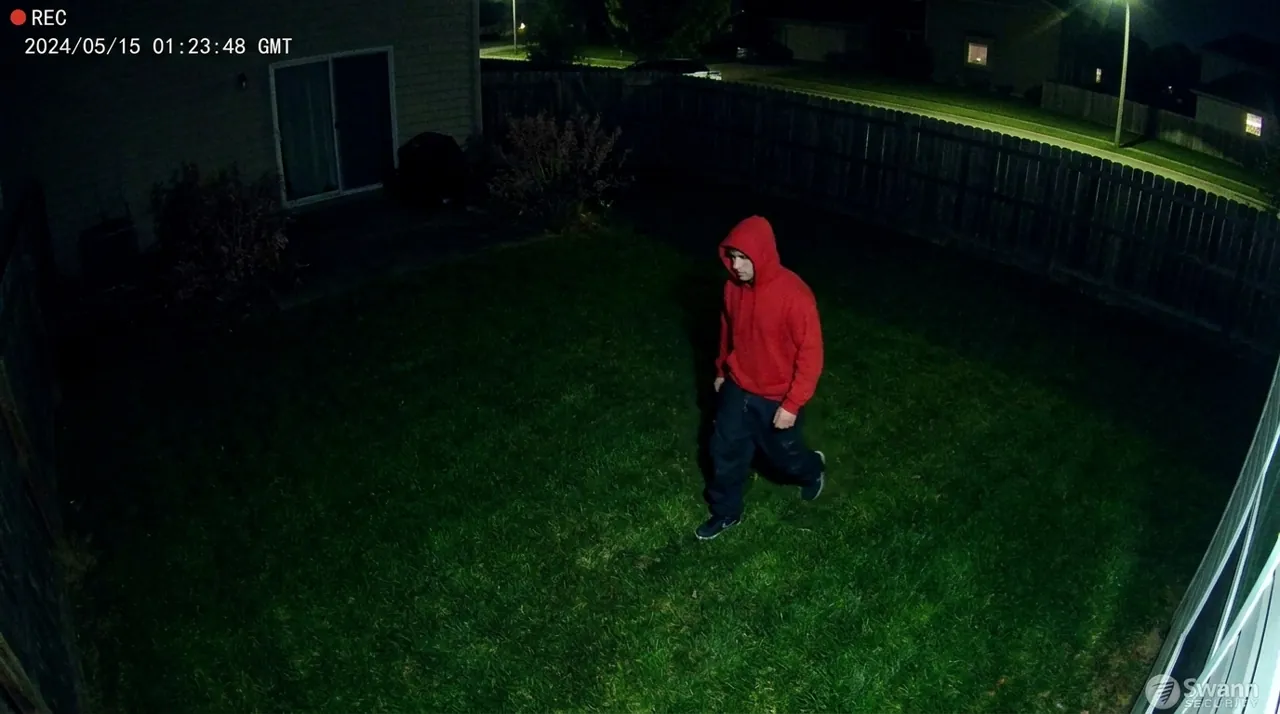
In Plain English
A driveway alarm tells you when a car or person turns into your property. A sensor outside watches the driveway, and a receiver plugged in inside the house chimes the moment something warm moves past.
It is like a shop-door chime for your whole driveway. There is no camera, no WiFi and no monthly fee; the sensor talks straight to the receiver by radio.
The HTZSAFE kit is the top pick, with two sensors for two entry points. The eMACROS runs on solar power, so you never swap batteries, as long as it gets real sun. The 1byone costs about half as much and offers lots of chime tunes.
The half-mile range on the box assumes open, flat ground, so expect less through trees or hills. The one thing to get right is placement: mount the sensor around knee to waist height, aimed across the driveway rather than straight down it, and away from bushes that move in the wind.
Top Rated Picks at a Glance
The Ranked Field: Star Rating, Consensus and Price

Best for the deepest-reviewed driveway alarm tracked on this site, covering two entry points.
- 1/2 mile long-range wireless signal.
- Two motion sensors included.
- No WiFi, no app, no subscription.
- Over 20,200 verified owner ratings.
Why buy it: Over 20,200 verified ratings across the HTZSAFE range — the deepest evidence base of any driveway alarm we track, covering two entry points in one purchase.

Best for a sensor that never needs a battery swap.
- 1/2 mile range.
- Solar-powered sensor, no battery replacement.
- Non-app, direct receiver alert.
- Over 11,400 verified owner ratings.
Why buy it: A solar-powered sensor removes the recurring battery-replacement chore, backed by over 11,400 verified ratings.
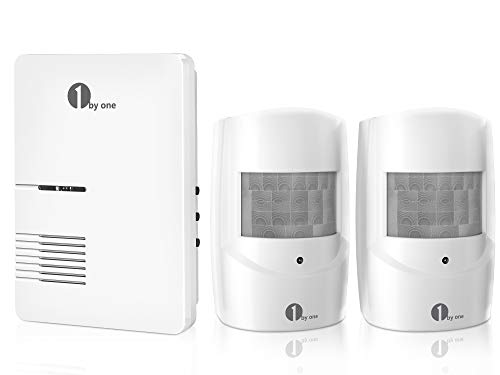
Best for a lower-cost entry into driveway alerts with two PIR detectors included.
- Plug-in receiver with 36 selectable melodies.
- Two PIR detectors included.
- No WiFi or subscription.
- Over 5,100 verified owner ratings.
Why buy it: The lowest price on this page while still covering two entry points, backed by a solid review base.
Comparison Table
| Product | Best for | Buy |
|---|---|---|
| HTZSAFE Driveway Alarm, 1/2 Mile Long Range (1 Receiver + 2 Sensors) | Best Overall | Price |
| eMACROS 1/2 Mile Solar Wireless Driveway Alarm | Best Solar | Price |
| 1byone Driveway Alarm, 36 Melodies | Best Budget | Price |
How We Rank
We do not buy or physically install these alarms. Every star rating and review count comes from licensed Amazon data. Full method on how we rank.
Buying Guide: Range, Power and Coverage
Range
Manufacturer-stated range is measured in open, unobstructed conditions — expect meaningfully less in practice through trees, buildings or hilly terrain. HTZSAFE and eMACROS both advertise up to 1/2 mile in ideal conditions; check the 1byone listing for its own stated figure rather than assuming the same reach.
Battery vs Solar Sensors
A battery-powered sensor needs periodic replacement; a solar sensor like the eMACROS removes that maintenance entirely, provided it gets adequate sun exposure at the mounting position.
Number of Sensors
Match the sensor count to your actual number of entry points — a single driveway needs one sensor, a property with a gate and a separate walking path needs two or more.
Weatherproofing
Because the sensor unit lives outdoors year-round, weather resistance is worth checking on the current listing rather than assuming — the picks on this page are all built for outdoor exposure, but the degree of protection against driving rain, snow accumulation or direct sun varies across the wider driveway-alarm category. A sensor mounted under an eave or overhang gets meaningfully less weather exposure than one fully open to the elements, which can extend its working life regardless of its official rating.
Chime Options and Multiple Zones
Some receivers, including the 1byone pick on this page, offer dozens of selectable chime melodies or tones, which becomes genuinely useful once you're running more than one sensor and want to distinguish which entry point triggered the alert just from the sound. A single flat tone works fine for a one-sensor setup, but a household covering a front gate and a separate driveway benefits from being able to tell the two apart without walking to the receiver to check.
Wireless Receiver and Alert Range: HTZSAFE, eMACROS and 1byone Compared
All three picks on this page use the same basic design: a battery or solar sensor communicating wirelessly to a plug-in indoor receiver, with no WiFi, hub or app in the chain. HTZSAFE and eMACROS both rate their wireless link at up to 1/2 mile in open conditions, while 1byone's simpler kit competes on its lower price and wider chime selection, so check its listing for the stated range. Owner reviews across all three consistently describe the wireless link between sensor and receiver as the more reliable half of the system, with false alarm rates tied far more often to sensor placement than to signal dropout.
PIR Motion Detection: How a Driveway Alarm Sensor Works
Every alarm on this page relies on passive infrared, or PIR, detection — the same fundamental technology used in most motion-activated lights. The sensor doesn't emit anything itself; it passively reads changes in infrared heat as a warm body moves between its interleaved detection zones and fires a wireless signal to the indoor receiver the instant something warm-bodied crosses that zone. No video, image or recording is involved at any point, which is the core distinction between a driveway alarm and a security camera pointed at the same spot. That simplicity is also why these systems work without WiFi, an app or a subscription — there's no image data to transmit or store, just a motion event and an alert.
Sensor Placement for Reliable Detection
Where and how you mount the sensor has more effect on real-world reliability than any spec sheet number. Most owners mount the sensor at roughly knee to waist height, angled across the path of approach rather than pointed straight down the driveway, since a sensor facing directly along the direction of travel gives an approaching vehicle or person less time inside the detection zone before triggering. Keep the mounting spot clear of tall grass, shrubs, or anything that sways in the wind directly in front of the sensor, since foliage movement is one of the most consistently reported causes of false alerts across this entire category, regardless of brand.
Common False Alarm Causes and Fixes
Beyond windblown foliage, the next most common false alarm sources owners report are small animals passing through the zone and direct sunlight hitting the sensor at certain times of day. Most sensors include an adjustable sensitivity setting that can reduce a false alarm triggered by smaller animals like cats or rabbits, though dialing sensitivity too low risks missing a genuine approach, so it's worth testing and adjusting over the first few days rather than assuming the factory default is correct for your specific yard.
Driveway Alarm vs Security Camera
A driveway alarm and a security camera solve genuinely different problems, and many households end up using both rather than choosing one over the other. The alarm's entire job is the instant heads-up — something is approaching, right now — with no video to review afterward. If you are hunting for the best driveway alarm with camera built in, note that none of the alarms on this page include one. A camera aimed at the same area adds the visual confirmation the alarm can't provide: who or what actually triggered it, and what they did next. If budget only allows for one right now, the alarm is generally the cheaper, simpler first purchase; a camera is the natural second step once instant awareness is already covered.
Who Actually Needs a Driveway Alarm
A driveway alarm makes the most sense for a rural or semi-rural property with a long driveway where you genuinely can't see or hear a vehicle approaching from inside the house, a home with a detached garage or workshop out of easy earshot, or anyone who wants an instant heads-up before a delivery, guest or unexpected visitor reaches the front door. It's a lower-value purchase for a tight urban lot where the driveway is already within a few steps of the front entrance and easily visible from most rooms — in that setup, a video doorbell or an entry-point security camera likely delivers more practical value than a motion-only alarm.
Going Deeper: The Radio Rules and Physics Behind a Driveway Alarm
A driveway alarm’s wireless link is built to say one thing — “something moved” — and US radio rules show why that kind of design exists. The FCC rule for periodic low-power transmitters, 47 CFR § 15.231, restricts devices operating under it to “the transmission of a control signal such as those used with alarm systems, door openers, remote switches, etc.” It states that continuous transmissions, voice and video are not permitted, though data may be sent with a control signal, and that a transmitter activated automatically “shall cease transmission within 5 seconds after activation.”
That is the design philosophy behind the kits on this page: a short burst from the sensor to the receiver, rather than a stream of images. It is also why none of these alarms can show you what triggered them. The alert is the whole message, which is exactly why this guide suggests pairing an alarm with a camera if you want visual confirmation.
The sensing side is a separate system with its own limits. Passive infrared sensors watch for a change in infrared between two halves of the sensing element as a warm body moves across a set of detection zones created by a faceted lens, according to Adafruit’s technical guide. Angling a sensor across the driveway, as this page recommends, makes an approaching car or person pass through several of those zones in turn rather than heading straight down one of them.
Temperature contrast matters as much as angle. Panasonic, which manufactures PIR sensors, guarantees detection when there is at least a 4°C difference between a body and its surroundings, and says detection fails mainly when there is little temperature difference. On a hot day, with sun-warmed pavement close to body temperature, a sensor has less contrast to work with — one reason the sensitivity tuning this page recommends is worth revisiting as the seasons change.
The Verdict
The HTZSAFE Driveway Alarm is the right default for most buyers — deep review evidence and two-entry-point coverage. Choose the eMACROS Solar if avoiding battery replacement matters, and the 1byone if budget is the priority. Whichever you choose, the underlying PIR technology and core reliability considerations are shared across all three, so the decision mostly comes down to how many entry points you need covered and whether ongoing battery maintenance is worth avoiding.
Sources & References
- How PIRs Work — Adafruit Learning System
- Motion Sensor Gen 2 Installation Guide — SimpliSafe Support
- Driveway Alarm Kits — HTZSAFE
- 47 CFR § 15.231 – Periodic operation in the band 40.66–40.70 MHz and above 70 MHz — Legal Information Institute (Cornell Law School)
- Panasonic’s PIR Motion Sensors — Panasonic Industrial Devices