
Affiliate Disclosure: Some links on this page are affiliate links. As an Amazon Associate, we earn from qualifying purchases — at no extra cost to you. We do not buy, install, or physically handle the cameras we cover; our rankings come from aggregated owner reviews, ratings and expert consensus. Commissions never change our verdicts. We're reader-supported: commissions fund hosting, research and updates, so if a guide helped, buying through our links keeps it going. How we rank · full disclosure.
Short version: for lawful home-security placement in a common area of your own home, the Funstorm 4K Mini Nanny Cam is the best overall pick — the deepest review base in this category. The realhide offers longer battery life.
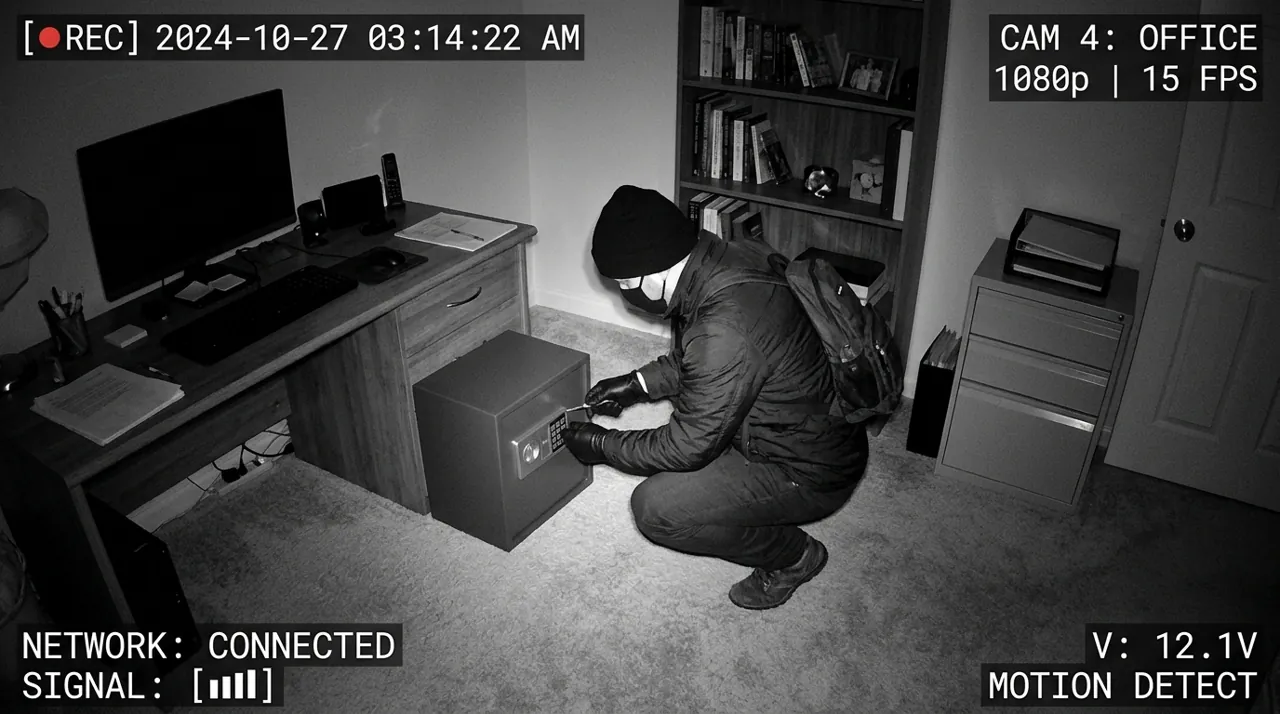
In Plain English
A discreet camera is a small security camera designed to look like an ordinary object, or to fit inside one. This page ranks the best ones for lawful use in the shared rooms of your own home, such as keeping an eye on childcare.
Most of them work like a motion-sensor porch light: they wake up and record short clips when something moves, rather than filming all day. That saves storage and battery, but the first second or two can be missed. At night they switch to infrared (light people can’t see), so the picture turns black and white.
You also choose where the video goes: a memory card inside the camera, which has no fee but is lost if the camera is taken, or cloud storage, which usually costs monthly. Before anything else, check the law. Keep the microphone off unless your state’s rules allow audio, and never place a camera in a bathroom or someone else’s bedroom.
What to Look For in a Hidden Camera
A discreet home camera is a different buying decision than a visible dome camera. The housing has to look like an ordinary household object first. Recording well comes second. The features owners consistently rate highest fall into six areas worth checking before you buy.
Discreet Camera Form Factor
Discreet cameras generally ship in one of three housings. A fully finished object — a clock, an air freshener, a USB charger — hides the lens inside a working or non-working replica. A bare board or module is meant to be built into an object you already own. A compact standalone body is small enough to tuck onto a shelf or behind other items. A finished housing is the easier out-of-the-box choice.
Recording Mode: Motion Detection vs Continuous
Most discreet cameras use motion detection and record short clips rather than recording continuously. This saves storage and battery life, but the first second or two of an event can be missed while the sensor wakes the camera up. A camera with a stated pre-record buffer closes that gap. So does one running on constant power with continuous recording, at the cost of more storage use.
Battery Life vs Plug-In Power
A battery-powered unit can go almost anywhere, even a spot with no outlet nearby. Its battery life depends heavily on how much motion it records and whether WiFi stays connected. A plug-in or hardwired unit — often disguised as a charger or a power strip — trades placement flexibility for essentially unlimited runtime. That matters most for a spot you want recording around the clock.
SD Card vs Cloud Storage
An SD card keeps footage on the device itself, with no ongoing subscription. Capacity is finite, though, and older footage eventually gets overwritten. Losing the physical camera means losing the card too. Cloud storage backs footage up off-device and is typically reachable from the app anywhere. It usually comes with a monthly or annual fee once a free trial ends. Several well-reviewed models support both, so you can decide case by case.
Night Vision
Night vision on a discreet camera almost always means infrared LEDs. Footage records in black-and-white after dark, not color, and the effective range varies between models. Because the housing has to stay hidden, don't expect the same low-light range as a large visible outdoor camera. Check the specific listing's stated range rather than assuming it matches a full-size security camera.
App and Alerts
The companion app is where you actually experience the camera day to day: live view, motion push notifications, clip playback and, on WiFi models, remote access from anywhere. Owner reviews are the most reliable signal here. App reliability and notification speed only show up after weeks of real use, not on a spec sheet.
Lawful Placement and Audio Consent Before You Buy
This matters more than any spec on the box. Where you can lawfully place a camera, whether you can legally record audio, and which spaces are off-limits are all governed by state law, not by what a camera can technically do. Read the legal limits on hidden cameras in full before you place any camera. It covers audio consent by state, spaces where recording is never legal even in your own home, and the separate rules for tenants and employees. Nothing here is legal advice, and no camera ranked below changes what the law allows.
Top Rated Picks at a Glance
The Ranked Field: Star Rating, Consensus and Price
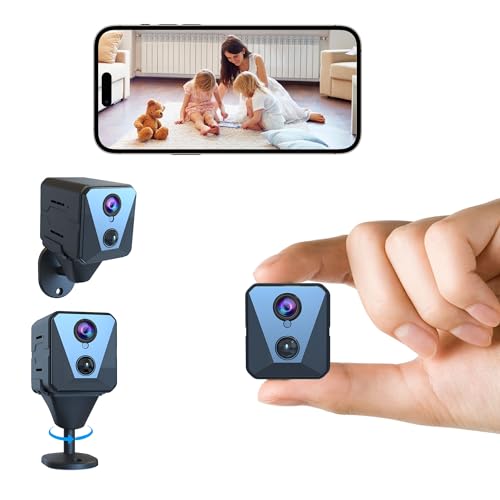
Best for the deepest-reviewed discreet home camera in this category.
- 4K HD video with night vision.
- Compact, discreet housing.
- Motion detection.
- Over 3,000 verified owner ratings.
Why buy it: The deepest review base of any discreet home camera we track, at a genuinely accessible price.

Best for longer unattended runtime between charges.
- 4K resolution.
- 5GHz WiFi.
- Extended battery life.
- Over 300 verified owner ratings.
Why buy it: Longer battery life than the category norm.
Comparison Table
| Product | Best for | Buy |
|---|---|---|
| Funstorm 4K HD Mini Nanny Cam | Best Overall | Price |
| realhide 5GHz WiFi 4K Spy Camera | Best Battery Life | Price |
Common Home Security Use Cases
The lawful use cases for a discreet home camera cluster into a few recurring situations, each with slightly different priorities.
Childcare Monitoring: The Nanny Cam Use Case
Checking in on a nanny, babysitter or au pair in the common areas of your own home is the single most common reason people buy this category of camera. Reliable daytime video and dependable motion alerts matter more here than night vision range, since childcare monitoring is almost always a daytime activity. See our full nanny cam covert security guide for the placement and audio rules specific to this use case.
Small Business and Home Office
A small retail counter, a home-based business storeroom or a shared home office sometimes calls for a lower-profile camera than a visible dome unit. The reason can be aesthetic, or simply to avoid drawing attention to where stock is kept. Cloud storage is worth prioritizing here, since a business owner is often not on-site to swap an SD card regularly. Continuous or long-duration recording also matters more than in a typical household placement.
Travel
A compact, battery-powered discreet camera that fits in a bag is a reasonable way to add a layer of security to a short-term rental room or a hotel room you're staying in, provided you're recording your own space and belongings, not a shared or common area of the property. Battery life and a genuinely small form factor matter more for travel than for a fixed home installation.
Placement Tips for Reliable Footage
Where you put a discreet camera affects the footage you get far more than any single spec. Aim for a vantage point that covers the doorway or entry path into the room, not a corner that only catches whoever's already standing in frame. Keep the lens clear of direct sunlight or a bright window behind the subject, since that can wash out motion detection and blow out exposure. Test the placement for a day or two before relying on it. Check that motion alerts fire when someone walks through the frame, not just when they stand directly in front of the lens, and confirm the field of view on your phone matches where you physically placed the camera.
Mistakes to Avoid
The most common mistake is placing a camera where it happens to blend in rather than where it actually needs to see. A beautifully disguised camera aimed at a blank wall isn't doing its job. A close second is skipping the legal check before recording audio. Disable audio by default and only turn it on once you've confirmed your state's consent law, covered in full in hidden camera consent laws. Also worth avoiding: relying on a single SD card with no backup for footage you'd genuinely need later, and assuming a battery-powered camera holds a charge as long as a plug-in one once it's actually recording motion regularly rather than sitting idle.
How We Select From Owner Reviews and Verified Ratings
We work from aggregated owner reviews and licensed Amazon rating data rather than buying and installing units ourselves. A camera earns a place on this list based on review depth — how many verified owners have actually rated it, not just a handful of early reviews. We also weigh the consistency of what those owners report about motion detection reliability and app performance, plus price relative to the rest of the field. A camera with a slightly lower average rating but thousands of reviews behind it is treated as more trustworthy than one with a perfect score from a dozen ratings. Sample size is part of the signal, not just the average itself.
How We Rank
We do not buy or physically install these cameras. Every star rating and review count comes from licensed Amazon data. Full method on how we rank.
Going Deeper: Infrared Night Vision and Memory Cards in Small Cameras
Night vision on a discreet camera relies on a part of the spectrum people cannot see. NASA describes infrared as light just beyond the visible spectrum, divided into near-, mid- and far-infrared. It notes that a typical TV remote uses infrared at around 940 nanometers, and that while you cannot see that light, some digital and cell phone cameras are sensitive to it (NASA Science). A camera’s small infrared LEDs work on the same principle: they light the room for the sensor without lighting it for the people in it.
NASA also notes that many things reflect infrared light, particularly near-infrared, so a camera using it is effectively photographing the room under its own invisible lamp. How far that lamp reaches varies a lot even among full-size indoor cameras: TP-Link lists up to 40 ft for the 850 nm infrared on its Tapo C100, while Google lists up to 15 ft from two 850 nm LEDs on its Nest Cam Indoor. A camera small enough to hide has even less room for illuminators, which is why this page advises checking the stated range rather than assuming it.
Local storage has its own technical floor. The SD Association, which sets the standards for SD and microSD cards, notes that recording video requires “a constant minimum write speed to avoid ‘frame drop’ during recording,” and defines Video Speed Classes from V6 to V90 to mark minimum performance (SD Association). An unattended camera writing clips to a card that cannot keep pace can produce gaps you only discover when you need the footage.
Compression decides how long a card lasts before older clips are overwritten. When the ITU agreed the H.265 video standard in 2013, it said the new codec “will need only half the bit rate” of the older H.264 (International Telecommunication Union). Two cameras recording at the same resolution can therefore fill the same card at very different rates, so the codec is worth checking alongside resolution.
The Verdict
The Funstorm 4K Mini Nanny Cam is the right default for most buyers. Choose the realhide if extended battery life matters. Whichever you choose, confirm lawful placement and audio settings before recording anything.
Related Accessories

Best for local recording on a camera with a card slot.
Sources & References
- Introduction to the Reporter's Recording Guide — Reporters Committee for Freedom of the Press
- 18 U.S. Code § 2511 - Interception and disclosure of wire, oral, or electronic communications prohibited — Cornell Law School Legal Information Institute
- 18 U.S. Code § 1801 - Video voyeurism — Cornell Law School Legal Information Institute
- Infrared Waves — NASA Science
- Tapo C100 Home Security Wi-Fi Camera — TP-Link
- Nest Cam Indoor (wired, 3rd gen) – Tech Specs — Google Store
- Speed Class — SD Association
- New video codec to ease pressure on global networks — International Telecommunication Union (ITU)