
Affiliate Disclosure: Some links on this page are affiliate links. As an Amazon Associate, we earn from qualifying purchases — at no extra cost to you. We do not buy, install, or physically handle the cameras we cover; our rankings come from aggregated owner reviews, ratings and expert consensus. Commissions never change our verdicts. We're reader-supported: commissions fund hosting, research and updates, so if a guide helped, buying through our links keeps it going. How we rank · full disclosure.
Short version: the JMDHKK Hidden Camera Detector is the best overall pick, with by far the deepest review base of any detector tracked on this site — genuinely useful for checking a rental, hotel room or Airbnb for unlawfully placed devices. The 6-in-1 detector carries the highest star rating. The Infrared Pin-Hole Finder focuses specifically on the lens-reflection detection method.
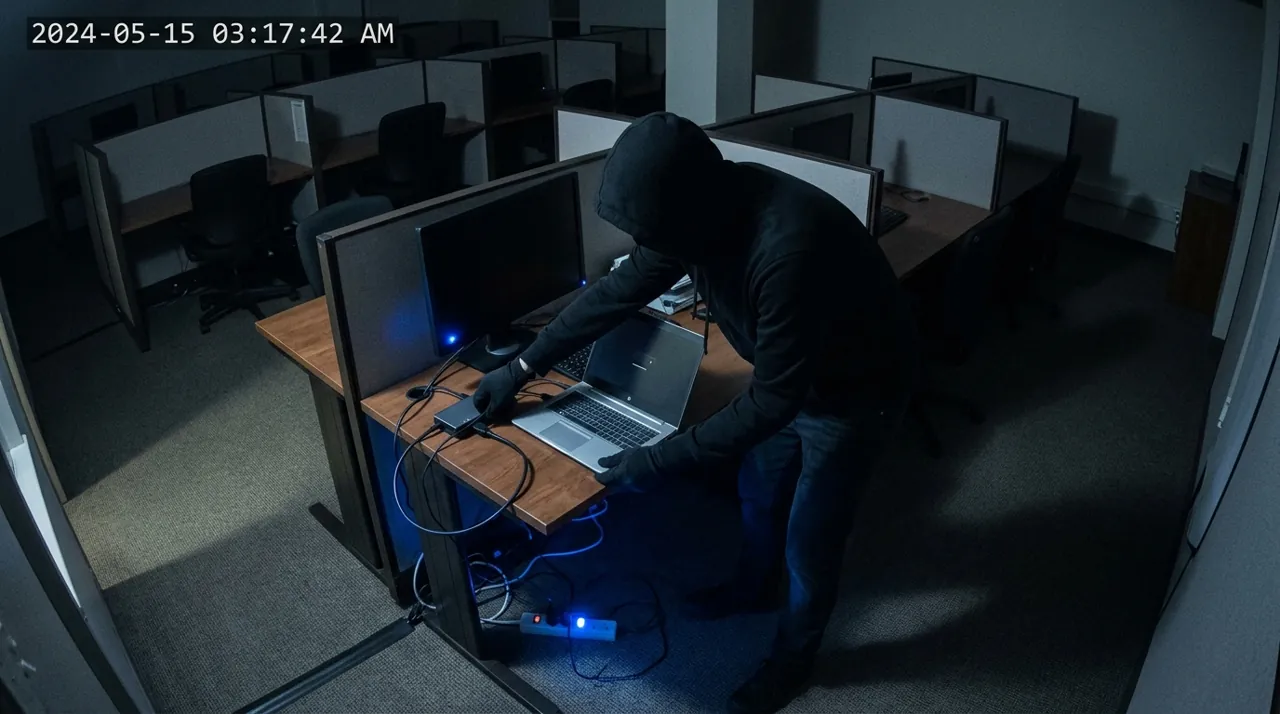
In Plain English
A hidden camera detector helps you check a hotel room, rental or Airbnb for secret cameras. Most use two tricks.
The first listens for radio signals. A camera that streams over WiFi or Bluetooth gives off a signal, and the detector reacts as you get closer. The second trick shines small lights around the room. A camera lens bounces that light straight back, the way a cat’s eyes glow in a flashlight beam.
Neither trick catches everything. A camera that only records to a memory card sends out no signal at all, so only the light method can find it. That is why it pays to use both. Turn off your own phone and laptop first, move slowly, and darken the room for the light check. Look closely at smoke detectors, clocks, picture frames, outlets and USB chargers.
If you do find something, don’t touch it. Take photos, leave it in place if it is safe to, and contact the property manager, the booking platform or the police.
Top Rated Picks at a Glance
The Ranked Field: Star Rating, Consensus and Price
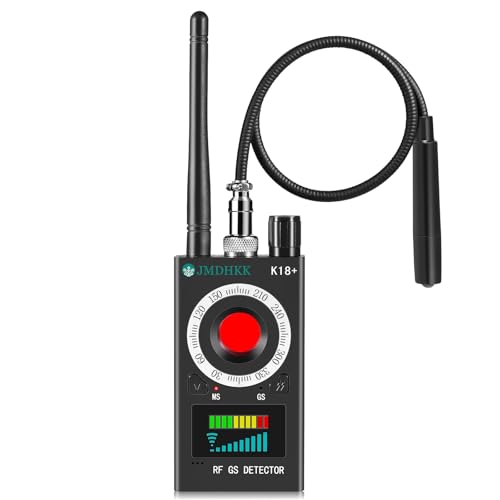
Best for the deepest-reviewed detector tracked on this site, for checking a rental, hotel room or Airbnb.
- RF signal detection.
- Magnetic field detection.
- Lens-reflection detection mode.
- Over 6,700 verified owner ratings.
Why buy it: By far the deepest review base of any hidden camera detector we track, giving genuine confidence in the number despite a modest average rating.

Best for the highest star rating among detectors, with GPS and RF detection combined.
- RF and GPS tracker detection.
- Anti-spy camera finder mode.
- Portable, travel-friendly size.
- Nearly 90 verified owner ratings.
Why buy it: The highest star rating of any detector on this page, combining camera and GPS-tracker detection in one device, though on a smaller review base.
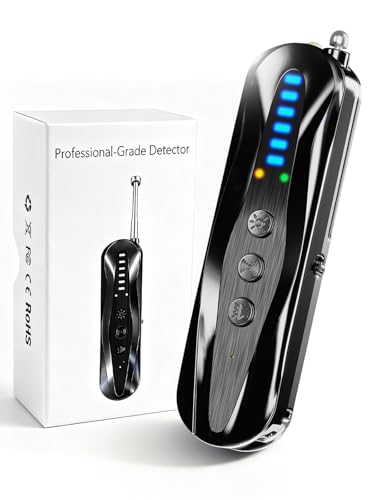
Best for specifically finding pinhole camera lenses via infrared reflection.
- Infrared lens-detection technology.
- Wireless camera signal detection.
- Compact, travel-sized.
- Over 200 verified owner ratings.
Why buy it: Focused specifically on the infrared lens-reflection detection method, the technique most specifically effective at finding a pinhole camera lens.
Comparison Table
| Product | Best for | Buy |
|---|---|---|
| JMDHKK Hidden Camera Detector | Best Overall | Price |
| 6-in-1 Hidden Camera Detector | Best Rated | Price |
| Infrared Pin-Hole Camera Finder | Best Lens-Detection Focus | Price |
RF Detection and Lens Reflection: How Hidden Camera Detectors Work
Consumer hidden camera detectors rely on two core methods, sometimes combined in one device. RF (radio frequency) detection scans for the wireless signal a WiFi or Bluetooth camera transmits to send footage back to an app or cloud server. Point the detector around a room. A spike in signal strength near an object flags it as a possible transmitting device. The lens reflection method works differently. An array of LED lights shines across a room. Any camera lens present reflects that light back distinctly, the same way a cat's eyes catch a flashlight beam in the dark. Some detectors, like the 6-in-1 model on this page, add a third method: GPS tracker detection. It scans for a different class of wireless signal entirely, useful if you're also concerned about a hidden tracker rather than just a camera.
Types of Hidden Cameras: Wireless Signal vs No Signal at All
Not every hidden camera behaves the same way, which is why no single detection method catches everything. A WiFi-connected spy camera transmits continuously. RF detection is generally effective against it. A standalone camera that records only to an internal SD card has no wireless transmission at all. It is invisible to RF detection entirely. That's the specific blind spot the lens reflection method is built to cover. It looks for the physical lens itself rather than a wireless signal. A well-disguised pinhole camera, hidden inside a smoke detector, alarm clock or USB charger, can defeat a casual visual inspection. It is still findable through a methodical lens reflection sweep in a darkened room.
Sensitivity and False Positives: What to Look For in a Detector
Portability matters more than most spec sheets suggest, since the realistic use case is checking a hotel room or Airbnb quickly at check-in, not a lengthy technical sweep. Look for adjustable sensitivity. A detector set too sensitive in a room full of ordinary WiFi devices, like a router or a smart TV, will flag false positives constantly. One set too low risks missing a genuine hidden camera. Battery life matters if you travel frequently. A simple, clearly labeled interface matters most of all, since these devices are rarely used by anyone with specialized training. Check the current listing's owner reviews specifically for reports of false-positive rates and ease of use in a real hotel room, not just a controlled demo.
How to Sweep a Hotel Room or Airbnb With a Hidden Camera Detector
For RF detection, start by turning off or moving away from your own wireless devices: your phone, a personal hotspot, a laptop. These can register as false positives and mask a genuinely suspicious signal nearby. Sweep the room slowly, paying closer attention to common hiding spots: smoke detectors, alarm clocks, picture frames, mirrors, electrical outlets and USB charging ports. For lens reflection detection, darken the room as much as possible. Look through the detector's viewfinder while slowly scanning every surface, since ambient light washes out the reflection the technique depends on. Combining both methods in the same sweep, rather than relying on just one, meaningfully improves your odds of finding a well-hidden device.
Limitations and Privacy: What a Detector Won't Catch
No consumer detector guarantees catching every hidden camera. A camera with no wireless transmission and a lens angled away from a typical sweep path can evade both RF and lens-reflection detection. A camera hidden behind actual two-way glass presents a harder case. So does one built into a fixture too large to fully inspect visually. Both are harder to catch than the small, standalone spy cameras these detectors are designed around. Treat a clean sweep as meaningfully reassuring, not as an absolute guarantee, and combine detector use with a basic visual check of the room's obvious hiding spots regardless of what the detector reports.
Who Needs a Hidden Camera Detector
The most common legitimate buyer is a frequent traveler who wants a quick, repeatable check of an unfamiliar hotel room or Airbnb, particularly after the well-publicized cases of hidden cameras found in short-term rentals in recent years. It's also a reasonable purchase for anyone renting a room in a shared living situation, or a parent checking a space where a nanny or caregiver has unsupervised access, for peace of mind rather than suspicion of a specific person. A detector is a genuinely inexpensive precaution relative to the peace of mind it buys, and most models on this page are compact enough to travel in carry-on luggage without adding meaningful bulk.
What to Do After Your Hidden Camera Detector Finds Something
Don't remove or tamper with the device immediately if you suspect it's evidence of unlawful surveillance. Document it with photos, note the exact location, and leave it in place if it's safe to do so. Contact the property manager, the booking platform for a short-term rental, or law enforcement, depending on the situation. Airbnb, for example, prohibits hidden cameras outright and, since April 30, 2024, bans hosts from any camera that monitors indoor spaces, so an indoor camera in an Airbnb listing breaks platform policy on its own. See hidden camera consent laws for the fuller legal framework around recording devices, including when placing one yourself is lawful versus when finding one placed by someone else crosses into a genuine privacy violation.
How We Rank
We do not buy or physically test these detectors. Every star rating and review count comes from licensed Amazon data. Full method on how we rank.
Going Deeper: Why Lens Reflection Finds What RF Scanning Misses
University research backs up the two-method advice on this page. A 2021 study from the National University of Singapore and Yonsei University, presented at the ACM SenSys conference, notes that earlier academic approaches analyze the wireless traffic hidden cameras generate — but that those techniques only apply to cameras that stream video wirelessly, while “many small hidden cameras only passively record to a local memory card” to save power or keep the device small (LAPD study). That is the RF blind spot in a sentence.
The lens method works because of a physical effect the researchers describe as lens-sensor retro-reflection, also known as “cat-eye reflection”: for certain optical systems, including hidden cameras, almost all incoming light is reflected directly back toward its source. The catch is geometry. The paper says the reflection is only visible within a cone of roughly 20° from the camera, and that it fades with distance, following the inverse square law. A single glance from one spot can therefore miss a lens that is angled away, which is why a slow sweep from several positions matters.
The same study puts numbers on how hard this is. Testing 30 objects, nine containing recessed hidden cameras, with 379 participants, the researchers found the naked eye located the cameras only 46.0% of the time. A commercial LED-viewfinder detector did better, at 62.3% in continuous mode and 57.7% in blinking mode, and the team’s own smartphone system, which uses a phone’s time-of-flight laser sensor, reached 88.9%.
For a traveler, the practical reading is that a detector meaningfully improves on looking around, but none of the methods tested was perfect — consistent with this page’s advice to treat a clean sweep as reassuring rather than a guarantee, and to combine RF scanning, a darkened-room lens check and a visual inspection of the usual hiding spots.
The Verdict
The JMDHKK Hidden Camera Detector is the right default given its exceptional review depth. The 6-in-1 detector is worth considering for its higher rating and added GPS tracker detection, and the Infrared Pin-Hole Finder if lens-reflection detection specifically is your priority.
Related Accessories

Best for local recording on a camera with a card slot.
Sources & References
- Use of cameras and recording devices — Airbnb Help Center
- Introduction to the Reporter's Recording Guide — Reporters Committee for Freedom of the Press
- What to do if you get an alert that an AirTag, Find My network accessory, or set of AirPods is with you — Apple Support
- LAPD: Hidden Spy Camera Detection using Smartphone Time-of-Flight Sensors (ACM SenSys ’21) — National University of Singapore and Yonsei University