
Affiliate Disclosure: Some links on this page are affiliate links. As an Amazon Associate, we earn from qualifying purchases — at no extra cost to you. We do not buy, install, or physically handle the cameras we cover; our rankings come from aggregated owner reviews, ratings and expert consensus. Commissions never change our verdicts. We're reader-supported: commissions fund hosting, research and updates, so if a guide helped, buying through our links keeps it going. How we rank · full disclosure.
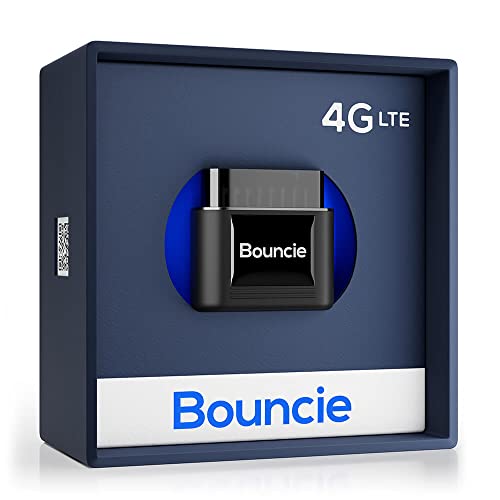
Bouncie GPS Tracker for Vehicles, Real-Time Location
An OBD-II plug-in vehicle GPS tracker with the highest star rating among the vehicle trackers this site ranks.
Check Price →In Plain English
The Bouncie is a small tracker that plugs into your car’s OBD-II port (a diagnostic socket, usually under the dashboard near the steering column). Once it is in, the app shows where the car is, where it has been, and how fast it was going.
There is nothing to wire and nothing to charge, because it draws power from the car. Fitting it is about as hard as plugging in a phone charger, and it moves easily to another car.
Think of it as a trip notebook that reports back to your phone. It uses the mobile network, so it needs a monthly subscription on top of the device, with no contract. Families mostly use it for teen drivers or a shared car. The one thing owners stress: tell the people who drive the car. Reviews suggest most friction comes from skipping that conversation, not from the device itself.
Full Specifications
| Install | Plugs into vehicle OBD-II port |
| Tracking | Real-time location, route history, speed alerts |
| Connectivity | 4G LTE cellular |
| Subscription | Required, sold separately; no contract, cancel any time |
Summary
The Bouncie GPS Tracker holds the highest star rating of any vehicle GPS tracker this site tracks, across a review base of over 6,600 verified ratings. It plugs directly into a vehicle’s OBD-II port for real-time location, route history and speed alerts through a subscription plan.
What owners praise
The plug-and-play OBD-II install with no wiring is the most consistently praised feature, alongside real-time accuracy that reviewers describe as reliable for daily route and speed monitoring. Family-plan use cases — monitoring teen drivers or shared vehicles — are a frequent theme.
What owners complain about
The mandatory subscription is the main structural complaint, consistent with the entire GPS tracker category and not specific to this product. Some reviews note the OBD-II port placement in certain vehicles makes the tracker visible and easy to spot or remove. A few reviewers also mention that a family member being tracked without prior agreement can create real friction, a reminder that lawful use and honest household communication matter as much as the hardware itself.
GPS Tracker Design and Build Quality
The Bouncie tracker is small and compact. It's built to plug directly into a vehicle's OBD-II port and stay there. There's no external wiring and no separate battery pack. It draws power straight from the port itself. Owners describe the build as solid and unobtrusive once installed. It's small enough to tuck under the dashboard without crowding knee room or other under-dash accessories. The housing is plastic, built for the temperature swings of a vehicle interior. It lives inside the cabin, not outdoors, so weather exposure isn't a factor.
Key Features: Real-Time Tracking, Geofencing and Alerts
Real-time location tracking is the core feature. It shows a vehicle's current position and recent route history through the app. Speed alerts notify you when the vehicle crosses a threshold you set. Reviewers specifically call this out as useful for monitoring a teen driver. Geofencing lets you draw a virtual boundary, like a school or workplace. You get an alert when the vehicle enters or leaves that area. Trip history logs past drives for later review. That's useful for mileage tracking, or just confirming where a shared vehicle has been.
OBD-II Installation
Installation is about as simple as GPS trackers get. Locate the vehicle's OBD-II port, usually under the dashboard near the steering column, and plug the tracker in directly. No tools, wiring or professional installer are required. Most owners report the entire process takes just a couple of minutes. The port has been standard since the 1996 model year, and Bouncie says it fits most vehicles from 1996 and newer. Compatibility isn't usually a concern except on the oldest cars. Because it plugs in rather than being hardwired, it's also simple to unplug and move to a different vehicle if needed.
Bouncie Tracker App, Trip History and Family Sharing
The Bouncie app is the primary way to view live location, trip history, alerts and vehicle status. Owners describe it as functional and reasonably reliable for the core tracking tasks. It supports shared access among family members, so more than one person can monitor a shared vehicle or a teen driver. Notifications for speed, geofence and other configured alerts arrive as push notifications to the phone. Setup after the physical install happens through the app. You pair the tracker to your account and configure the alerts you want active.
Subscription and Data Plan
Real-time tracking, route history and alerts run through a required monthly subscription plan. That's separate from the one-time hardware purchase. This is the single most common structural complaint across the entire GPS tracker category, not unique to Bouncie. Real-time cellular data has an ongoing cost that a plug-in device alone can't avoid. Bouncie says there is no contract or activation fee and the subscription can be cancelled at any time. Check its pricing page for the latest subscription pricing and multi-vehicle discounts, since these change more often than the hardware specification itself.
Performance and Reliability From Owner Reviews
Location accuracy is a consistent strength in the aggregated reviews. Owners describe real-time position updates as dependable for daily monitoring and route confirmation. The no-wiring OBD-II install is repeatedly praised as the easiest setup in the category. That's a genuine differentiator against trackers that require hardwiring into a vehicle's electrical system. Alert reliability for speed and geofence triggers is generally described as prompt. The main reliability caveat owners raise isn't about tracking accuracy. It's about visibility of the port-mounted unit, which a determined person could unplug or remove to disable tracking.
Lawful Use, Consent and Household Communication
A GPS tracker like this one raises real questions beyond hardware performance. Tracking a vehicle you own outright is generally the clearest lawful use case. So is a shared household vehicle where everyone involved agrees to the arrangement. Reviewers describe both as trouble-free. Tracking an adult family member's separately owned vehicle without their knowledge is different. State laws on consent, ownership and stalking statutes vary meaningfully. Reviewers who mention friction with the device most often point to a lack of upfront conversation, not the hardware itself. Talking through why the tracker is being installed tends to head off resentment. This page provides product information, not legal advice. Check your state's specific statute before tracking a vehicle you don't own outright.
Who It’s For
Vehicle owners wanting real-time GPS tracking from the highest-rated tracker in the category, comfortable with a subscription plan. It's a strong fit for a family managing a teen driver, a household sharing a vehicle across multiple drivers, or a small fleet operator wanting simple no-wiring installation across several vehicles. Anyone who values a plug-and-play setup over the deeper hardwired installation some rival trackers require will appreciate the OBD-II approach specifically.
Who Should Skip It
For a compact, general-purpose item tracker rather than a dedicated vehicle tracker, see Apple AirTag review. Anyone unwilling to commit to a recurring subscription cost should also weigh that ongoing expense carefully against the hardware price before buying.
Pros and Cons
Pros: highest star rating in the vehicle tracker category, no-wiring OBD-II install, real-time accuracy, family/fleet use case support.
Cons: mandatory subscription, visible/removable OBD-II placement in some vehicles.
Going Deeper: The OBD-II Port, and Where the Law Draws the Line
The port Bouncie plugs into exists for emissions monitoring. The EPA explains that all 1996 and newer cars and trucks use second-generation on-board diagnostics (OBD-II) to manage and monitor the engine, transmission and emissions control components, alert drivers through the check engine light, and let a technician read the system by connecting a hand-held scan tool “usually through a connector under the dashboard,” according to the EPA. That is why Bouncie can say it fits most vehicles from 1996 onward, and why the install needs no tools.
The same design explains the main reliability caveat owners raise. A connector meant to be reached quickly by a technician is easy for anyone to find, so a port-mounted tracker can be seen and unplugged. That is a property of where the port sits, not a defect in the tracker.
On the legal side, state laws differ, but California’s is a clear example of how many are structured. California Penal Code § 637.7 says “no person or entity in this state shall use an electronic tracking device to determine the location or movement of a person,” defines such a device as one attached to a vehicle or other movable thing that reveals its location by transmitting electronic signals, and makes a violation a misdemeanor. It also states that the section does not apply when the registered owner, lessor or lessee of a vehicle has consented to the device’s use on that vehicle — the ownership test this page describes.
Federal law adds a conduct-based layer. 18 U.S.C. § 2261A makes it a crime to use an electronic communication service or system, among other means, with intent to kill, injure, harass or intimidate another person, or to place them under surveillance with that intent, where that conduct places the person in reasonable fear of death or serious injury, or causes or would reasonably be expected to cause substantial emotional distress. None of this is legal advice, but it shows why ownership and genuine consent — not the hardware — decide whether tracking is lawful.
Verdict
The highest-rated OBD-II vehicle tracker we track. See the GPS trackers hub for how it compares against the field, including lawful-use guidance.
Alternatives to Consider
- Apple AirTag review
- Best GPS Tracker — the full ranked field
Sources & References
- Bouncie GPS tracker — Bouncie
- Bouncie pricing — Bouncie
- 18 U.S. Code § 2261A - Stalking — Cornell Law School Legal Information Institute
- Do You Drive a 1996 or Newer Car or Light Truck? (OBD fact sheet) — U.S. Environmental Protection Agency
- California Penal Code § 637.7 — California Legislative Information