
Affiliate Disclosure: Some links on this page are affiliate links. As an Amazon Associate, we earn from qualifying purchases — at no extra cost to you. We do not buy, install, or physically handle the cameras we cover; our rankings come from aggregated owner reviews, ratings and expert consensus. Commissions never change our verdicts. We're reader-supported: commissions fund hosting, research and updates, so if a guide helped, buying through our links keeps it going. How we rank · full disclosure.
Short version: the best GPS tracker overall is the LandAirSea 54 — the deepest review base of any GPS tracker on this site, at low hardware cost, though a subscription is required. The Bouncie carries the highest star rating with richer real-time vehicle data. And the Apple AirTag is the no-subscription option for tracking belongings rather than a moving vehicle.
Tracking a car specifically? See best GPS tracker for car for a vehicle-only ranking.
In Plain English
A GPS tracker tells you where something is. This page compares the best ones for your own car, your belongings, or a small business’s vehicles.
The big split is between two kinds. Real-time trackers send their position over the mobile network every few seconds or minutes, like a phone checking in. They suit a moving car, but they need a monthly plan. Item trackers such as the AirTag have no mobile plan. They rely on nearby phones to pass on a last known location, which is fine for keys or luggage.
Think of it as the difference between a live phone call and a note left at the front desk. Before you buy, check three things: how often it updates, what the subscription costs over a year, and how it is fitted — plugged into the car’s diagnostic port, held on with a magnet, or dropped in a bag. And only track what you have a right to track.
What to Look For in the Best GPS Tracker
A GPS tracker's value comes down to a handful of practical factors. How often does it update location, in real time or in periodic pings? Does it require a subscription? What does that subscription actually cost over a year? How is it mounted or carried: hardwired, plugged into an OBD port, magnetic, or simply dropped in a bag? How deep is the review base behind the star rating? A tracker with thousands of verified owner ratings is a far more reliable signal than one with a handful of early reviews, and that depth of evidence is worth weighing alongside the star rating itself, not instead of it.
Real-Time vs Passive GPS Tracking
Real-time trackers, like a dedicated vehicle tracker, report location continuously or at frequent intervals. That lets you watch a vehicle move on a map as it happens. Passive or network-based trackers, like Apple's AirTag, work differently. They rely on a crowd-sourced network of nearby devices to periodically report a location, rather than transmitting continuously themselves. Real-time tracking suits a moving vehicle where knowing the current position matters. Network-based tracking suits a stationary or slow-moving item, like luggage or keys, where knowing the last known location is enough. Neither approach is universally better; the right choice depends entirely on whether you are tracking something that moves continuously or something that mostly sits still.
Subscription Models and Cost
Most dedicated GPS vehicle trackers require an ongoing data plan for the tracking service to function, since they transmit location over a cellular network the same way a phone does. That subscription is usually the larger long-term cost, often exceeding the price of the hardware itself within the first year or two of ownership. LandAirSea's own plans, for example, start at $19.95 a month for three-minute updates as of September 2026, per its product page. Item trackers that use a manufacturer's free crowd-sourced network, rather than their own cellular connection, avoid this recurring cost entirely, which is a meaningful factor for anyone tracking a low-value item rather than a vehicle.
Battery Life and Charging
Battery life on a GPS tracker depends heavily on how it reports location and how it is powered. A hardwired tracker draws power directly from the vehicle and never needs charging on its own. A plug-in OBD tracker draws power the same way, through the vehicle's own port. A portable, battery-powered tracker needs periodic recharging or battery replacement, with battery life varying widely by how frequently it transmits and whether it is actively moving or sitting idle.
Mounting: Hardwired, Plug-In, Magnetic and Portable
Trackers mount in several different ways. The right one depends entirely on the use case. A magnetic, waterproof unit is built to be discreetly attached to a vehicle's undercarriage or frame. That suits covert placement. A plug-in OBD tracker is the simplest option for a personal vehicle. It needs no tools and no wiring. A portable tracker, small enough to slip into a bag or a glovebox, suits an asset that is not a vehicle at all. Check the specific mounting method against your actual use case before buying. A tracker built for one mounting style is rarely well suited to another.
Accuracy and Update Frequency
GPS accuracy and how often a tracker updates its position both affect how useful it is in practice. A tracker updating every few seconds gives a near-live view of movement. That is useful for monitoring a vehicle in transit. A tracker updating less frequently, or relying on a passive network, suits occasional location checks better than real-time monitoring. Manufacturer specifications state the intended update frequency. Owner reviews are the best available evidence for how consistently that frequency holds up in real-world use.
Best GPS Tracker Tags: Item Trackers vs Vehicle Trackers
An item tracker, built around a network like Apple's Find My, is designed for something small and mostly stationary: a bag, a set of keys, a wallet. It is not built for continuous real-time monitoring of something moving quickly, like a car. A dedicated vehicle tracker is built for exactly that: continuous or near-continuous reporting, often alongside route history and speed alerts, features an item tracker simply does not offer. Matching the tracker type to what you are actually tracking matters more than comparing star ratings across the two categories directly.
Who a GPS Tracker Is For
A GPS tracker suits several kinds of buyers. An owner monitoring their own vehicle is the most common case. A small business tracking a company fleet is another. A parent tracking a minor child's device or vehicle fits too, as does anyone keeping tabs on belongings like luggage or a bag through an item tracker. It is not a tool for tracking another adult without their knowledge or consent. See the lawful use guide linked above before buying any tracker for a use case beyond your own property or a consenting party.
Fleet and Multi-Vehicle Tracking
Small businesses tracking more than one vehicle have a slightly different set of priorities than a single-vehicle owner. Route history, speed alerts and a dashboard that shows multiple vehicles at once become far more valuable once there are several drivers to keep track of rather than just one car. Some trackers designed primarily for individual vehicle owners still scale reasonably well to a small fleet, while others are purpose-built with fleet management features from the start. Check whether a tracker's app supports viewing several vehicles at once before assuming it will scale beyond a single car.
Top Rated Picks at a Glance
The Ranked Field: Star Rating, Consensus and Price

Best for the deepest-reviewed GPS tracker tracked on this site for your own vehicle or assets.
- Designed and built in the USA from domestic and imported parts.
- Long battery life, magnetic and IP67 waterproof housing.
- Global tracking capability.
- Subscription required for the tracking service — over 29,600 verified owner ratings.
Why buy it: By far the deepest review base of any GPS tracker we track — nearly 30,000 verified ratings — at genuinely low hardware cost, though a subscription is required for the tracking service.
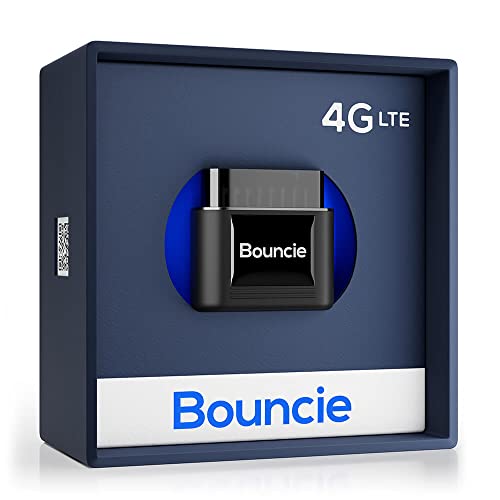
Best for the highest star rating in this category, with rich real-time vehicle data.
- Real-time location tracking.
- Route history and speed alerts.
- OBD plug-in, no wiring.
- Over 6,600 verified owner ratings, subscription required.
Why buy it: The highest star rating of any GPS tracker on this page, with real-time route history and speed alert features beyond basic location.

Best for tracking a bag, keys or other belongings with no subscription at all.
- Uses Apple’s free Find My crowd-sourced network.
- No subscription or monthly fee.
- Precision Finding on compatible iPhones.
- Over 9,000 verified owner ratings.
Why buy it: No ongoing cost at all for basic location tracking, though it suits belongings better than real-time vehicle tracking given its network-dependent, non-continuous location updates.
Comparison Table
| Product | Best for | Buy |
|---|---|---|
| LandAirSea 54 GPS Tracker | Best Overall | Price |
| Bouncie GPS Tracker for Vehicles | Best Rated | Price |
| Apple AirTag (2nd Generation) | Best Item Tracker (No Fee) | Price |
How We Rank
We do not buy or physically install these devices. Every star rating and review count comes from licensed Amazon data. Full method on how we rank.
Going Deeper: What Limits a GPS Fix
Every tracker on this page that uses GPS depends on the same satellite constellation. The United States is committed to keeping at least 24 operational GPS satellites available 95 percent of the time, in six orbital planes about 20,200 km (12,550 miles) up, each satellite circling the Earth twice a day. That layout is designed so users can see at least four satellites from virtually any point on the planet (GPS.gov space segment).
Seeing the satellites is not the same as getting a precise answer, though. GPS.gov is careful to separate the accuracy of the signal broadcast from space from the accuracy a user actually gets. User accuracy, it says, “depends on a combination of satellite geometry, URE, and local factors such as signal blockage, atmospheric conditions, and receiver design” — URE being the user range error in the signal itself. For GPS-enabled smartphones, GPS.gov puts typical accuracy at within a 4.9 m (16 ft) radius under open sky, worsening near buildings, bridges and trees, with signals reflected off buildings (multipath) adding further error (GPS.gov accuracy overview).
Two things follow for buyers. Receiver design is on that list, so two trackers under the same sky will not necessarily report identical positions. And mounting is on it too, in effect: anything that cuts a tracker’s view of the sky counts as signal blockage, so where a tracker sits on or in a vehicle affects the quality of each fix as much as the brand does.
Accuracy and update frequency are separate settings that are easy to confuse. Accuracy decides how close each reported position is to reality; the update interval decides how often a new position is sent. LandAirSea’s entry plan, for example, reports every three minutes. A precise fix every three minutes and a looser fix every few seconds suit different jobs, which is why the update frequency on a plan deserves as much attention as the star rating.
The Verdict
The LandAirSea 54 is the right default for most buyers wanting a dedicated vehicle tracker with the deepest evidence base. Choose the Bouncie if you want richer real-time data and the highest rating, and the AirTag if you’re tracking a bag or belongings with zero ongoing cost.
Sources & References
- LandAirSea 54 GPS tracker — LandAirSea
- Bouncie GPS tracker — Bouncie
- AirTag (2nd generation) — Apple
- Detect unwanted trackers (Personal Safety User Guide) — Apple Support
- 18 U.S. Code § 2261A - Stalking — Cornell Law School Legal Information Institute
- Space Segment — GPS.gov (U.S. government)
- GPS Accuracy — GPS.gov (U.S. government)