
Affiliate Disclosure: Some links on this page are affiliate links. As an Amazon Associate, we earn from qualifying purchases — at no extra cost to you. We do not buy, install, or physically handle the cameras we cover; our rankings come from aggregated owner reviews, ratings and expert consensus. Commissions never change our verdicts. We're reader-supported: commissions fund hosting, research and updates, so if a guide helped, buying through our links keeps it going. How we rank · full disclosure.
Short answer: the features that matter most in a security camera are reliable alert delivery, competent night performance, and a stable network connection, which count for more day to day than resolution, a long feature list, or anything else that dominates marketing copy. Across thousands of owner reviews for cameras this site tracks, the recurring praise and the recurring complaints both cluster overwhelmingly around these three fundamentals — a notification that arrives promptly and matters, a night image that is actually usable, and a connection that does not drop — far more often than around resolution or the presence of a specific advanced feature.

Recommended Cameras That Get the Fundamentals Right
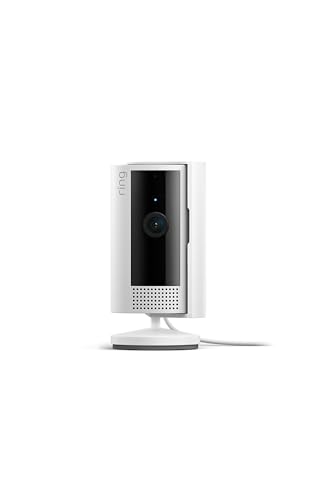

Best for night vision and deterrence handled by real hardware, not a spec sheet.

Best for reliable connectivity and continuous recording over flashy extras.
What Features Actually Matter in a Security Camera? Ranked by Real-World Impact
Alert reliability tops the list consistently, and it is worth stating plainly why: a camera's entire purpose is telling you something happened, and if that notification arrives late, arrives for the wrong things, or does not arrive at all, nothing else the camera does well actually matters. Owner reviews across every camera category converge on this same theme — the highest-rated cameras earn that rating primarily by getting alerts right, not by having the sharpest sensor or the longest feature list.
Night performance is the second consistent theme, since a large share of the events people actually care about — a package, a visitor, an intrusion attempt — happen after dark, and a camera that produces a genuinely usable image at night delivers real value precisely when it matters most. This is a bigger differentiator between good and mediocre cameras than daytime image quality, where most cameras already perform adequately.
Connection Reliability: The Unglamorous Feature That Decides Everything Else
A camera with excellent specs on paper is worthless in the moments its connection drops, and connection reliability is one of the least marketed but most consistently complained-about issues across the category. This is why checking a specific camera model's WiFi or connectivity reputation in owner reviews before buying is worth more time than comparing resolution numbers between finalists — a camera that performs its core function reliably ninety-five percent of the time beats one with better specs that only works reliably eighty percent of the time, every time, for a security application specifically.
Where Genuine Extras Do Add Real Value
Some features beyond the fundamentals do move the needle meaningfully. AI-based person, vehicle and package detection genuinely reduces false alerts compared to basic motion detection, addressing the single most common source of alert fatigue and camera abandonment. Two-way talk adds real practical value for package instructions and casual interaction. Local storage — Wyze, for example, supports 24/7 recording to a microSD card of up to 256GB on the Wyze Cam v4 — removes the cloud-recording fee for owners who prioritize that, though some brands still keep smart alerts behind a subscription. These are worth paying for specifically because they solve identifiable, common problems, unlike features that exist mainly to fill out a spec sheet.
App Quality: The Feature Nobody Lists But Everybody Feels
The camera's companion app shapes the daily experience of ownership more than almost any hardware spec, since it is the interface for every alert, every live view, and every settings change. A clunky, slow or unreliable app can make excellent hardware feel frustrating to own, while a well-designed app can make modest hardware feel genuinely pleasant to use. App quality rarely appears on a spec sheet at all, which is exactly why checking owner reviews specifically for app complaints, rather than relying on the product listing alone, is one of the most useful things a buyer can do before committing.
See stop security camera false alerts for the practical settings behind the alert-reliability theme covered here, and how we rank for the fuller method behind how this site weighs these factors across every camera it covers.
Specs That Sound Impressive But Rarely Change the Real Experience
Some numbers on a spec sheet exist mainly to win a comparison chart rather than to solve a problem an owner actually has. Resolution far beyond what a typical viewing screen can show is one example — a phone screen and most home monitors cannot display the full detail of an extremely high-resolution sensor, so the marginal benefit above a solid 1080p or 2K image is smaller in practice than the number suggests, particularly once night footage and compression are factored in.
A long list of smart-home integrations is another. Compatibility with every major ecosystem sounds comprehensive, but most households use one or two integrations in practice — Alexa or Google Home, rarely both seriously — and paying a premium for broad compatibility a household will never use is money better spent on the fundamentals covered above. The same logic applies to a long list of secondary detection categories: a camera that claims to distinguish a dozen different object types rarely gets meaningful daily use out of more than two or three of them for a typical household.
Extremely long claimed battery life on a battery camera is worth reading skeptically too, since real-world battery life depends heavily on how often the camera actually triggers, and a high-traffic position drains even a well-rated battery far faster than the marketing figure implies. Owner reviews of the specific model in the specific use case are a better guide than the manufacturer's stated number.
How to Verify These Priorities Before You Buy
Spec sheets alone cannot tell you whether alerts arrive reliably, whether night footage is genuinely usable, or whether the app behaves well day to day — that information lives in what owners report after living with the camera, not in the listing copy. Searching owner reviews specifically for mentions of "notification," "night" and "app" or "connection" surfaces exactly the fundamentals this guide argues matter most, filtered from the noise of feature-list comparisons.
Cross-checking a shortlist of two or three models this way, rather than relying on a single star rating, is a more reliable way to predict actual satisfaction than comparing spec sheets side by side. A camera with a slightly lower headline spec but consistently praised alert reliability is, in practice, usually the better buy — and that pattern holds consistently enough across categories that it is worth treating as a general buying rule, not a one-off observation about a single product line.
Sources & References
- Ring Protect subscription plans — Ring
- Wyze Cam v4 — Wyze
- Reolink TrackMix PoE specifications — Reolink
- IEC 60529: Degrees of protection provided by enclosures (IP Code) — International Electrotechnical Commission