
Affiliate Disclosure: Some links on this page are affiliate links. As an Amazon Associate, we earn from qualifying purchases — at no extra cost to you. We do not buy, install, or physically handle the cameras we cover; our rankings come from aggregated owner reviews, ratings and expert consensus. Commissions never change our verdicts. We're reader-supported: commissions fund hosting, research and updates, so if a guide helped, buying through our links keeps it going. How we rank · full disclosure.
The short version: the best security camera for a driveway has to cover a wide, high-traffic outdoor space. That makes wired power and a wide field of view the two priorities that matter more here than almost anywhere else on a property. The Ring Floodlight Cam Wired Plus covers that brief well, with a real deterrent light. For sharper detail specifically, a 4K PoE camera like Reolink's RLC-820A resolves more of what actually happened. This page is about the driveway as a space — the approach, the gate and the perimeter. If your worry is the vehicle itself rather than the ground it sits on, and especially if it is sometimes parked at the kerb, in a car park or under a carport instead, our best security camera for a car guide is the one that follows the car wherever it parks.
In Plain English
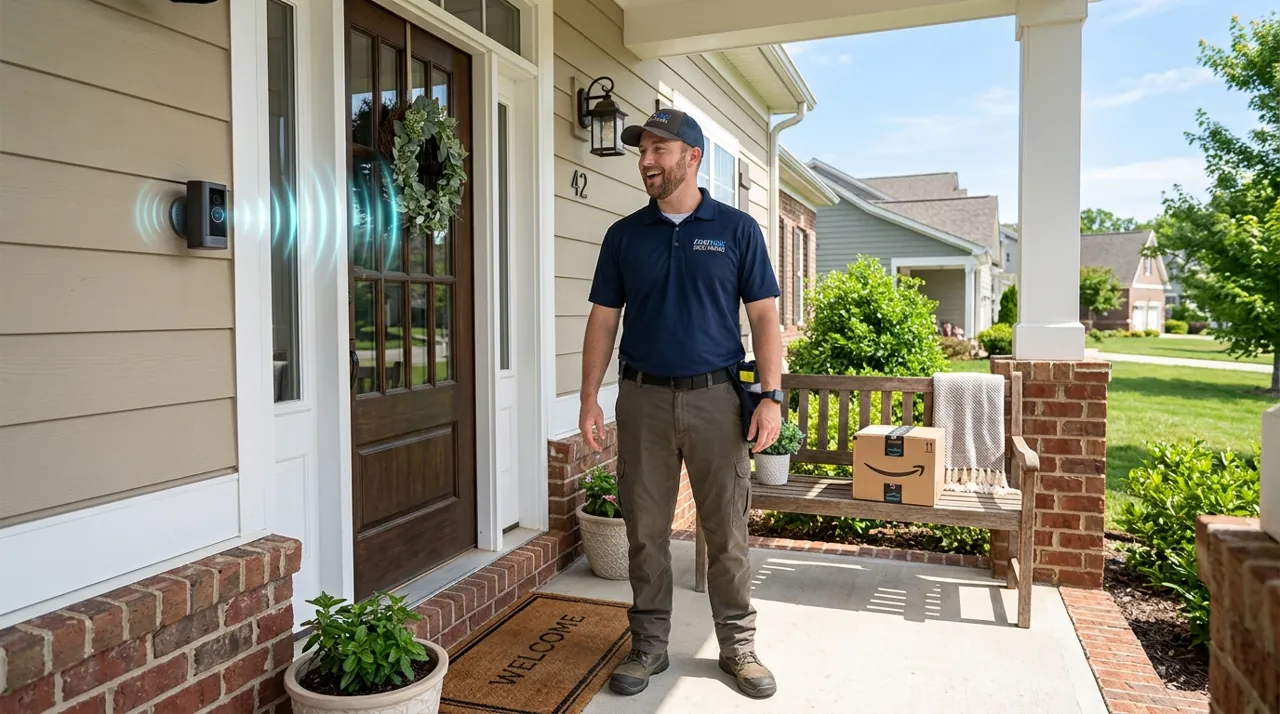
A driveway is a wide, busy space. Cars, deliveries and people pass through it all day, so a camera there wakes up far more often than one watching a quiet side gate.
That is why this page puts two things first: steady power and a wide view. A battery camera in a busy driveway needs recharging so often it becomes a chore, so wired power is worth it if an outlet or junction box is nearby. And a wide lens (roughly 120 to 140 degrees for a single-car driveway) matters more than sharp detail on a narrow view that misses half the drive.
Think of it like taking a group photo. First make sure everyone fits in the frame. Only then worry about how sharp the picture is.
The one thing to look for: a camera that lets you draw a motion zone (the part of the picture the camera watches for movement). Drawing that zone around your driveway, not the street beyond it, is the biggest single fix for a phone that pings every time a car drives past.
Top Floodlight and 4K Driveway Camera Picks at a Glance
The Ranked Field

Best for a wide, well-lit driveway with an existing junction box.
- 2,000-lumen motion-activated floodlight.
- Wide 140° horizontal field of view.
- Built-in siren.
- A deep base of owner ratings.
Why buy it: A driveway is exactly the wide, dark-at-night space a floodlight camera is built for, and it’s the highest-rated wired outdoor camera in this comparison.
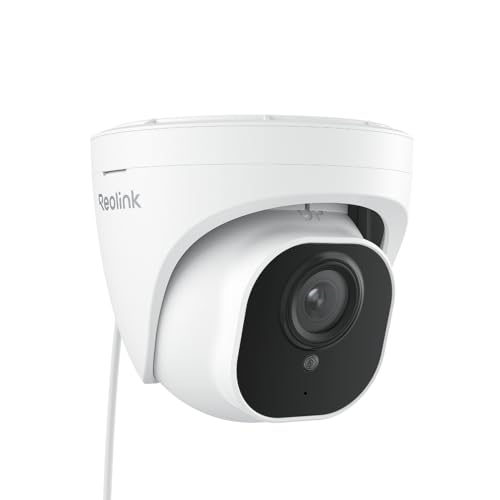
Best for a driveway where you want sharper detail on plates and faces.
- 4K resolution, sharp enough to crop into detail.
- Person and vehicle detection.
- Local recording, no subscription required.
- A growing base of owner ratings.
Why buy it: 4K matters most on a wide driveway where you may need to zoom into a specific vehicle or face after the fact.

Best for a long driveway where one fixed angle won’t cover the whole approach.
- 360° pan-tilt with AI auto-tracking.
- 2,000-lumen floodlight.
- No subscription required.
- A solid base of owner ratings.
Why buy it: Motorized tracking follows a vehicle up a long driveway rather than losing it once it leaves a fixed frame.
Comparison Table: Wired vs Battery Camera Trade-offs
| Product | Best for | Buy |
|---|---|---|
| Ring Floodlight Cam Wired Plus | Best Overall | Price |
| REOLINK RLC-820A 4K PoE Bullet | Best Wired PoE Option | Price |
| eufy Floodlight Camera E340 | Best Motorized | Price |
How We Rank
We do not buy, install or physically handle these cameras. This ranking is built from aggregated owner star ratings weighted by review volume and specifications relevant to wide-area outdoor coverage. Full method on how we rank.
Which Driveway Security Camera Should You Buy?
A standard driveway with an existing wired position: the Ring Floodlight Cam Wired Plus, for the deterrent light and siren combination.
You specifically need sharper detail for plates or faces: the Reolink RLC-820A at 4K.
A long driveway one fixed camera can't fully cover: the eufy Floodlight E340's motorized tracking.
Pros and Cons: Best Overall, Best for Detail, Best Motorized
Best Overall (Ring Floodlight Cam Wired Plus): Pros — 2,000-lumen deterrent light, built-in siren, largest review base of any camera here. Cons — mains-voltage install, 1080p rather than 2K on this specific listing.
Best for Detail (Reolink RLC-820A): Pros — 4K resolution sharp enough to crop into plates or faces, no subscription. Cons — no floodlight of its own, so pair it with lighting for full nighttime deterrence, and a narrower 87° horizontal view (per Reolink’s spec sheet) than the floodlight cameras here, so it suits a view down the driveway more than across its full width.
Best Motorized (eufy Floodlight E340): Pros — 360° pan-tilt with AI tracking follows a vehicle up the driveway, plus local microSD storage with no required subscription. Cons — hardwired only, dual 2K/3K lenses rather than 4K.
Budget-conscious buyers should also weigh Wyze's Cam v4. It's indoor-outdoor rated with color night vision at a fraction of these prices — see Wyze cameras worth considering. It lacks a floodlight, though, and won't match a wired camera's continuous power for a high-traffic driveway.
Warranty, PoE Installation, Junction Box and Solar Camera Notes
Wired floodlight cameras carry a one-year limited warranty. They connect to an existing junction box at mains voltage — budget an electrician call-out if you're not comfortable at a breaker panel. PoE cameras like the Reolink need a cable run rather than a mains connection, a different but still real installation commitment. Test WiFi or PoE signal strength at the actual mounting point before finalizing the position. A driveway's distance from the router or switch is easy to underestimate. If no wiring or PoE run is realistic for your driveway at all, a solar camera in a genuinely sunny position is a reasonable fallback, though it won't match a wired floodlight's constant power for a high-traffic spot.
Buying Guide: Field of View, License Plate Detail, Deterrent Lighting and Traffic Volume
The direct answer: prioritize field of view and power source before resolution. A driveway's width and traffic volume decide the baseline requirement that resolution only refines afterward. A wide-angle lens (130°+) that covers the full driveway width matters more than 4K detail on a narrow view that misses half the approach.
Wired power earns its keep here specifically because of traffic volume. A driveway sees far more motion events per day than most other positions on a property. Every car, every delivery, every pedestrian passing adds up, and a battery camera's recharge cycle becomes a real chore at that event rate. If any outdoor outlet or junction box exists near the driveway, use it.
Mounting height and angle decide whether you get a usable license plate. Aim for a position where vehicles pass close and roughly perpendicular to the lens rather than head-on or from a steep angle — plates photographed at an angle are frequently unreadable regardless of resolution.
Field of View and Mounting Height for Full Driveway Coverage
Most single-vehicle driveways are fully covered by a 120-140 degree field of view from one wall or eave-mounted camera. A wider or longer driveway can leave a blind spot at either edge on a narrower lens. Check the actual driveway width against the camera's stated field of view before assuming one camera covers the whole thing. Mounting height matters just as much as the lens angle. Roughly 8-10 feet up is the common sweet spot for a driveway position. That's high enough to be out of easy reach for tampering. It's also low enough that the downward angle still resolves useful facial and vehicle detail. Mounting much higher trades detail for a wider view, which matters less here than getting a usable, identifiable image of who's actually there.
Motion Zones: Keeping Alerts to the Driveway, Not the Street
A driveway camera with a wide field of view often captures the street beyond it too. Every passing car then triggers a motion alert that has nothing to do with your property. Most cameras let you draw a custom motion zone or activity zone inside the app, restricting alerts to the driveway itself rather than the full frame. Setting this up properly during install is worth the extra five minutes. It's the single biggest fix for driveway-camera notification fatigue, more than any hardware spec on the camera itself. A camera with weak or no zone-editing controls is a real downgrade for a driveway position specifically, even if its other specs look strong on paper.
Long, Curved or Shared Driveways: Motorized Tracking and Garage Coverage
A short, straight driveway is usually a one-camera job. A long, curved, or gated driveway often isn't. One fixed camera at the street end misses activity near the house, and one camera at the house end misses the entry point entirely. A motorized pan-tilt camera like the eufy Floodlight E340 covers more of a long approach from a single position, but it still can't watch both ends at once. Two fixed cameras, one at each end, is the more reliable setup for a driveway that curves out of sight partway along its length. If the driveway leads straight to a garage door, one well-placed camera can often cover both, provided the field of view is wide enough to catch the full width without leaving either edge blind. A shared driveway serving multiple households raises a separate consideration: point the camera's field of view at your own property and the shared access point, not into a neighbor's yard or windows, to stay a reasonable, defensible use of a driveway camera.
Going Deeper: What It Actually Takes to Read a License Plate
This page says plates are readable only under specific conditions, and professional guidance explains why. Axis Communications’ license plate capture white paper says a European-standard plate “should cover at least 75 pixels for the letters to be imaged with full contrast,” and that most recognition systems want 100 to 150 pixels across the plate. Resolution only helps if those pixels land on the plate: a 4K camera covering a whole driveway spreads its pixels across the full width of the scene, so a plate at the far end may get only a small share of them.
Angle matters as much as pixel count. Axis recommends keeping the total angle between the camera and the vehicle’s direction of travel under 30 degrees, so the plate is seen close to head-on. Seen from a steep angle, the characters compress and run together, which is why the buying guide above advises mounting where vehicles pass close to the lens.
Motion is the third factor. A moving car blurs unless the exposure is short, and Axis gives an example: at a 10-degree angle with traffic at 50 km/h, a shutter time of 5.8 milliseconds or faster is needed to avoid motion blur. Consumer cameras rarely expose manual shutter settings, which is one reason a general-purpose driveway camera struggles with a car that is still rolling.
Night adds a twist. License plates are retroreflective — Axis notes they “reflect light straight back where it came from” — so infrared light placed close to the camera makes a plate bright, while headlights shining into the lens can blind it. Axis suggests mounting cameras higher than vehicle headlights. For a home driveway, the honest takeaway matches the rest of this page: a wide floodlight camera is for describing people and vehicles, and reading plates is a separate, carefully aimed camera job.
Verdict: Wired Power and Field of View Win for a Driveway
Prioritize wired power for a driveway position given the traffic volume, and choose resolution based on whether identification detail (plates, faces) matters to you specifically or general coverage is enough. See leading outdoor security cameras for the wider category and floodlight cameras for the deterrent-focused option.
Related Accessories

Best for local recording on a camera with a card slot.

Best for angling a camera precisely under an eave, soffit or shelf.

Best for a clean, weatherproof cable entry point on an outdoor mount.
Sources & References
- Floodlight Cam Wired Plus Information — Ring
- RLC-820A 4K PoE Camera Specifications — Reolink
- eufy Floodlight Camera E340 — eufy
- Wyze Cam v4 — Wyze
- License Plate Capture — Axis Communications