
Affiliate Disclosure: Some links on this page are affiliate links. As an Amazon Associate, we earn from qualifying purchases — at no extra cost to you. We do not buy, install, or physically handle the cameras we cover; our rankings come from aggregated owner reviews, ratings and expert consensus. Commissions never change our verdicts. We're reader-supported: commissions fund hosting, research and updates, so if a guide helped, buying through our links keeps it going. How we rank · full disclosure.
Short version: Halloween porch security is mostly about three things: a doorbell camera set up so trick-or-treat traffic does not bury the alerts that matter, a porch that is lit, clear and free of moving props, and a plan to save the footage if something goes wrong. None of it needs new gear, and all of it is best done before October 31, not on the night.
Where this comes from: we do not buy, install or physically test cameras. The camera advice below is drawn from the manufacturers’ own support pages, and the safety advice from the Consumer Product Safety Commission and National Neighborhood Watch. Method on how we rank.
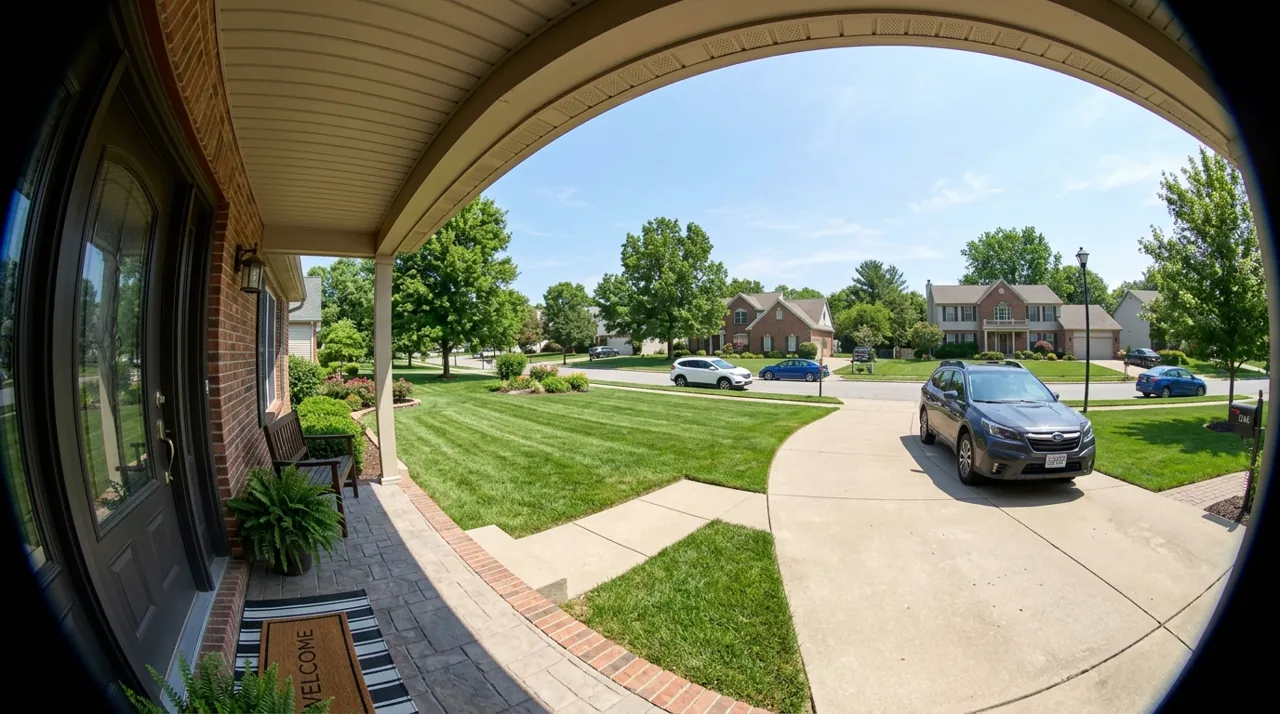
In Plain English
Halloween is the one night a year when your front door is busy on purpose. Dozens of strangers, many of them small and in masks, walk up to your step. Your doorbell camera will notice every one of them.
Two problems follow. First, the phone buzzes so often that you stop looking, which is exactly when you would want to notice something odd. Second, the night brings a few genuine risks: decorations get taken or smashed, a pumpkin ends up in the road, and a small number of people treat the evening as a chance to cause trouble.
The fix is not complicated. Before the night, decide which alerts you want and which you do not, move anything that flaps or flashes out of the camera’s view, light the path safely, and know how to save a clip. Then enjoy the evening.
Set Up the Doorbell Camera Before the Night
Decide how loud the alerts should be. Ring’s motion detection settings include Motion Schedules that suppress alerts during specific times. On a night when you expect constant visitors, a schedule that quiets motion notifications between roughly dusk and the last trick-or-treaters is friendlier than switching alerts off entirely. Google’s Activity Zones approach it differently, letting you choose People, All other motion, or both within each zone. If you use a Nest camera, a zone drawn around the area outside the porch, such as the sidewalk and the street, can keep the walkers out of your notifications.
Keep recording. The point of quieting alerts is to stop the noise, not the evidence. Leave motion recording on so the clip exists if you need it. Google notes that Activity Zones filter notifications only, and that the camera still streams its entire view and stores the footage.
Check the mount height. Ring recommends 48 inches from the ground for its doorbells and says a doorbell mounted too high or too low can give inconsistent motion detection. Children are short, so it is worth watching a test walk-up before the night.
Clean the lens. A dusty, cobwebbed lens turns night video milky. Wipe it with a soft cloth, and check that Halloween webbing is not stretched near the camera.
Decorations That Trigger False Alerts
Ring’s positioning guidance lists swaying trees, flags and bright lights as sources of false motion alerts. Halloween decor is those same things in costume: banners, cotton webbing, inflatables, skeletons on strings, motion-activated props and flashing lights. If one of them is in the camera’s view, expect an alert every time the wind moves it.
Three simple habits solve most of it. Put animated and windblown decorations at the edge of the porch or on the lawn, outside the camera’s motion zone. Anchor lightweight items so they stay still. And never drape webbing, fabric or a hanging prop across the lens or the sensor. That blocks the view you are relying on, and it can also trigger night vision to glare off the material in front of it.
The same objects cause a second problem. Ring notes that objects blocking the desired field of view are a placement hazard, and a large inflatable directly in front of the doorbell is exactly that. Leave a clear line from the camera to the step.
Light the Porch, Safely
National Neighborhood Watch recommends outdoor lighting activated by a photocell or movement to illuminate the area around the home during Halloween, and suggests trimming shrubs and large trees beforehand so trespassers have fewer hiding spots. It also says to keep steps, sidewalks, porches and pathways well lit and free of props. A lit porch is friendlier to trick-or-treaters and to your camera, whose night video is better when faces are lit.
The Consumer Product Safety Commission adds several decoration rules that double as porch safety. Outside your home, use flameless candles or keep burning candles and jack-o-lanterns away from landings and doorsteps, so costumes do not brush a flame. The CPSC recommends battery-operated flameless candles or glow sticks as safer than open flames in carved pumpkins. It also advises inspecting every light strand, new or old, for broken sockets, exposed wires or frayed connections, using only lighting certified by a recognized testing laboratory, and avoiding overloaded extension cords. A porch is a wet, outdoor place, so those checks matter more here than in a living room.
If you want a light that comes on as people approach, our best motion sensor light roundup covers the options. For package-related risks on a night when deliveries and decorations share the porch, see our package theft hub.
Protecting Decorations and Pumpkins
A camera records a theft; it does not prevent one. What reduces the chance is making the porch look watched, lit and hard to take from. Keep valuable or hard-to-replace decorations near the door, inside the camera’s view, and bring them in overnight if they matter to you. Light the front of the house, and keep the doorbell camera visible, since a camera that can be seen is the part with any chance of changing what a passerby does.
For anything you would hate to lose, such as a vintage prop or an expensive inflatable, use the same thinking as for parcels: out of easy reach, in view, and secured if it can be. Our video doorbells hub and the best video doorbell cameras roundup explain what to look for if your current camera struggles with night video or a wide porch.
If Something Happens
If your house or car is vandalized, do these things in order.
Save the footage first. Download or export the relevant clip before anything else. Camera services store history for limited periods that depend on the plan, and the footage is only useful if you still have it. Note the date and time too.
Photograph the damage before you clean it, so the record shows what happened.
Contact your local police if you decide to report it, and give them the clip. This is general information, not legal advice, and requirements for reporting and for insurance claims differ by place and policy, so check yours.
National Neighborhood Watch also suggests checking that your homeowners insurance is current before Halloween, which is a sensible thing to do in October rather than after an incident.
Going Deeper: Why a Busy Doorbell Is Hard to Tune
A doorbell camera on Halloween faces a situation it was not tuned for. Most owners set it up in a quiet week, watching for delivery drivers and the occasional visitor. On October 31, dozens of small people arrive in quick succession, often in dark costumes, some in masks, and many stand close to the door for a minute at a time. Every part of the detection chain is stressed at once.
Motion detection is the first part. Ring’s documentation says lowering motion sensitivity reduces detection range, and that motion frequency on battery devices trades responsiveness for battery life, with a setting that detects continuously giving the shortest battery life. A doorbell on a battery that is set to check motion frequently will drain quickly on a night with constant activity, so it is worth topping up the battery beforehand and switching to a wired supply if you have one. A doorbell already at the edge of its charge may stop recording at exactly the wrong moment.
Notification volume is the second. Every alert is a chance to look at the phone, and after the twentieth you will not. A schedule that silences the routine and keeps recording lets you review the night afterwards in one sitting. If your camera supports it, a person-only filter also helps, though on Halloween a person filter is not useful for telling a trick-or-treater from anyone else; its job is to remove the cars and blowing props.
The third is video quality. Dark costumes and masks are a hard test for night video, and Ring’s guidance about bright lights applies too: a light shining directly at the lens can wash out a face. A porch light beside or above the camera, rather than facing it, gives the sensor an evenly lit subject.
Finally, remember the limits of what a camera tells you. It shows who was on your step. It does not prove intent, and a masked face is not identifiable in most footage. Save the clip, note the time, and let the police decide what to do with it. That is the honest ceiling of what a doorbell can do for you on this particular night.
A Ten-Minute Checklist for Before October 31
Wipe the lens and check the battery or power. Watch a test walk-up to be sure the camera notices someone at child height. Decide your alert schedule or zones. Move anything that flaps or flashes out of the camera view. Swap open-flame candles for flameless ones. Check every light strand for damage. Clear steps and paths of props. Note where the app keeps clips, so you can save one quickly. That is the whole plan.
Sources & References
- Halloween Safety Tips for Selecting Costumes and Decor — U.S. Consumer Product Safety Commission
- Halloween Safety Tips — National Neighborhood Watch
- Positioning Doorbells and Security Cameras — Ring
- Motion Detection for Ring Devices — Ring
- Set up and use Activity Zones — Google Home and Nest Help