
Affiliate Disclosure: Some links on this page are affiliate links. As an Amazon Associate, we earn from qualifying purchases — at no extra cost to you. We do not buy, install, or physically handle the cameras we cover; our rankings come from aggregated owner reviews, ratings and expert consensus. Commissions never change our verdicts. We're reader-supported: commissions fund hosting, research and updates, so if a guide helped, buying through our links keeps it going. How we rank · full disclosure.
Short version: the best apartment security system is one you can install without tools, cancel without a contract and peel off the wall on move-out day. On those terms the SimpliSafe 8 Piece Wireless Home Security System is our pick for a complete kit. If you only need a loud alarm on a door or window, the UltraPro 2-pack does that for well under $20 with no app or hub. Add a plug-in camera such as the Wyze Cam v4 if you want video with the alert.
Comparing lower-cost single devices first? See our best security camera for apartment guide, and check the lease rules in renters’ rights and security cameras before you stick anything to a shared hallway.
In Plain English
An apartment security system is a set of small devices that tell you, or scare off, someone who opens a door or window they should not. Most work like a doorbell for trouble. A small sensor on the door frame notices when the door moves, then sounds a siren, sends a message to your phone, or both.
The renter-friendly kind uses sticky tape instead of screws, runs on batteries and links to your phone over WiFi. That means nothing is drilled into the wall, nothing needs an electrician, and it all comes off when you leave.
Two things are worth deciding up front. First, do you want a service that calls for help, which costs a monthly fee, or are you happy to be alerted yourself? Second, how many entry points do you have? A studio with one door needs far less than a ground-floor two-bedroom with a patio slider.
Top Rated Picks at a Glance
The Ranked Field: Star Rating, Consensus and Price

Best for a complete, self-installed alarm kit with no contract and optional monitoring.
- Wireless components that stick on with adhesive.
- Entry sensors for doors and windows.
- Monitoring plans are optional and contract-free.
- Owner-rated 4.5 stars.
Why buy it: The most complete starting point for a rental: the pieces attach without drilling, and the monitoring decision stays yours month to month.
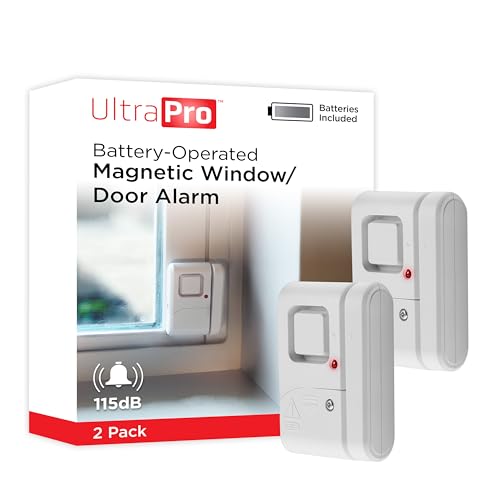
Best for a standalone, no-app, no-hub alarm for a front door or ground-floor window.
- 120 dB sound output.
- Double-sided tape mounting, no tools.
- Off, chime and alarm switch.
- Four LR44 batteries included.
Why buy it: The cheapest way to make a door or window loud, with nothing to configure and nothing that leaves a mark on move-out.
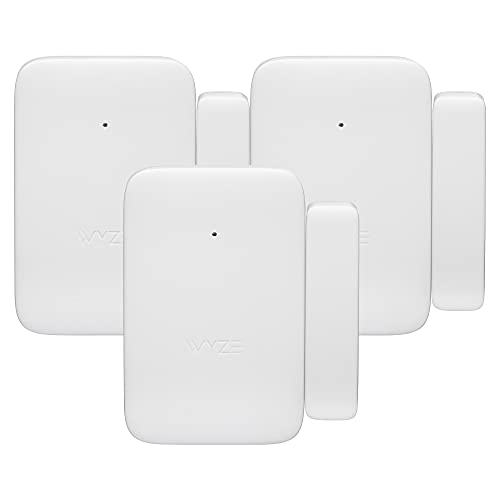
Best for renters already in the Wyze app who want phone alerts when a door or window opens.
- Phone notifications when an entry point opens.
- Up to 18-month battery life.
- Permanent adhesive back.
- Needs a Wyze Sense Hub (sold separately).
Why buy it: Three sensors in one pack, and alerts land in the app you may already use for a Wyze camera.

Best for a plug-in indoor camera that needs no drilling and records to a microSD card.
- Plug-in power, no wiring.
- Local microSD recording.
- 2.5K video.
- Shelf or desk placement.
Why buy it: A low-cost camera to sit on a shelf aimed at the entry, so a sensor alert comes with video.
Comparison Table
| Product | Best for | Buy |
|---|---|---|
| SimpliSafe 8 Piece Wireless Home Security System | Best Overall Kit | Price |
| UltraPro Personal Security Window and Door Alarm (2-Pack) | Best Budget Door Alarm | Price |
| Wyze Home Security System Entry Sensor (3-Pack) | Best Add-On Sensors (Wyze) | Price |
| Wyze Cam v4 (2.5K) | Best Camera Add-On | Price |
How We Rank
We do not buy or physically install these systems. Every star rating comes from licensed Amazon data, and specifications come from the manufacturers’ own pages. Full method on how we rank.
What a Renter Actually Needs From a System
No drilling. Anything that mounts with adhesive is the baseline. SimpliSafe’s installation guide describes cleaning the surface with an alcohol-based solution, letting it dry and holding the sensor in place for 30 seconds. That kind of mounting comes off at move-out with far less damage than screws.
No contract. A one-year lease deserves a one-month commitment. SimpliSafe’s support page says its plans carry no contracts or hidden fees, and that a fully unmonitored option exists at no cost with live video and remote arm and disarm. That lets you start without a monthly bill and add monitoring later if you want it.
Portable. Choose parts that peel off or clip on. Note that adhesive varies: Wyze describes the back of its entry sensor as permanent, so treat those as semi-disposable if you plan to move within a year or two.
Right-sized. A one-door apartment on the fourth floor has a different risk from a ground-floor unit with a patio door. Count your doors and ground-level windows first, then buy for those.
Whole Kit or Single Alarms?
A full kit gives you a base station, keypad, entry sensors and often a motion sensor and siren, all talking to one app. The advantage is one place to arm and disarm and, if you subscribe, one plan to add monitoring. The trade-off is upfront cost and a system that only works as a set.
Standalone door alarms like the UltraPro work the other way around. Each sensor is self-contained: it has a 120 dB alarm, three modes (off, chime and alarm), tape mounting and four LR44 batteries, per Jasco’s product page. There is nothing to pair and nothing to subscribe to. The trade-off is that nobody is notified unless you are home to hear it, which limits its value if you are out during the day.
Many renters end up with a hybrid: a kit’s sensors on the main entries, plus one plug-in camera aimed at the door. The camera adds the video that a sensor alone cannot.
Professional Monitoring: Optional, and Priced Separately
Monitoring means a call center receives the alarm and dispatches help. It is optional on the kits we recommend, and it is priced separately from the hardware. SimpliSafe’s support page lists these monitored plans, as of September 2026: Standard at $22.99 a month with 24/7 emergency dispatch, Core at $32.99, Pro at $49.99 and Pro Plus at $79.99, plus a $9.99 self-monitoring plan with camera recordings for up to 10 cameras. The Standard plan’s history covers up to 7 days but excludes camera recordings.
Consumer Reports’ guide frames the wider choice: professional monitoring typically costs $15 to $53 a month by its figures and suits people who want someone else watching, while self-monitoring is usually free but relies on you seeing the alert. It also says a three-year contract can lock in a price, which is why the no-contract structure matters for a renter with a twelve-month lease.
This site sells no monitoring and did not test any monitoring service. We are describing the vendor’s own published plans, not vouching for a response.
Where to Put the Pieces
Start with the entries a burglar would actually use. ASU’s burglary guide says about two-thirds of burglaries involve forced entry through windows and doors, and about one-third enter through unlocked or open windows and doors. Put a sensor on the front door and on any balcony or patio slider. If you are on the ground floor, add sensors to windows that face a fence, a hedge or a shared walkway. Upper-floor windows matter far less unless there is a fire escape or a balcony below.
For entry sensors, mind the gap. SimpliSafe says the two halves should be no more than 1.5 inches apart when the door is closed. A door that sags or a window that rattles will trigger false alarms if the gap creeps past that.
Which One Should You Buy?
A ground-floor unit or a two-door apartment: the SimpliSafe 8-piece kit, so every entry is covered and you can add monitoring later.
A single door on an upper floor, on a tight budget: the UltraPro 2-pack, one on the door and one on the balcony slider.
Already using Wyze: the Wyze entry sensor 3-pack, remembering the hub requirement.
You want to see what set it off: add the Wyze Cam v4, a plug-in camera that records to a microSD card.
Going Deeper: What Alarms Actually Change for Burglars
It is fair to ask whether a $17 alarm or a $180 kit changes anything, and the research on burglars gives a measured answer. A UNC Charlotte study led by criminologist Joseph Kuhns surveyed more than 400 incarcerated burglars. According to the university’s write-up, about 83 percent said they would check for an alarm before entering, and about 60 percent said they would abandon a target if they found one. When an alarm surfaced mid-attempt, roughly half stopped, while about 31 percent said they sometimes retreated. The same study found most offenders forced open a window or door, and only about 12 percent picked locks or obtained keys.
That last point shapes how to use a sensor. A sensor announces that a door has opened; it does not keep the door shut. ASU’s Center for Problem-Oriented Policing says burglars typically use simple tools such as screwdrivers or crowbars to pry open weak locks and windows, and that houses with two or more security devices, including window locks, dead bolts, security lights and alarms, are less likely to be entered. The sensible reading for a renter is layering: a working lock, a loud sensor, and visible signs that the place is protected. ASU also cautions that experienced burglars may tackle devices, but that devices slow them down and raise the chance of detection.
The technology is simple, which is part of why it is reliable. A typical entry sensor is a magnet on the moving door or window and a reed switch on the frame; when the door opens, the magnet moves away and the circuit changes state. Magnetic fields weaken quickly with distance, so sensors are built to work across a specific gap. That is why the placement gap in the manufacturer’s guide is a real limit and not a suggestion.
Finally, remember that any connected device can be a target. For a camera add-on like the Wyze Cam v4, use a strong unique password, turn on two-factor authentication where offered, and keep the app and firmware updated.
The Verdict
Buy for the way you live and the lease you have. The SimpliSafe kit is the most complete renter-friendly system on this page, the UltraPro is the smartest cheap deterrent, and the Wyze sensors and camera are good add-ons if you already use that app. Count your doors and ground-floor windows, buy for those, and keep monitoring a separate decision you can start or stop at any time.
Sources & References
- Entry Sensor Overview and Installation Guide — SimpliSafe
- What are the residential monitoring plan options? — SimpliSafe
- UltraPro Battery-Operated Magnetic Window Alarm 2 Pack — Jasco
- Wyze Sense Entry Sensor v2 — Wyze
- Burglary of Single-Family Houses — ASU Center for Problem-Oriented Policing
- Through the Eyes of a Burglar: Study Provides Insights on Habits and Motivations — UNC Charlotte
- How to Pick a Home Security System — Consumer Reports
- Landlord-Tenant Law — Legal Information Institute, Cornell Law School