
Affiliate Disclosure
Some links on this page are affiliate links. As an Amazon Associate, we earn from qualifying purchases — at no extra cost to you. We do not buy, install, or physically handle the cameras we cover; our rankings come from aggregated owner reviews, ratings and expert consensus. Commissions never change our verdicts. How we rank · full disclosure.
Short version: premium security cameras are worth the money in three specific situations — long viewing distances where you need to identify rather than notice, positions that must never miss an event, and homes where false alerts have already made someone turn notifications off. Outside those three cases, the honest answer is that an entry-level camera does most of the job, and our budget cameras hub makes that argument without flinching.
How we work: we do not buy, install or physically handle these cameras. Our rankings come from aggregated owner reviews, star ratings weighted by review volume, and the complaints that recur across thousands of buyers. The method is on how we rank, and our funding is set out in the affiliate disclosure.
Top Rated Premium Security Cameras Worth Knowing About
These four show what the upper end of the market actually delivers, from a mid-range 4K wired camera to a premium whole-property system. They are the top rated models in this price band on owner ratings weighted by review volume, and the full rankings live in the best PoE security camera systems and best security camera systems guides.
What the Extra Money Buys: Advanced Detection and Superior Optics
The direct answer: detection accuracy, low-light performance and reliability — in that order. Resolution is fourth, and it is the only one on the packaging.
Detection accuracy is the feature owners cite most when explaining why they upgraded. A cheap camera detects motion; a premium camera classifies what moved. The difference is not a nicety. Alert fatigue is the mechanism by which a working camera stops being useful, because a phone that buzzes at every passing headlight gets muted within a week, and a muted camera is a recording device rather than a security system.
Low-light performance is where the price gap is most visible and least advertised. Resolution figures are daylight figures. What separates an entry-level camera from a premium one at 2am is sensor size and lens aperture, which is why premium cameras deliver color night footage on ambient light while budget models need a spotlight to manage the same thing — announcing the camera’s position in the process.
Reliability is unglamorous and decisive. Wired power instead of a battery you forget to charge. A better radio that holds a connection at the far corner of the property. Firmware that is still being updated in year four. The most expensive camera failure is the one you discover after the event you needed it for.
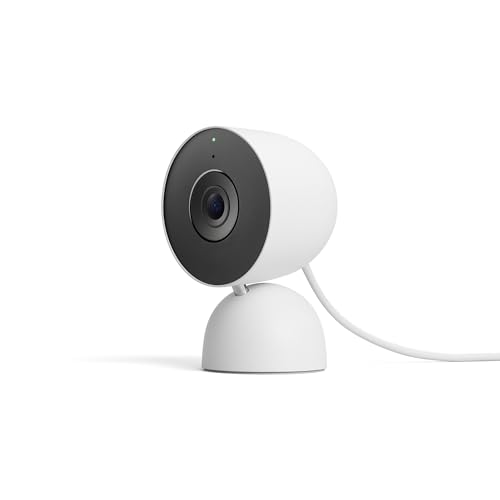
Best for a main living space where detection accuracy matters more than resolution.
- On-device intelligence that separates people, animals and vehicles.
- Wired power for genuinely continuous operation.
- Tight integration with the Google Home ecosystem.
- Some event history retained without a paid plan.
Why buy it: The highest owner rating in this group, and the detection accuracy is what premium money buys more than pixel count.

Best for the most resolution and tracking per dollar, with local storage.
- 4K sensor with 360° AI motion tracking.
- Person, pet and facial recognition on-device.
- Subscription-free local storage.
- Wired power, so no battery management at all.
Why buy it: It matches the premium feature list at a mid-market price, which is why it rates as highly as cameras costing twice as much.

Best for wire-free outdoor mounting with genuine object classification.
- 2K with color night vision.
- Person, package, vehicle and animal detection.
- Battery powered — mounts anywhere with no wiring.
- Two-way audio and integrated siren.
Why buy it: Package detection is the feature owners cite most often as worth paying for, and Arlo does it well.

Best for permanent whole-property coverage with weeks of local recording.
- Four 4K PoE cameras on an eight-channel NVR.
- 2TB drive included — recording is local by design.
- One Ethernet run carries power and data per camera.
- No cloud account required for recording or playback.
Why buy it: The only setup here that keeps recording regardless of app updates, WiFi outages or a vendor changing its business model.
AI Detection, Facial Recognition and Color Night Vision
Three named features do most of the work at this price, and they are worth separating from marketing language.
AI detection means the camera decides whether the thing that moved is a person, a vehicle, an animal or a package, and ideally does that on the device rather than in a paid cloud tier. Google Nest and TP-Link Tapo both run classification locally; several ecosystem brands do not. Facial recognition goes a step further and learns familiar faces so the app can say who is at the door rather than that someone is. Owners find it genuinely useful in households with regular visitors, and largely pointless on a driveway camera.
Color night vision is the one that changes evidence quality. Infrared produces a grey silhouette; a larger sensor with a wider aperture, or a modest spotlight, produces clothing color and skin tone. If a camera exists so that you could describe someone afterwards, this is the specification to pay for.
4K Resolution, Dual Lens Cameras and When It Genuinely Matters
Resolution is worth exactly as much as your viewing distance makes it worth, and no more.
The useful way to think about it is pixels across a face at the distance you care about. At ten feet, 1080p already gives a recognizable face and 4K adds detail you will never need. At forty feet across a driveway, 1080p produces a person-shaped shape and 4K produces something a police report can use. The camera watching your living room and the camera watching your gate have completely different requirements, and buying 4K for both is a common way to overspend.
Where 4K genuinely pays is digital zoom on a recorded clip. A wide 4K view lets you crop into a license plate or a face afterwards, which is precisely the situation where footage matters — nobody is watching live when it happens. That single capability is the best argument for resolution, and it is why 4K belongs on approaches and driveways rather than hallways.
The cost is storage. Continuous 4K recording consumes card and drive space at several times the rate of 1080p, which is why the premium systems that make the most sense ship with a 2TB drive rather than a memory card. Sizing storage to resolution is covered in the NVR camera systems hub.
A dual lens camera is the other way premium models solve the same problem. Instead of one very wide 4K view, a dual lens unit pairs a wide sensor with a telephoto or a downward-facing second sensor, so you get both the context of the whole yard and a usable close view of the doorstep in one mounting position. Reolink, Eufy and TP-Link all sell dual lens outdoor models now. The trade is bulk, a higher price and twice the footage to store, so it earns its place on a driveway or a long approach rather than on a side gate.
Premium Wired vs Premium Wireless
At the top of the market this is the real decision, and it is not close on the technical merits.
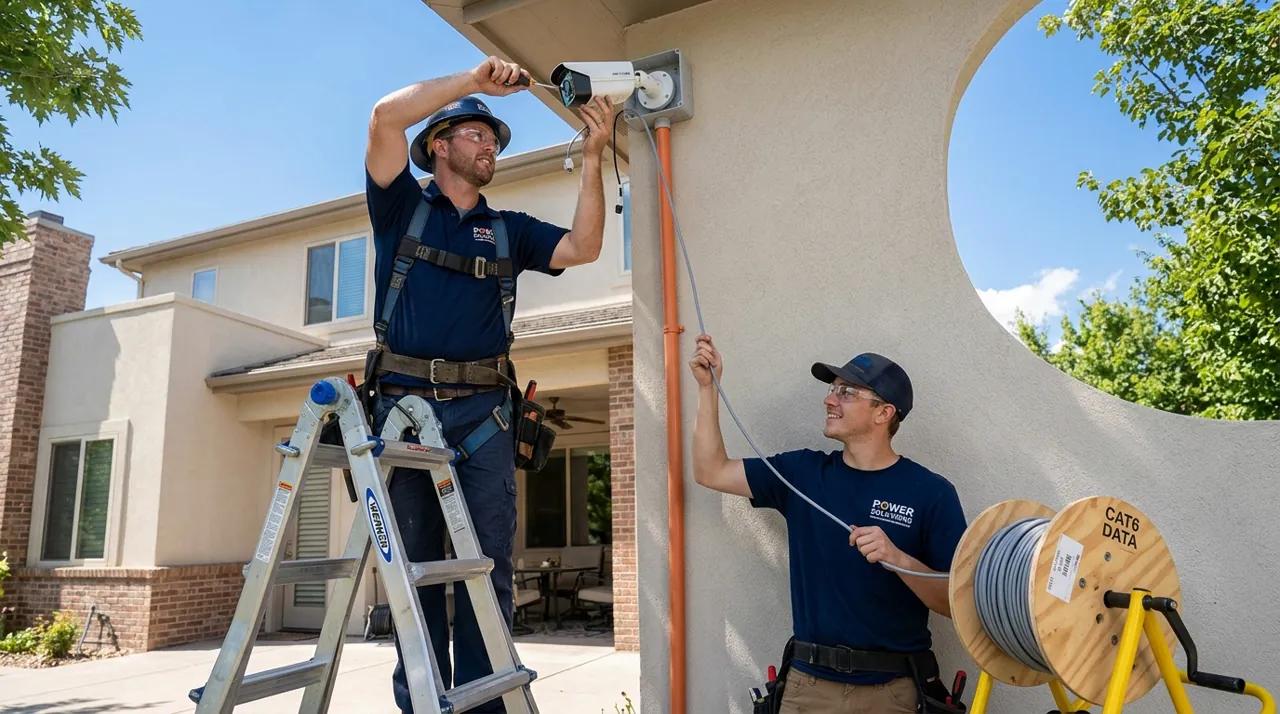
Wired PoE puts power and data on one Ethernet run per camera. No batteries, no charging, no WiFi congestion, no seasonal drop-offs, and the recording sits on a drive in your house rather than in a service you rent. Owner reviews of PoE systems complain about installation and interface design, almost never about the cameras failing to record. That is the profile you want on a permanent installation. The wired PoE cameras hub covers cable runs and switch requirements.
Premium wireless wins on everything else: it goes up in twenty minutes, it moves with you if you rent, and it reaches positions no cable will. What it asks in return is battery management and a dependence on WiFi reaching the far corners of your property. Owners of battery cameras consistently report that manufacturer battery-life figures assume far less activity than a real front yard produces.
The pattern that works for most premium buyers is a hybrid: wired cameras on the positions that must never miss anything, battery or solar cameras on the awkward spots where running cable is not worth it. Our wireless and battery cameras hub and solar cameras hub cover the second half of that.
The Subscription Tier Trap at the High-End
This is where premium buying most often goes wrong, and it is worth being blunt about. A premium camera whose person detection, activity zones or video history requires an ongoing plan is not really a premium camera at that price point. At a modest monthly fee it adds up to a much larger total over five years, and the plan is generally per-household rather than per-camera only until you add the third camera.
Read the subscription tier table before you read the spec sheet: the entry tier usually covers one camera, and the multi-camera tier is where the real number lives. The ecosystem brands are the ones to check hardest here, because a subscription is a large part of their business model. That is not automatically a bad deal — cloud storage genuinely protects footage against the camera being stolen, which local storage cannot — but it must be a decision rather than a discovery.
The alternative is well established at this price point: cameras with on-device AI and local recording, or a PoE system with an NVR, where the ongoing cost is zero and nothing can be moved behind a paywall later. Our subscription-free rankings cover that route in detail.
Where Premium Is Worth It, and Where It Is Not
Worth it: long distances. Driveways, front approaches, large yards and anywhere you need identification rather than awareness. Resolution and night performance both matter here and both cost money.
Worth it: positions that cannot fail. The one camera covering the only vulnerable entrance. Wired power and a maintained ecosystem are cheap insurance against the failure you only notice afterwards.
Worth it: households already suffering alert fatigue. If someone in your house has muted the camera app, better detection is the fix, and it is the single most satisfying upgrade owners describe.
Not worth it: indoor rooms. An entry-level indoor camera at close range genuinely competes with a premium one. This is the clearest case in the whole market, and the indoor cameras hub bears it out.
Not worth it: more cameras beat better cameras. Given a fixed budget, coverage of four positions tells you more than excellence at one. Spend the premium on the important approach and go cheap everywhere else.
Not worth it: 4K on short views. Storage cost is real, benefit at ten feet is not.
Best Overall, Best Value, Best Premium: Star Rating and Consensus
Ranked on owner ratings weighted by review volume, the Google Nest Cam Indoor is the best overall of this group — not because it has the most pixels, but because its on-device classification is what buyers say they actually notice day to day. The TP-Link Tapo C260 is the best value by a wide margin: matching that same strong owner rating at an entry-level price, with 4K and subscription-free local storage, which is why the consensus in owner reviews treats it as the entry point to this category rather than a compromise.
The REOLINK 8-channel 4K PoE kit is the best premium buy when the job is a whole property rather than a room, because the price includes four cameras, a recorder and a drive. Arlo sits between them, chosen for placement freedom rather than specification. Anyone weighing this group against far cheaper hardware should read the best budget picks first — the gap is smaller indoors than the price suggests.
Pros and Cons of Buying at the Premium End
Pros. Detection you can trust, which is the difference between a system people keep enabled and one that gets muted. Usable night footage without a spotlight announcing the camera. Hardware and firmware that are still supported in year four. Wired options that remove batteries from the equation entirely. And on the local-recording models, no ongoing cost at all.
Cons. The price is only the opening figure once a plan is involved. Storage demands rise with resolution, so the 4K camera that impressed you in the store quietly needs a bigger drive. Installation on wired premium systems is genuine work. And ecosystem lock-in gets more expensive the deeper you go, because the second and third cameras are effectively chosen for you. The honest summary is that premium buys reliability and accuracy, not a fundamentally different picture in daylight.
Warranty, Returns and What a Premium Price Should Include
Most premium cameras carry a one-year limited manufacturer warranty; a few brands extend to two years on wired models, and NVR kits usually cover the recorder and the drive separately from the cameras. That matters more than it sounds, because the component that fails first in a kit is normally the hard drive, and a drive replacement is a cheap fix if the recorder is still supported.
The practical protection at this price is the retailer return window rather than the warranty. Owner reviews describe most genuine faults — a camera that will not hold a link, a lens with visible haze, a spotlight that never fires — showing up in the first fortnight, which sits inside a standard 30-day return period. Mount everything, run it through a full week of weather and night cycles, and decide before that window closes. Also check whether the warranty is voided by third-party mounts or by fitting your own drive, which some kit makers specify and buyers rarely read.
What Owner Reviews Say Premium Camera Buyers Complain About
The complaints at this end of the market are different from the budget end, and instructive.
Subscription gating. By some distance the loudest theme. Owners rarely object to the camera; they object to discovering after setup that the feature they bought it for costs monthly.
Battery life below expectations. Universal across premium wireless. Manufacturer figures assume a quiet location, and a street-facing camera is not one.
Installation effort on wired systems. Not a defect, but consistently understated. Four Ethernet drops through a finished house is a weekend of work or a contractor.
Ecosystem lock-in. Buying deep into one brand makes mixing in a better camera from another awkward later. The brand comparisons hub is worth reading before the second purchase, not the fifth.
Dated NVR interfaces. The recording reliability is excellent and the software design frequently is not. Owners accept the trade, but it surprises people coming from a polished phone app.
Where to Start
If you are covering a whole property permanently and will run cable, go straight to best PoE security camera systems — that is where premium money is best spent, and the best security camera systems rankings cover the same ground from the recorder side, with a comparison table of price, resolution and storage. If you want one excellent camera on one important approach, the best outdoor security cameras rankings are the place to look, and a floodlight camera is often the better version of that position. If the driver is escaping monthly fees rather than gaining features, read the subscription-free rankings first. And if you are not yet convinced premium is necessary at all, the budget cameras hub is the honest counter-argument. The topical map below closes the loop.