
Affiliate Disclosure: Some links on this page are affiliate links. As an Amazon Associate, we earn from qualifying purchases — at no extra cost to you. We do not buy, install, or physically handle the cameras we cover; our rankings come from aggregated owner reviews, ratings and expert consensus. Commissions never change our verdicts. We're reader-supported: commissions fund hosting, research and updates, so if a guide helped, buying through our links keeps it going. How we rank · full disclosure.
Short answer: PIR (passive infrared) motion detection uses a dedicated sensor that reacts to changes in infrared heat radiation moving across its field of view. It is the same core technology behind most household motion-activated lights. Video motion detection instead analyzes the video feed itself, comparing successive frames for pixel changes that indicate movement. PIR is efficient and battery-friendly, but it reacts to any heat source crossing its view, including cars, animals and blowing debris. Video-based detection, especially paired with AI classification, can distinguish a person from an animal or a moving branch far more reliably. That accuracy costs more processing power.
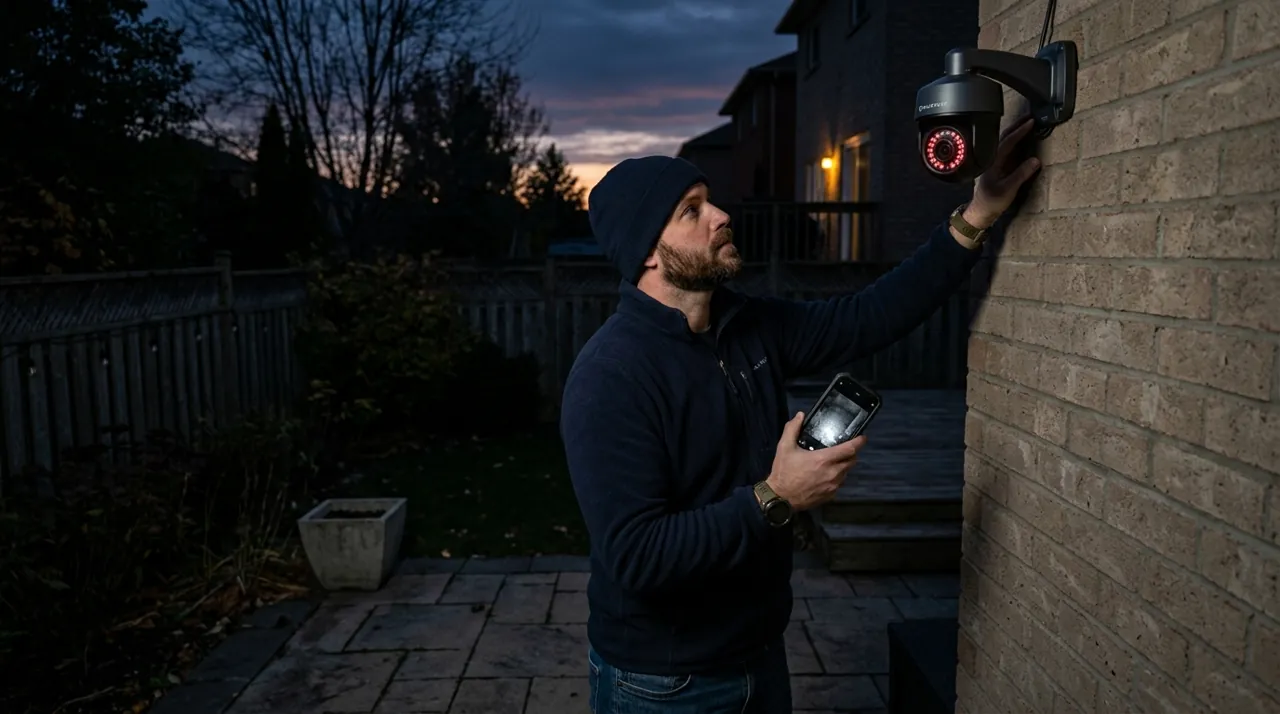
Recommended Cameras by Detection Type
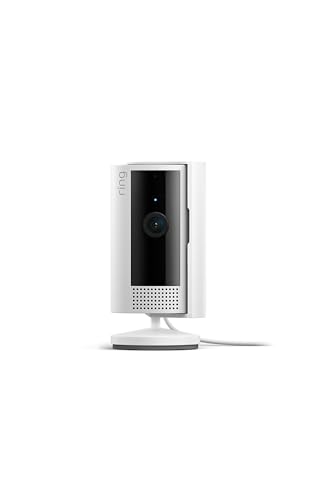
Best for plug-in motion detection with customizable motion zones at an entry-level price.


Best for a budget camera pairing free pixel-based motion detection with optional AI person detection (Cam Plus).
PIR vs Video Motion Detection: Heat Signature vs Pixel Change
A PIR sensor is a small, dedicated hardware component, separate from the camera's imaging sensor. It is built to detect the specific infrared wavelength range human and animal body heat emits. When something warm moves across the sensor's field of view, it registers a change and triggers the camera to start recording or send an alert. This is the same technology behind a household motion-activated porch light. Battery cameras favor it heavily for exactly that reason. A PIR sensor draws very little power while idle, letting the camera's processor and radio stay in a low-power sleep state until something actually triggers a recording event.
Video motion detection works entirely differently. It compares consecutive video frames pixel by pixel to identify areas of change. Basic video motion detection triggers on any sufficiently large change — a shadow shifting, a curtain moving in a breeze, headlights sweeping across a wall. That is why basic video-only motion detection has a reputation for generating more false alerts than PIR. Modern smart or AI-based video detection improves on this substantially. It runs a classification model on the detected motion, distinguishing a person or vehicle shape from irrelevant background movement before triggering an alert.
The Real Tradeoffs: AI Classification, Power Draw and Window Glass
PIR's core weakness is that it cannot distinguish what is moving, only that something warm is. A dog, a car engine's residual heat, or even direct sunlight heating a surface can trigger a PIR sensor the same way a person walking by does. That is the source of many classic motion-camera false-alert complaints. PIR is also less effective through glass. Window glass blocks a meaningful portion of infrared radiation, making PIR-based cameras positioned behind a window notably less reliable than ones with a direct outdoor view. Ring and Reolink both advise against aiming cameras through or at glass for exactly this kind of inconsistent detection.
Video-based smart detection's core weakness is power and processing cost. Running frame analysis and classification continuously draws more power than a passive sensor waiting for a trigger. That is why battery cameras often use PIR as the initial wake-up trigger, layering smart video classification on top only after that trigger fires, rather than running full video analysis continuously.
Which Detection Type Matters More: Person or Vehicle Alerts
For most buyers, the practical answer is a hybrid approach: PIR for efficient wake-triggering, video-based AI classification for filtering what actually deserves an alert. That combination delivers the best balance of battery life and alert accuracy. It is increasingly the standard across mid-range and premium consumer cameras, not a premium-only feature. Buyers specifically frustrated by false alerts should prioritize cameras with smart person or vehicle detection layered on top of basic motion, regardless of which underlying sensor technology triggers the initial wake event.
See stop security camera false alerts for the practical settings that reduce false triggers regardless of detection type, and do security cameras work in the dark for how detection and night vision interact after dark.
Detection Range: Another Practical Difference
PIR sensors typically have a defined, fairly consistent detection range and cone angle specified in the camera's manual — Reolink, for example, lists about 10 meters and 120 degrees horizontally for the PIR sensor on its battery cameras, and notes it is more sensitive to side-to-side movement than to movement heading straight at the camera. That range degrades predictably with distance, as the heat signature becomes harder to distinguish from ambient background temperature. Video motion detection's effective range depends more heavily on lighting, contrast and resolution. A well-lit scene with a high-resolution sensor can detect motion meaningfully further than PIR would reach, while a dim scene can underperform PIR at even moderate distances. This is part of why some cameras combine both: PIR for a reliable, consistent near-field trigger, and video analysis for anything the camera's field of view can resolve regardless of the PIR sensor's own range limit.
For buyers comparing two cameras on paper, checking both the PIR range spec and the video-based smart detection range, where the manufacturer publishes one, gives a more complete picture than either figure alone.
How Each Detection Type Affects Battery Life
On a battery-powered camera, the detection method chosen has a real, measurable effect on runtime between charges. A camera relying primarily on PIR to trigger short, efficient recording clips generally lasts longer between charges than one running continuous or frequent video-based analysis. PIR's near-zero idle power draw is exactly why it became the standard trigger mechanism for battery cameras in the first place. Cameras that layer AI video classification on top of a PIR trigger, rather than running video analysis continuously, are specifically designed to capture most of the accuracy benefit of smart detection while preserving most of PIR's battery efficiency. That is why this hybrid design has become the default architecture across most modern battery-powered cameras, not a niche premium feature.
Adjusting Sensitivity: What Actually Changes on Each System.
On a PIR-based camera, sensitivity settings typically adjust how strong a heat signature needs to be, and how much it needs to move, before triggering. Turning sensitivity down cuts false alerts from small or distant heat sources, but it can also miss a person moving slowly or partially obscured. Turning it up catches more real events, at the cost of more false triggers from cars, animals and shifting sunlight.
On a video-based system, sensitivity usually adjusts the size of the pixel-change region needed to count as motion, along with the classification confidence threshold for AI detection. A higher confidence threshold means the camera only alerts when it is genuinely sure it sees a person or vehicle, which cuts false alerts significantly but can occasionally miss a partial or unusual view of a real subject.
Detection Zones: A Feature That Works Differently for Each Type.
Video-based systems generally support drawing custom detection zones directly on the camera's field of view, ignoring motion in a zone entirely, like a busy sidewalk or a neighbor's driveway, while still alerting on the zones that matter, like your own front path. This is one of the most effective tools for cutting false alerts on a video-based camera.
PIR-based zones work differently, since the sensor itself has a fixed physical field of view rather than a software-drawn boundary. Some PIR cameras offer masking to ignore part of that field, but the control is coarser than a video system's pixel-level zone drawing. This is one of the more meaningful practical advantages video-based detection holds over PIR for a busy or complex scene.
Sources & References
- Reolink Camera Installation Tips — Reolink
- Introduction to PIR Detection Distance — Reolink Support
- How to use Motion Warning on your Wyze Cam — Wyze Support
- Positioning Doorbells and Security Cameras — Ring
- Troubleshooting Battery Performance — Ring