
Affiliate Disclosure: Some links on this page are affiliate links. As an Amazon Associate, we earn from qualifying purchases — at no extra cost to you. We do not buy, install, or physically handle the cameras we cover; our rankings come from aggregated owner reviews, ratings and expert consensus. Commissions never change our verdicts. We're reader-supported: commissions fund hosting, research and updates, so if a guide helped, buying through our links keeps it going. How we rank · full disclosure.
Short answer: what happens when a security camera loses power depends entirely on its power source. A wired or PoE camera with no battery backup stops recording and goes offline the instant power cuts, with zero coverage until power returns — this is the most consequential answer, since many home camera systems have no backup power at all. A battery-powered camera keeps running on its stored charge exactly as it would during normal use, unaffected by a grid outage. A solar camera with battery storage similarly continues operating off its stored charge, potentially indefinitely if sun exposure keeps the battery topped up.
Recommended Cameras by Outage Resilience

Best for battery backup that keeps working through a power outage.

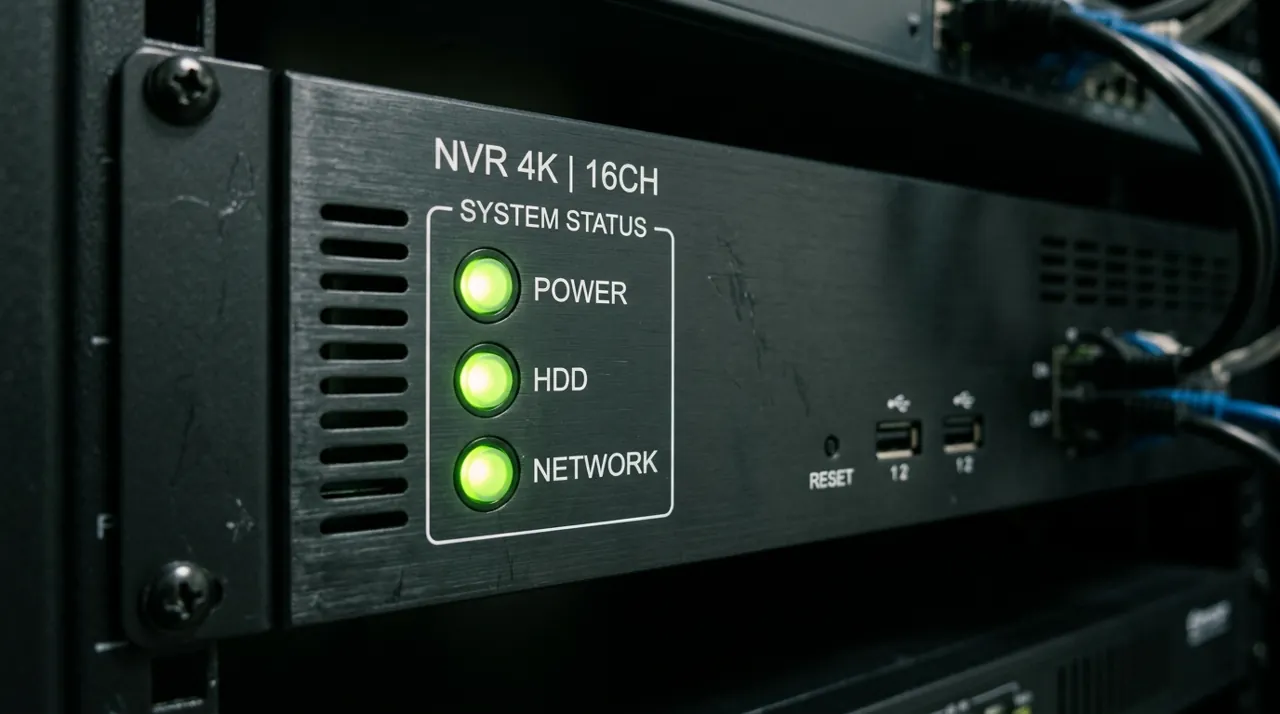
Best for a wired system that stops recording without backup power.
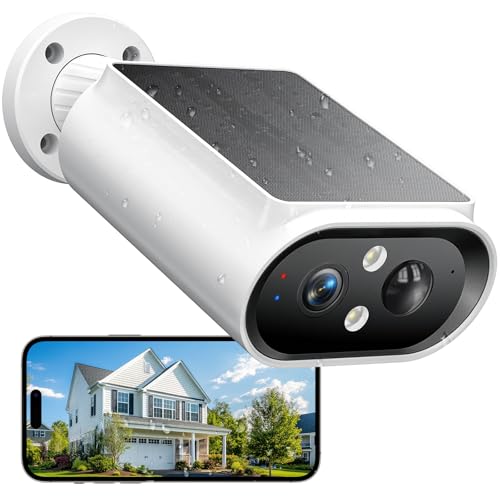
Best for solar-plus-battery power that rides through a grid outage.
What Happens If a Security Camera Loses Power? By Power Type
A plug-in WiFi camera or a PoE camera fed by an NVR with no battery backup is entirely dependent on continuous grid power. The moment power cuts, the camera stops recording immediately, and there is no coverage at all for the duration of the outage — which is precisely the window when a break-in during a storm, or an opportunistic entry timed to a known outage, is most likely to go unrecorded. This is the single biggest blind spot in an otherwise well-designed wired system, and it is worth planning for explicitly rather than discovering during an actual outage.
Battery cameras are structurally immune to this specific failure mode, since they were never depending on continuous grid power to begin with — a battery camera during a power outage behaves identically to a battery camera on any other day, running down its charge at the normal rate regardless of what the household's electricity is doing.
Protecting a Wired System Against Power Loss
A UPS (uninterruptible power supply) is the standard fix for a wired camera or NVR system that needs to keep recording through short outages. Sized correctly for the system's total power draw, a UPS provides enough runtime to bridge brief outages entirely and gives longer outages a documented window before recording actually stops, rather than losing coverage the instant the grid does. For anyone treating continuous coverage as a genuine requirement rather than a nice-to-have, budgeting for a UPS alongside a wired NVR system is a reasonable and relatively inexpensive addition.
Some higher-end NVR systems also support a backup battery built directly into the unit, which serves a similar purpose to an external UPS but is sized and integrated by the manufacturer specifically for that system.
Why Many Households Run a Mixed System
Given this asymmetry, a mixed setup — wired or PoE cameras for the bulk of continuous coverage, paired with one or two battery or solar cameras covering the most critical positions like the front door — gives a household at least partial coverage during exactly the scenario when a wired-only system goes fully dark. This is a common and sensible compromise rather than a sign of an incomplete plan, and it costs meaningfully less than a full UPS-backed wired system while still closing the worst of the outage gap.
See how to power an outdoor security camera for the full comparison of power sources, and wireless and battery cameras for the outage-resilient category specifically.
What Happens When Power Returns
Most cameras and NVR systems reconnect automatically once power is restored, rebooting and rejoining the network with no manual intervention required in the majority of cases. The reboot itself takes anywhere from under a minute to a few minutes depending on the device, during which there is still no coverage — a detail worth remembering, since the vulnerable window extends slightly past the moment power actually returns. Some systems send a "back online" notification once reconnected, which is a reasonable way to confirm the system genuinely recovered rather than assuming it did.
Occasionally a device fails to reconnect automatically after a longer or more severe outage, particularly if the router itself needed a manual restart or an IP address conflict occurred during the reboot sequence. Checking the system after any extended outage, rather than assuming automatic recovery worked, is a reasonable habit for anyone relying on continuous coverage.
Storms Are the Scenario That Actually Matters Most
Power outages correlate strongly with storms — U.S. Energy Information Administration data show the average customer went without power for about 5.6 hours in 2022 once major events like hurricanes and winter storms are counted, versus roughly two hours a year without them — and storms are precisely when a functioning security camera is most valuable — downed trees, opportunistic break-ins during evacuation, and general chaos all cluster around severe weather events. This makes the wired-camera power gap a particularly frustrating one, since it disappears exactly when coverage would matter most. It is a genuine, concrete reason to weigh battery or solar backup for at least the most critical camera position, even in an otherwise fully wired system, rather than treating outage resilience as a purely theoretical concern.
Common Mistakes That Make Power Loss Worse Than It Needs to Be
A few avoidable habits turn a routine outage into a real coverage gap. The most common is never testing the backup power in the first place — a UPS bought years ago can have a battery that no longer holds a meaningful charge, and the first real test of its runtime should not be during an actual storm. A brief scheduled test, unplugging the UPS from the wall for a few minutes once or twice a year, catches this before it matters rather than during the actual event.
Another is assuming every camera in a mixed system has backup power because one or two of them do. It is easy to add a battery doorbell at the front door and mentally file "power outage covered" without checking whether the PoE cameras on the rest of the property share that same protection — they usually do not, unless the NVR itself sits behind a UPS.
A third is forgetting that a router without its own backup power breaks remote access and alerts even for cameras that keep recording locally through an outage. A small UPS covering the router and modem alongside the NVR is inexpensive and closes this specific gap, which is easy to overlook since the cameras themselves can appear to be working fine on their own power the whole time.
Sources & References
- Power Outages — Ready.gov (FEMA)
- U.S. electricity customers averaged five and one-half hours of power interruptions in 2022 — U.S. Energy Information Administration
- Ring Battery Video Doorbell — Ring