
Affiliate Disclosure: Some links on this page are affiliate links. As an Amazon Associate, we earn from qualifying purchases — at no extra cost to you. We do not buy, install, or physically handle the cameras we cover; our rankings come from aggregated owner reviews, ratings and expert consensus. Commissions never change our verdicts. We're reader-supported: commissions fund hosting, research and updates, so if a guide helped, buying through our links keeps it going. How we rank · full disclosure.
Short answer: yes, an audible siren scares off intruders. Owner accounts and criminology research on burglar decision-making agree — a sudden audible siren genuinely interrupts an intrusion attempt. The mechanism is simple. A loud, unexpected alarm removes the sense of being unobserved that opportunistic intruders rely on. It replaces that sense with an unmissable signal that the property is actively monitoring and responding. Owner accounts of camera sirens triggering describe the same pattern again and again: the person startles and leaves quickly. That is a reaction a silent camera alone rarely produces.

Recommended Cameras With a Siren Feature

Best for a built-in siren paired with a floodlight for compounding effect.

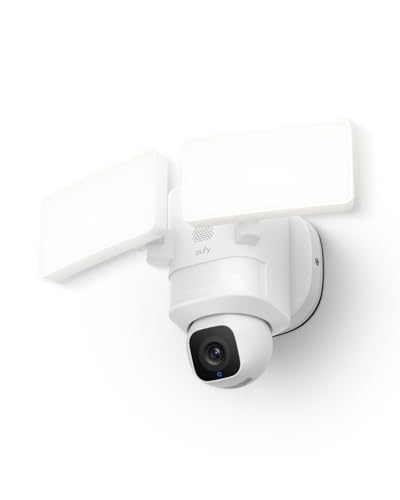
Best for a siren activated automatically by AI person detection.
Does an Audible Siren Scare Off Intruders? Why It Works
An effective deterrent interrupts a person's risk assessment in real time. A siren does this more forcefully than almost any other camera feature. A silent camera requires the person to notice it, recognize it as functional, and reason through the consequences. Those are several steps a distracted or determined person can skip past. A siren removes that reasoning process entirely. It replaces it with an immediate, visceral startle response, one most people react to instinctively before they consciously decide anything. Many of the security cameras that carry a siren feature, including several eufy and Reolink models, can tie it to motion or person detection so the alarm can fire the moment a person crosses the detection zone rather than on a delay. Others do not: Ring lists the Floodlight Cam Wired Plus siren as remote-activated, meaning you trigger it from the app.
Interview research with convicted burglars supports the value of alarms. In a UNC Charlotte survey of 422 incarcerated burglars, about 60 percent said they would seek an alternative target if an alarm was on site, and about half of those who discovered an alarm during an attempt said they abandoned it, with only 13 percent continuing. That study looked at alarms generally rather than camera sirens specifically, and it listed alarms alongside dogs and outdoor cameras as security signs burglars weigh. The common thread is simple: an alarm produces an immediate, unambiguous signal rather than a passive, easily-ignored one. That is exactly the category an audible siren falls into. The effect is strongest in the first several seconds after an intruder crosses onto a property, before real commitment sets in. Response speed matters here as much as eventual loudness.
How Loud a Security Camera Siren Needs to Be, in Decibels
Manufacturers commonly rate a built-in camera siren at roughly 90 to 110 decibels, and usually measure it only inches from the unit — Ring, for example, quotes 105 dB at 4 inches (10 cm) for the Floodlight Cam Wired Plus, while Wyze lists a 99 dB speaker for the Cam v4, which has a built-in siren. Sound level falls quickly with distance, so the figure at your gate or door will be lower. Treat any single listing's exact decibel figure as a general guide, not a laboratory-verified constant — consumer siren ratings are measured under varying conditions, and enclosure design affects real-world projection. What matters more than the number on the box is whether the siren is clearly audible at the actual point of entry it is protecting. A siren rated loud but buried behind thick glazing, or mounted around a corner from the approach path, loses much of its practical effect no matter what the spec sheet says.
Past a certain threshold, chasing a higher decibel number brings diminishing returns. Once a siren is unmistakably loud and sudden at the relevant distance, extra volume mostly raises the odds of a neighbor complaint about a false alarm. It does little to boost deterrent value further. Reliable, well-tuned triggering at a genuinely startling volume beats an ever-louder siren that only fires occasionally or fires on the wrong things.
Automatic Motion Detection vs Manual Activation
Many cameras with a siren feature support two modes, though some offer only the manual one. Automatic motion detection fires on movement or AI person detection with nobody watching. A manual trigger lets you activate the siren yourself from the app on a live feed. Automatic triggering is what makes the feature useful when nobody is home, or nobody is looking at their phone at the right second — it is the mode doing the real deterrent work in most owner accounts of an unattended siren scaring someone off. Manual triggering suits a household actively monitoring a live view, spotting suspicious loitering and firing the siren on purpose. But it only works if a person is watching in real time, which is the exception rather than the rule.
Some cameras add a two-stage approach. A quieter warning tone or spoken message plays on first detection, then escalates to the full siren only if motion continues. This cuts false-alarm annoyance for genuinely brief passers-by while still delivering the full response to someone who lingers. A handful of models pair this with built-in two-way talk, letting a homeowner speak through the camera live before the siren ever sounds — an extra layer some owners find more effective than the siren alone for a hesitant, first-time intruder.
Common Misconceptions About Siren Deterrents
A siren is not a universal solution, and a few assumptions consistently trip people up. The first is treating a siren as equivalent to a monitored alarm system. A camera siren alerts and startles, but it does not call anyone on your behalf unless it is paired with a professionally monitored service, like ADT, that does exactly that. The second is assuming a siren works equally well against every type of intruder. It does not. Burglar-interview research suggests it is most effective against opportunistic, undecided people. It is considerably less reliable against someone who has specifically targeted the property and already priced in an alarm. The third misconception is assuming louder is always better. As covered above, reliability and positioning generally matter more than raw decibels once a reasonable threshold is cleared.
The Real Limits of a Siren-Based Deterrent
A siren works best against opportunistic intruders reacting in the moment. It is considerably less effective against someone who specifically targeted the property and already priced in the possibility of an alarm. It also depends on the siren being loud enough, and positioned well enough, to be heard clearly at the point of entry being attempted — a siren muffled by distance from the actual intrusion point loses much of its startle effect. And like any automated alert, a siren triggered too often by false motion trains both the household and any observant intruder to associate it with nothing happening. That erodes its effectiveness over time, the same way an ignored alarm generally does.
Frequent false alarms carry a second, more immediate cost beyond eroded deterrent value. A siren firing several times a day from passing cars or a neighborhood cat is a fast route to a strained relationship with the people next door. Tuning motion detection zones and sensitivity carefully, and reserving the siren for genuine person-detection events rather than any motion at all, keeps the feature credible for both purposes at once.
Battery Life and Practical Trade-offs
Sounding a siren is one of the more power-intensive things a battery-powered camera does, alongside live viewing, two-way talk and floodlight activation. A camera that fires its siren often in a busy position will typically need recharging noticeably more often than the same model with the feature switched off. In a quiet position this trade-off is close to invisible. On a front porch with regular deliveries and pedestrians, it is worth weighing directly against how much deterrent value the siren realistically adds in that specific spot. A wired or PoE camera sidesteps the question entirely, since it draws continuous mains power rather than a finite battery charge — see wired PoE cameras for that alternative.
Why Pairing a Siren With a Floodlight Works Best
A siren combined with a motion-activated floodlight produces a stronger combined effect than either alone. The two signals reinforce each other through separate senses at the same moment — sudden light and sudden sound together are harder to rationalize away than either one is by itself. Owner accounts of the strongest deterrent outcomes consistently describe this combination rather than a siren-only or light-only setup. Ring's Floodlight Cam Wired Plus, for example, pairs 2,000-lumen floodlights with a 105 dB siren, and this combination is widely regarded as one of the strongest single-device deterrent configurations in the consumer security camera category.
See the best deterrent camera feature for how sirens rank against lighting and other options, and do security cameras deter burglars for the fuller evidence base this specific feature sits within.