
Affiliate Disclosure: Some links on this page are affiliate links. As an Amazon Associate, we earn from qualifying purchases — at no extra cost to you. We do not buy, install, or physically handle the cameras we cover; our rankings come from aggregated owner reviews, ratings and expert consensus. Commissions never change our verdicts. We're reader-supported: commissions fund hosting, research and updates, so if a guide helped, buying through our links keeps it going. How we rank · full disclosure.
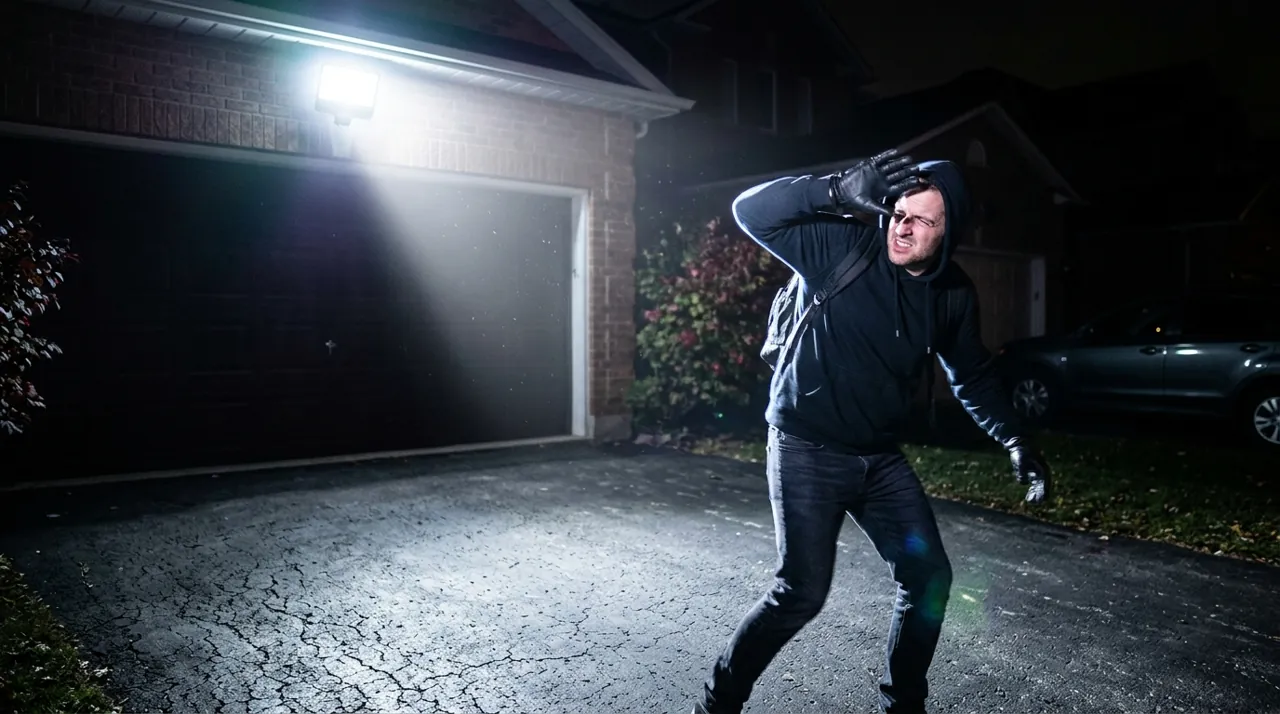
Short answer: the best deterrent security camera feature is a motion-activated light, the one most consistently credited with actually changing behavior in the moment. It beats resolution, a visible camera body, and even signage alone. Owner accounts across the deterrence category converge on the same pattern. A light snapping on unexpectedly interrupts a person's sense of being unobserved far more effectively than a static lens ever does. It is an immediate, unmissable signal that cannot be ignored the way a small camera housing on a wall can. An audible siren and two-way talk round out the next tier of genuinely effective deterrent features. Both work best layered on top of lighting, not as standalone substitutes for it.
Recommended Cameras for Deterrence

Best for the light-plus-siren combination that owners report actually works.
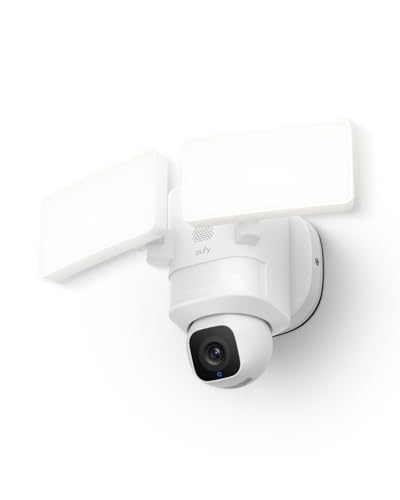
Best for AI-tracked lighting with a built-in siren, no subscription.

Best for two-way talk as a lower-cost deterrent feature at the front door.
What Is the Best Deterrent Security Camera Feature? Ranking What Actually Works
Motion-activated lighting tops nearly every informal ranking of effective deterrent features, and the reasoning holds up. It removes the darkness that makes an approach feel low-risk. It announces itself unmistakably the instant it triggers. It requires no interpretation from the person experiencing it, unlike a small camera lens. Owners describing an actual deterrent success story overwhelmingly describe a light triggering and the person immediately leaving, far more often than a camera alone producing the same reaction.
An audible siren is the second-strongest individual feature. It works through a similar mechanism — an unmissable, immediate signal that something has detected the person's presence. It depends on the camera having a genuine siren, though, not just a notification sent to an owner's phone. A notification does nothing in the moment unless the owner is actively watching and responds fast enough to matter.
Why Resolution and Image Quality Are Not Deterrent Features at All
It is worth being explicit about what does not belong on this list. Resolution, sensor size, and image quality generally affect what happens after an event — identification, evidence, review — not what happens during it. A person standing outside a house cannot perceive whether the camera watching them is 1080p or 4K. Upgrading resolution specifically for deterrence purposes is a common but genuinely misdirected spending decision. If deterrence is the goal, a light and a siren do more real work than a resolution upgrade, dollar for dollar.
Why Combinations Outperform Any Single Feature
The strongest deterrent setups layer several features together rather than relying on one alone. A floodlight camera with a built-in siren and two-way talk gives multiple independent signals firing in sequence. Each one reinforces the message that the property is actively monitored and responsive. Signage adds a final layer that removes any ambiguity about whether the light or camera someone just triggered is genuinely functional. A bluffing sign in front of no real hardware eventually gets tested and fails.
Buying Specifically for Deterrence
If deterrence, rather than evidence collection, is the primary goal, prioritize in this order: a motion-activated light on the main approach, an audible siren, two-way talk, and only then resolution and storage considerations. This ordering runs against the instinct to buy the highest-resolution camera available, but it matches what owner experience reports, and it fits criminology research on burglar decision-making — Arizona State University's Center for Problem-Oriented Policing notes that burglars are less likely to gain entry when a house has two or more security devices, such as security lights and alarms. See do security cameras deter burglars for the fuller evidence behind deterrence generally, and floodlight cameras for the category built specifically around this feature combination.
Deterrent Features That Sound Good but Underperform in Practice.
A visible camera housing alone ranks surprisingly low as a deterrent on its own. A static, unlit camera blends into a porch or eave, and plenty of owner accounts describe an intruder who clearly noticed the camera and proceeded anyway. The camera still captures useful evidence after the fact, but "visible" and "deterrent" are not the same thing once a person has already decided to approach.
Loud phone notifications are another feature that sounds like a deterrent but rarely functions as one. A push alert only helps if a person is watching their phone at that exact moment and responds fast enough to matter, and a break-in can be over within minutes. A genuine on-device siren or light triggers instantly and needs no human in the loop, which is the entire reason it consistently outperforms notification-based response.
Does Smart AI Detection Improve Deterrence?
Indirectly, yes, though not through deterrence in the moment. AI-based person and vehicle detection improves the accuracy of what triggers a light or a siren in the first place, cutting down the false alerts that make owners disable automatic responses out of frustration. A motion light that keeps firing for a passing car eventually gets switched to manual mode, which quietly removes the actual deterrent. Smarter detection keeps automatic triggers reliable enough that owners leave them running, which is where the real deterrence value shows up.
Do Security Signage and Visible Camera Branding Help as Evidence of Monitoring?
Yes, modestly, and mainly as a first-layer signal rather than a primary deterrent. A yard sign or a window decal tells a person the property is monitored before they even reach the camera's field of view, which can end a decision before it starts. Signage works best paired with a real, functioning system behind it — a sign in front of no actual camera eventually gets tested and fails, and word travels fast in a neighborhood once that happens.
Placement Matters as Much as the Feature Itself.
The best deterrent feature on the market still underperforms if it is aimed the wrong way. A motion light mounted too high triggers late and illuminates the wrong patch of ground. A siren muffled inside a housing loses much of its impact outdoors. Cover the actual approach a person would take — the front walk, the driveway, the side gate — rather than a wide, unfocused view of the whole yard that catches everything a little and nothing well.
Height and angle matter almost as much as the feature choice. A light or camera mounted about eight to ten feet up, angled slightly downward toward head height, delivers a far stronger deterrent trigger than the same hardware mounted at gutter height and aimed straight down. Get the placement right first, then layer the strongest deterrent features on top of it.
Sources & References
- Burglary of Single-family Houses — ASU Center for Problem-Oriented Policing
- Positioning Doorbells and Security Cameras — Ring
- Reolink TrackMix PoE specifications — Reolink
- eufy Floodlight Camera E340 — eufy
- Wyze Cam v4 — Wyze