
Affiliate Disclosure: Some links on this page are affiliate links. As an Amazon Associate, we earn from qualifying purchases — at no extra cost to you. We do not buy, install, or physically handle the cameras we cover; our rankings come from aggregated owner reviews, ratings and expert consensus. Commissions never change our verdicts. We're reader-supported: commissions fund hosting, research and updates, so if a guide helped, buying through our links keeps it going. How we rank · full disclosure.
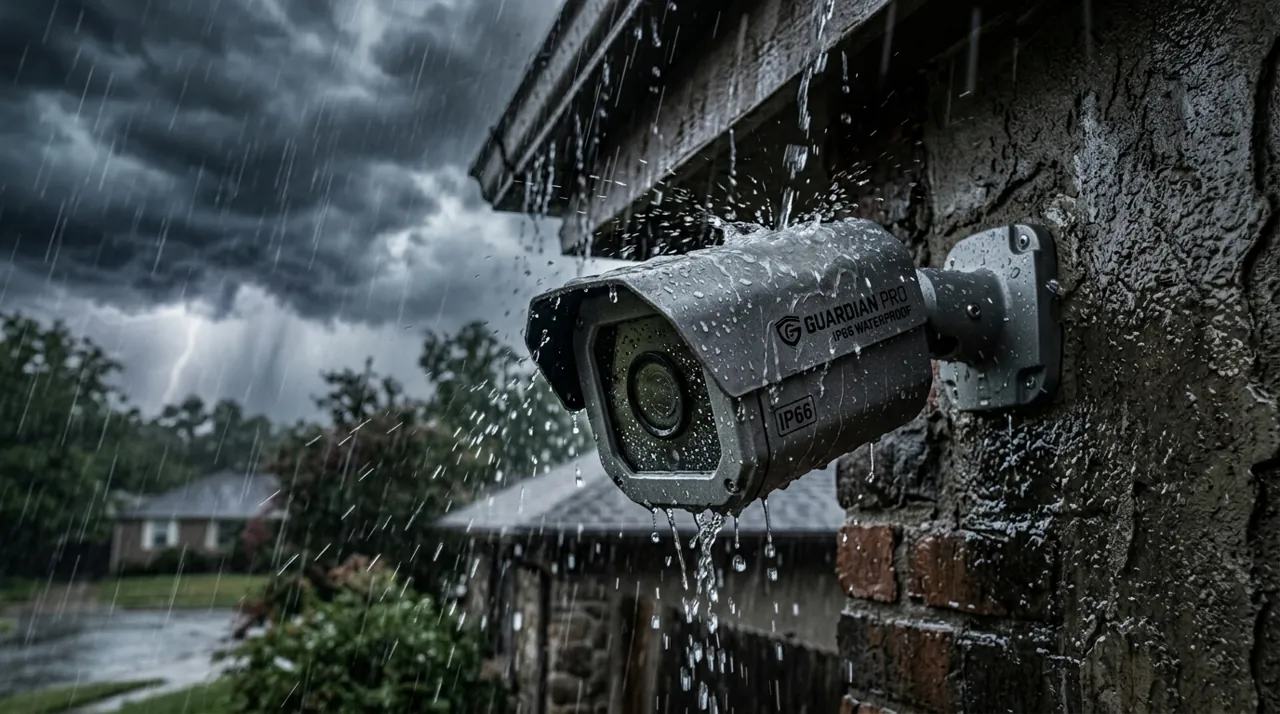
Short answer: a genuine outdoor-rated camera does not need a separate cover to survive normal rain, sun and temperature swings. That is what the IP rating on the housing, along with the published operating temperature range, is for. A cover becomes useful in three narrower situations. One is an exposed mounting position that takes driving rain at a steep angle rather than straight down. Another is intense direct sun that accelerates plastic degradation and heat-related battery wear over years of exposure. The third is physical tampering, where a cover or cage adds a layer of deterrence against someone reaching up and turning the camera away.
Recommended Weather-Ready Cameras

Best for weather-resistant coverage that needs no extra cover.

Best for a fully sealed dome built for permanent exposure.
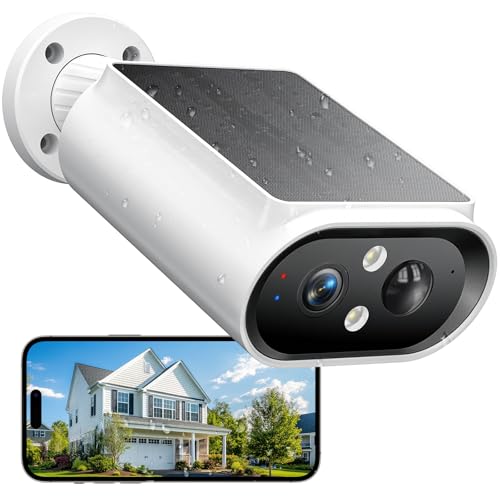
Best for the highest waterproof rating in this budget tier.
Do Outdoor Security Cameras Need a Cover? The Short Version Restated
Most outdoor security cameras do not. Buying a cover reflexively is a common case of solving a problem the camera's own housing already solved. The question is worth asking specifically for your mounting position, rather than defaulting to yes or no. A camera tucked under a deep eave in a mild climate needs nothing extra. The same camera bolted to an exposed wall in a stormy coastal region genuinely benefits from a small hood or shield.
What the Weatherproof IP Rating Already Handles
An outdoor camera's weatherproof IP rating, commonly IP65, IP66 or IP67 on consumer models, describes a sealed housing tested against dust and water ingress under standardized conditions. The second digit is the water part: 5 means protection against low-pressure water jets from any direction, 6 against powerful jets, and 7 against temporary immersion up to 1 meter for 30 minutes. That rating already covers ordinary rain falling from above and splashback; temperature is a separate spec, the camera's published operating range. Buying an additional cover for a camera already rated for those conditions is largely redundant. The housing was engineered to handle exactly that exposure without one.
Where the rating stops being enough is at the edges of what the test conditions actually simulate. A camera mounted under a shallow eave that still catches wind-driven rain at a sideways angle experiences meaningfully harsher conditions than the standardized test. So does one mounted in full southern exposure that bakes in direct sun for eight hours a day through summer. That is the gap a cover genuinely closes.
What Owners Who Add Covers Actually Report
The owners who report buying a cover after the fact almost always describe one of two triggers. The first is glare or streaking in footage during storms, traced back to rain hitting the lens directly at an angle the housing's own hood does not block. The second is visible sun fading and warping on the housing itself after a season or two of intense direct exposure. Both are legitimate, specific problems a cover solves. What is far rarer in owner reports is a genuine water-ingress failure on a properly rated outdoor camera. That failure mode is uncommon enough that it points toward a defective unit or a damaged seal, rather than an argument for buying a cover as routine insurance.
When a Cover Is Actually Worth Adding: Rain, Sun and Battery Heat
Three real scenarios justify one. First, exposed mounting with no overhang at all. A small angled hood keeps driving rain from hitting the lens directly and degrading the image during storms, even though the housing itself would survive fine. Second, intense sun exposure in hot climates. A shade cover reduces the heat load on the housing and, for battery models, on the battery itself, since heat is a genuine accelerant of lithium-ion battery aging over years, according to Battery University. Third, tamper deterrence. A cage or cover mounted around a camera in an accessible position, like a low porch or a garage, makes it meaningfully harder for someone to reach up and disable the camera by hand.
What a cover should never be treated as is a substitute for buying an actual outdoor-rated camera. A cheap indoor camera under even a well-designed cover is still not built for the temperature and humidity cycling real outdoor exposure produces over months and years. Start with genuine outdoor hardware. Add a cover only for the specific exposure problem your mounting position actually has.
Choosing a Cover Material That Will Not Trap Moisture
If a cover is genuinely warranted, material choice matters more than most buyers expect. A sealed, non-breathable cover mounted too tightly against the housing can trap condensation against the seams. That is counterproductive on a camera whose seals were designed to shed water outward rather than hold it in against the body. A cover engineered specifically for the camera model, with a gap between the shield and the housing, avoids this failure mode. A generic tarp or improvised shield rarely does. When in doubt, a cover purpose-built and sold for the exact camera in question is worth the extra cost over a universal one.
See what does IP65 mean for the rating system itself, and can security cameras survive winter cold for the cold-weather side of exterior exposure.
A Cover Cannot Fix a Poor-Quality Housing
A cover is a supplement to a genuinely well-sealed housing, not a fix for a weak one. If a specific camera model has a documented pattern of seal failures or water ingress in owner reviews, adding a cover treats a symptom rather than the underlying build-quality problem. Reading owner reviews for the specific camera model, not just its general IP rating on paper, is worth doing before assuming a cover will compensate for a genuinely weak housing. A well-built camera with no cover generally outlasts a poorly sealed one with a cover added after the fact.
Do Covers Need to Stay On Year-Round?
Not always. Some owners add a cover seasonally, for example during a region's rainiest months or the peak of summer sun, then remove it the rest of the year once the specific stress period has passed. This is a reasonable approach for a cover added mainly for sun protection in a climate with a genuinely mild off-season. A cover added for tamper deterrence, by contrast, is more useful left in place year-round, since the security benefit does not follow a seasonal pattern the way weather exposure does.
Mounting Position Still Matters More Than the Cover Itself
Even the best cover cannot fully offset a poor mounting choice. A camera mounted facing directly into prevailing wind and rain fights a harder battle than one angled slightly away from the weather, cover or no cover. Where possible, mount under any natural overhang available, angle the camera slightly downward rather than level, and avoid a due-south or due-west exposure in a hot climate if an alternate mounting spot with similar coverage exists. A cover is a genuine improvement on top of good mounting. It is a poor substitute for it.
Sources & References
- Introduction to Reolink Security Cameras' Weatherproof IP Rating — Reolink
- Introduction to the Working Environment of Reolink Devices — Reolink
- BU-808: How to Prolong Lithium-based Batteries — Battery University (Cadex Electronics)