
Affiliate Disclosure
Some links on this page are affiliate links. As an Amazon Associate, we earn from qualifying purchases — at no extra cost to you. We do not buy, install, or physically handle the cameras we cover; our rankings come from aggregated owner reviews, ratings and expert consensus. Commissions never change our verdicts. How we rank · full disclosure.
Is Ring worth it, and is the Ring subscription worth it specifically? The short answer: Ring is worth it if you will pay the subscription cost and value a system that simply works without configuration. It is not worth it if you refuse to pay monthly, because a Ring camera without a plan keeps no video history — and that is the thing most people bought it for. So do you need a subscription for Ring? Only if recorded clip history, person detection or rich notifications matter to you — live view, motion alerts and two-way talk work on every device with no plan at all. The hardware is genuinely good. The recurring fee is the entire decision.
That is not a knock on the brand so much as a description of the business model. Ring sells hardware close to cost and makes its money on Ring Home plans, which is why a doorbell can be relatively affordable while a competitor charging no fee costs more up front. Whether that trade suits you depends on one number: what you are willing to spend per month, forever.
If a monthly fee is already a dealbreaker for you, stop here and go straight to best security cameras without a subscription — it covers eufy, Reolink, Wyze and Tapo cameras that record locally with no recurring cost, ranked the same way as everything else on this site. The rest of this page assumes you are still weighing whether Ring’s subscription model is worth it for you specifically.

Is Ring Worth It? The Free Tier: What You Get Without Paying
This is the part that produces the angriest owner reviews, almost always written in the week after a real incident.
Free tier: live view whenever you open the app, motion and doorbell-press notifications, and two-way talk. That genuinely covers the intercom use case — someone is at the door, you see and speak to them.
Paid tier adds: recorded video history you can scroll back through, person detection that cuts false alerts dramatically, rich snapshot notifications, and event sharing or download. In practice that means the clip of the person who took the parcel exists at all.
Read that split carefully, because it defines who Ring suits. If you want a video intercom and a deterrent, the free tier is fine and the hardware is cheap. If you want evidence, you are buying a subscription and should price the camera at hardware plus sixty months of fees.
The Five-Year Total Cost of Ownership and Storage Options, Written Out
Take a normal two-device household: a doorbell at the front and one outdoor camera at the side. That represents a modest combined hardware cost. A plan covering both at one address commonly runs a moderate monthly fee depending on tier, adding up to a real annual cost at the middle of that range. Over five years that fee total comfortably exceeds the hardware cost.
Now the same coverage with a local-storage brand. Hardware runs higher — often noticeably more per camera — but the recurring cost is zero because footage lands on a microSD card or a base station you own. Over five years the local-storage route is very frequently cheaper by a wide margin, and that gap widens with every camera you add, because cloud plans price per household and hardware prices per unit only once.
Ring’s fee has also risen more than once since launch. Whatever you calculate today is a floor, not a ceiling. That is not a reason to avoid it, but it belongs in the arithmetic.
The Ring Devices Worth Buying

This is the most-reviewed and highest-rated video doorbell in the US market, and the model most first-time Ring buyers land on. Its head-to-toe view shows the package on the mat rather than cropping it out. Owners consistently rate its alert pipeline as the most dependable of any doorbell tracked on this site. Recorded clip history requires a Ring Protect subscription.
Why You Should Get This
If you’re buying your first Ring device, this is the most-reviewed, most-trusted starting point in the whole lineup.
Benefits
- Deepest review base of any video doorbell on the market.
- Head-to-toe view shows the whole doorstep.
- No wiring required, battery or optional hardwiring.
Pros and Cons
- Largest, most trustworthy review base in the category.
- Motion zones cut sidewalk false alerts.
- Live view and two-way talk work with no plan.
- Recorded clip history needs a Ring subscription.
- 1080p rather than 2K.
- Battery recharge every two to four months on a busy door.
Features
- Head-to-toe 1:1 view.
- Removable battery or hardwiring.
- Two-way talk with quick replies.

The newer 2K doorbell steps up resolution with up to 6x enhanced digital zoom, useful on a wide porch or long approach. It keeps the same head-to-toe frame and built-in removable battery as the standard model. Owners rate it solidly, with the extra resolution most cited as the reason to crop into a face or package label after the fact. Recorded history still needs a Ring Protect subscription.
Why You Should Get This
If the standard doorbell’s resolution isn’t sharp enough for your porch or driveway, this is the 2K upgrade within the same ecosystem.
| Resolution | 2K (Retinal 2K) |
| Field of view | 173° diagonal (140° horizontal/vertical) |
| Power | Removable rechargeable battery |
| Night vision | Infrared, illumination to ~6m |
| Zoom | Up to 6x Enhanced Zoom |
| Audio | Two-way talk |
| Install | No wiring required |
Benefits
- 2K resolution with 6x enhanced zoom on saved clips.
- Same trusted head-to-toe frame.
- No wiring required.
Pros and Cons
- Sharper detail than the standard 1080p doorbell.
- Zoom lets you re-examine a clip later.
- Full Ring ecosystem integration.
- Lower star rating than the standard doorbell in this comparison.
- Recorded history still needs a subscription.
- Higher price than the base model.
Features
- 2K video, up to 6x zoom.
- Built-in removable battery.
- Two-way talk.

The highest-rated Ring device in this comparison by a wide margin, backed by one of the deepest owner-review bases of any Ring product, and the one owners argue least about. Motion-activated LED floodlights pair with 1080p color night video on a permanent hardwired connection, so it never needs a battery recharge. A built-in 105dB siren and two-way talk round out the hardware. It needs an existing wired outdoor fixture or a licensed electrician to install.
Why You Should Get This
If you have an existing wired fixture and want the single most review-validated Ring device available, this is it.
| Resolution | 1080p HD |
| Field of view | 140° horizontal |
| Power | Hardwired, existing outdoor fixture |
| Night vision | Color night vision |
| Audio | Two-way talk |
| Siren | 105dB built-in siren |
| Lighting | Motion-activated LED floodlights |
| Smart home | Works with Alexa |
Benefits
- Highest-rated Ring device tracked on this site.
- Never needs a battery recharge, continuous wired power.
- Color night video from the floodlights, not grainy infrared.
Pros and Cons
- Massive, consistent review base.
- Motion-activated floodlights double as a deterrent.
- Reliable wired connection, no dropouts.
- Needs an existing wired fixture or electrician.
- 1080p rather than 2K/4K.
- Recorded clip history needs a subscription.
Features
- Motion-activated LED floodlights.
- 105dB built-in siren.
- Two-way talk.
These two illustrate the range fairly. The Ring Battery Doorbell 2K is the newest battery doorbell and the model most first-time buyers land on: 2K resolution, a head-to-toe vertical view that fits both a face and a parcel, six-times digital zoom and no wiring at all. It carries a solid owner-rating average, but the weakest score of any device on this page. Reading the negative reviews, the recurring themes are battery life falling short of the quoted figure in busy locations, occasional notification delay, and buyers who did not realize the useful features sat behind a plan.
The Ring Floodlight Cam Wired Plus is a different story and the strongest data point in Ring’s favor anywhere in this comparison: one of the highest owner ratings of any device we track, backed by an enormous, well-established review base. That combination — a high score holding up across a huge sample — is the most reliable signal available to us. Owners praise the floodlight-plus-camera combination as a genuine deterrent, the reliability that comes from continuous mains power, and the siren. The complaints are consistent too: it is 1080p rather than 2K in a market that has moved on, the install is a mains-voltage job, and the useful motion filtering is a paid feature.
Consensus Score █████████░ 9.2 — Floodlight Cam Wired Plus, from one of the largest and highest-rated review bases we track.
What Owner Reviews Actually Say About Ring
Ring has more owner reviews than any brand in this category, which makes its behavior unusually well documented. Four themes repeat across tens of thousands of them.
The apps and notifications are the best in the category. This is the least disputed point. Alerts arrive fast, live view opens quickly, and the whole system works without configuration effort. Owners switching from cheaper brands mention it unprompted, and it is the main reason people stay.
The subscription is the number one complaint. Not the price alone — the discovery. A large share of one and two-star reviews are people who bought a camera, had an incident, and found there was no recording. That is a communication failure as much as a pricing one, and it is entirely avoidable if you know going in.
Battery life underperforms the quoted figure. Ring quotes months; owners in busy locations report weeks. The variable is motion event count, not the battery, and a doorbell facing a sidewalk sees far more events than one facing a private drive. Owners who tighten activity zones report much better results, which is a settings problem rather than a hardware defect.
Wired devices rate higher than battery ones. This is visible directly in the numbers on this page: the wired floodlight camera rates meaningfully higher than the battery doorbell. Continuous power removes the two biggest sources of frustration in the category at once.
Ring Alternatives: Where Wyze, Eufy and Arlo Beat Ring
Ring is not the only reasonable answer, and for some buyers it is clearly the wrong one.
Eufy is the strongest argument against Ring for anyone doing the five-year math. Its cameras record locally, to onboard storage or a HomeBase hub, with no monthly fee for the core recording function. Hardware costs more up front and the app is less polished, but the total cost of ownership over several years is lower, often substantially. If the subscription is your objection, this is the direction to look.
Wyze wins outright on entry price. Cameras start at a fraction of Ring’s pricing, microSD recording is supported without a plan, and the value at the bottom of the market is genuinely hard to beat. The tradeoffs owners report are less consistent notification reliability and a company that has had public security incidents — which matters more for an indoor camera than an outdoor one.
Arlo competes at the premium end on video quality, with strong 2K and 4K options and good color night vision. It also charges a subscription, so it does not solve the recurring-cost objection; it is the alternative for buyers who want better footage rather than a cheaper bill.
TP-Link Tapo and Reolink deserve a mention for indoor and wired coverage respectively, both built around local storage. Our budget cameras hub covers the low end honestly, and wired PoE cameras covers the no-subscription wired route in full.
How We Reached This Verdict
We do not buy, install or physically handle Ring cameras. There is no test rig behind this page and we are not going to imply one. This verdict is built from aggregated owner star ratings weighted by review volume, the recurring themes inside negative reviews (which are far more informative than positive ones), published subscription pricing, and expert consensus across the category. Where a device has a thin review base we say so rather than treating a small sample as proof. Full method on how we rank.
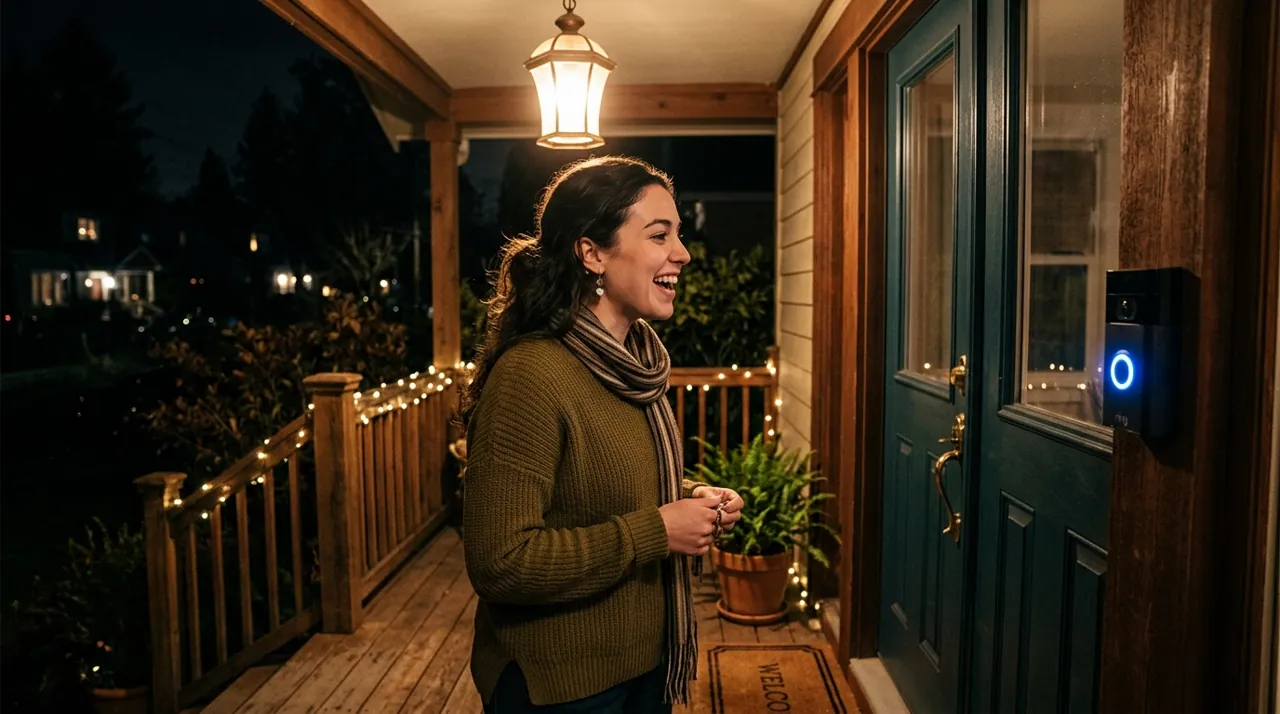
Ring Is Worth It If
- You will pay the subscription without resenting it. Everything good about Ring assumes a plan. If a modest monthly fee is a non-event for you, the experience is the smoothest in the category.
- You want it to work without being configured. Ring is the least fiddly mainstream system. Alerts arrive, live view opens, and you do not administer it.
- You are buying more than one device. One household plan covers unlimited devices at an address, so the per-camera economics improve as you add cameras — the opposite of most competitors.
- You want a wired floodlight camera specifically. The Floodlight Cam Wired Plus, backed by one of the deepest review bases in the category, is one of the most consistently well-rated outdoor devices in the whole category.
- You value a large, mature ecosystem. Accessories, integrations and documentation are deeper here than anywhere else, and the review base means very few surprises.
Ring Is Not Worth It If
- You will not pay monthly. This is decisive. A subscription-free Ring keeps no video history, and buying one on that basis leads directly to the most common one-star review in the category.
- You want continuous recording. Ring records event clips, not an unbroken timeline. If you want 24/7 footage, go to NVR camera systems.
- You want the footage to stay on your property. Cloud storage is the model. Local-storage brands exist precisely for buyers who object to that.
- You are covering four or more positions on a budget. Hardware savings get eaten by the plan, and a local NVR kit becomes cheaper and technically better at that scale.
- You need the sharpest possible footage. Several Ring devices, including the well-rated floodlight camera, are still 1080p while competitors ship 2K and 4K at similar prices.
Ring Protect Pricing Table: Monthly Fee by Plan, Current as of August 2026
Ring Home is sold in tiers, and the tier you need is decided by how many devices you own rather than by how much video you want.
| Plan | Monthly | Annual | What it covers |
|---|---|---|---|
| Ring Protect Basic | Entry-level | Cheaper if paid yearly | One device — recorded video history, person detection, rich notifications |
| Ring Protect Plan (Standard) | Moderate | Cheaper if paid yearly | Unlimited devices, one address |
| Ring Protect Plan (Plus tier) | Highest of the standard tiers | Cheaper if paid yearly | Unlimited devices, one address, extended features |
| Ring Protect Pro | Higher, varies | Higher, varies | Professional monitoring options and extended coverage |
Prices shift periodically — Ring’s own pricing page has the live figure. Treat this table as the current general range, not a locked-in number.
What the fee buys, at every tier, is recorded video history — typically up to 180 days of event clips — plus person detection, rich notifications, snapshot capture and the ability to download or share an event. Those storage options are entirely cloud-based; there is no microSD slot to fall back on across the mainstream Ring range, which is the structural difference between Ring and Eufy or Reolink.
Cancel Anytime: What Actually Happens
The plan is month-to-month, and you genuinely can cancel anytime. But cancelling means the stored history stops being accessible, so download anything you might need before you do it. And the price has risen more than once since launch, so treat today’s monthly fee as the floor of your five-year estimate rather than a fixed input.
Privacy Track Record: The FTC Settlement, Stated Plainly
This belongs in a worth-it verdict rather than a footnote. In May 2023, the Federal Trade Commission announced Ring would pay $5.8 million to settle charges that the company gave employees and contractors "dangerously overbroad" access to customers' videos for years, including footage from bedrooms, and that Ring failed to implement basic security safeguards — the FTC’s complaint cited over 55,000 US customer accounts compromised by unauthorized access between January 2019 and March 2020. As part of the settlement, Ring agreed to a 20-year data security program with regular independent assessments, and in April 2024 the FTC sent over 117,000 refund payments to affected customers.
The balanced read: this is a real, serious, publicly documented failure, not a rumor — cited directly from the FTC’s own press release. It is also several years old, and the settlement’s required 20-year security program is specifically meant to prevent a repeat. Weigh it the way you would weigh any company’s disclosed history: a genuine factor in how much you trust Ring with footage from inside your home. It is not a reason to assume every camera brand is equally exposed. Most consumer camera companies have had some public security failure, and Ring’s is simply unusually well-documented because of the settlement’s public record.
Installation and Setup: What the First Hour Looks Like
Installation is one of Ring’s genuine advantages, and it is worth weighing against the running cost. The battery doorbell and battery cameras are bracket-and-screws jobs: mark the holes, drive three fixings, clip the unit on, pair it in the app. Most owners are finished inside half an hour with no wiring and no electrician, and a renter can take the whole thing down without a trace.
The wired floodlight camera is the exception. It connects to a mains junction box, and a meaningful share of buyers hire an electrician rather than work at a breaker panel themselves. The Consumer Product Safety Commission (CPSC) has tracked home electrical fires linked to unlicensed wiring work for years, which is a good reason to hire out that specific job rather than improvise. If the fixture is already there, it is a straightforward swap; if it is not, budget a call-out.
The setup step people skip is the one that decides whether they keep the system: drawing activity zones to exclude the sidewalk and the road, then triggering the camera on purpose and confirming the clip actually exists. Our install guide covers mounting height, signal checks and sealing in full.
Warranty, Return Policy and What Happens When It Fails
Ring devices carry a one-year limited warranty on the hardware in the United States, and an active Ring Home plan extends the cover on devices at the covered address for as long as the plan runs — which is a quiet argument for the subscription that rarely appears in the marketing, and equally a reason the hardware cover lapses when you cancel.
The return policy matters here more than in most categories, because the two things you cannot verify before buying are WiFi strength at the mounting point and whether the free tier is enough for you. Both become obvious inside a week. Buy from a seller with a clear return window, keep the packaging, and run a real recording test while the camera is still returnable rather than discovering the gap during an incident.
Which Camera to Buy First as a First-Time Buyer
If you have decided Ring is worth it and just want to know where to start, the front door comes first in almost every household — it is the delivery point, the visitor point and one of the two most common break-in approaches. That makes a battery doorbell the sensible first purchase, and the head-to-toe vertical view is the reason a doorbell beats a general-purpose camera at that position.
Buy the wired floodlight camera first only if your approach is dark or set back from the road, where light does more than footage. Add a second position later rather than buying three devices at once, because one household plan covers unlimited devices and the per-camera economics improve as you grow. If you are still deciding whether any of it is worth it, best security camera for front door compares Ring against the rest of the field at that exact position.
The Verdict: Is It Worth It in the End?
Ring makes good hardware and the best-behaved app in the category, and the Floodlight Cam Wired Plus is one of the strongest owner-rated outdoor cameras anywhere, backed by one of the deepest review bases we track. If you are comfortable paying for a plan, it is an easy recommendation and the smoothest path to a working system.
But the honest verdict is conditional. Price a Ring camera as hardware plus five years of fees, compare that against a local-storage system with a higher sticker and no bill, and choose deliberately. Buyers who do that arithmetic before checkout are almost always happy with whichever side they land on. Buyers who skip it are the ones writing the reviews about a missing clip.
Next steps: if the front door is the position you are solving, our best video doorbell cameras rankings compare Ring against the field directly, and best security camera for front door frames it around package theft specifically. For outdoor coverage beyond the door, start at best outdoor security cameras. And whatever you buy, how to install a security camera covers the mounting and signal decisions that determine whether the footage is worth anything.