
Affiliate Disclosure
Some links on this page are affiliate links. As an Amazon Associate, we earn from qualifying purchases — at no extra cost to you. We do not buy, install, or physically handle the cameras we cover; our rankings come from aggregated owner reviews, ratings and expert consensus. Commissions never change our verdicts. How we rank · full disclosure.
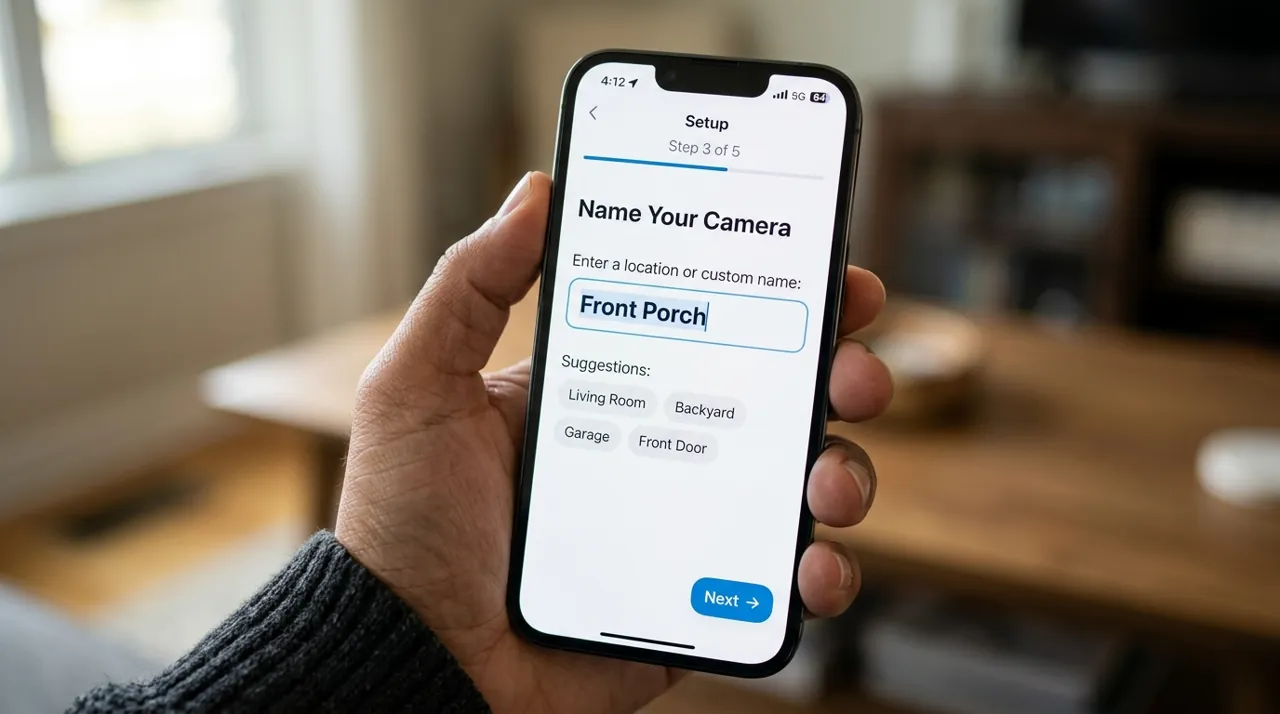
Short version: the app matters as much as the hardware, because it’s what you actually interact with daily — and app quality varies more between brands than raw camera specs do. Ring’s app is widely regarded as the most polished and reliable for notifications; Eufy and Reolink’s apps are less refined but pair with genuinely subscription-free local storage; Google Home integrates tightly with Nest but is a smaller camera lineup. This guide compares the major apps directly rather than the cameras behind them.

Cameras With the Apps This Page Compares

The most-reviewed video doorbell in the US market, with one of the deepest, highest-rated review bases we track, running on the Ring app widely regarded as the most polished notification pipeline in the category. Its head-to-toe view shows the package on the mat. Owners consistently rate the app’s notification speed and reliability above rival apps.
Why You Should Get This
If app polish and notification reliability matter most to you, this is the doorbell running the most consistently praised app in this comparison.
Benefits
- Widely regarded as the most polished app in the category.
- Deepest review base of any video doorbell on the market.
- Fast, reliable notifications.
Pros and Cons
- Largest, most trustworthy review base.
- App notification speed praised repeatedly in reviews.
- Motion zones cut sidewalk false alerts.
- Recorded clip history needs a subscription.
- 1080p rather than 2K.
- Battery recharge every two to four months.
Features
- Ring app, fast notifications.
- Head-to-toe 1:1 view.
- Two-way talk with quick replies.
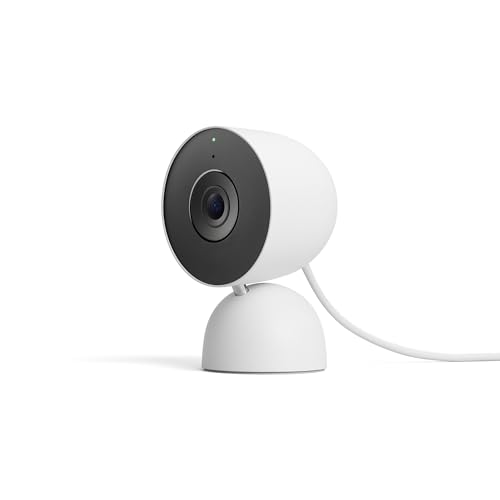
Runs on the Google Home app, the natural fit for households already using Google smart-home devices, at an entry-level price and a solid owner rating. On-device person, animal and vehicle detection works with no plan required. 3 hours of free event history is included by default. HDR video quality complements the app’s smart-display integration.
Why You Should Get This
If you already run Google Home devices and want camera alerts in the same app as everything else, this is the natural fit.
| Resolution | Up to 1080p at 30fps |
| Field of view | 135° diagonal |
| Sensor | 2-megapixel color, HDR video |
| Zoom | 6x digital zoom |
| Power | AC wired |
| Connectivity | 2.4GHz and 5GHz WiFi |
| Storage | Up to 3 hours event history included |
Benefits
- Google Home app integration across your whole smart home.
- On-device detection works with no subscription.
- Free event history included by default.
Pros and Cons
- Genuinely generous free tier.
- Tight Google Home / smart-display integration.
- Strong HDR video quality.
- Full history beyond 3 hours needs Nest Aware.
- Needs an outlet at the mount point.
- Indoor use only.
Features
- Google Home app.
- On-device detection.
- HDR video.

Runs on the Wyze app, which keeps working with no subscription for core recording, at an entry-level price and a solid owner rating. A 2.5K QHD sensor delivers color night vision. Local microSD recording works with no plan required. Owners consistently value the app remaining fully functional without a forced upgrade.
Why You Should Get This
If you want an app that doesn’t gate core recording behind a subscription, this is the most review-validated no-subscription app in this comparison.
Benefits
- App keeps core recording working with no subscription.
- 2.5K QHD sensor, color night vision.
- Local microSD recording.
Pros and Cons
- Genuine no-subscription local recording.
- Strong resolution for the price.
- Works indoors or covered outdoors.
- Cam Plus subscription needed for smart detection features.
- Smaller ecosystem than Ring or Nest.
- MicroSD card sold separately.
Features
- Wyze app.
- 2.5K, color night vision.
- Local microSD recording.
What Actually Differentiates a Camera App
Four things separate a good camera app from a frustrating one, and they matter more than most spec sheets suggest. Notification speed and reliability — does the alert arrive in seconds, or does it lag or drop entirely, which is the single most commonly cited reason owners abandon a system. Live-view load time — how long from tapping the camera to seeing a real-time feed. Multi-camera timeline — whether the app shows all your cameras' events on one combined timeline or forces you to check each camera separately. And settings depth — how granular activity zones, sensitivity and detection type controls actually are.
Ring App
Widely regarded across owner reviews as the most polished and fastest app in this category — this is one of Ring’s clearest competitive advantages independent of its hardware, and it’s a major reason the brand retains subscribers despite Ring Home’s recurring cost. Multi-camera households get a genuinely unified timeline, and neighborhood-level features (shared alerts in some markets) are unique to Ring’s app specifically. The tradeoff is the same one that runs through Ring’s whole ecosystem: full functionality assumes a paid plan.
Nest / Google Home App
Tightly integrated with the broader Google Home ecosystem, so a Nest camera’s live view can appear alongside smart displays, Google TV and other Google Home devices without extra setup. On-device AI detection (person, animal, vehicle) means smart alerts work even on Nest’s free tier, which is a genuine differentiator — most competitors gate smart detection behind a subscription entirely. The app itself is capable but has a smaller device lineup to manage than Ring’s, simply because Google sells fewer camera models.
Arlo App
Built around Arlo Secure, which unifies live view, playback and detection settings across Arlo’s premium camera lineup cleanly. It supports the highest resolution tiers in this comparison (up to 4K on select models) and richer video controls than most budget-brand apps. Like Ring, most of what makes the app valuable — smart detection, cloud history — sits behind the Arlo Secure subscription.
Blink App
Simpler and less feature-dense than Ring or Arlo’s apps, which matches Blink’s positioning as the budget option in Amazon’s own portfolio. It supports local storage via a Sync Module and USB drive without a subscription, genuinely, which is unusual for an app this integrated with a major ecosystem — most subscription-model brands don’t offer a real local-storage escape hatch.
Eufy and Reolink Apps
Both apps are functional but noticeably less polished than Ring’s, and owner reviews consistently note this. What they offer instead is genuine subscription-free operation as the default, not an afterthought — local storage, on-device or on-hub processing, and no plan required to keep a full recording history. Reolink’s app also handles NVR systems specifically, consolidating many wired cameras under one recorder into a single interface.
Wyze and Tapo Apps
Both are capable budget-tier apps supporting local microSD recording without a subscription for the core function. Wyze’s app has faced public scrutiny over past security incidents (covered honestly in is Wyze worth it), which is worth weighing for privacy-sensitive positions like indoors. Tapo’s app is straightforward and reliable for its price tier, without deep smart-home ecosystem integrations beyond basic Alexa and Google Assistant support.
Consolidating Multiple Brands Under One App
If you already own cameras from more than one brand, Apple’s HomeKit Secure Video, Google Home, or SmartThings can pull compatible cameras' live view into a single interface — genuinely useful for daily viewing, though recorded history and detailed settings still usually route back to each manufacturer’s own app. Our best smart home security cameras guide covers which specific cameras support this by ecosystem.
Choosing an App (By Choosing a Brand)
Since camera apps are brand-locked, choosing an app really means choosing a brand and its whole ecosystem. Want the smoothest, fastest daily experience and will pay for it: Ring. Want smart detection without a subscription: Nest’s free tier. Want to skip the subscription question entirely: Eufy or Reolink. Building a multi-brand setup: lean on a smart-home platform for unified live view and accept that deep settings stay per-app.