
Affiliate Disclosure
Some links on this page are affiliate links. As an Amazon Associate, we earn from qualifying purchases — at no extra cost to you. We do not buy, install, or physically handle the cameras we cover; our rankings come from aggregated owner reviews, ratings and expert consensus. Commissions never change our verdicts. How we rank · full disclosure.
The short version: Ring and Nest both rate strongly, with Ring holding a modest edge, and the honest deciding factor for most buyers is which smart-home ecosystem they already run rather than a clear quality gap. Nest’s specific technical edge is on-device AI detection that works on its free tier; Ring requires a paid plan for any recorded history or smart detection at all.

Top Picks: Ring, Nest and an Alternative
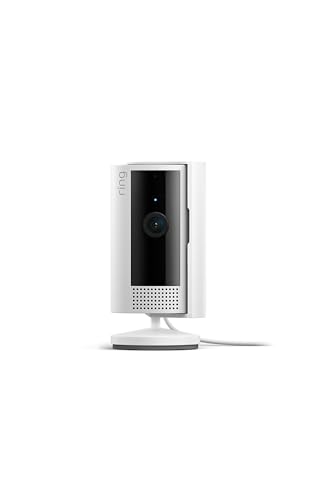
Alexa households and the largest review base in this category, backed by one of the highest ratings we track. 1080p HD video with two-way talk and a physical privacy cover. Plug-in power means nothing to recharge.
Why You Should Get This
If you run Alexa devices and want the most review-validated indoor camera, this is the pick.
Benefits
- Largest review base of any indoor camera tracked here.
- Fastest, most reliable notification pipeline.
- Physical privacy cover.
Pros and Cons
- Massive, trustworthy review base.
- Lower price than the Nest Cam.
- Widely regarded as the most polished app.
- Recorded clip history needs a Ring subscription.
- 1080p rather than Nest’s HDR sensor.
- No on-device free detection like Nest.
Features
- 1080p HD, two-way talk.
- Physical privacy cover.
- Plug-in power.
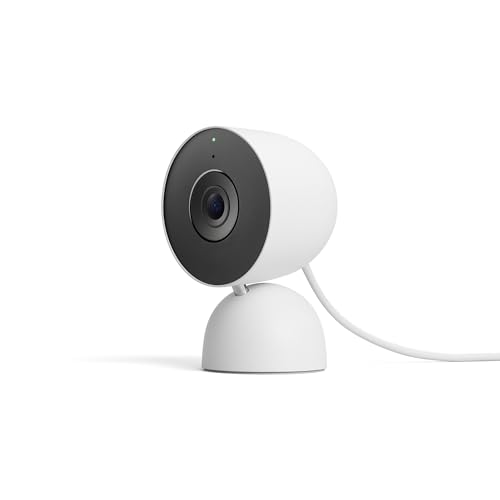
On-device AI detection that works even without a subscription, at an entry-level price and a solid owner rating. 3 hours of free event history is included by default. HDR video handles bright windows and dark corners well.
Why You Should Get This
If you run Google Home and want free on-device detection with some included history, this is the pick.
| Resolution | Up to 1080p at 30fps |
| Field of view | 135° diagonal |
| Sensor | 2-megapixel color, HDR video |
| Zoom | 6x digital zoom |
| Power | AC wired |
| Connectivity | 2.4GHz and 5GHz WiFi |
| Storage | Up to 3 hours event history included |
Benefits
- On-device detection works with no subscription at all.
- 3 hours of free event history included by default.
- Strong Google Home integration.
Pros and Cons
- Genuinely generous free tier versus Ring.
- HDR video quality.
- Wired power, no battery to manage.
- Higher price than Ring Indoor Cam.
- Full history beyond 3 hours needs Nest Aware.
- Smaller review base than Ring.
Features
- On-device detection.
- 3 hours free event history.
- HDR video.

A third indoor option worth comparing: 2.5K resolution with color night vision at an entry-level price, recording to a local microSD card with no subscription required at all.
Why You Should Get This
If you want a middle ground on price and no-subscription recording between Ring and Nest, this is the alternative.
Benefits
- Sharper than Ring, cheaper than Nest.
- Genuine no-subscription local recording.
- Indoor/outdoor rated.
Pros and Cons
- Best resolution-to-price ratio of the three.
- No subscription required for core recording.
- Built-in spotlight and siren.
- Smaller ecosystem than Ring or Google Home.
- MicroSD card sold separately.
- Cam Plus needed for smart detection.
Features
- 2.5K, color night vision.
- Local microSD recording.
- Indoor/outdoor rated.
Representative Products Compared
| Product | Best for | Price | Buy |
|---|---|---|---|
| Ring Indoor Cam | Ring pick | $49.99 | Price |
| Google Nest Cam Indoor (Wired, 3rd Gen) | Nest pick | $99.99 | Price |
Where the Real Differences Are
Free-tier capability. This is Nest’s clearest structural advantage: on-device person, animal and vehicle detection works without paying anything, plus roughly 3 hours of free event history. Ring’s free tier gives live view and motion alerts only — no recorded clips, no smart detection.
Ecosystem integration. Ring is built for Alexa; Nest is built for Google Home. Both work with the other’s ecosystem to a degree, but the deepest integration (routines, displays, voice control nuance) stays within each brand’s own platform.
Review base size. Ring’s review counts are dramatically larger across nearly every device — tens of thousands versus roughly a thousand for comparable Nest products in our verified data — which affects how much statistical confidence to place in each rating.
Notification reliability. Ring is more consistently praised for fast, reliable alerts across a larger sample of reviews; Nest’s smaller review base makes broad claims about its notification consistency less statistically certain, though what reviews exist are generally positive.
Winner by Use Case
Alexa household: Ring, for the tightest integration.
Google Home household: Nest, for the same reason in the other direction.
Want smart detection without paying: Nest, by a clear structural margin — its free tier includes AI detection Ring does not offer at any price without a plan.
Want the largest, most statistically reliable review base: Ring.
Read More
See best Ring cameras and is Nest worth it for the subscription math, and best smart home security cameras for how each fits into a broader Alexa/Google Home/HomeKit decision.
Verdict
Let your existing smart-home ecosystem decide first — that integration matters more day-to-day than the half-star rating gap between these two flagship cameras. If you have no existing ecosystem and want smart detection without paying anything, Nest’s free tier is the more generous starting point.