
Affiliate Disclosure
Some links on this page are affiliate links. As an Amazon Associate, we earn from qualifying purchases — at no extra cost to you. We do not buy, install, or physically handle the cameras we cover; our rankings come from aggregated owner reviews, ratings and expert consensus. Commissions never change our verdicts. How we rank · full disclosure.
The short version: Arlo and Nest are both premium-positioned brands that don’t compete primarily on price, and each has a distinct technical strength. Arlo pushes harder on raw video quality — 2K and 4K HDR options with strong color night vision. Nest pushes harder on making its detection genuinely useful on the free tier, since it runs on-device rather than requiring a cloud subscription to work at all.

Top Picks: Arlo, Nest and an Alternative

The sharpest mainstream video doorbell footage tracked on this site, with a solid owner rating, 2K head-to-toe video in a square 1:1 aspect ratio and HDR handling. Package, person, vehicle and animal detection require an Arlo Secure plan. It runs on battery or existing doorbell wiring, and a chime is included.
Why You Should Get This
If reading detail at the door matters most, this delivers the sharpest footage of the comparison.
Benefits
- Sharpest mainstream video doorbell footage in this comparison.
- Chime included in the box.
- Square 1:1 aspect ratio shows the whole doorstep.
Pros and Cons
- Best detail-at-the-door of the brands compared here.
- HDR handles bright and dark areas well.
- Flexible battery or wired power.
- Full detection needs an Arlo Secure subscription.
- Lower star rating than the Nest Cam Indoor.
- No free event history included.
Features
- 2K head-to-toe video.
- HDR video handling.
- Chime included.
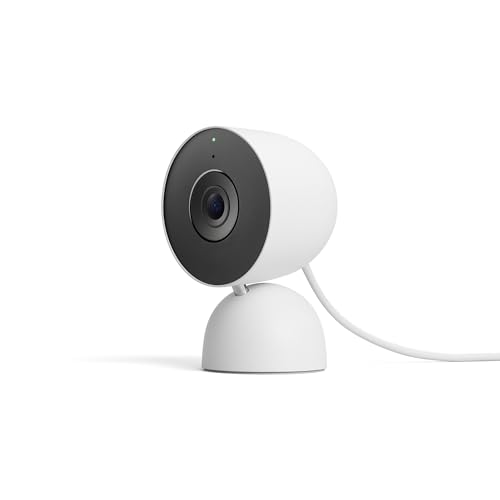
On-device person, animal and vehicle detection works with no plan required at all, at an entry-level price and a solid owner rating. 3 hours of free event history is included by default — more generous than Arlo’s all-paid model. HDR video handles bright windows and dark corners well. It runs on wired AC power.
Why You Should Get This
If free on-device detection and some included recorded history matter more than doorbell-specific framing, this is the pick.
| Resolution | Up to 1080p at 30fps |
| Field of view | 135° diagonal |
| Sensor | 2-megapixel color, HDR video |
| Zoom | 6x digital zoom |
| Power | AC wired |
| Connectivity | 2.4GHz and 5GHz WiFi |
| Storage | Up to 3 hours event history included |
Benefits
- On-device detection works with no subscription at all.
- 3 hours of free event history included by default.
- Higher star rating than the Arlo doorbell.
Pros and Cons
- Genuinely generous free tier.
- Strong Google Home integration.
- Wired power, no battery to manage.
- Indoor camera, not a doorbell.
- Full history beyond 3 hours needs Nest Aware.
- Needs an outlet at the mount point.
Features
- On-device detection.
- 3 hours free event history.
- HDR video.

A third doorbell option worth comparing: the most-reviewed and highest-rated video doorbell in the US market. Its head-to-toe view shows the package on the mat. It runs on a removable rechargeable battery with no wiring required.
Why You Should Get This
If you want the most review-validated doorbell available rather than either premium brand here, this is the alternative.
Benefits
- Deepest review base of any video doorbell on the market.
- Head-to-toe view shows the whole doorstep.
- No wiring required.
Pros and Cons
- Largest, most trustworthy review base of the three.
- Live view and two-way talk work with no plan.
- Lower price than the Arlo doorbell.
- Recorded clip history needs a Ring subscription.
- 1080p rather than Arlo’s 2K.
- No on-device free detection like Nest.
Features
- Head-to-toe 1:1 view.
- Removable battery or hardwiring.
- Two-way talk.
Representative Products Compared
| Product | Best for | Price | Buy |
|---|---|---|---|
| Arlo Video Doorbell 2K + Chime | Arlo pick | $99.99 | Price |
| Google Nest Cam Indoor (Wired, 3rd Gen) | Nest pick | $99.99 | Price |
Where the Real Differences Are
Free-tier usefulness. Nest’s biggest structural advantage: person/animal/vehicle detection runs on the camera itself and works without paying anything, plus about 3 hours of free event history. Arlo’s free tier is comparatively bare — live view and basic alerts, with smart detection and recorded history behind Arlo Secure.
Video quality. Arlo’s HDR handling and color night vision on premium models are frequently cited as best-in-class in this comparison, a genuine edge over Nest’s competent-but-not-flagship video quality.
Ecosystem. Nest ties into Google Home tightly; Arlo is more ecosystem-neutral, working reasonably with Alexa, Google Home and Apple Home via various integrations without being deeply tied to any one.
Review base and price. Nest’s flagship indoor camera rates higher in our data and sits at a lower price point than Arlo’s comparable premium options.
Winner by Use Case
Best video quality for the price you’re willing to pay: Arlo.
Best free-tier functionality: Nest, by a clear margin.
Google Home household: Nest, for the tightest integration.
Ecosystem-neutral buyer who doesn’t want to commit to one smart-home platform: Arlo is the more flexible of the two.
Read More
See best Arlo cameras, is Arlo worth it, and is Nest worth it for the full subscription breakdowns on each brand.
Verdict
Choose Arlo if premium video quality is the deciding factor and you’re comfortable paying for it, subscription included. Choose Nest if you want smart detection that actually works before you’ve paid anything, and especially if you’re already in the Google Home ecosystem.