
Affiliate Disclosure: Some links on this page are affiliate links. As an Amazon Associate, we earn from qualifying purchases — at no extra cost to you. We do not buy, install, or physically handle the cameras we cover; our rankings come from aggregated owner reviews, ratings and expert consensus. Commissions never change our verdicts. We're reader-supported: commissions fund hosting, research and updates, so if a guide helped, buying through our links keeps it going. How we rank · full disclosure.
Short version: every monitor on this page connects directly to its own parent unit with no WiFi, no app and no cloud account. If audio alone is enough, the VTech Audio Baby Monitor is the most-reviewed baby monitor on this entire site at over 44,000 verified ratings. If you want video too, the VTech Baby Monitor No WiFi (Video) is the top-rated video option with the same closed connection, and the HelloBaby HB6550 is the value alternative with a larger screen.
Want the field beyond the best no-WiFi baby monitors, including monitors that do use WiFi? See top-rated baby monitors or best video baby monitor.
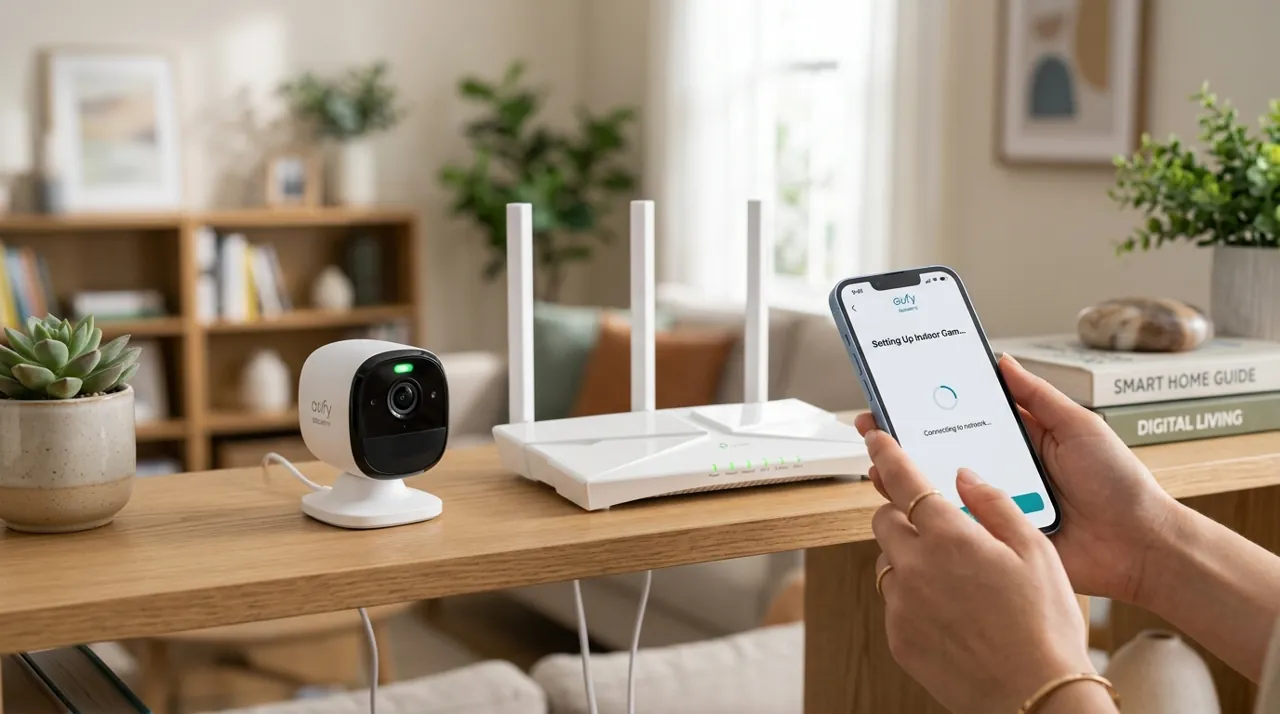
In Plain English
A no-WiFi baby monitor is a closed pair of devices: a camera or microphone in the nursery, and a handheld screen or speaker that you carry. They talk only to each other over a private radio link. Think of two walkie-talkies that were paired at the factory and never listen to anyone else.
Because nothing goes through your home internet, there is no app to install, no account to create and nothing stored online. The trade-off is that you can only check in while you are within range at home, not from work or the shops.
You can get these as audio-only monitors, which let you hear the baby, or video monitors, which add a live picture and usually night vision and talk-back. Battery life on the handheld unit varies a lot between models, so it is worth comparing.
The one thing to do: decide first whether hearing the baby is enough or whether you want to see them, then compare screen size and battery life within that group.
Top Rated Picks at a Glance
The Ranked Field: Star Rating, Consensus and Price

Best for parents who want sound monitoring without a video screen, and the deepest review base in the entire category.
- DECT 6.0 digital audio, no static.
- No WiFi — closed-circuit connection only.
- Up to 8-hour battery life.
- Over 44,000 verified owner ratings.
Why buy it: The single most-reviewed baby monitor on this entire site, at over 44,000 verified ratings — a genuinely enormous evidence base for a simple, focused product.

Best for parents who want video as well as audio, with the same no-WiFi closed connection.
- Up to 19-hour video battery life.
- 1,000ft range in open conditions.
- Night vision and two-way talk.
- No WiFi, no app, no cloud account.
Why buy it: The top-rated video baby monitor on the site, and it shares the same closed, no-WiFi connection as VTech’s audio-only model above.

Best for a large 5-inch screen at a mid-range price, with no WiFi involved.
- 5" video screen.
- No WiFi, no app required.
- Night vision and two-way audio.
- Over 16,700 verified owner ratings.
Why buy it: A large screen at the same strong rating as the category leader, from a brand with a deep review history in this specific no-WiFi category.
Comparison Table
| Product | Best for | Buy |
|---|---|---|
| VTech Audio Baby Monitor, No WiFi | Best Audio-Only | Price |
| VTech Baby Monitor No WiFi (Video) | Best Video, No WiFi | Price |
| HelloBaby No WiFi Baby Monitor HB6550 | Best Value, No WiFi | Price |
What "No WiFi" Actually Means
A no-WiFi baby monitor connects its camera or microphone unit directly to its own dedicated parent-unit screen or speaker over a private radio signal — DECT digital audio, or a digital 2.4GHz frequency-hopping (FHSS) link on video models such as the HelloBaby HB6550, depending on the model. Nothing about that connection touches your home network, the internet or a cloud account at any point. That's the core distinction from a WiFi baby monitor, which streams through your router to an app, and often to a manufacturer's cloud server for remote viewing when you're away from home. A no-WiFi monitor trades that remote-access convenience for a simpler, self-contained connection that doesn't depend on your internet staying up, your router being nearby, or an app updating correctly.
Range and Interference Considerations
Every monitor on this page lists a manufacturer-stated range measured in open, unobstructed conditions — a backyard with a clear line of sight, essentially — and real-world range through walls, floors and household clutter is meaningfully shorter in practice. DECT digital audio, used by the VTech Audio Baby Monitor, runs in a dedicated 1920-1930 MHz band in the US, away from the 2.4GHz band shared by WiFi routers and microwave ovens, which helps explain why owners consistently cite it as an advantage over older analog baby monitors that could pick up stray static or even a neighbor's signal. Check the current listing's stated range against your home's actual layout — a two-story house with the nursery at the far end from where you'll carry the parent unit needs a longer stated range than a single-level home.
Battery Life and Portability
A parent unit is only useful if you can carry it around the house with you, so battery life is a genuine buying consideration, not an afterthought. Audio-only units are often assumed to last longest, but battery capacity matters as much as the screen: the VTech Audio Baby Monitor is listed at up to roughly 8 hours, while the VTech Baby Monitor No WiFi (Video) is rated for up to 19 hours of video per its listing, and HelloBaby quotes up to 30 hours for the HB6550 in its sound-activated (VOX) screen mode. Those are best-case figures, and screen brightness and usage patterns affect actual runtime on any monitor in this category.
Audio-Only vs Video: Which Do You Need
Audio alone genuinely is enough for many parents, particularly once a baby is a little older and mostly needs to be heard rather than watched constantly. It's typically the simpler, lower-cost option, and the VTech Audio Baby Monitor's enormous review base reflects how many parents land on that as their honest choice. A video monitor adds real reassurance for parents who want to visually confirm a baby has just rolled over rather than actually waking, especially useful in the newborn months when every small sound can otherwise trigger a check-in. Neither choice is wrong — it comes down to whether visual confirmation is worth the added cost and the extra screen to keep charged.
Privacy and Security Advantages
Because a no-WiFi monitor's signal never touches the internet, there's no remote account that could be compromised and no footage stored on a server anywhere outside the two paired units sitting in your own home. That's a structurally different privacy model than a WiFi-connected camera, which depends on the manufacturer's cloud security, your account password strength, and the app staying patched against vulnerabilities. For parents specifically prioritizing the simplest, most self-contained connection with the smallest possible attack surface, that's the single biggest reason to choose this category over an otherwise more feature-rich WiFi monitor.
What Consumer Reports says: Consumer Reports’ baby monitor buying guide makes the same trade-off. Monitors with a separate display keep the video feed inside your home, so they are less likely to be hacked, while it says most WiFi models it tested score only middling for security and privacy. It also points out there is little correlation between a monitor’s price and its performance.
Buying Guide: What to Check Before You Buy
Screen Size and Display Quality
On a video monitor, screen size directly affects how easily you can actually see what's happening in the crib from across a room, and the HelloBaby HB6550's larger 5-inch display is a genuine point of differentiation from smaller-screened competitors at a similar price. A bigger screen also tends to draw more battery, so weigh display size against how often you'll want to carry the parent unit around versus leave it docked on a charger.
Night Vision
Every video monitor on this page includes night vision, since checking on a sleeping baby in a dark room is the primary use case, not an edge case. Owner reviews are the best source for how usable a specific monitor's night vision actually looks in a real nursery — check the current listing's recent reviews for image clarity in low light before assuming all night-vision implementations perform identically.
Two-Way Talk
Both video monitors on this page include two-way talk, letting you speak to soothe a baby remotely without walking into the room, a feature that owners consistently describe as genuinely useful during naptime transitions and not just a marketing checkbox.
Going Deeper: How a Closed-Circuit Monitor Keeps Its Signal to Itself
“No WiFi” describes where the signal goes, not whether there is a radio. Every monitor on this page transmits wirelessly. The difference is that the link runs only between the paired units, rather than out through your router to the internet.
Audio monitors such as the VTech model above use DECT, a digital radio technology best known from cordless phones. The DECT Forum notes that its role has expanded beyond telephony to audio uses including baby monitors. In the US, DECT 6.0 products run in a band the FCC reserves for unlicensed personal communications devices: 47 CFR 15.301 covers unlicensed PCS devices operating in the 1920-1930 MHz band. That sits well away from the 2.4GHz band where WiFi routers and microwave ovens operate, which is the background to owners’ reports of less static than older analog monitors.
The video monitors here use the 2.4GHz band instead; VTech’s VM819 quick start guide lists a transmit frequency of 2405-2475 MHz across 32 channels. They use it differently from WiFi, though. HelloBaby describes the HB6550 as using 2.4GHz FHSS, or frequency-hopping spread spectrum, where the camera and parent unit switch between channels together in a pattern. HelloBaby markets that as a secure connection. Treat any “hack-proof” wording on a box as a brand claim rather than an independent test, but the basic point holds: there is no internet account in the chain to attack.
That is the real contrast with a WiFi monitor. The Federal Trade Commission’s advice on internet-connected devices warns that many IP cameras are vulnerable to digital snooping, and tells owners to change default usernames and passwords, keep firmware updated, turn on encryption and use two-factor authentication where offered. None of those steps applies to a closed-circuit monitor, because it has no login, no firmware delivered over the internet and no cloud account. The cost is the one covered above: you can only watch from inside the monitor’s range.
How We Rank
We do not buy or physically install these monitors. Every star rating and review count comes from licensed Amazon data. Full method on how we rank. This page is product information, not medical or safety advice — consult your pediatrician for guidance on infant monitoring and sleep safety.
The Verdict
If audio is genuinely enough, the VTech Audio Baby Monitor is the most thoroughly evidenced choice available, video or audio. If video matters, the VTech No-WiFi Video Monitor is the top-rated pick with the same closed connection, and the HelloBaby HB6550 is a strong, well-reviewed alternative with a larger screen.
Related Accessories

Best for local recording on a camera with a card slot.

Best for angling a camera precisely under an eave, soffit or shelf.
Sources & References
- HelloBaby 5-inch Video Baby Monitor HB6550 — HelloBaby
- 47 CFR 15.301 — Unlicensed PCS devices (1920-1930 MHz) — Cornell Law School Legal Information Institute
- DECT Technology — DECT Forum
- VM819 / VM819-2 Video Baby Monitor Quick Start Guide — VTech
- Securing Your Internet-Connected Devices at Home — Federal Trade Commission
- Baby Monitor Buying Guide — Consumer Reports