
Affiliate Disclosure
Some links on this page are affiliate links. As an Amazon Associate, we earn from qualifying purchases — at no extra cost to you. We do not buy, install, or physically handle the cameras we cover; our rankings come from aggregated owner reviews, ratings and expert consensus. Commissions never change our verdicts. How we rank · full disclosure.
Short version: a door/window sensor alerts you the instant an entry point opens; a glass break sensor catches the scenario a contact sensor misses — a window smashed rather than opened. Standalone versions work independently with no subscription; system-connected versions integrate with a broader security app and often a camera setup.
How we work: we do not buy, install or physically handle these devices. Every ranking here comes from aggregated owner reviews, star ratings weighted by review volume, and expert consensus. Method on how we rank; funding on our affiliate disclosure. Ready for models? Go to best door and window sensor.
Top 3 Recommended Entry Sensors
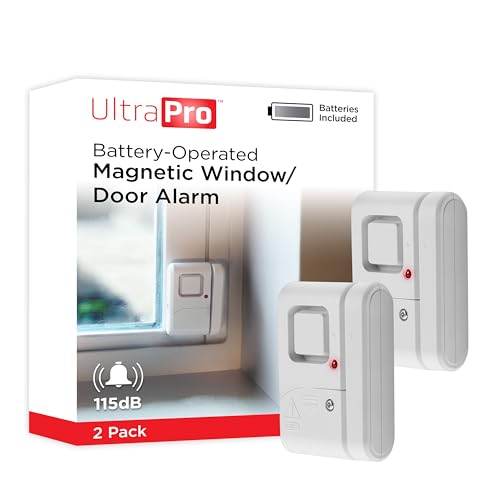
The UltraPro holds by far the deepest review base of any entry sensor tracked on this site, backed by one of the highest ratings we track, as a self-contained wireless chime and alarm with no hub, app or subscription needed. A simple magnetic contact mount makes installation trivial. Owners consistently value having nothing else to buy or configure. It suits buyers who want a standalone alert with an audible siren rather than a silent smart-home notification.
Why You Should Get This
If you want the most review-validated entry sensor available, with nothing else to buy or configure, this is the default.
Benefits
- Deepest review base of any entry sensor tracked on this site.
- No hub, app or subscription needed.
- Simple magnetic contact mount.
Pros and Cons
- Largest, most trustworthy review base.
- Genuinely standalone, nothing else to buy.
- Built-in audible alarm.
- No smartphone notification, local alarm only.
- No integration with a broader smart-home system.
- Battery-powered, needs periodic replacement.
Features
- Standalone wireless chime and alarm.
- No hub, app or subscription.
- Magnetic contact mount.
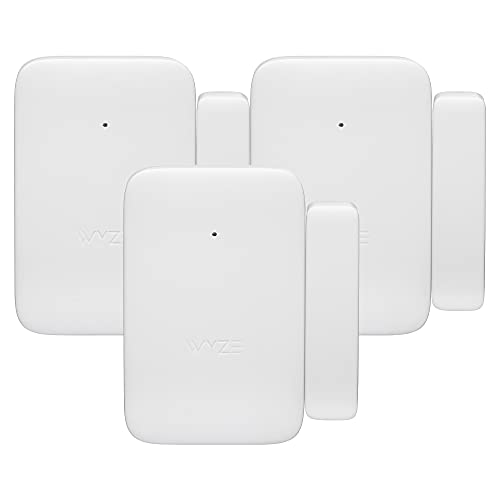
This Wyze entry sensor 3-pack integrates directly into the Wyze Home Security System app, holding a solid rating from a deep review base, for households already running Wyze cameras. It sends phone notifications rather than just sounding a local siren. Owners consistently value adding entry alerts into an app they already use. Three sensors cover multiple doors and windows from one purchase.
Why You Should Get This
If you already run Wyze cameras and want entry alerts inside the same app, this is the natural fit.
Benefits
- Integrates with the Wyze Home Security System app.
- Phone notifications, not just a local siren.
- Three sensors in one purchase.
Pros and Cons
- Fits directly into an existing Wyze setup.
- Smartphone alerts rather than local-only.
- Three-pack covers multiple entry points.
- Smaller review base than the standalone UltraPro.
- Requires the Wyze ecosystem to get full value.
- Subscription may be needed for some advanced features.
Features
- Wyze Home Security System integration.
- Phone notifications.
- Three sensors included.

The eufy E20 offers the longest stated battery life in this comparison at 5 years, holding a solid rating from a smaller review base, integrating with eufy HomeBase systems. Dual-side detection adds flexibility in mounting. Owners consistently value the extended battery life for low-maintenance entry monitoring. It suits households already running eufy security devices, with a smaller review base than the more established UltraPro.
Why You Should Get This
If you’re already in the eufy ecosystem and want the longest battery life on this hub, this is the matched choice.
Benefits
- Longest stated battery life in this comparison, 5 years.
- Integrates with eufy HomeBase systems.
- Dual-side detection.
Pros and Cons
- Exceptional battery life versus rivals.
- Fits an existing eufy HomeBase setup.
- Compact, unobtrusive design.
- Smaller review base than UltraPro or Wyze.
- Best value requires an existing eufy HomeBase.
- Higher price than the standalone UltraPro.
Features
- 5-year battery life.
- Dual-side detection.
- eufy HomeBase integration.
Standalone Alarms vs System-Connected Sensors
A standalone sensor (like the UltraPro alarms here) is entirely self-contained — mount it, and it sounds its own local siren when triggered, with no hub, app or subscription required. It’s the simplest, cheapest way to add entry-point alerting to a home. A system-connected sensor (Wyze, eufy, SimpliSafe) integrates with that brand’s broader app and, often, its cameras — giving you a phone notification rather than just a local siren, at the cost of needing that ecosystem’s hub or base station.
Where to Place Sensors
Prioritize every ground-floor door and easily-accessible window first — these are overwhelmingly where forced entry actually happens. Glass break sensors are worth the added cost specifically on ground-floor windows, where breaking glass rather than forcing a lock is a more common entry method than upper floors.
How We Rank
Every product ranked on this hub is scored the same way the rest of the site is: aggregated owner star ratings weighted by review volume, recurring themes in negative reviews, and specification differences owners raise unprompted. We never buy, install or physically test these devices, and every star rating and review count comes from licensed Amazon data. Full method on how we rank.
Building a Complete Home Security Setup
Entry sensors are one component of a layered home security approach. Pair them with a camera system (see the NVR camera systems hub) for visual confirmation, outdoor motion detection (see the motion sensors and driveway alarms hub) for perimeter warning, and a smart lock (see the smart locks hub) to control entry itself rather than just alert to it.