
Affiliate Disclosure: Some links on this page are affiliate links. As an Amazon Associate, we earn from qualifying purchases — at no extra cost to you. We do not buy, install, or physically handle the cameras we cover; our rankings come from aggregated owner reviews, ratings and expert consensus. Commissions never change our verdicts. We're reader-supported: commissions fund hosting, research and updates, so if a guide helped, buying through our links keeps it going. How we rank · full disclosure.
The short answer: an Amazon Hub Locker is safer than porch delivery for theft, because the parcel sits behind a locked door until you enter your code, and porch delivery leaves it in view. But a locker only helps for items that fit, and you must pick up within three days. Porch delivery is easier, and can be made safer with a box, a camera and carrier settings. Choose the locker if theft happens near you and one is on your route; choose the porch if convenience matters and you add protection.
How we work: we do not buy, install or use these services ourselves. Everything here comes from Amazon’s own pages, government guidance and published tests, plus aggregated owner reviews for the products. See how we rank and our affiliate disclosure. For the wider picture, start at the package theft prevention hub.
In Plain English
Amazon Locker is a set of steel lockers in stores, apartment lobbies and campuses. You pick one as your delivery address, and the driver puts your order inside. You get a code by email and use it on the locker’s screen to open your compartment. Nobody else can open it without that code.
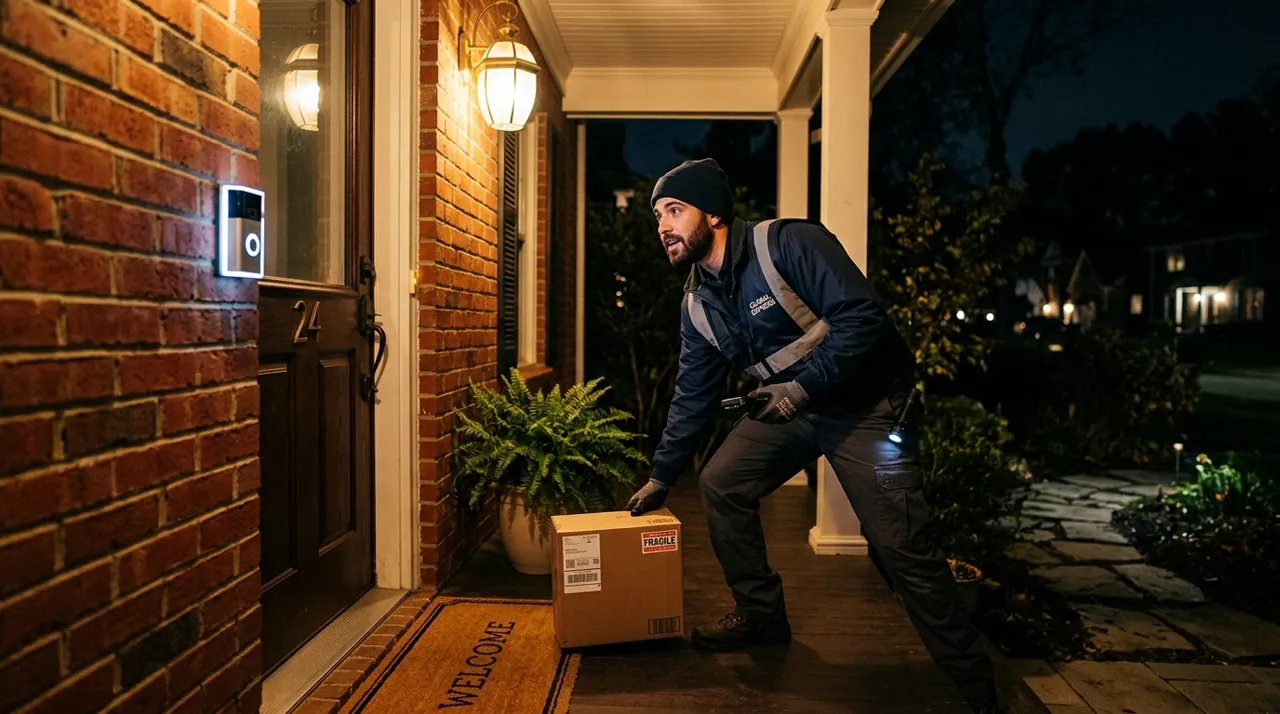
Porch delivery is the usual way: a driver leaves the parcel at your door. It is convenient, but until you get home it is sitting in public where a passer-by can see it.
So the real question is a trade-off between safety and effort. A locker asks you to make a trip, collect within a few days, and keep items small. A porch asks nothing of you, but carries the risk. You can also mix them: send valuable or small items to a locker, and let bulky, low-risk things arrive at the door. Add a camera or a hidden box at home and the porch risk drops further.
If You Keep Porch Delivery: Useful Add-Ons

Best for hiding porch deliveries from street view with the deepest review base of any package box tracked here.
- Outdoor package bin with a one-way delivery lid.
- Weather-resistant resin.
- Lid is removable but not lockable.
Why buy it: If you keep porch delivery, it takes the parcel out of sight without any setup.

Best for a lockable, larger-capacity box at a lower price than heavy-duty metal.
- 48-gallon capacity.
- Lockable design.
- Weatherproof construction.
Why buy it: A physical lock adds a real barrier for a household that keeps porch delivery.

Best for seeing and recording every delivery, whichever option you choose.
- Head-to-toe view shows a parcel on the mat.
- Live view and alerts work without a plan.
- No wiring required.
Why buy it: Video does not stop a theft, but it gives you a record and an alert either way.
How Amazon Hub Locker Works
Amazon has used both the names Amazon Hub Locker and Amazon Locker for the same service. According to Amazon’s guide to using lockers, you find a locker by address or ZIP code, add it to your address book, and select it at checkout. When your order arrives, you receive an email, then collect the package using a code, a barcode or the Amazon Shopping app.
Amazon says the service is free to use, with more than 25,000 locations across the U.S., including hundreds on college campuses. You can pick up without your phone if you write down the six-digit code from the email, though some lockers may require a barcode scan or the app.
The rules that matter most are the limits. Amazon states that eligible items must weigh under 10 pounds, measure under 16 by 12 by 14 inches, and be sold or fulfilled by Amazon. You have three calendar days to pick up, and if you do not, Amazon returns the item and refunds you. That deadline is the main catch: a busy week, travel or a locker that is out of your way can turn a safe delivery into a return.
The Risks of Porch Delivery
A parcel left on a step is visible to anyone walking by, and it stays there until you or someone at home collects it. The U.S. Postal Inspection Service advises that you promptly pick up mail and avoid leaving items at your door for extended periods. The shorter the time between drop-off and pickup, the less chance there is to lose it, which is why a locker, a hold or a hidden box helps.
Porch delivery is also unpredictable. You often do not control when the driver arrives, whether they ring the bell, or where they leave the parcel. If you work away from home, a package can sit for hours. The same USPIS page reports that from 2019 to 2024, Postal Inspectors arrested nearly 9,300 suspects for mail and package theft, which shows the problem is real enough for federal enforcement, though it is not a measure of how likely any one household is to be hit.
Where Lockers Fall Short
Lockers only help for what fits and where you can reach. Large or heavy orders, anything from a third-party seller not fulfilled by Amazon, and items from other retailers will still go to your door. The locker must also be on a route you already travel, or the trip becomes a chore you will skip. Three days is short if you are away, and some households find that a code or barcode in an email is one more thing to keep track of.
Lockers are also not a shield against every delivery mix-up. If the order never arrives, or a locker is full, you still need to deal with Amazon customer service. The benefit is narrower than it sounds: a locker fixes the stolen-from-the-doorstep problem, not late or lost deliveries.
Boxes and Cameras: Making the Porch Safer
A lock box sounds like the perfect middle ground, but Consumer Reports’ at-home test found a weak link: drivers rarely used the boxes. Of dozens of packages received over three months, only three were placed inside, because couriers work under time pressure and carriers had no policy requiring box use. CR pointed to video doorbells, floodlight cameras and pickup locations such as Amazon Hub as alternatives.
That does not make a box useless. It works best when the same driver serves your address for each carrier, when you leave clear delivery instructions, and when the box is easy to spot. Compare models in our best package lock box roundup. A camera adds a different kind of protection: it will not stop a theft, but it records one, and a bright light and visible doorbell may discourage opportunists.
Other Ways to Avoid the Doorstep
You do not have to choose only between a locker and your porch. USPS says Hold Mail can pause delivery for a minimum of three days up to a maximum of 30, requested through your USPS.com account. USPIS also suggests Hold for Pickup, so the package waits at your local Post Office. And Informed Delivery is a free USPS service that previews incoming mail and shows package status updates, which helps you time your pickup.
Other choices depend on your area and the retailer: workplace delivery, a neighbor you trust, a staffed apartment package room, or the in-store pickup that many retailers offer. If you use a smart lock, check our smart locks hub for options that pair with in-home delivery services, and read the terms carefully before letting anyone into your home.
Which Should You Choose?
Choose the locker if packages have gone missing on your street, you are away most of the day, the order is small and Amazon-fulfilled, and a locker sits on your commute.
Choose the porch if you are home most days, your area rarely sees theft, or the item is too big for a locker. Add a doorbell camera and clear delivery notes.
Mix both for the best result: valuable, small items to a locker, and everything else to a protected porch.
Going Deeper: Why the Time Window Matters More Than the Method
Every option here works by shrinking the time a package is exposed. A locker cuts it to nearly zero at the moment of delivery, but starts a three-day clock that you must beat. Porch delivery leaves a package exposed from drop-off until you collect it, which for a working household can be most of a day. A hold at the Post Office moves the exposure to a staffed building, and a box hides the parcel from view during the window it would otherwise be visible.
Seen that way, the safest choice is the one that best matches your schedule. If you are reliably home in the afternoon, a porch with a camera has a short exposure window. If you leave at seven and return at six, a locker or a hold removes eleven hours of risk. USPIS’s advice to make another arrangement when you cannot be home reflects the same logic.
It also explains why carrier cooperation matters. CR’s test showed a box is only as good as the driver’s willingness to use it, and Amazon told CR it had no formal policy on box use, only suggestions such as delivery instructions and alternatives like Amazon Hub lockers. The locker sidesteps that problem, because Amazon controls both the delivery and the destination.
Finally, keep expectations realistic. None of these steps is a guarantee, and they address theft, not misdelivery or shipping delays. Keep photo proof of the delivery, report a missing package to the retailer or carrier promptly, and save any camera footage. If a package is stolen, USPIS gives a number and a portal for reporting mail-related crimes, and the retailer’s claim process is usually the fastest route to a replacement.
Sources & References
- How to use Amazon Locker: Free and secure package pickup system — Amazon
- Mail and Package Theft: Tips and Prevention — U.S. Postal Inspection Service
- At-Home Review: Package Delivery Boxes to Deter Porch Pirates — Consumer Reports
- Hold Mail — United States Postal Service
- Informed Delivery — United States Postal Service