
Affiliate Disclosure: Some links on this page are affiliate links. As an Amazon Associate, we earn from qualifying purchases — at no extra cost to you. We do not buy, install, or physically handle the cameras we cover; our rankings come from aggregated owner reviews, ratings and expert consensus. Commissions never change our verdicts. We're reader-supported: commissions fund hosting, research and updates, so if a guide helped, buying through our links keeps it going. How we rank · full disclosure.
Short answer: Matter is a cross-manufacturer smart-home connectivity standard. Apple, Google, Amazon and other major smart-home companies all back it jointly. A single Matter-certified device works natively across Alexa, Google Home and Apple Home, with no separate integration needed for each ecosystem. Cameras are the exception for now: Apple Home does not yet support Matter cameras. For security cameras specifically, Matter support has developed more slowly than for simpler device categories like locks, lights and plugs — cameras only became part of the standard with Matter 1.5, released in November 2025. Camera-specific Matter adoption still lags behind the standard's broader ambitions as a result.
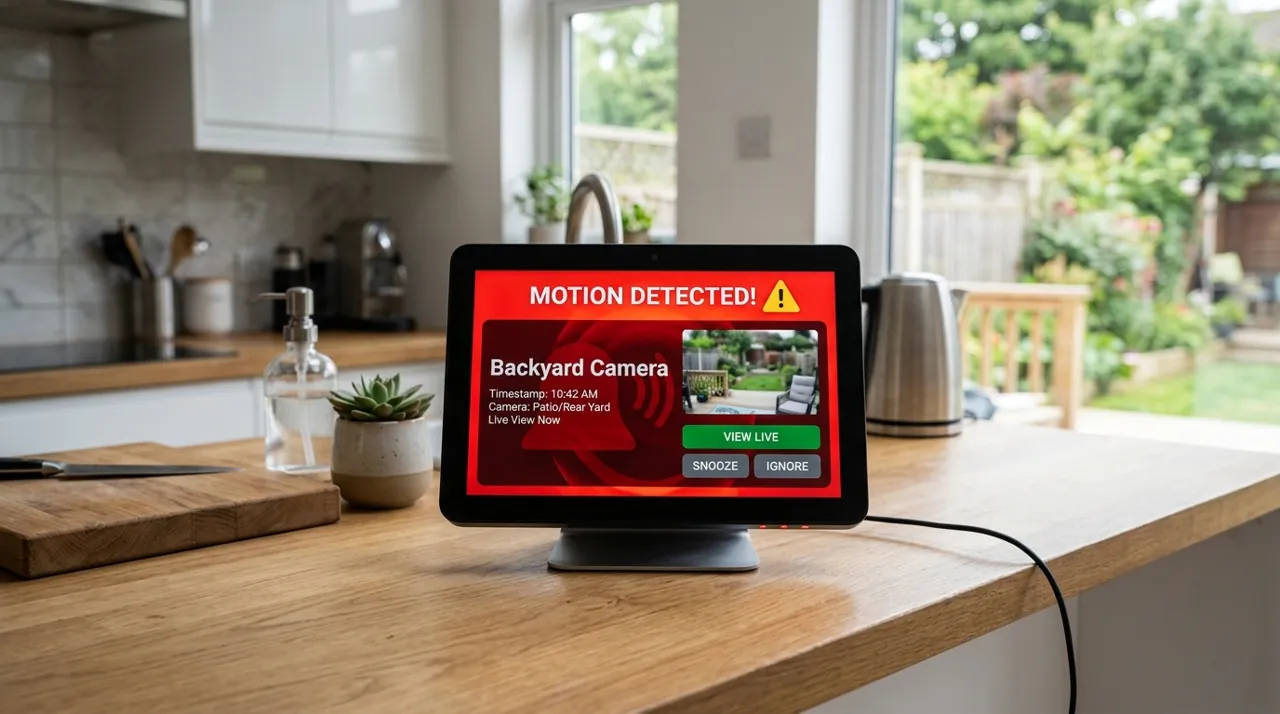
Matter-Adjacent Smart-Home Devices

Best for a Matter over Thread-compatible smart-home device already sold today.
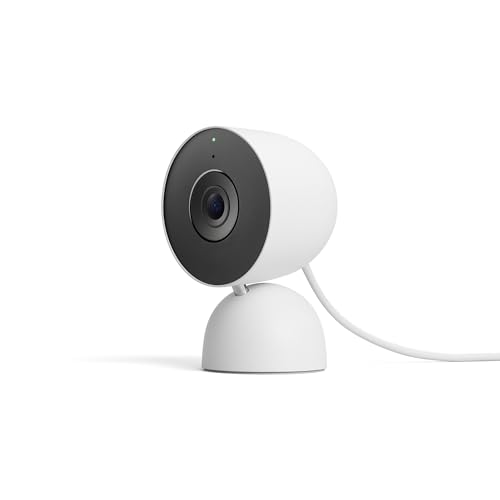
Best for a camera from a brand actively involved in Matter development.

Best for broad existing ecosystem compatibility while Matter camera support matures.
What Is Matter and Does It Affect Security Cameras? The Core Idea
Before Matter, a device manufacturer had to build and maintain separate integrations for Alexa, Google Home and Apple HomeKit individually. That is exactly why camera compatibility has historically been so uneven across ecosystems. Supporting all three well takes real, ongoing engineering investment, and not every manufacturer commits to it equally. Matter aims to collapse that into a single standard instead. A Matter-certified device speaks one common protocol that any Matter-compatible platform understands natively, removing the fragmented, per-ecosystem integration work that has frustrated smart-home buyers for years.
For cameras specifically, this promise is real but only partially realized so far. Video streaming is the core function a camera exists to provide, and it is a far more demanding technical requirement than the simple on/off or sensor-reading functions Matter's earlier device categories handle. That gap is part of why full Matter camera support has lagged behind locks, plugs, lights and sensors in the standard's rollout.
Where Matter Camera Support Actually Stands Today
Matter 1.5 added camera support to the standard in November 2025, and the Connectivity Standards Alliance's reference software now includes camera streaming built on WebRTC. Even so, only a growing but still limited number of camera manufacturers have announced or shipped Matter support, and platform support is still catching up. Apple Home does not yet support Matter cameras, so HomeKit Secure Video remains the way to get a camera into Apple Home. Google's Matter supported-devices list for Google Home, for example, did not yet list cameras when we checked in September 2026. Support generally lands on newer product lines rather than retrofitting existing hardware through firmware alone. Buyers should treat "Matter compatible" as a specific label to look for on current listings, not an assumption that applies broadly across the camera market yet. The standard keeps evolving, and camera-specific capabilities keep expanding within it, but adoption has not reached the near-universal level seen in simpler device categories.
Why This Is Worth Watching as a Buyer
Ecosystem fragmentation frustrates a lot of households — different apps, inconsistent feature support, the recurring compatibility questions covered throughout this FAQ hub. Matter represents a genuine, meaningful long-term fix for that, not just a marketing buzzword. It has real backing from every major smart-home platform at once, rather than being pushed by a single company alone. Buyers making a camera purchase today with a multi-year horizon in mind may reasonably weight Matter support as a forward-looking consideration. Camera-specific Matter support still remains a work in progress, not the finished picture.
See do security cameras work with Google Home and do security cameras work with Apple HomeKit for the current, pre-Matter state of ecosystem-specific compatibility that Matter is ultimately trying to simplify.
How Matter Actually Works With Google Home, Alexa and Apple Home.
Matter runs as a shared application layer on top of a device's existing network connection. A camera can carry Matter traffic over WiFi, Ethernet, or Thread, a newer low-power mesh protocol built for battery devices. The camera itself does not need to be Thread-based to support Matter — WiFi and Matter work together just fine.
What actually changes for the buyer is simpler than the underlying engineering. A Matter-certified device shows up in Google Home, Amazon Alexa and Apple Home at the same time, using one setup process instead of three separate ones. No separate skill, no separate linked account, no separate app permission screen for each ecosystem. That single setup is the entire point of the standard.
Matter and Thread: Two Different Things That Often Get Confused.
Thread is a low-power wireless mesh network, similar in spirit to Zigbee. Matter is the higher-level standard that can run over Thread, but also over WiFi or Ethernet. A device can support Matter without supporting Thread at all, and a Thread network can exist without every device on it speaking Matter.
For a security camera specifically, Thread rarely makes sense as the primary connection. Cameras push a continuous or near-continuous video stream, which needs far more bandwidth than Thread's low-power design targets. Most Matter-certified cameras use WiFi or Ethernet for the actual video, and reserve Thread, where present at all, for lower-bandwidth smart-home signaling instead.
How to Check Matter Certification and Ecosystem Compatibility.
Look for explicit Matter certification language on the product listing or the box itself, not just a general mention of smart-home compatibility. A camera advertised as working with Alexa or Google Home is not automatically Matter-certified. Those can be older, ecosystem-specific integrations built before Matter existed, and they behave differently from true Matter support.
The Connectivity Standards Alliance maintains an official list of certified Matter products. Cross-checking a specific model against that list is the most reliable way to confirm certification, rather than relying on marketing copy alone. Retailer listings sometimes use "Matter compatible" loosely, so a direct check is worth the extra minute before buying.
Live Video Limits: What Matter Does Not Yet Do Well for Cameras.
Live video streaming across ecosystems is the newest and least mature part of Matter. The 1.5 specification defines WebRTC-based live streaming, but manufacturer and platform support is still rolling out, so full live-view video inside every ecosystem's own app is still inconsistent between manufacturers, and Apple Home does not yet accept Matter cameras at all. Some cameras handle this cleanly; others still route live video back through their own proprietary app even after Matter setup.
Recording storage, whether local or cloud, also sits outside Matter's current scope entirely. Matter standardizes how a device talks to a platform, not where footage lives or how a subscription works. Expect brand-specific storage and subscription terms to keep applying to a Matter camera exactly as they would without Matter involved.
Where Matter Camera Support Is Headed Next.
The Connectivity Standards Alliance continues to expand Matter's camera-specific capabilities with each new release of the specification. Live video access across ecosystems, richer event metadata like person or vehicle detection, and broader manufacturer participation are all active areas of work rather than finished features. None of this is guaranteed on a fixed timeline, since the standard evolves through an industry working group rather than a single company's release schedule.
For a buyer weighing Matter today, the safest framing is this: treat Matter support as a genuine long-term hedge against ecosystem lock-in, not as a reason to delay a purchase you otherwise need now. A well-reviewed non-Matter camera still solves today's problem well, and Matter adoption across the category will keep expanding regardless of any single purchase decision.
Sources & References
- Build With Matter — Connectivity Standards Alliance
- Matter 1.5 Introduces Cameras, Closures, and Enhanced Energy Management Capabilities — Connectivity Standards Alliance
- connectedhomeip v1.5.0.0 release (Matter reference SDK) — Project CHIP / Connectivity Standards Alliance
- What is Matter? — Google Home Developers
- Supported device types (Matter) — Google Home Developers