
Affiliate Disclosure: Some links on this page are affiliate links. As an Amazon Associate, we earn from qualifying purchases — at no extra cost to you. We do not buy, install, or physically handle the cameras we cover; our rankings come from aggregated owner reviews, ratings and expert consensus. Commissions never change our verdicts. We're reader-supported: commissions fund hosting, research and updates, so if a guide helped, buying through our links keeps it going. How we rank · full disclosure.
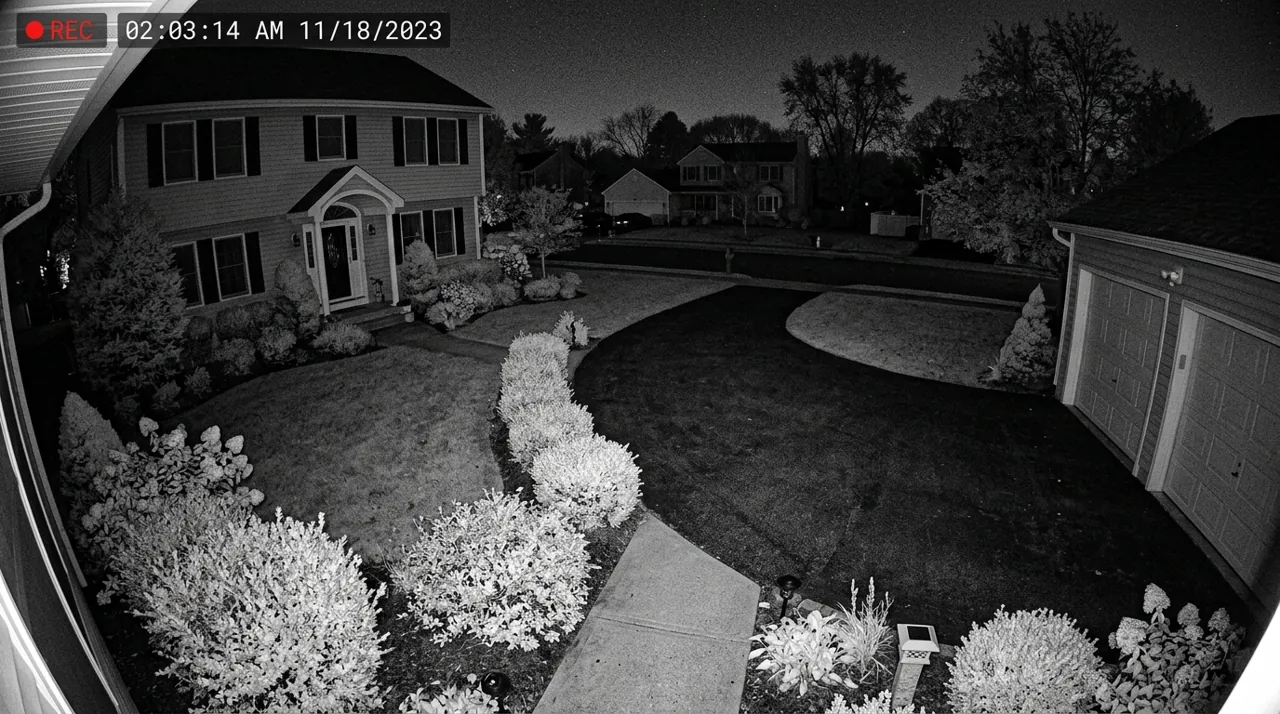
Short answer: color night vision is a camera's ability to keep recording in full color after dark, instead of switching to the grainy black-and-white image produced by standard infrared night vision. It works one of two ways: a built-in white or warm-toned spotlight illuminates the scene enough for the color sensor to read it, or the camera uses an unusually light-sensitive sensor that can pull in a color image from very little ambient light. Most consumer cameras that advertise color night vision use the first method, which is why nearly every color-night-vision camera also doubles as a small floodlight.
The practical upside is identification. A gray infrared silhouette tells you a person was there. A color image can tell you what they were wearing, what color the vehicle was, and whether the person matches someone who has a reason to be on the property. That difference is the single most-cited reason owners give for upgrading from a standard infrared camera.
Recommended Cameras

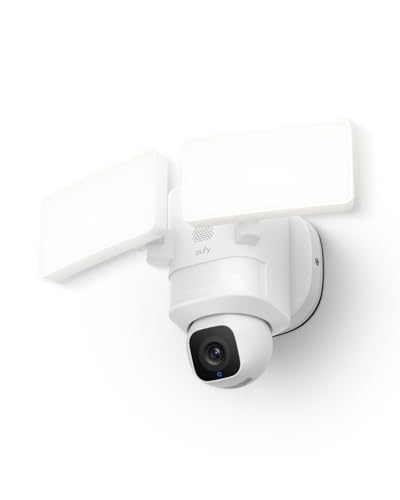
Best for color night vision paired with a 2,000-lumen floodlight.
Best for AI-tracked color night vision with no subscription required.

Best for wide-angle and telephoto lenses with spotlight color night vision or IR.
What Is Color Night Vision, Exactly?
Color night vision is the name for a security camera's ability to record in full color after dark rather than switching to the black-and-white image standard infrared night vision produces. Two components do the work. The first is the light source — usually a set of warm-white LEDs built into the camera housing, sometimes paired with a full floodlight for a wider throw. The second is the sensor itself, which needs to be large and sensitive enough to make good use of that light rather than simply overexposing the nearest object and losing everything further away. Cameras that get this combination right produce a genuinely usable color image across a typical porch, driveway or front yard; cameras that skimp on either the light or the sensor tend to produce a washed-out, high-contrast image that is only marginally more useful than infrared.
Some cameras offer a "smart" or automatic mode that switches between color and infrared depending on the available light — color when a porch light or streetlight is helping, infrared when the scene is genuinely dark. That hybrid approach is often the more honest engineering answer, because it does not force a light-hungry mode onto a spot that has no ambient light to begin with.
Owner Reports: Identification Gains and Ambient Light Limits
Across owner reviews of color-night-vision cameras, the recurring praise is specific rather than vague: being able to describe a jacket color or a vehicle to a 911 dispatcher, rather than only being able to say "a person" or "a car." The recurring complaint is just as consistent — a camera's color night vision looking impressive in the product photos but disappointing in a genuinely dark yard with no porch light or streetlamp nearby to help it along. That gap between marketing image and real backyard performance is the single most common source of disappointment reported for this feature, and it is almost always a lighting-conditions problem rather than a defective unit.
The other consistent theme is that color night vision improves fastest with a companion light source already present. Owners who pair a color-night-vision camera with an existing porch light, or buy a model with its own floodlight built in, report meaningfully better results than owners relying on the camera's own modest spotlight alone in a fully dark position.
Where Standard Infrared Still Wins on Detection Range
Infrared night vision uses LEDs in the near-infrared spectrum, largely invisible to the human eye (common 850nm emitters show only a faint red glow), to illuminate a scene that the sensor then reads in black and white. It has three real advantages over color night vision: it works in total darkness with no ambient light at all, it draws meaningfully less power, and it does not announce the camera's presence with a bright visible light. A camera aimed at a long, dark driveway with no fixtures nearby will generally see further and more consistently with infrared than with a color mode fighting to find enough light to work with.
The honest tradeoff is detection versus identification. Infrared tells you something moved. Color night vision, when it has enough light to work with, tells you what it was. Many owners land on a hybrid setup: infrared-only cameras covering long, unlit stretches, and color night vision cameras covering the front door and driveway where a light fixture or the camera's own spotlight can do its job.
What to Check Before Buying: Sensor Size and Spotlight Type
The sensor size matters more than the marketing copy usually admits — larger sensors need less light to produce a clean color image, which is why some budget color-night-vision cameras look noticeably worse than premium ones at the same distance. It is also worth checking whether the camera's spotlight is motion-activated or always on; an always-on light draws power continuously and can wash out a scene that would otherwise resolve cleanly under its own ambient light. For a full walkthrough of night vision across the whole product category, see do security cameras work in the dark, and for the deterrent side of a bright light at night, see floodlight cameras.
How the Spotlight Actually Cycles.
Most color night vision cameras do not run their spotlight continuously. The light usually snaps on the moment motion triggers a recording event — Reolink's TrackMix, for example, turns its spotlights on automatically when motion is detected by default — stays on for the length of the clip, then switches off again. This matters for two reasons. First, it saves power, which is why a battery-powered color-night-vision camera can last months rather than days. Second, it doubles as a mild deterrent on its own, since an unexpected light snapping on is often enough to make someone leave before the camera even needs to identify them.
A smaller number of cameras offer an always-on low-level light instead. That mode trades battery life for a more consistently lit scene, and it suits a wired camera far better than a battery one. Check which mode a specific listing uses before buying, since the two behave very differently after dark.
Common Complaints About Color Night Vision, and What Usually Causes Them.
The single most common complaint is a scene that looks sharp and colorful in daylight demo footage, then turns soft and grainy at night. Almost always, this traces back to distance. Color night vision has an effective range, set mainly by the strength of the spotlight and any ambient light, and anything beyond that range falls back toward the same limits infrared faces without enough light.
A second common complaint is color casting — a scene that looks slightly orange, green or blue instead of neutral. This usually comes from the spotlight's own color temperature mixing with other light sources nearby, like a porch bulb or a streetlamp with a different tone. It is a cosmetic issue rather than a functional one, and it rarely affects whether a person or vehicle is identifiable.
Is Color Night Vision Worth Paying Extra For?
For a front door, a driveway, or any position with at least some ambient light already nearby, yes — the identification benefit is real and it shows up in owner reviews consistently. For a long, genuinely dark stretch of yard with no fixtures nearby, the honest answer is more mixed. A well-specified infrared camera may outperform a weak color-night-vision one in that exact spot, simply because it does not depend on light that is not there.
The safest approach for a full property is mixed coverage. Put color night vision where a light source already exists or where you are willing to add one, and keep standard infrared on any stretch that stays genuinely dark. That combination consistently outperforms either technology used everywhere on its own.
Sources & References
- Reolink TrackMix PoE specifications — Reolink
- eufy Floodlight Camera E340 — eufy
- Wyze Cam v4 — Wyze