
Affiliate Disclosure
Some links on this page are affiliate links. As an Amazon Associate, we earn from qualifying purchases — at no extra cost to you. We do not buy, install, or physically handle the cameras we cover; our rankings come from aggregated owner reviews, ratings and expert consensus. Commissions never change our verdicts. How we rank · full disclosure.
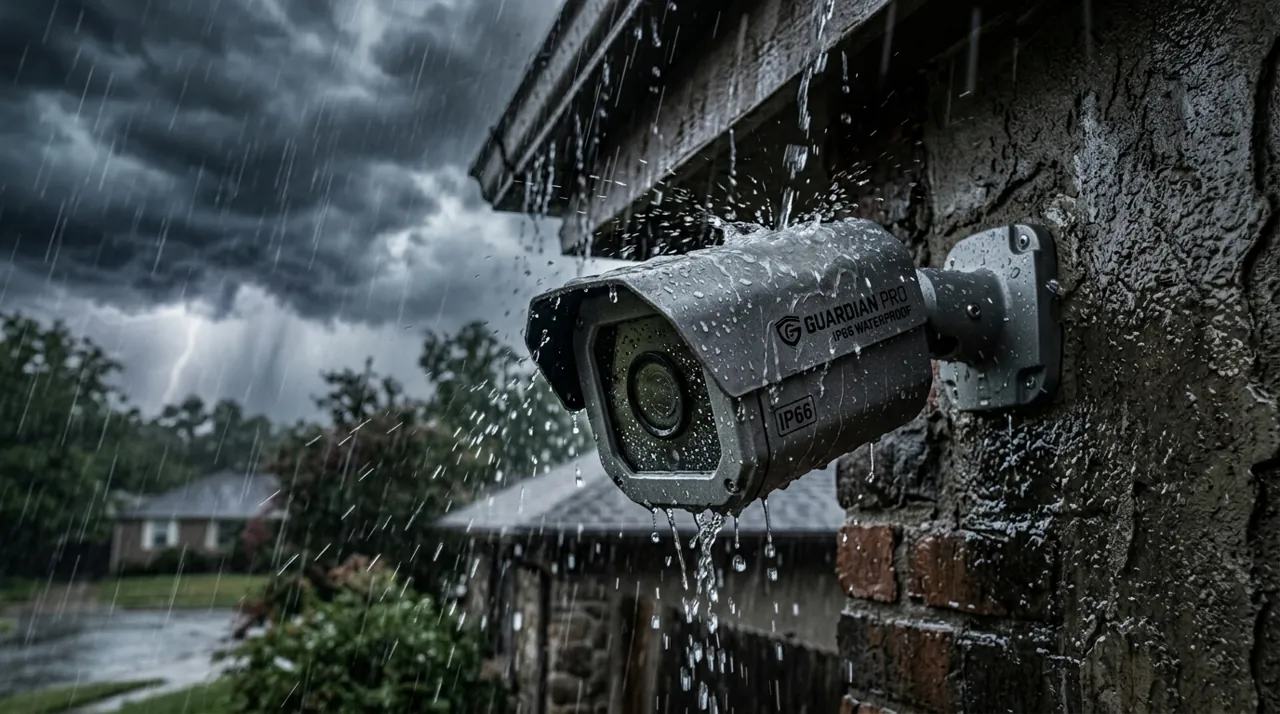
Short answer: IP65 means a device is fully protected against dust ingress (the "6") and protected against low-pressure water jets sprayed from any direction (the "5"). On a security camera, that translates to reliable protection against rain, splashback and general outdoor humidity, but not against submersion or high-pressure water — a distinction that matters for exactly how and where an IP65 camera should be mounted. IP65 is one of the most common ratings on consumer outdoor security cameras, sitting comfortably above what typical rainfall demands while stopping short of the higher IP66 and IP67 ratings used on premium or marine-grade equipment.
Recommended IP-Rated Cameras

Best for IP65-class weather resistance at an accessible price.

Best for a sealed dome housing built for permanent outdoor exposure.
Best for a step up to IP67, the highest common rating in this category.
What Does IP65 Mean? Decoding the Two Digits
IP stands for Ingress Protection, and the rating system was defined by international electrical standards specifically to give a consistent, testable measure of how well an enclosure resists solid objects and liquids. The first digit, ranging from 0 to 6, covers protection against solid particles — dust, dirt and small objects — with 6 being the top rating, meaning fully dust-tight with no ingress at all under test conditions. The second digit, ranging from 0 to 9, covers protection against liquid ingress, and this is where the meaningful differences between common camera ratings live.
A 5 in the second position specifically means protection against water projected from a nozzle at low pressure from any direction for a sustained test period, which is a robust standard for rain, splashing and general outdoor humidity. It falls short of the 6 rating, which withstands powerful water jets, and further short of 7 and 8, which cover temporary and continuous submersion respectively. For a camera mounted under an eave or overhang facing typical weather, IP65 comfortably covers the exposure it will actually see.
IP65 vs the Other Common Camera Ratings
IP66 is the step above IP65, trading the low-pressure water jet test for a high-pressure one, which matters more for wind-driven rain in exposed, stormy locations or for anyone who plans to pressure-wash nearby surfaces occasionally. IP67 goes further still, adding protection against temporary submersion up to a specified depth and duration, which is genuinely relevant for a camera mounted low near a flood-prone area or exposed to occasional deep puddling. For the overwhelming majority of home installations — mounted under an eave, on a wall, away from standing water — IP65 is entirely sufficient, and paying extra specifically for IP66 or IP67 rarely changes real-world outcomes for a typical residential position.
It is worth noting that a higher IP number is not automatically "better" in every practical sense — it usually reflects a more robust seal and housing, which can add cost without adding real-world benefit for a mounting position that was never going to face high-pressure jets or submersion in the first place.
What the IP Rating Does Not Cover at All
IP ratings say nothing about temperature tolerance, UV resistance, or long-term material degradation from sun exposure — all separate engineering considerations a manufacturer may or may not address elsewhere in the camera's design. A camera can be fully IP65-rated and still suffer battery performance loss in extreme cold, or plastic housing degradation from years of direct UV exposure, neither of which the IP rating was ever meant to certify. Buyers specifically concerned about cold climates or intense sun exposure should look for separate operating temperature specifications rather than assuming the IP rating covers those conditions.
The IP rating also assumes correct installation — a camera mounted with an open, unsealed cable entry point can leak regardless of its housing rating, since water finds the weakest point in the overall installation rather than testing the housing alone. Sealing cable entries properly is part of what actually delivers the protection the rating promises.
Shopping With IP Ratings in Mind
For a typical outdoor position under an eave or overhang, IP65 is the sensible minimum to look for and is widely available even on budget-tier cameras. For a fully exposed position with no overhang, taking direct wind-driven rain, stepping up to IP66 adds real margin. For anything near standing water, low mounting positions in flood-prone areas, or marine environments, IP67 is worth the extra cost specifically for its submersion tolerance. See do outdoor cameras need a cover for when additional physical protection makes sense even on a well-rated camera, and can security cameras survive winter cold for the temperature side of outdoor durability.