
Affiliate Disclosure
Some links on this page are affiliate links. As an Amazon Associate, we earn from qualifying purchases — at no extra cost to you. We do not buy, install, or physically handle the cameras we cover; our rankings come from aggregated owner reviews, ratings and expert consensus. Commissions never change our verdicts. How we rank · full disclosure.
The direct answer: yes, for most homeowners, with real caveats worth understanding before you buy. A camera system is a genuine, moderate deterrent and a useful source of evidence after an incident — it is not a guarantee against crime, and its ongoing cost (subscription or otherwise) needs to be weighed honestly against what you’ll actually use it for.
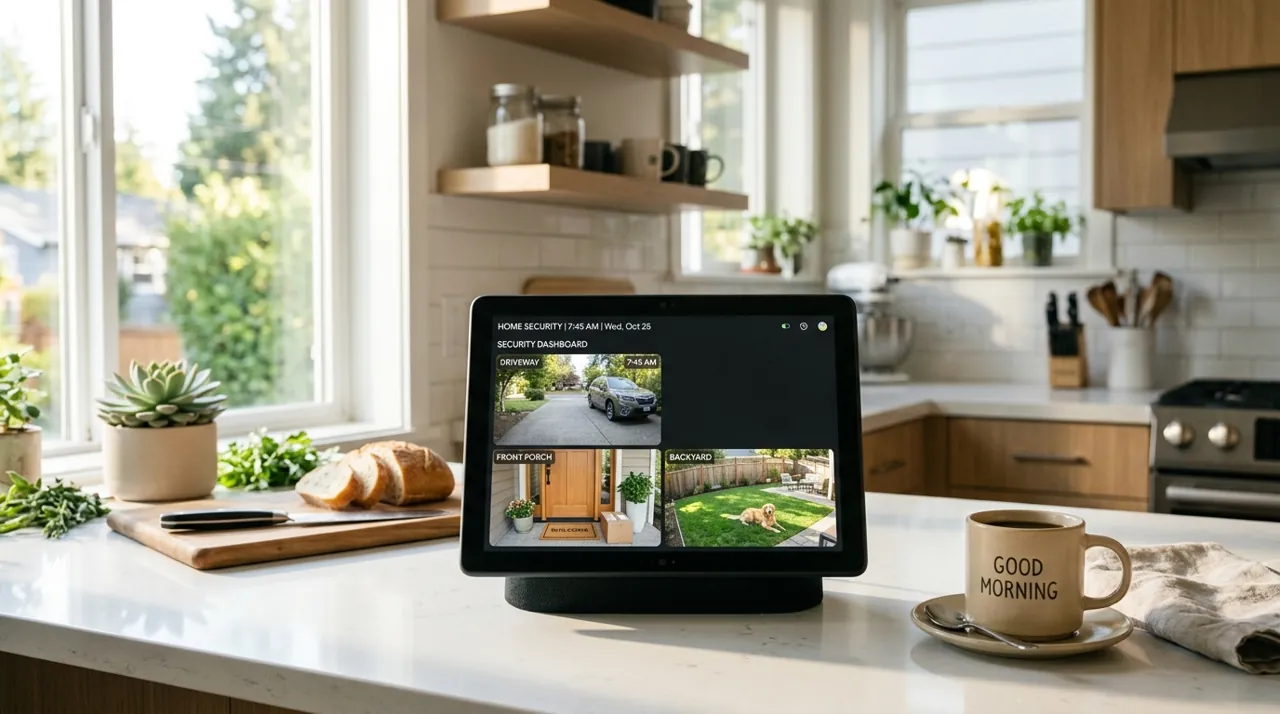
An Example of the System This Question Is About

The REOLINK RLK8-410B4 carries the largest review base of any complete NVR system tracked on this site, with a solid owner rating, pairing four 4MP bullet cameras with an 8-channel PoE NVR and a 2TB HDD for 24/7 local recording. Person and vehicle detection cuts false alerts. There is no subscription at any point. Owners consistently cite it as the honest starting point for a first full system.
Why You Should Get This
If you’re weighing whether a full system is worth it over single cameras, this is the most review-validated complete system to compare against.
| Camera resolution | 4MP Super HD (2560x1440), 4 bullet cameras |
| NVR | 8-channel PoE NVR |
| Storage | 2TB HDD pre-installed, 24/7 recording |
| Connectivity | PoE, single cable per camera |
| Detection | Person and vehicle detection |
| Night vision | Infrared, up to 30m range |
Benefits
- Largest review base of any complete NVR system tracked on this site.
- 2TB HDD pre-installed, 24/7 continuous recording.
- No subscription at any point.
Pros and Cons
- Deep, trustworthy review base.
- True 24/7 recording, not event clips only.
- Expandable, 8 channels for 4 cameras.
- 4MP rather than 4K resolution.
- Real installation project running cable.
- Higher upfront cost than a single camera.
Features
- 4MP Super HD cameras.
- 8-channel PoE NVR.
- 2TB HDD pre-installed.
The Deterrent Case
General criminology and insurance-industry consensus supports visible cameras as a meaningful, if imperfect, deterrent. Most burglary is opportunistic — a visible camera signals a harder target and pushes an opportunistic intruder toward an easier one nearby. This effect is real but not absolute: a determined, targeted intruder who has cased a specific property is not stopped by a camera alone, and treating a system as a complete security solution rather than one layer of it is the most common overestimation buyers make.
The Evidence Case
Beyond deterrence, a working system gives you something to review after an incident — a package theft, a vehicle break-in, an attempted entry. This is where the subscription-versus-local-storage decision matters most: a camera with no recorded history (free-tier Ring, for instance) gives you a live view in the moment but nothing to go back to, which defeats much of the evidentiary purpose for many buyers.

Running the Honest Cost-Benefit
A basic system (one or two cameras) runs a modest hardware cost, plus nothing to a modest annual subscription depending on brand. Against that: potential insurance discounts (commonly 2-10% off a homeowner’s policy with many insurers), reduced risk of package theft, and the practical value of remote visibility when you’re away. For most households, this math favors having at least a front-door camera. It favors a full whole-property system less universally — that decision depends more on the specific property (isolated, high-value items outdoors, prior incidents) than on a blanket recommendation.
Who Should Buy a Full System
Properties with multiple vulnerable entry points, detached structures (garages, sheds) worth covering separately, a documented prior incident, or households that specifically value continuous whole-property recording rather than event-triggered clips. See NVR camera systems for the whole-property route.
Who Should Start Smaller
Most first-time buyers are better served starting with one or two cameras at the highest-value positions (front door, driveway) and expanding only where an actual gap shows up, rather than buying a full kit on day one. See how many cameras do I need for that decision.
Verdict
A security camera system is worth it for the large majority of homeowners, provided you’re realistic about what it does (deter opportunistic crime, provide evidence) and doesn’t do (stop a determined intruder outright), and you’ve budgeted the real cost including any subscription. Start with best security camera for front door if you’re buying your first camera, or best security camera systems if you’ve decided a full multi-camera kit is the right scope.