
Affiliate Disclosure
Some links on this page are affiliate links. As an Amazon Associate, we earn from qualifying purchases — at no extra cost to you. We do not buy, install, or physically handle the cameras we cover; our rankings come from aggregated owner reviews, ratings and expert consensus. Commissions never change our verdicts. How we rank · full disclosure.
The short answer: yes, for most homeowners and most renters, a security camera is worth it — but only with three caveats stated plainly. The deterrent effect is real and it is not absolute. If you buy a cloud-based system the ongoing fee will eventually cost more than the hardware. And you are taking on privacy and legal responsibilities that most buyers never think about until a neighbour raises them.
This page is deliberately not about which camera to buy. It is about whether you should buy one at all, and how to price the decision honestly before you get anywhere near a product page.
Do Cameras Actually Work? What The Evidence Supports
The research consensus is more nuanced than either the marketing or the sceptics suggest.
Deterrence is real. Studies interviewing convicted burglars, and law-enforcement surveys of residential break-in patterns, land consistently in the same place: visible security measures push opportunistic intruders toward a different, easier property. Cameras appear repeatedly on the list of things that cause a target to be skipped, alongside dogs, alarm signage, lighting and signs of occupancy. Most residential burglary is opportunistic rather than planned, which is precisely the behaviour that displacement affects.
Deterrence is not prevention. A camera does not stop entry. Someone motivated, or someone who assumes the footage will never be reviewed, walks past it. Cameras have also been overstated as an investigative tool: footage of a hooded figure at night with no distinguishing detail rarely closes a case, and clearance rates for residential burglary are low regardless.
The most reliable value is the everyday value. Ask owners what they actually use their camera for and burglary is rarely first. It is parcels, deliveries, contractors, checking whether a teenager got home, seeing what the noise in the driveway was, and settling small disputes with evidence. That is where the return sits for most households, and it is a perfectly good reason to buy one.
The Real Cost: Hardware Is The Small Number
The mistake almost every first-time buyer makes is pricing the camera and not the system.
| Route | Hardware | Monthly fee | Five-year total |
|---|---|---|---|
| One budget camera, no plan | Entry-level | None (microSD) | Lowest of the five |
| Blink Subscription Plus, unlimited | Modest | Modest | Moderate |
| Ring Home, unlimited devices | Moderate | Modest to higher | Highest of the five |
| Nest Aware, unlimited cameras | Moderate to higher | Modest | Highest of the five |
| Local storage (Eufy / Reolink) | Higher | None | Moderate, same as hardware |
Read the right-hand column rather than the left. Two cameras and a mid-tier cloud plan is a four-figure decision over five years, and cloud fees across this category have historically risen rather than fallen. A local-storage system with a higher sticker price is very often the cheaper choice by year three, which is the single most useful thing a first-time buyer can know.
Electricity is a rounding error — a wired camera draws a few watts, costing single-digit dollars per year. Internet bandwidth matters more than power if you are on a metered connection, since continuous cloud upload from multiple cameras is not trivial.
The Insurance Discount: Real, But Smaller Than You Hope
It is common industry practice for home insurers to offer premium discounts for documented security measures, typically quoted in the region of 2 to 10 percent. The larger end of that range generally attaches to professionally monitored alarm systems, sometimes with central-station fire monitoring, rather than to self-monitored cameras on their own. Some insurers credit cameras only as part of a broader package; some ask for installation documentation or a monitoring certificate.
Do the arithmetic on your own policy rather than on an advertised range. A modest percentage discount on a typical annual premium adds up to a real saving over five years. That comfortably funds a budget camera and part of a second. It does not fund a premium subscription. Call your insurer, ask exactly what they credit and what evidence they need, and get the answer before you buy rather than after — retroactive discounts are not typical.
Break-Even Thinking: The Question Worth Asking
Here is a more useful frame than “is it worth it.” What is the cheapest version of this that solves your actual problem, and what does it cost you per year to keep?
If your problem is parcel theft, a doorbell at the front door solves 90 percent of it and a second camera adds little. If your problem is a dark side gate, a floodlight camera does more than three ordinary cameras. If your problem is knowing whether the dog is on the sofa, an entry-level indoor camera is the whole answer and a subscription is irrelevant.
Then apply the honest test: will you check the app? A camera nobody looks at displaces the measures that actually prevent entry. Better locks, a solid door frame and exterior lighting all outperform a camera at stopping a break-in. Cameras document; hardware prevents. Buy in that order if the budget is tight.
Two Illustrative Entry Points
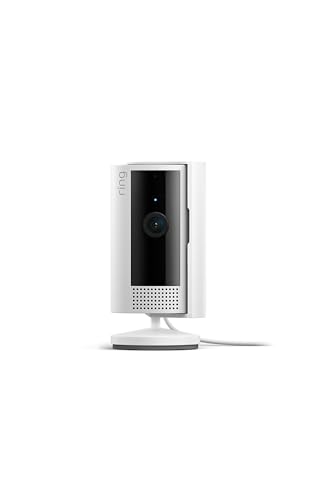
The most-reviewed and highest-rated inexpensive camera in the category, and the easiest low-risk way to find out whether you will use one. 1080p HD video with two-way talk covers a first camera or an entry hallway on a small budget. A physical privacy cover blocks the lens when you want it off. Plug-in power means nothing to recharge.
Why You Should Get This
If you’re still deciding whether a security camera is worth it at all, this is the lowest-risk, most review-validated way to find out.
Benefits
- Most-reviewed inexpensive camera in the category.
- Physical privacy cover for peace of mind.
- Plug-in power, nothing to recharge.
Pros and Cons
- Massive, trustworthy review base.
- Low price for a first camera.
- Simple plug-in setup.
- Recorded clip history needs a Ring subscription.
- 1080p rather than 2K.
- Indoor use only.
Features
- 1080p HD, two-way talk.
- Physical privacy cover.
- Plug-in power.

It records without a subscription, which is why it keeps appearing on shortlists it has no business being on, at an entry-level price and a solid owner rating. 2K video at an entry-level price includes color night vision and a built-in siren. MicroSD recording works with no plan required. It works indoors or under cover outdoors.
Why You Should Get This
If a monthly fee is the reason you haven’t bought a camera yet, this proves you don’t need one to get real value.
Benefits
- MicroSD recording, no subscription required.
- 2K video at an entry-level price.
- Built-in siren and color night vision.
Pros and Cons
- Genuine no-subscription local recording.
- Strong resolution for the price.
- Works indoors or covered outdoors.
- MicroSD card sold separately.
- Cam Plus subscription needed for smart detection.
- Not fully weatherproof for exposed outdoor mounting.
Features
- 2K video.
- MicroSD recording, no plan required.
- Color night vision, built-in siren.
These two are here as illustrations of how little money the decision actually requires, not as a shortlist. The Ring Indoor Cam, an entry-level pick, carries one of the highest ratings on this site across an unusually large and well-established review base — a high score holding up on a huge sample, which is the strongest signal available to us on any product. It is plug-in, has a physical privacy cover, and works out of the box. The caveat is the one that defines Ring: without a plan it keeps no recorded history, so it is a live-view and alert device until you pay.
The Wyze Cam v4, at an entry-level price, holds a solid rating across a substantial review base and answers the opposite question: it records to a microSD card with no subscription at all, at 2K resolution. Negative reviews cluster on notification consistency and app reliability rather than on the hardware, and Wyze has had publicly reported security incidents in the past, which matters more for an indoor camera than an outdoor one. At this price it is the least expensive way to own footage rather than rent access to it.
Consensus Score █████████░ 9.4 — Ring Indoor Cam, from one of the largest and highest-rated owner-review bases we track.
The Caveat Nobody Mentions: Privacy Is Now Your Responsibility
Buying a camera makes you the custodian of continuous video of your home and, unavoidably, of some of the space around it. That comes with duties.
The Federal Trade Commission’s 2023 settlement with Ring is the case every buyer should be aware of, and it concerned employees and contractors accessing customer video along with inadequate security controls. It is not a reason to avoid cameras. It is the clearest available evidence that cloud-stored footage is a real risk surface, that it applies to the category rather than to one brand, and that the trade you are making is convenience for exposure. Local-storage systems reduce that exposure substantially, at the cost of a less polished app and no off-site backup if the camera itself is taken.
The everyday obligations are simpler and more commonly breached. Point cameras at your own doors, drive and boundary rather than into a neighbour’s windows or over a fence into their enclosed yard. Keep indoor cameras out of bedrooms and bathrooms, and tell anyone living in the house where they are. Check your state’s audio-recording law before enabling recorded two-way talk, because roughly a dozen states require every party to consent. Use a unique password and turn on two-factor authentication, since the most common way camera footage leaks is a reused password, not a sophisticated attack.
How We Reached This Verdict
We do not buy, install or physically handle these cameras. There is no rig behind this page and we will not imply one. This page is built from aggregated owner star ratings weighted by review volume, the recurring themes inside negative reviews, published subscription pricing, criminology and law-enforcement consensus on deterrence, and publicly documented regulatory action. Where a claim is an industry norm rather than a guaranteed figure — insurance discounts in particular — we say so. Full method on how we rank.
Security Cameras Are Worth It If
- You get deliveries you cannot always collect. This is the highest-frequency, highest-certainty return in the whole category, and it justifies the purchase on its own for most households.
- You are away from the property regularly. Travel, shift work or a second home all turn a camera from a curiosity into the only way you know what is happening.
- You will actually respond to alerts. The value is in checking, not in owning. Owners who tune activity zones in the first week keep their systems; the rest mute the notifications and stop looking.
- You have a specific position in mind. Front door, side gate, driveway, garage. Buyers who name the position are satisfied far more often than buyers who buy a three-pack and then look for somewhere to put them.
- You can absorb the recurring cost, or you choose local storage. Either answer works. What fails is buying cloud hardware while intending never to pay.
Security Cameras Are Not Worth It If
- Your entry hardware is the real weakness. A weak door frame, old locks or an unlit approach should take the money first. Cameras document a break-in; hardware prevents one.
- You will not open the app. An unmonitored camera provides the feeling of security without the substance, and that is an actively bad outcome.
- You refuse any ongoing fee and also will not manage local storage. Local storage means swapping and checking cards or minding a base station. It is not zero effort, only zero cost.
- Your WiFi does not reach the mounting point. This is the most common cause of returns in the category. Check signal at the exact spot before buying, or plan for a wired route.
- You are not prepared to handle the privacy side. Careless angles create neighbour disputes, and careless indoor placement creates household ones. If that is not something you want to manage, skip it.
The Verdict
For most homes the answer is yes, and the reason is more mundane than the marketing suggests. Cameras earn their keep on parcels, contractors, deliveries and simply knowing what happened — and they add a real, if partial, deterrent on top. The entry price is genuinely low: a modest budget buys a well-reviewed camera, and an insurance discount may cover a chunk of that.
The honest caveat is the recurring cost. Price the system at hardware plus sixty months of whatever plan you are signing up for, compare that against a local-storage system with a higher sticker and no bill, and decide deliberately. Buyers who do that arithmetic before checkout are happy with either answer. Buyers who skip it write the one-star reviews about a missing clip and a fee they did not expect.
Next steps: if the recurring cost is the sticking point, go straight to best security cameras without subscription. To spend as little as possible, start at budget cameras; to compare the top of the market, premium cameras. Deciding between brands is what brand comparisons and our buying guides hub exist for — including is Ring worth it. When you have chosen, how to install a security camera covers mounting height, signal checks and sealing.