
Affiliate Disclosure
Some links on this page are affiliate links. As an Amazon Associate, we earn from qualifying purchases — at no extra cost to you. We do not buy, install, or physically handle the cameras we cover; our rankings come from aggregated owner reviews, ratings and expert consensus. Commissions never change our verdicts. How we rank · full disclosure.
The short version: the SEHMUA 4G LTE solar camera is the pick for most people who need coverage where there is no WiFi and no outlet. It sits at a strong rating across a deep review base, which is the best weight-of-evidence-to-price ratio in the category. If you want to spend less while you work out whether cellular suits your site at all, the entry-level 4G LTE solar unit carries the biggest review base on this page. If the property is remote enough that support matters, the TACTACAM Defend 360 is the only pick here from a brand with a real service operation behind it.
One thing to settle before you shop: "no WiFi" and "no subscription" are two different problems, and buying for the wrong one is the most common mistake in this category. A no-WiFi camera solves connectivity — it has its own cellular radio because there is no router in range. A no-subscription camera solves recurring cost — it records locally so there is no monthly cloud fee. Cellular cameras usually need a data plan, so they are often the opposite of subscription-free. If the monthly bill is what you are trying to avoid, read our best security cameras without subscription rankings instead, and the no-WiFi and cellular cameras hub lays out the whole decision.
Top Rated Picks at a Glance
Our #1 Pick: SEHMUA 4G LTE Cellular Solar Camera
This one wins on the boring, defensible grounds our method rewards: a strong average rating that has held up across a deep review base, at a price low enough that a second camera is an easy decision. Volume matters enormously in a category this young. Half the cellular cameras on the market have a few dozen reviews and a top-tier average, which tells you almost nothing. A much deeper base of ratings tells you what the failure modes are.
Consensus Score ████████░░ 8.0 — from a deep base of owner ratings with a strong average.
What it does well, according to those owners: it goes up in minutes with no network setup, because there is nothing to join — the SIM is already inside. The solar panel keeps it alive at a gate or a paddock corner that would otherwise mean a battery swap every few weeks. The 360-degree live view means one camera can cover an approach and a yard rather than needing two. Night footage is in color rather than infrared gray, which matters more than most buyers realize when you are trying to identify a vehicle rather than just notice one.
The honest weaknesses are consistent enough to state as fact. Owners repeatedly report that the app is functional rather than polished, and that setup instructions read as if translated. The data plan is the recurring theme in one-star reviews — not its existence, but discovering it after the box is open. And in heavy-traffic locations the LTE radio drains the battery faster than the panel refills it, which is a mounting and siting problem more than a product defect, but it catches people out.
The Ranked Field: Star Rating, Consensus and Price

Best for driveways, gates and outbuildings with no WiFi and no power run.
- Built-in SIM card — runs on 4G LTE, not your home network.
- Solar panel integrated, so no charging trips.
- 360° live view with pan control from the app.
- 2K color night vision and PIR motion detection.
Why buy it: The strongest balance of price, feature set and review weight in the whole no-WiFi field — a deep base of owner ratings behind a strong average.

Best for a solid off-grid camera at a genuinely accessible price.
- Built-in SIM card, no home WiFi required.
- Solar powered, free cloud storage included.
- 360° live view and 2K night footage.
- No internet connection needed on site.
Why buy it: A deep review base and a strong average rating make it a well-evidenced budget pick in the no-WiFi cellular category.
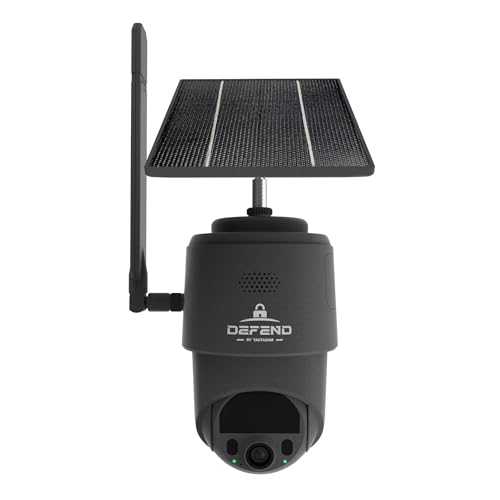
Best for land, cabins and hunting properties where support matters more than price.
- From an established US outdoor-camera brand with real support.
- Solar power with no WiFi requirement.
- 360° coverage from a single mounting point.
- Built for remote-property use rather than suburban yards.
Why buy it: The only pick here from a brand with a track record and a phone number, which is why rural owners keep choosing it over cheaper units.

Best for covering two angles of a jobsite or off-grid property at once.
- Two cameras in the box, each with its own built-in SIM.
- Solar powered — designed for sites with no outlet at all.
- 2K color night vision and 360° view.
- Two-way audio and motion detection.
Why buy it: Two cellular cameras for the price most single units command, with the highest star average on this page — though on a thin review base.

Best for wide-plus-zoom coverage of a single approach road or gate.
- Two lenses — a wide view plus a zoom view in one housing.
- 360° PTZ with AI auto-tracking of moving subjects.
- Built-in SIM card and solar panel.
- 2K color night vision with cloud storage option.
Why buy it: The most capable specification on the page, but with only a handful of ratings so far it is a specification bet, not a proven pick.
Comparison Table: Price, Star Rating and Coverage
| Product | Best for | Price | Buy |
|---|---|---|---|
| SEHMUA 4G LTE Cellular Solar Security Camera | Best Overall | $35.99 | Price |
| HOSAFE.COM 4G LTE Cellular Security Camera (2K, Built-In SIM) | Best Value | $39.99 | Price |
| TACTACAM Defend 360 Cellular Security Camera | Best Known Brand | $159.99 | Price |
| 4G LTE Cellular Security Camera, 2-Pack | Best Two-Camera Kit | $69.98 | Price |
| Dual-Lens 4G LTE Solar PTZ Camera with Auto-Tracking | Best Dual-Lens PTZ | $59.99 | Price |
How We Rank
We do not buy, install or physically handle these cameras. There is no test cabin and we are not going to invent one. What we do instead is read the evidence that already exists at scale: aggregated owner star ratings, weighted by review volume so that a 5.0 from four buyers does not outrank a 4.2 from several thousand; the recurring themes in the negative reviews, which are far more informative than the praise; the specification differences owners mention unprompted; and the expert consensus across the category. A camera with a thin review history can still place here, but it has to earn the spot on specification and it gets flagged as unproven — which is exactly what happened to the two newest units on this page. The full method is on how we rank.
Every Cellular Camera Reviewed: Pros and Cons
1. SEHMUA 4G LTE Cellular Solar Camera — Best Overall
The default recommendation for a driveway, gate, paddock or outbuilding with no network in range. Built-in SIM, integrated solar, 360-degree pan and 2K color night vision, at an entry-level price. What owners praise: genuinely simple setup with no router to join, solar that holds charge through normal use in open sun, color night footage that makes vehicles identifiable, and a price that makes covering a second location easy. What owners complain about: the app being clunky and occasionally slow to load a live view, documentation quality, and the data plan cost arriving as a surprise. A recurring minority complaint is motion sensitivity that either misses a walker or fires at every branch, with little middle ground until you tune it.
2. 4G LTE Cellular Solar Camera, 2K — Best Value
The most-reviewed camera in the entire no-WiFi field, at a price that barely registers. A deep base of owner ratings and a strong average, at the entry-level end of the category. What owners praise: the price above everything, the fact that it works at properties with no power and no internet at all, and that at this cost a spare is trivial to justify. What owners complain about: build quality that feels exactly like an entry-level product, battery performance in short winter days, and an app experience that draws the same criticism as the pick above. Several reviewers note that the included trial data disappears quickly once you start checking the live view often, which is worth knowing before you plan around it.
3. TACTACAM Defend 360 — Best Known Brand
The pick for land, hunting properties and cabins where a camera failing means a two-hour drive to find out. TACTACAM is an established name in outdoor cameras, and that is most of the argument at a premium price. What owners praise: support you can actually reach, an app maintained by a company that will still exist next year, solar performance in genuinely remote mounts, and coverage from a single pole position. What owners complain about: the price relative to the generic units, at several times the cost for a comparable specification, and an average that is a touch below the cheap cameras it competes with. The review base is still modest, so treat the brand rather than the volume as the reassurance here.
4. 4G LTE Cellular Camera 2-Pack — Best Two-Camera Kit
Two cellular cameras, each with its own SIM and solar panel, for a mid-range price all-in. On a jobsite or an off-grid property, two angles beat one good angle almost every time. What owners praise: the arithmetic, mainly — two independent cameras for roughly what one mid-range unit costs — plus 2K color night vision and two-way audio on both units. The star average is the highest on this page. What owners complain about: that average rests on well under a hundred ratings, so it is not yet meaningful. Take it as an encouraging early signal rather than proof. Note also that two cameras usually means two data plans, which changes the running-cost math considerably.
5. Dual-Lens 4G LTE Solar PTZ — Best Dual-Lens PTZ
The most ambitious specification here: two lenses in one housing giving a wide view and a zoomed view simultaneously, full PTZ movement, and AI auto-tracking that follows a moving subject across the frame. What owners praise: the dual-view concept, which solves the classic trade-off where a wide lens sees everything and identifies nothing. What owners complain about: almost nothing yet, and that is the problem. With only a handful of ratings on record, this is a specification bet. We include it because the feature set is genuinely differentiated and the price is not silly, but it is explicitly the unproven pick on this page and we would not put it on a property you cannot easily revisit.
Buying Guide: What to Look For With No WiFi and No Router
The direct answer: confirm cell coverage at the exact mounting spot, budget for the data plan as part of the purchase price, and put the solar panel where it gets real sun rather than where the camera looks best. Those three decisions matter more than any spec on the box.
SIM Card Lock-In and Off-Grid Cellular Coverage
A cellular camera is a phone that watches things. If a phone struggles at that spot, so will the camera. Check the coverage map for the address, then check it again for the specific corner of the property — coverage on a road frontage and coverage behind a hill 300 feet away can be completely different. Some cameras are locked to one carrier’s network, which turns a marginal signal into a dead camera. Owners who report the worst experiences in this category overwhelmingly turn out to have marginal signal, not defective hardware.
The Cellular Data Plan Cost Is Part of the Price
Expect a modest monthly fee per camera for a light plan built around motion clips. Continuous live streaming costs considerably more, and the "unlimited" tiers usually throttle after a threshold. Two cameras generally means two plans. Over three years, an entry-level camera on a modest plan adds up to a total that reframes the case for the better-supported premium unit entirely. Work that number out before you decide the cheap camera is obviously the smart buy.
Solar Power and Battery Reality
The LTE radio, not the image sensor, is what drains these batteries. A camera that wakes fifty times a day on a busy roadside is doing far more radio work than one covering a quiet back gate, and owners report the difference plainly. South-facing mounts with no overhead cover are what keep these cameras alive. If your only viable mount is shaded or north-facing, plan on either a supplementary panel or a seasonal battery top-up. For the general case for solar, our solar cameras hub covers panel sizing and winter performance.
Local Storage Still Matters
Every camera here records to a microSD card, and that is your insurance: networks drop, plans lapse, apps break, and a card that keeps rolling regardless is the difference between a camera and an ornament. Buy a decent-quality card and check it on your visits.
Cabin Camera, Rural Property and Jobsite: Where This Wins
Land, acreage and hunting property. The original use case and still the strongest. No power, no network, long gaps between visits.
Construction and jobsites. Equipment theft is the driver, and sites move, so anything requiring installed infrastructure is wasted money. The two-camera kit above suits this well.
Cabins, boats, seasonal properties and rentals. You need to know about a break-in or a burst pipe in February, not in May — and a cellular camera watching your own parking space or storage unit sidesteps a landlord’s network entirely.
Where it is the wrong answer: a normal suburban home with working WiFi. You are paying a monthly fee to solve a problem you do not have. Start with the best outdoor security cameras or the wireless and battery cameras hub instead, and if the goal is avoiding fees rather than avoiding routers, go to the no-subscription rankings.
What Owner Reviews Actually Complain About
Read enough reviews across this category and four complaints turn up regardless of brand or price.
The data plan surprise. Comfortably the most common one-star theme. The listing says no WiFi needed, the buyer reads that as no ongoing cost, and the trial data runs out in a fortnight. It is a marketing problem rather than a hardware one, but it sours a lot of otherwise-fine purchases.
Battery not keeping up with traffic. The second-biggest theme, and almost always a siting issue. Cameras aimed at a public road wake constantly; cameras aimed at a private gate do not. Panels under tree cover in a northern winter cannot win that fight.
App quality. Nearly universal across the budget end of this category. Slow live-view loading, notifications that arrive late, and settings menus that need a screenshot to navigate twice. The cameras generally work; the software around them is the weak link.
Motion detection tuning. Owners describe an all-or-nothing feel out of the box — either every passing branch triggers an alert or a person walks through unnoticed. Most reviewers who stuck with it report getting there after adjusting sensitivity and detection zones, which is worth knowing before you conclude the camera is broken.
Notably absent from the complaint pile: image quality. 2K sensors at this price are genuinely fine, and almost nobody is unhappy with the picture. The unhappiness is about power, plans and software.
Warranty and Support: The Real Difference at the Premium End
Warranty is the quiet reason the price range on this page spans so widely. TACTACAM is a US outdoor-camera company with a published limited warranty, a support line and a firmware history you can look up. The generic entry-level units typically offer a twelve-month seller warranty administered through the retail listing, which in practice means a replacement if it fails early and nothing at all once the return window closes.
That matters more at a remote site than at a house. If a camera 90 minutes away dies in month fourteen, the cheap unit is simply gone and you make the drive twice — once to discover it, once to replace it. Owners of remote property consistently reach the same conclusion in reviews: buy cheap where you pass the camera weekly, buy supported where you do not. Whatever you buy, keep the order record, because it is the warranty in this corner of the market.
Solar Cellular Camera Tiers: Best Budget to Best Premium
Sorting by price makes this field easier to read. The best budget tier is where the review volume actually is, and the ratings hold up surprisingly well against much dearer hardware — a solar cellular camera at this price gives you a built-in SIM, 2K color night video and a panel, and its weaknesses are the app and the documentation rather than the picture.
The middle tier buys either a second camera in the same box or a dual-lens PTZ specification, both of which are better value on paper than a single mid-range unit. The best premium tier buys almost none of that on paper and all of it in support: a company that answers the phone, an app likely to still be maintained in three years, and hardware built for genuine remote use. Which tier is right depends less on your budget than on how far you would have to drive to fix a failure.
Best Budget and Best Premium: What Changes at the Top End
The best budget option here is the entry-level two-pack, and its real job is reconnaissance: it tells you whether the signal at your gate is usable before you commit real money. Owners who buy it expecting a long-term camera are the ones who write the disappointed reviews; owners who treat it as a cheap site survey are almost always satisfied.
The best premium choice is the TACTACAM Defend 360, and what the extra money buys is not resolution. It is firmware that keeps getting updated, an app that will still exist in three years, a US support line, and a cellular data plan sold by the same company that made the camera rather than by a reseller. On a property you visit twice a year, that reliability is worth more than any sensor upgrade — a dead camera at a remote gate costs a round trip to discover.
Off-Grid Setup: SIM Card Choice and Solar Cellular Camera Kits
A properly off-grid install is three decisions, not one. First the SIM card: a camera that takes a standard swappable SIM lets you change carrier if coverage disappoints, while a locked unit turns a marginal signal into a returned camera. Check which you are buying before you order.
Second, the panel. A solar cellular camera has to charge against a radio that is the hungriest component in the device, so aim the panel south, keep it clear of branches and undergrowth, and mount it where snow will slide off rather than settle. Third, the card. Set the camera to record everything to microSD and let the cellular link carry alerts and thumbnails only — that halves the data plan you need and keeps the footage safe when the network drops. Owners who set it up this way report by far the fewest problems.
How to Choose Between These Five
If you want the safe default: the SEHMUA, an entry-level pick. Best evidence base relative to price, and nothing about it is a gamble.
If you are testing whether cellular works at your site at all: buy the cheapest unit first. If the signal is bad, you have lost very little, and if it is good you have a working camera.
If the property is remote and a failure is expensive: the TACTACAM Defend 360. You are buying support and firmware longevity, not pixels.
If you need two angles: the two-camera kit, with both data plans budgeted.
If you want the best specification and accept the risk: the dual-lens PTZ — but not somewhere you cannot easily get back to.
Still weighing whether cellular is the right category at all? The no-WiFi hub compares it against local-storage and standard WiFi setups, and our buying guides hub covers subscriptions and installation decisions generally.
The Verdict
The SEHMUA 4G LTE solar camera is the one we would point most no-WiFi buyers toward, and the reasoning is not complicated: backed by a strong rating across a deep review base, it carries more real-world evidence behind it than almost anything else in a young category, it sits at the entry-level end of the price range, and the complaints against it are about the app and the data plan rather than the camera failing. Site it where it gets genuine sun, buy a decent microSD card, work the monthly plan into your budget before you order, and it will do the job at a gate or a paddock corner that no WiFi camera on the market can reach.
The one caveat worth repeating: if you came here because you want to escape a monthly fee rather than because there is no router, this is the wrong page. Cellular cameras trade a router for a carrier bill. Our subscription-free rankings solve that problem properly, with local recording and no ongoing cost at all.
Related Accessories

Best for local recording on a camera with a card slot.

Best for angling a camera precisely under an eave, soffit or shelf.

Best for a clean, weatherproof cable entry point on an outdoor mount.